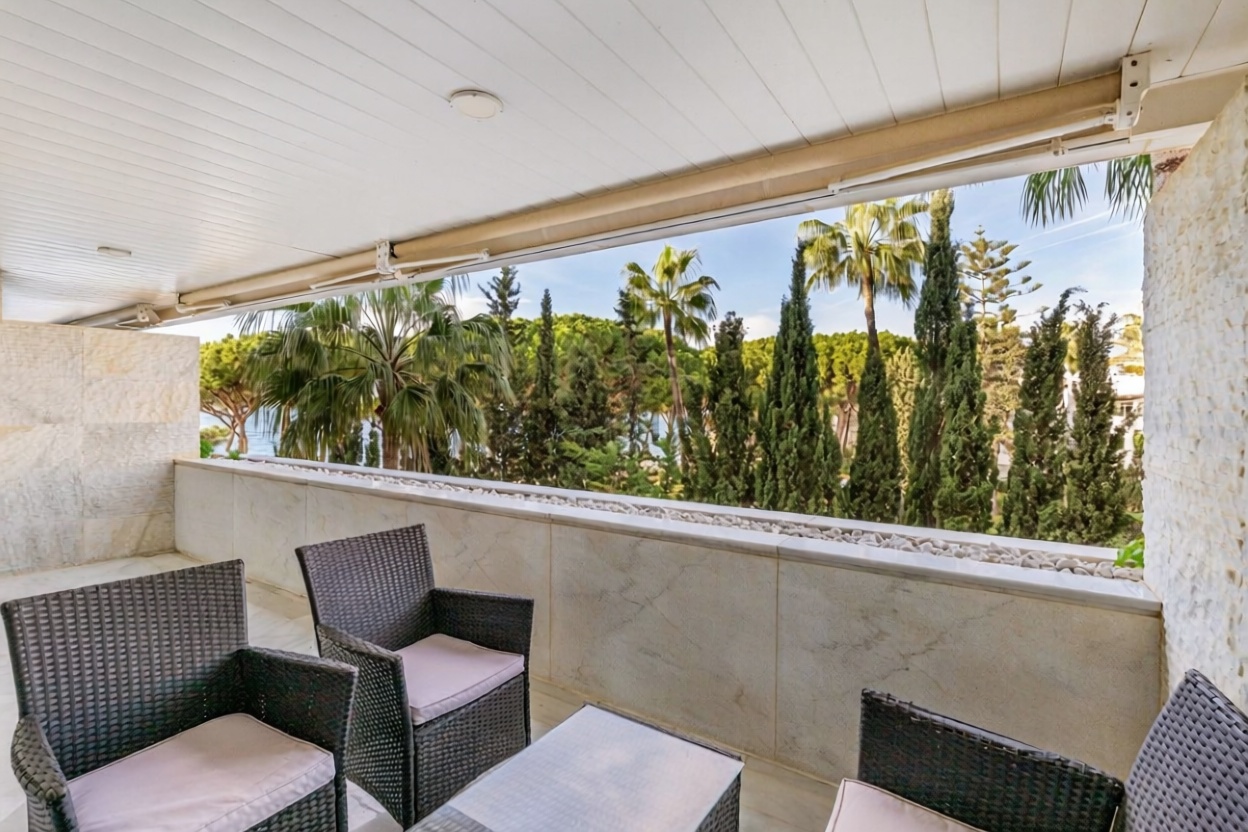
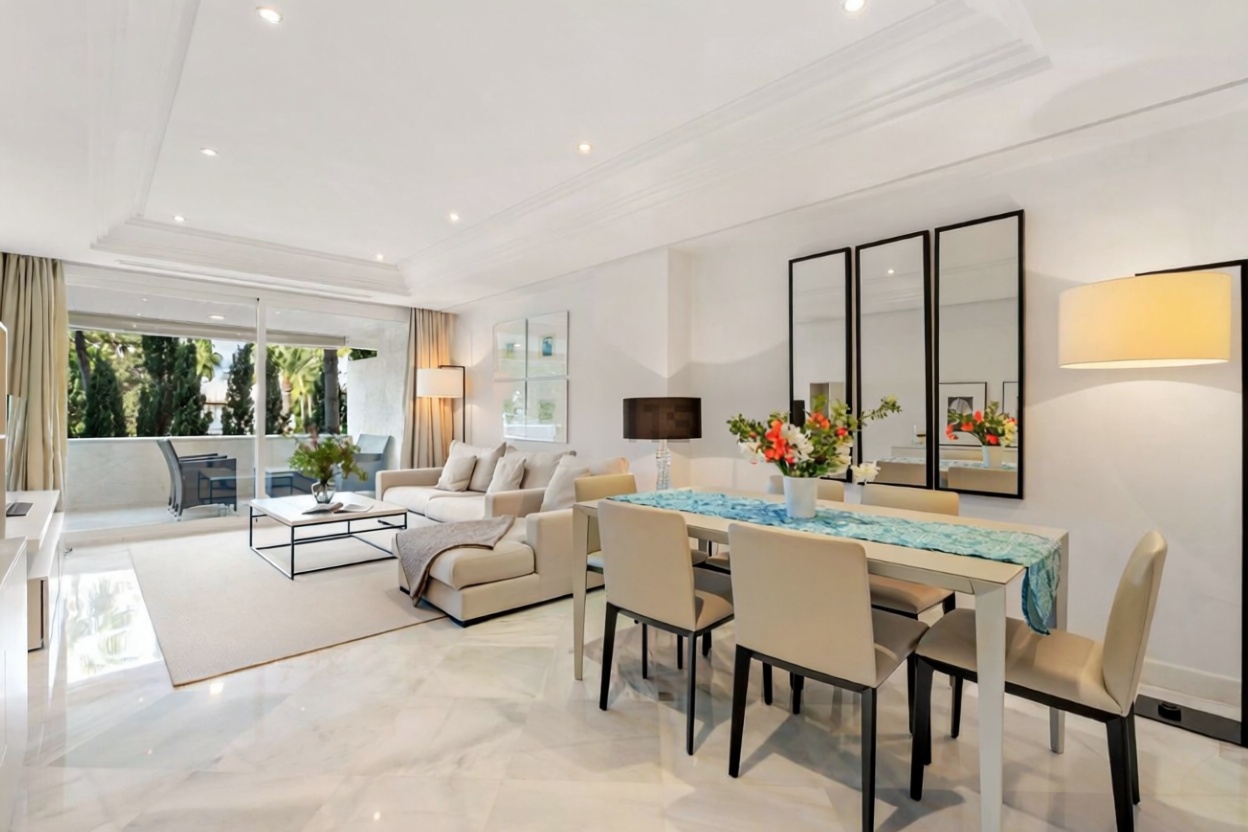
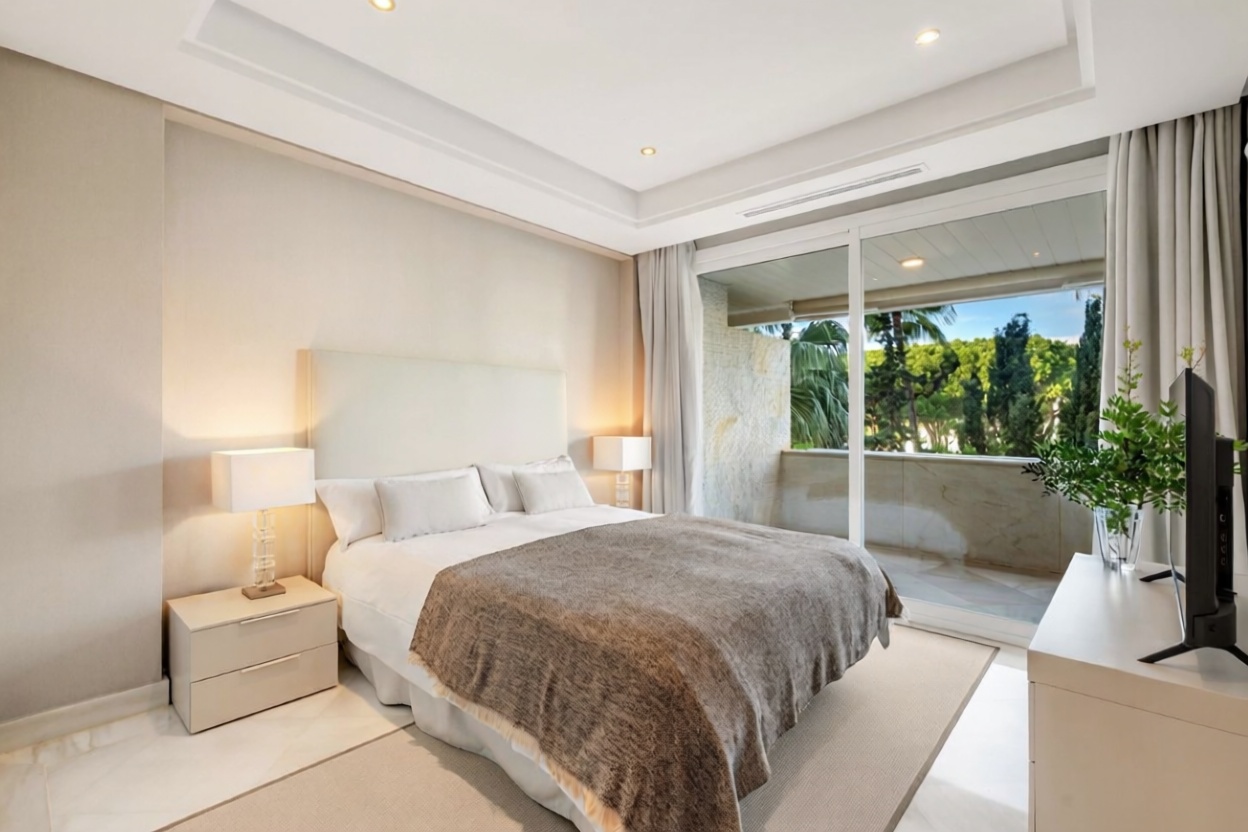
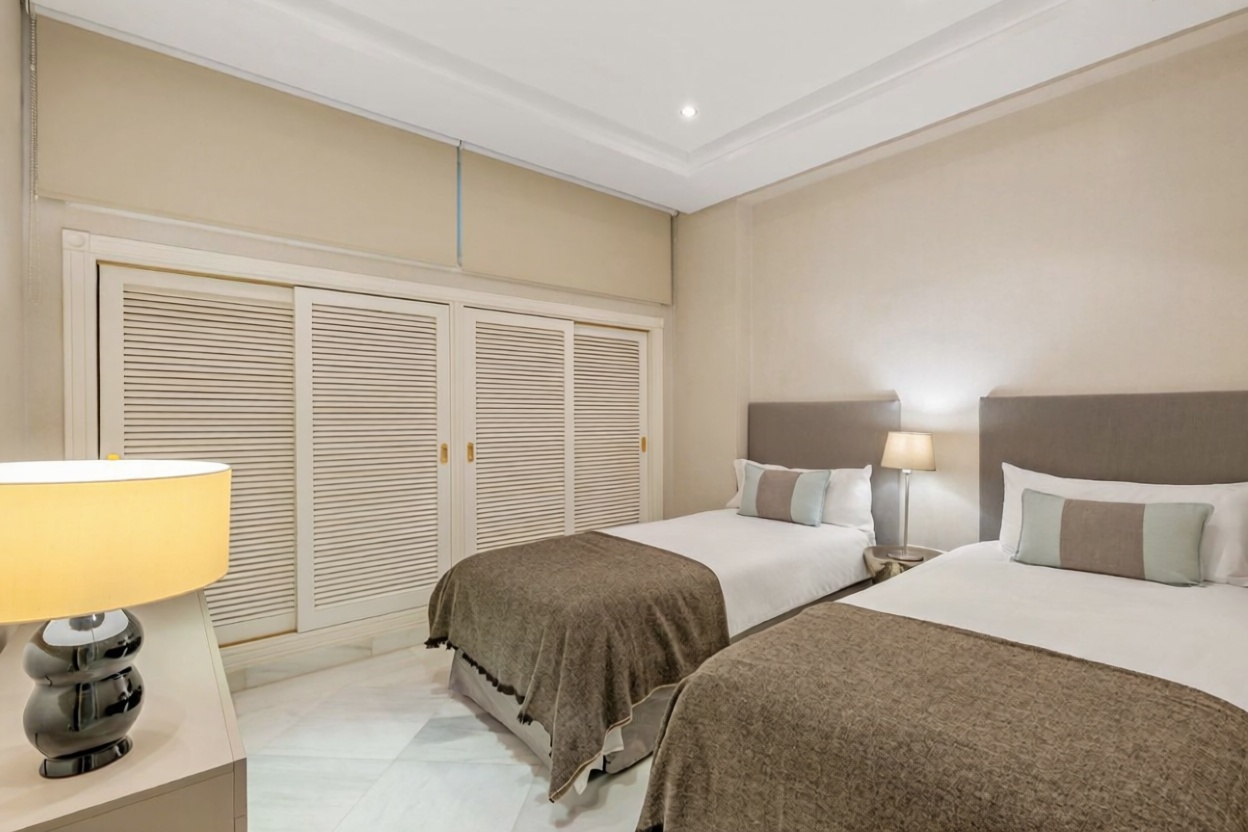
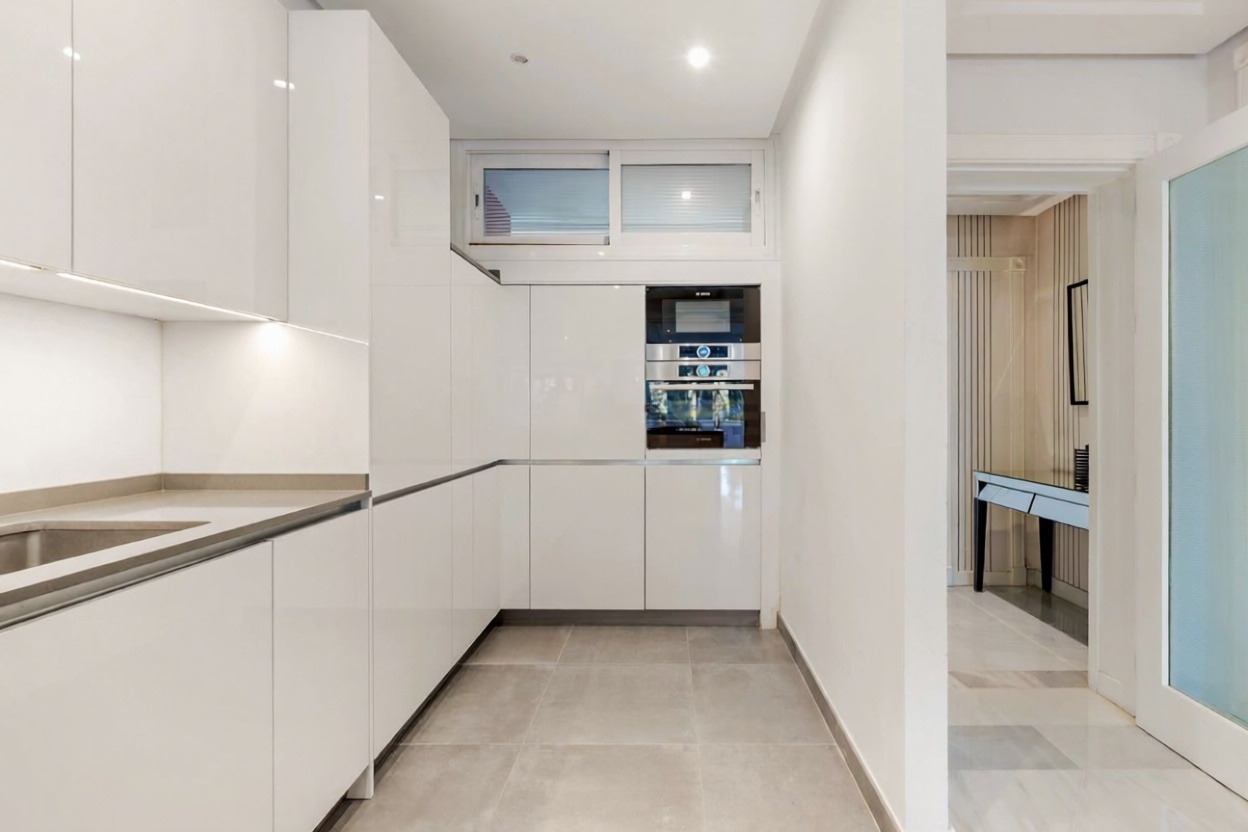
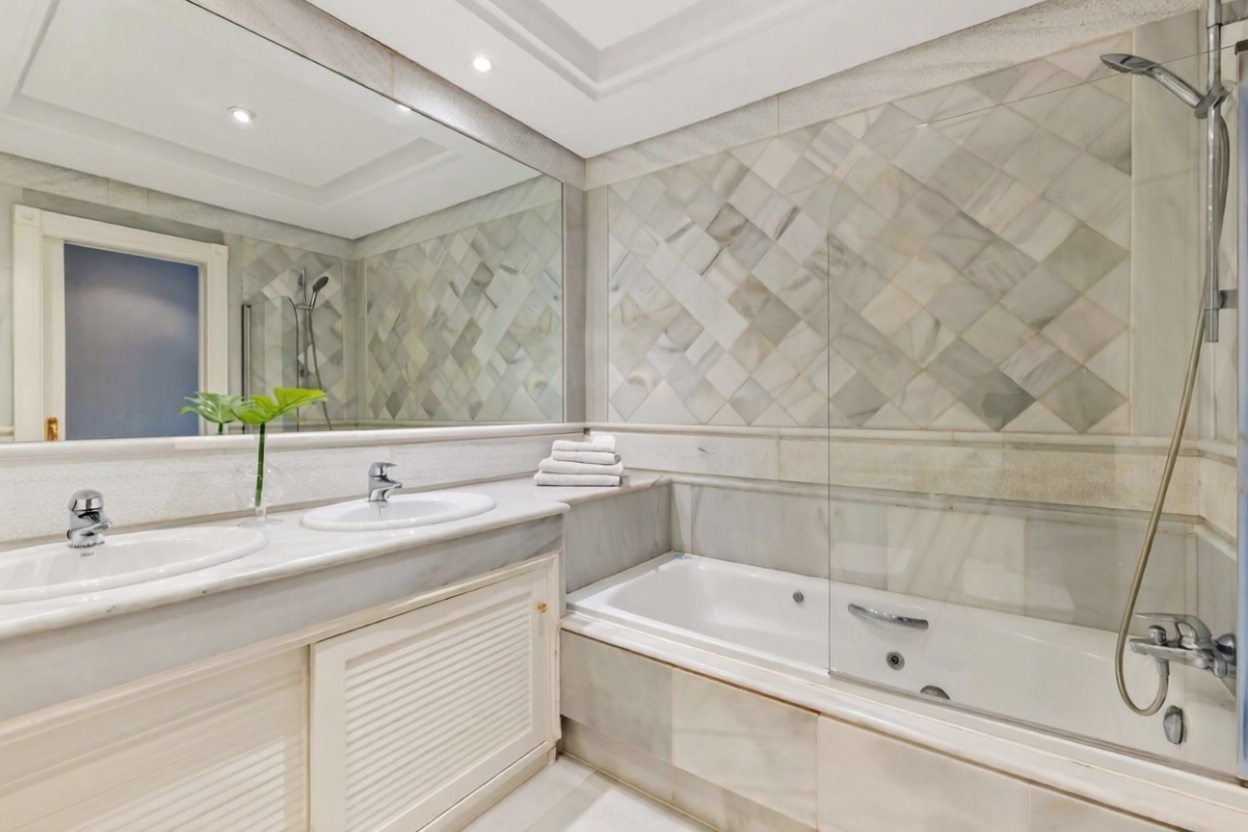
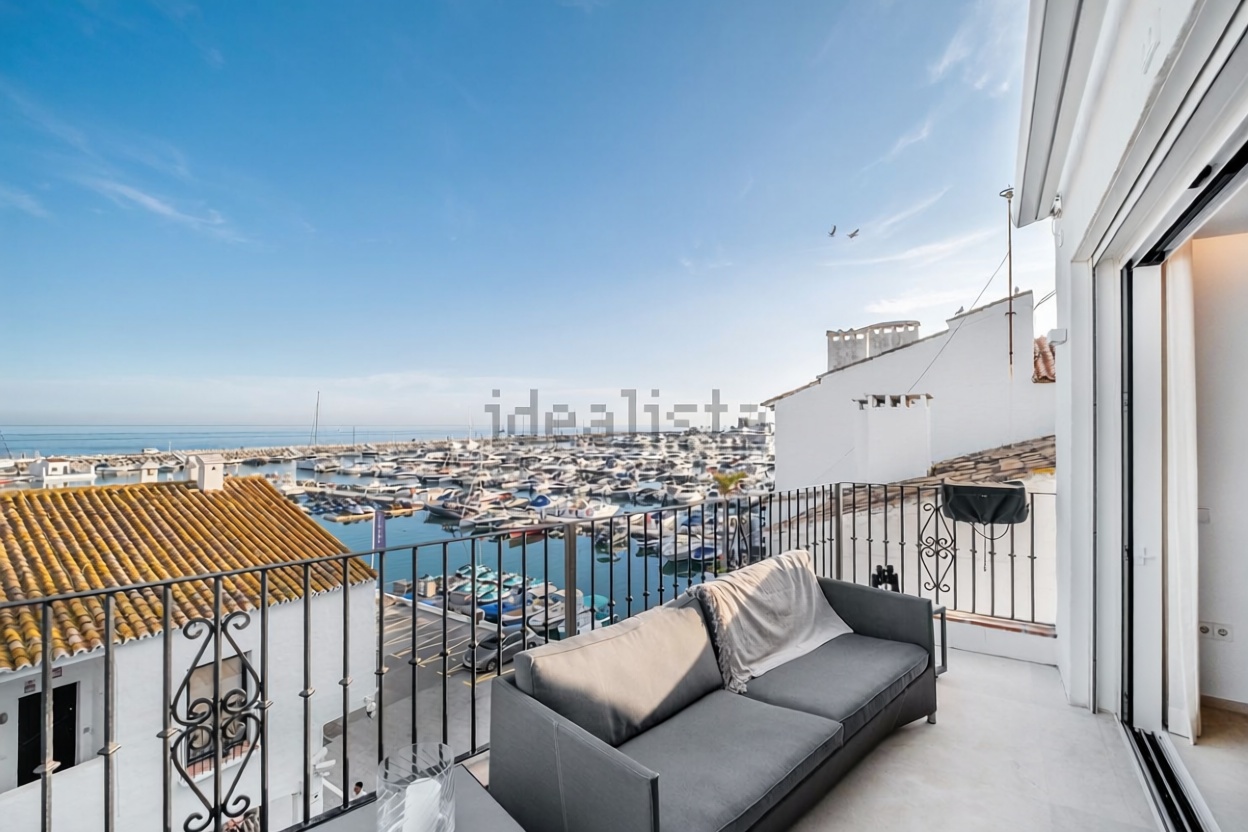
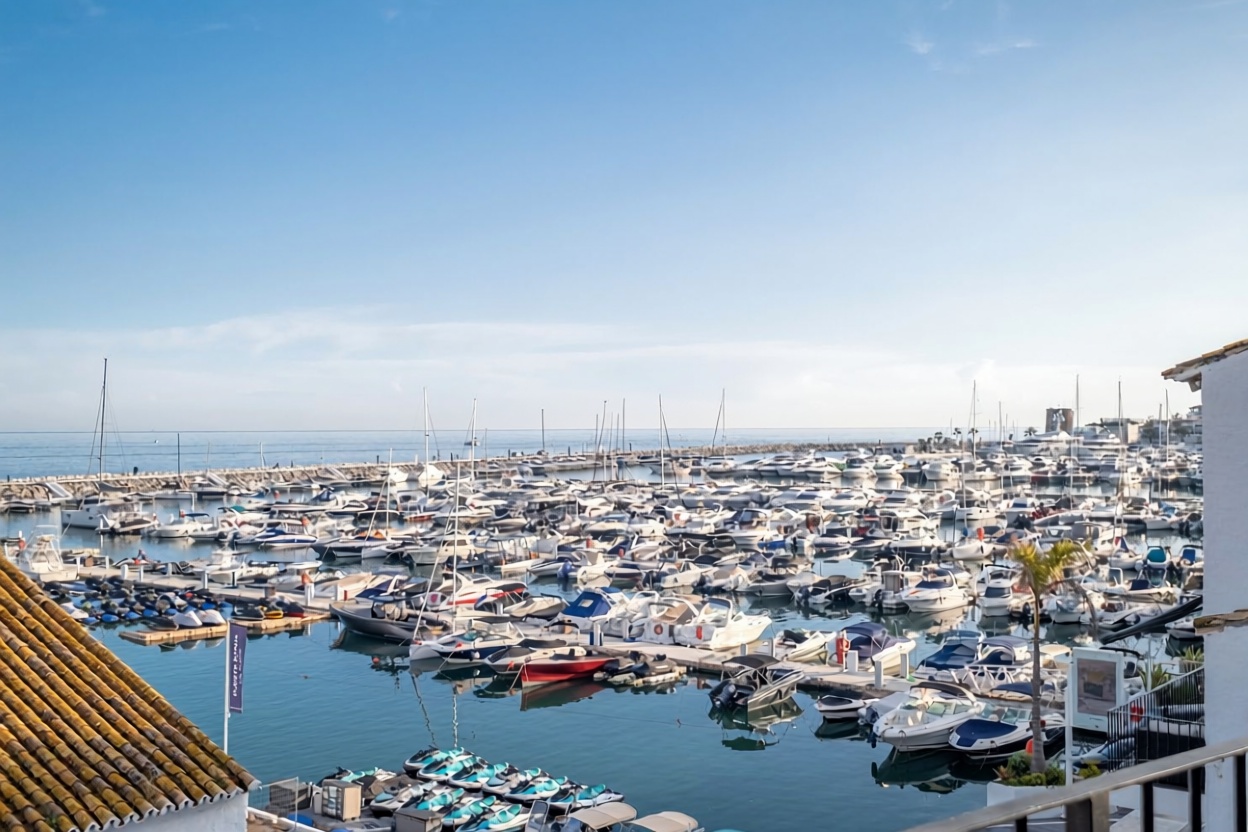
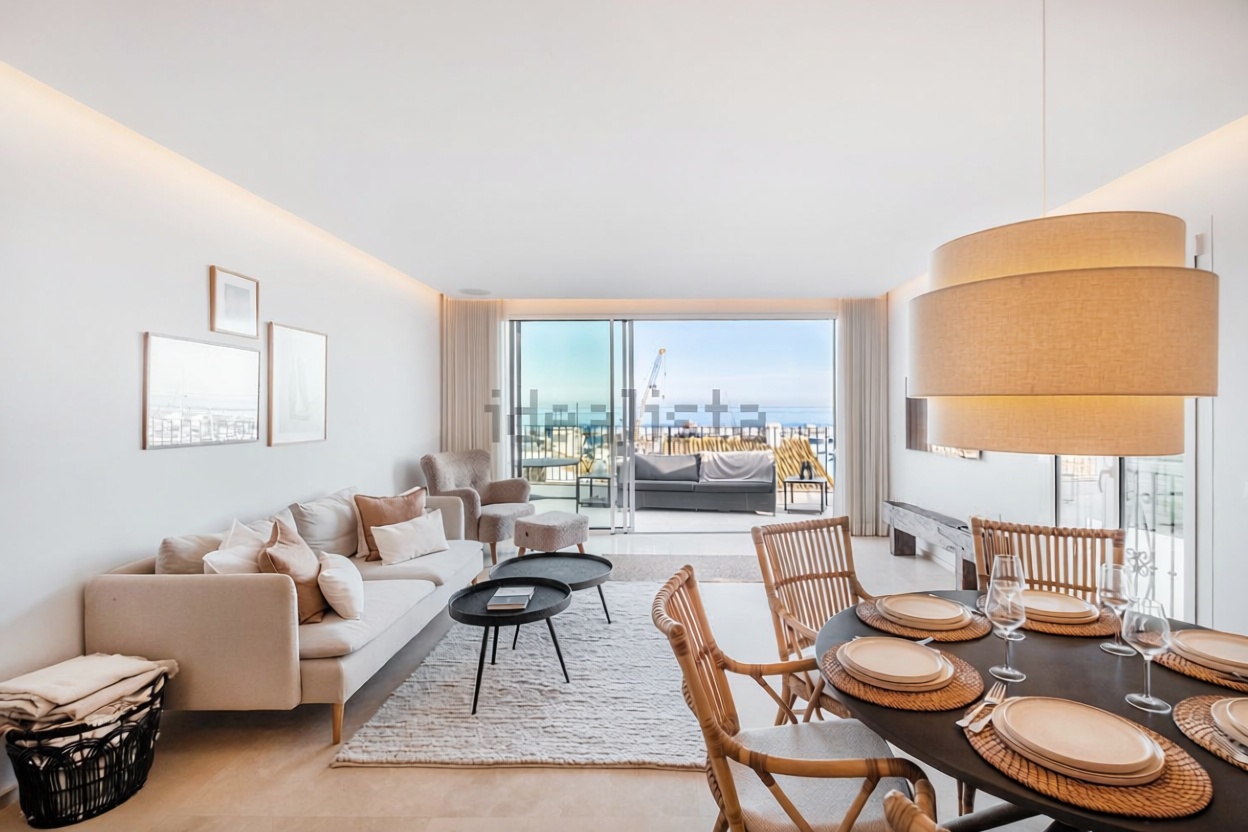
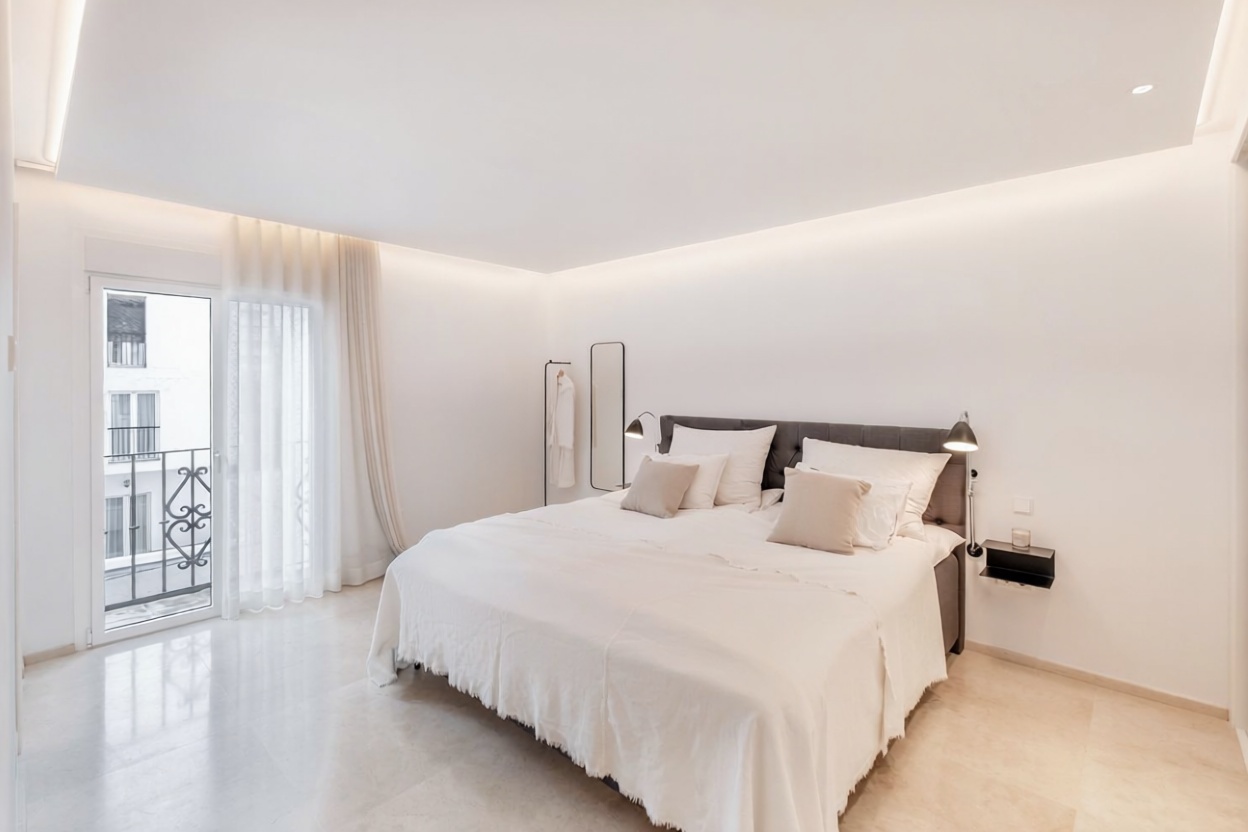
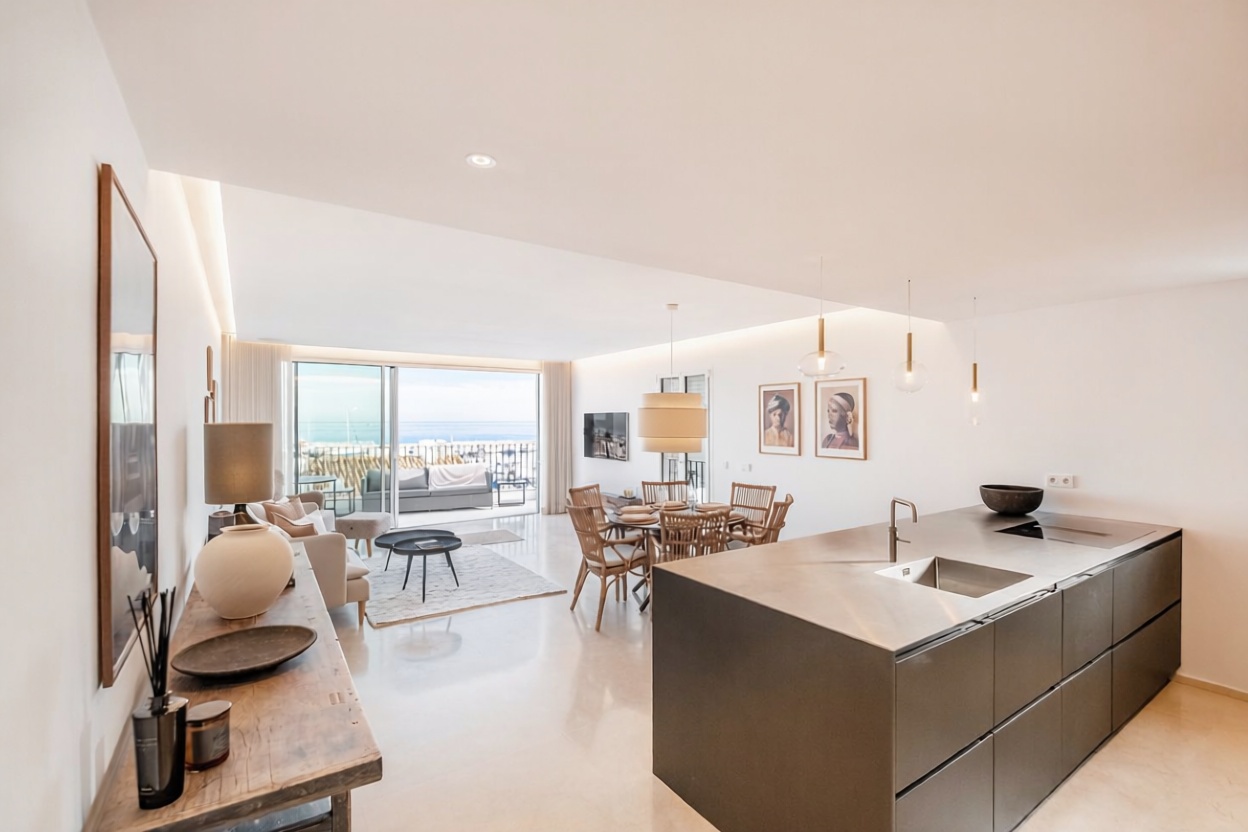
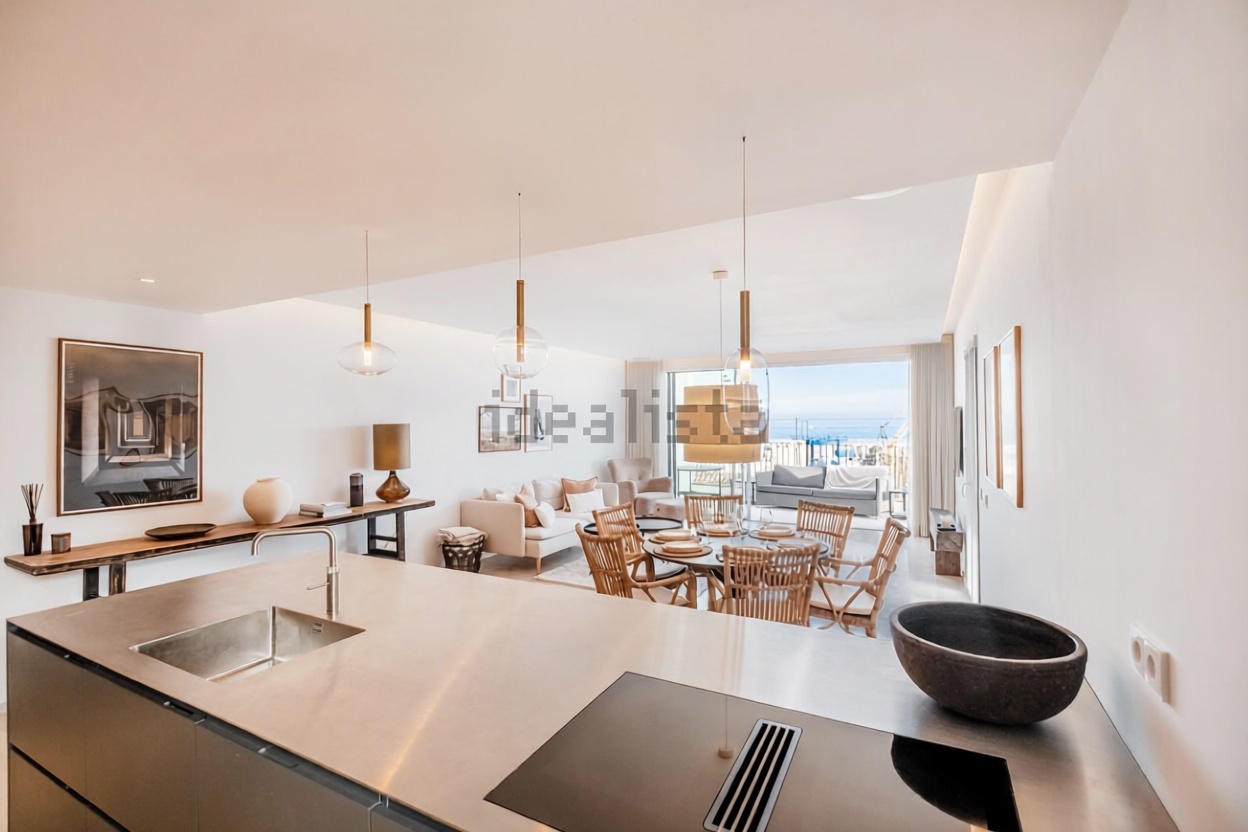
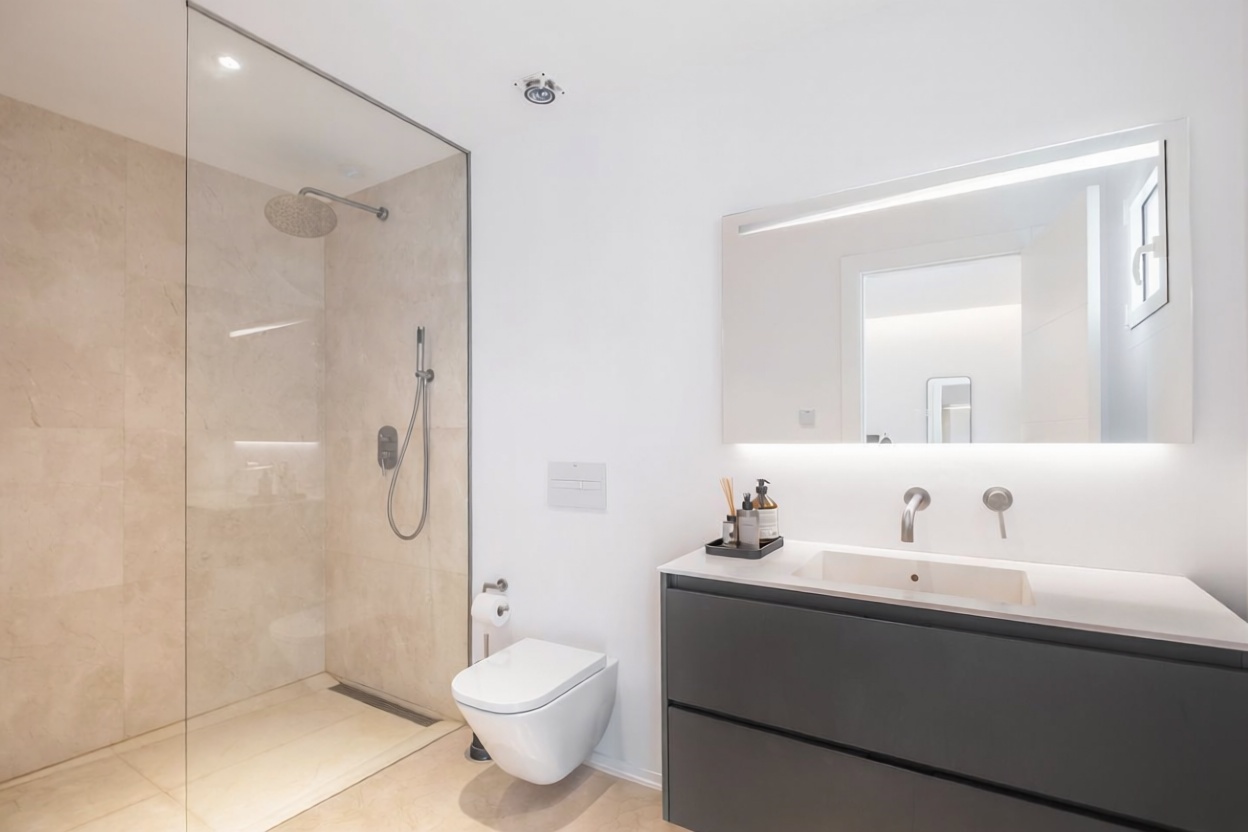
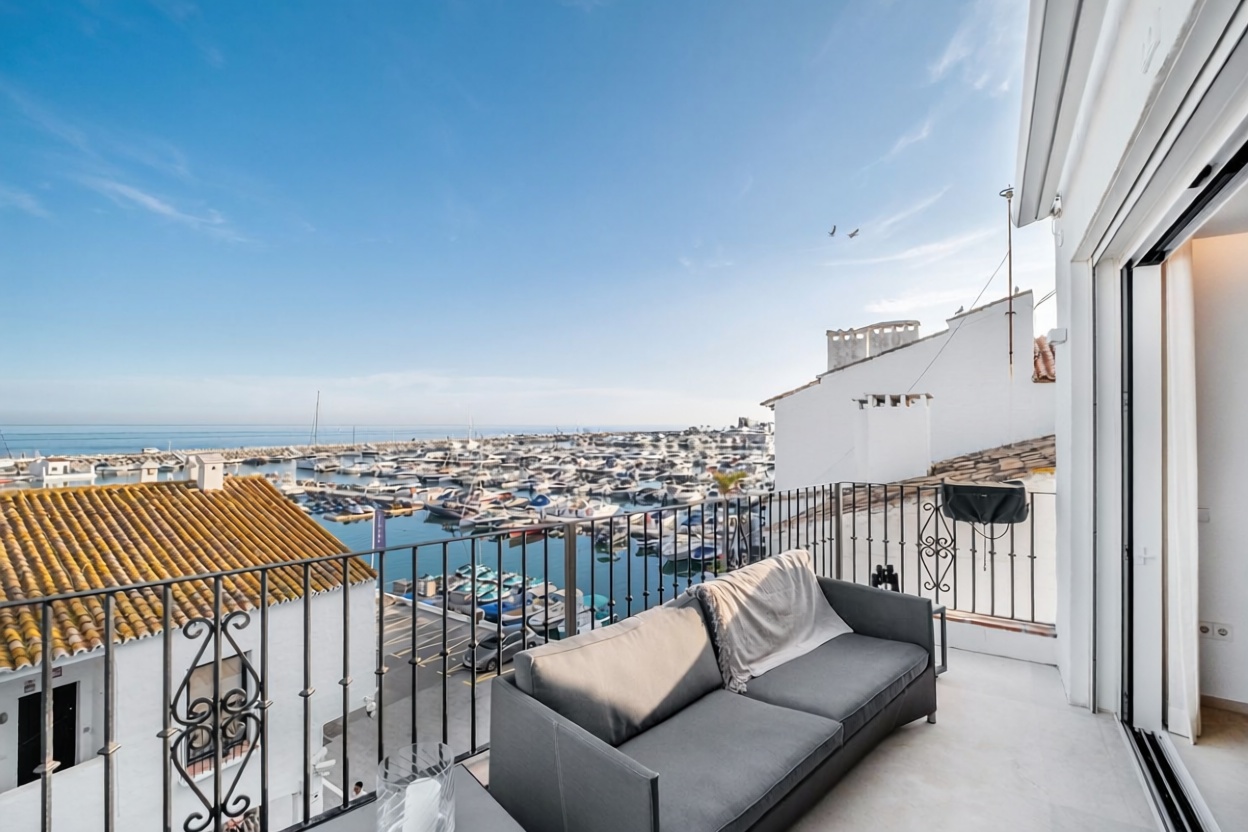
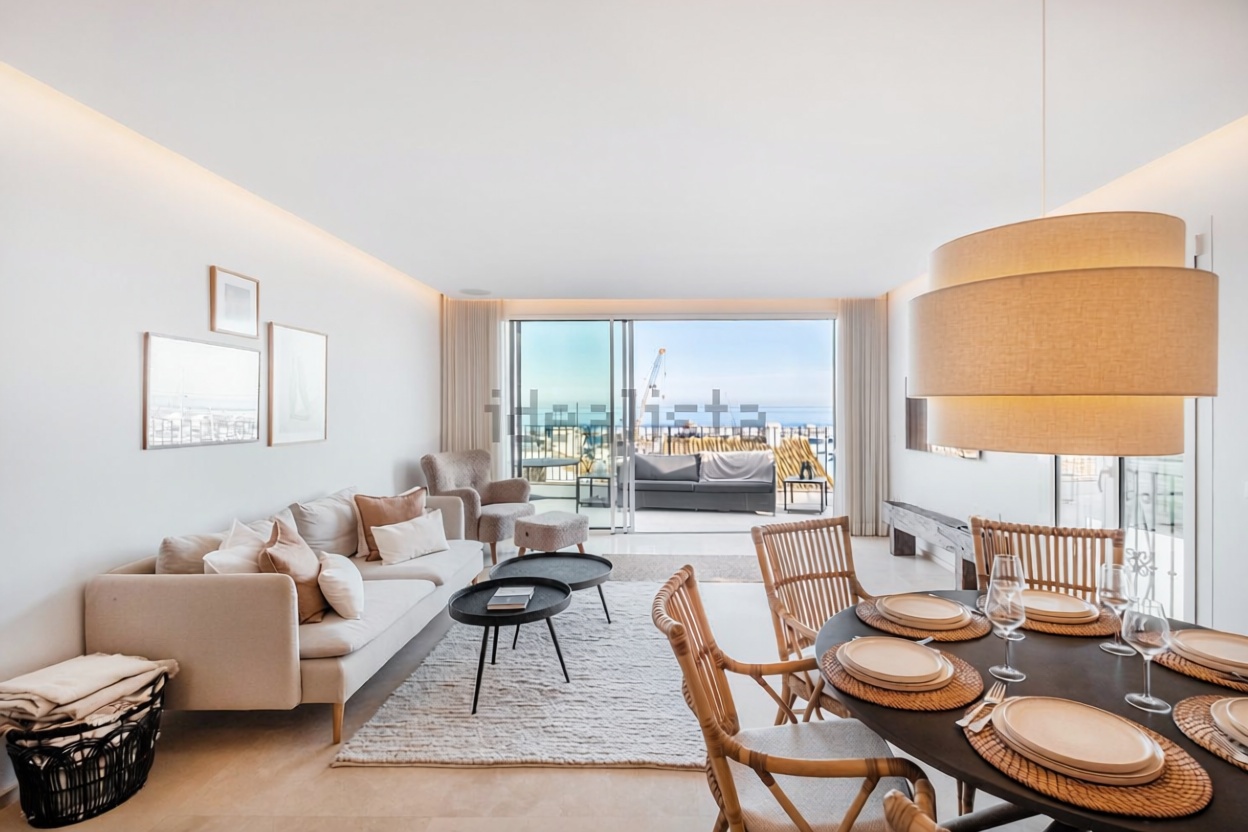
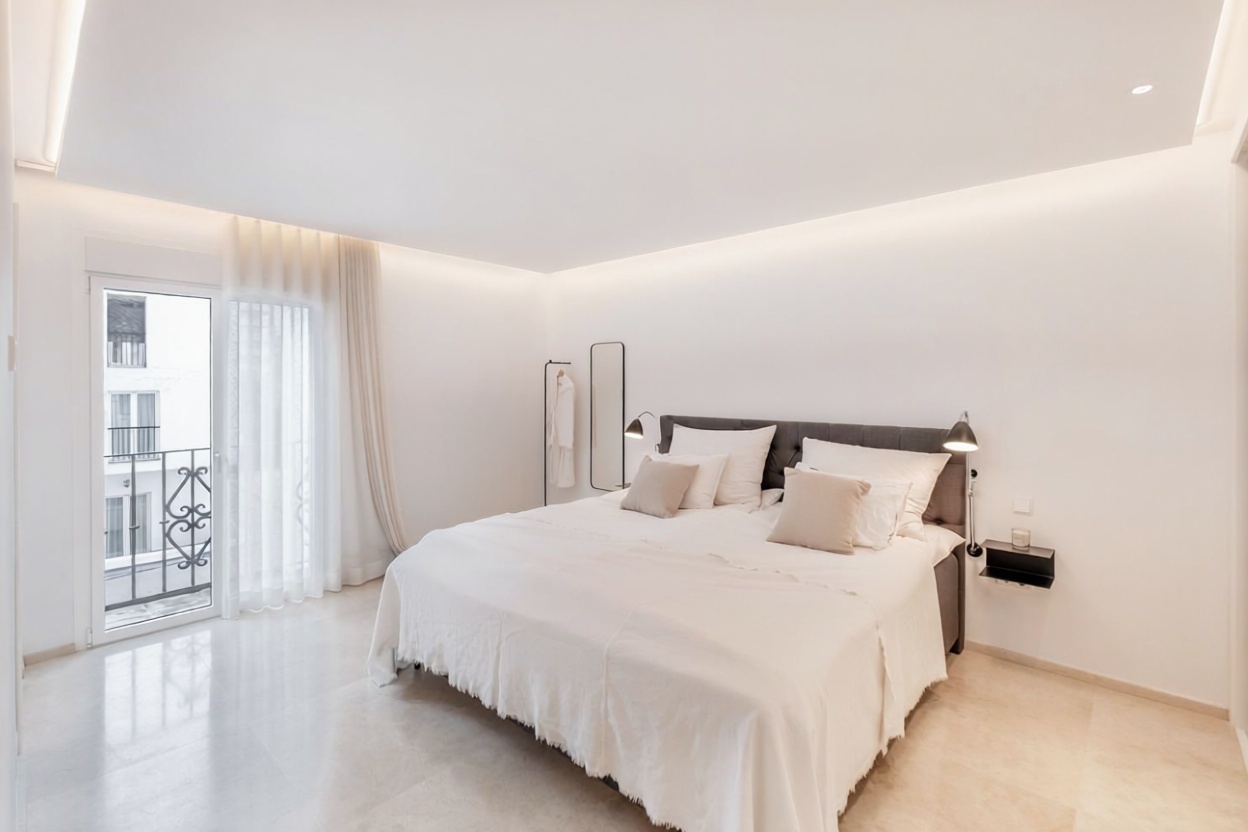
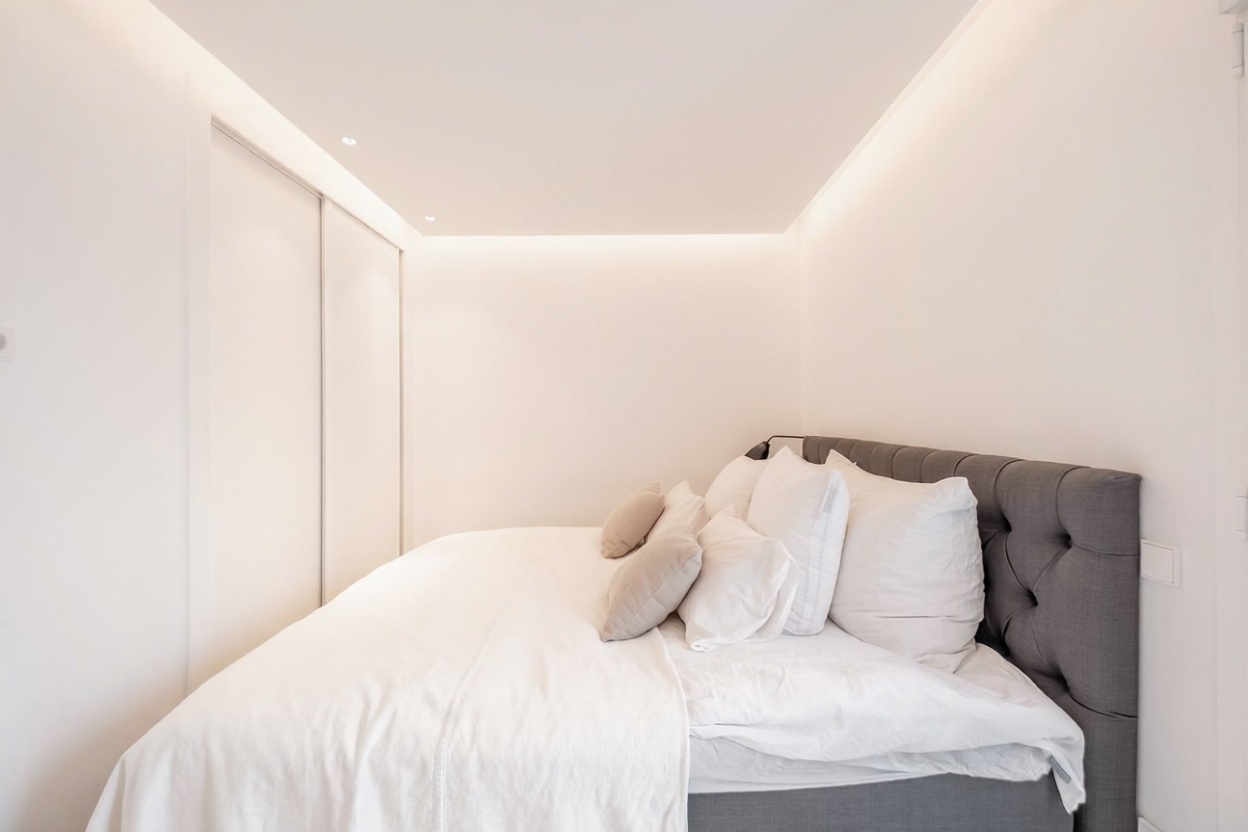
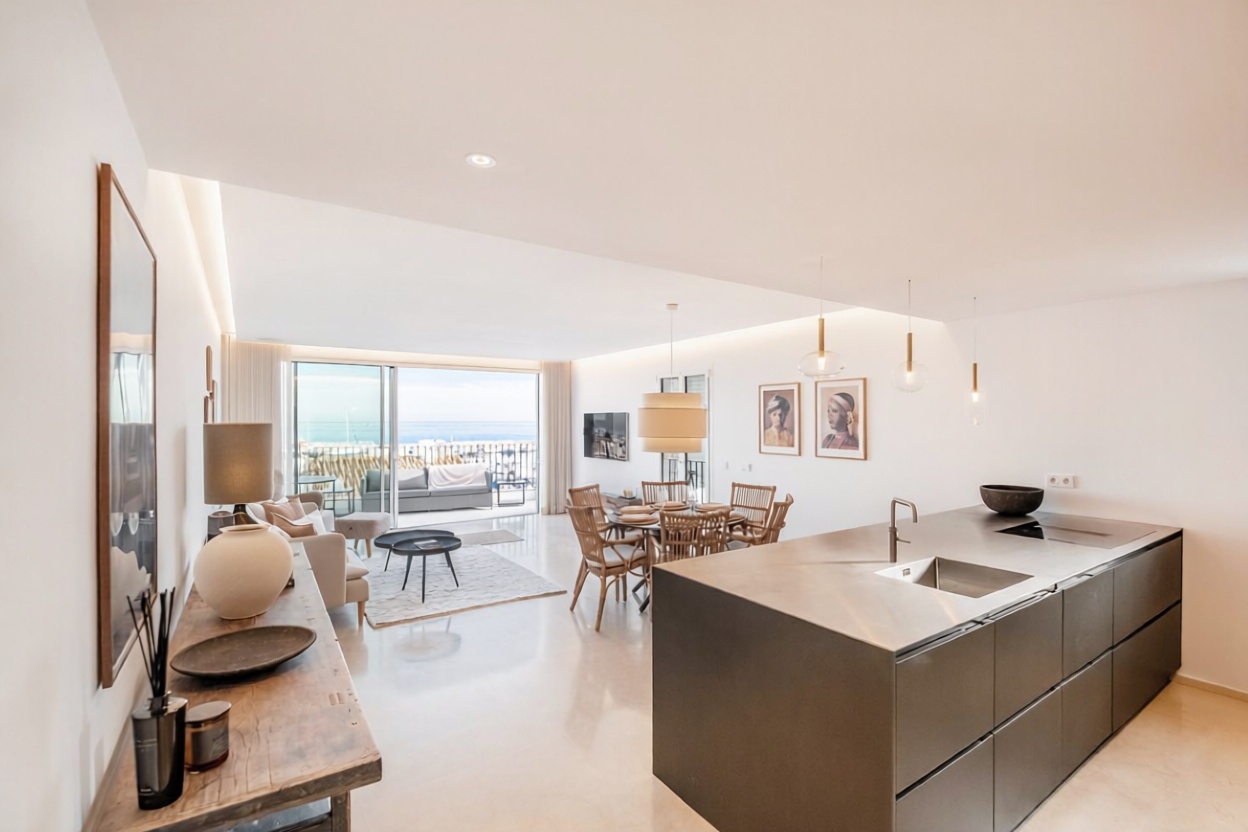
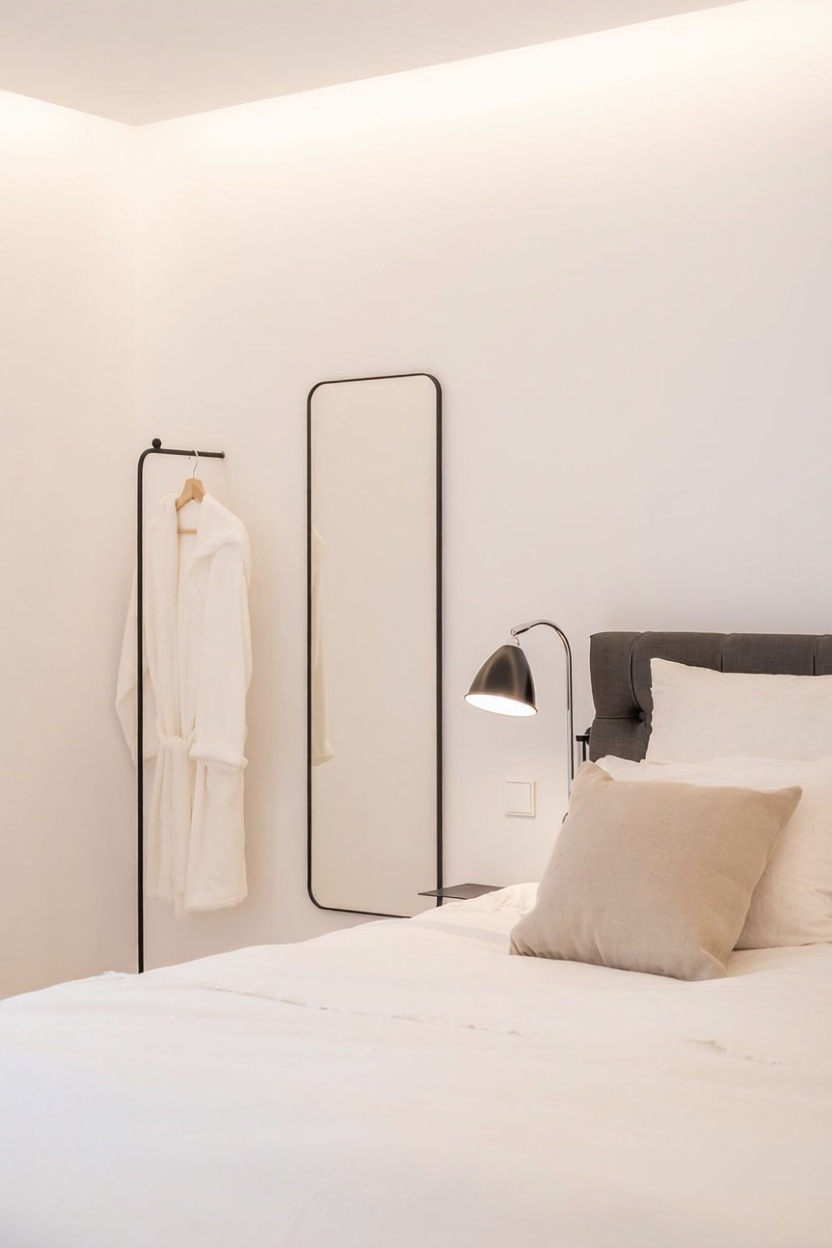
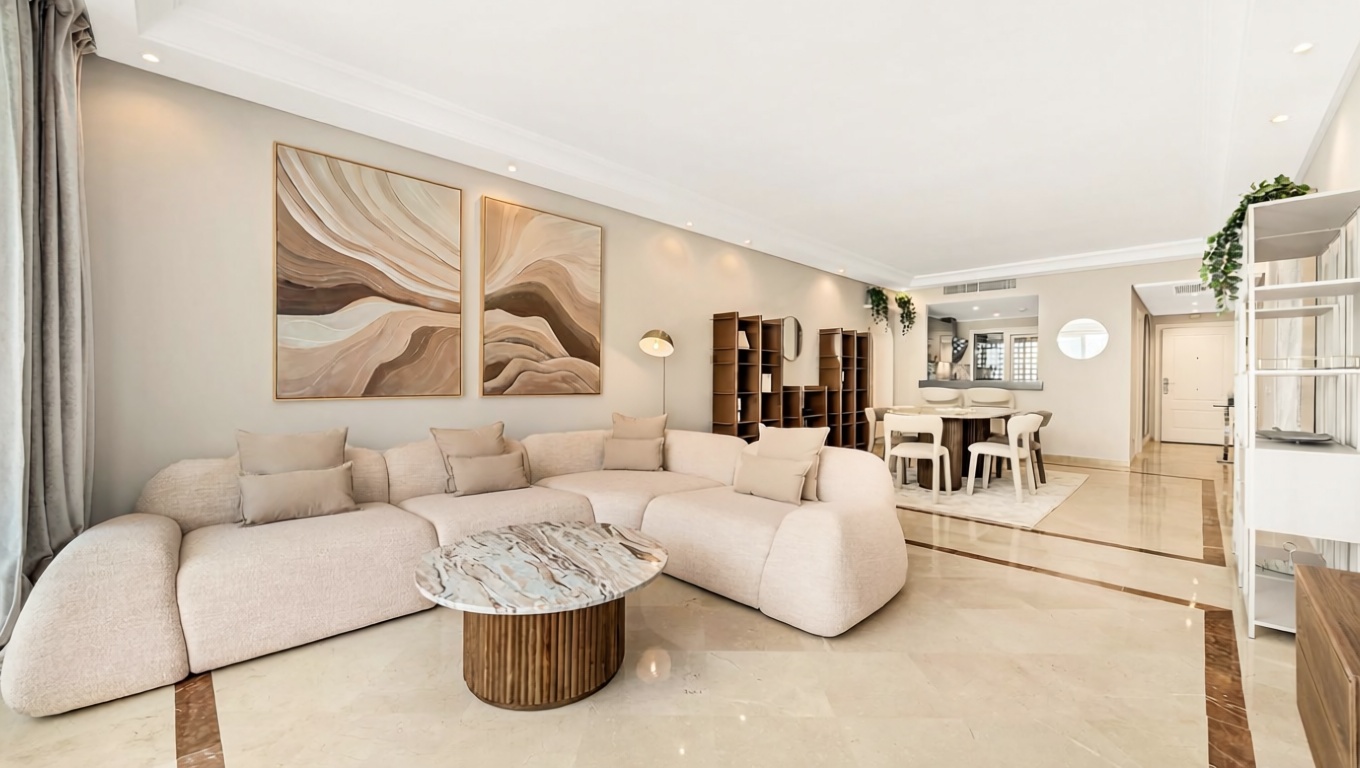
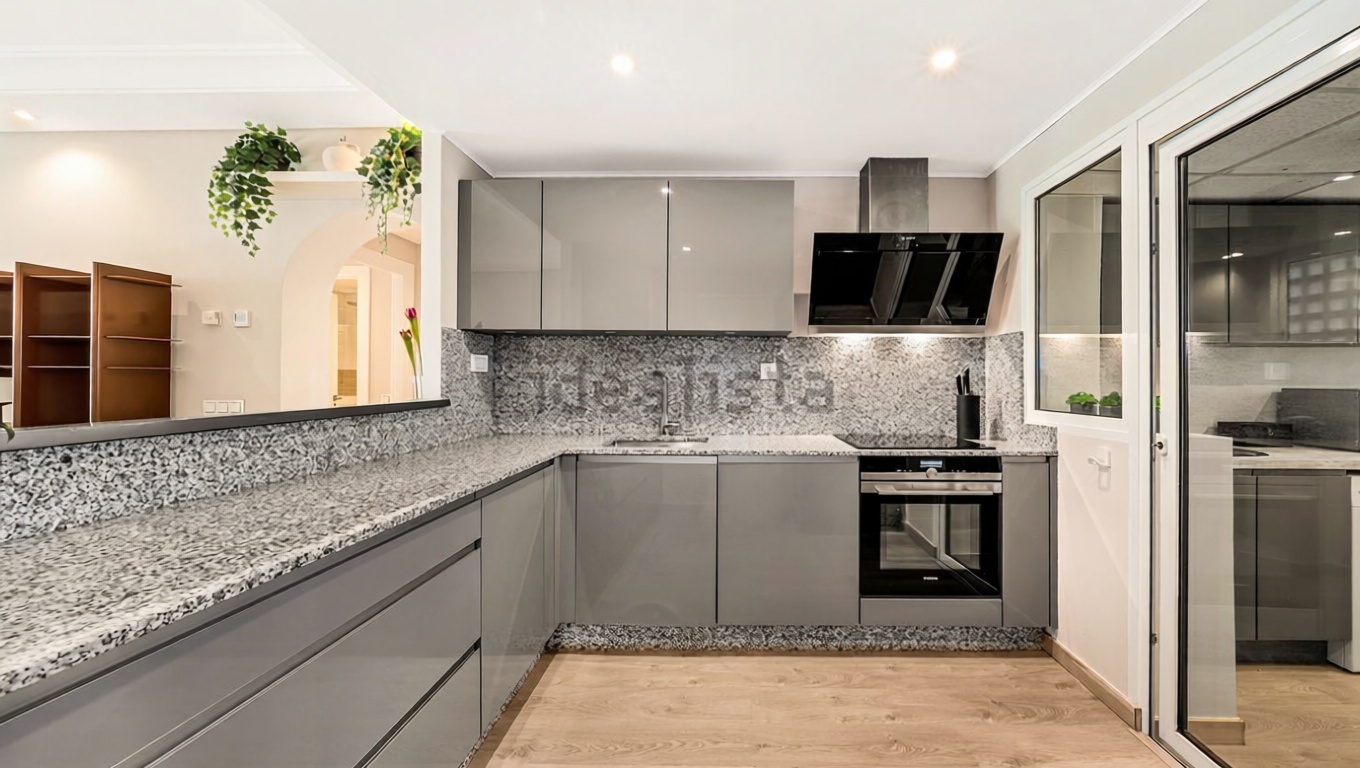
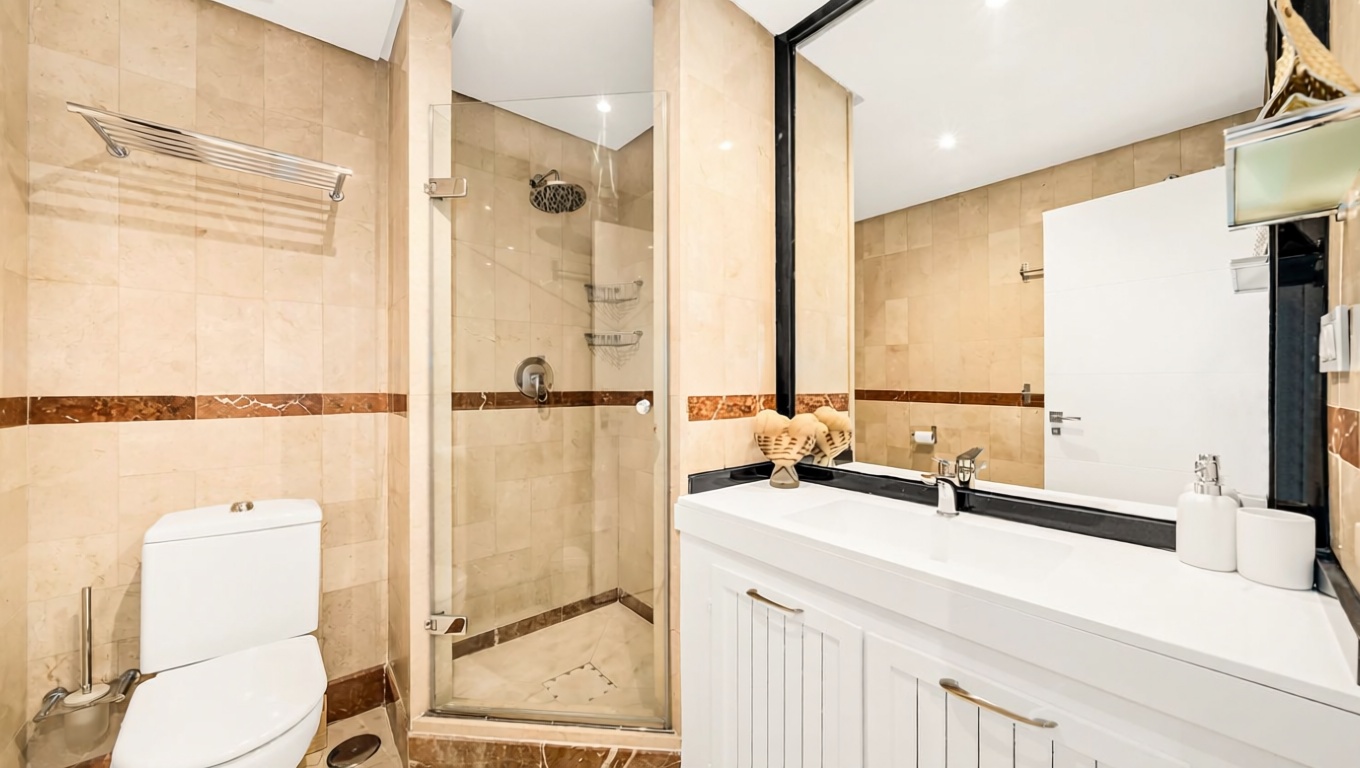
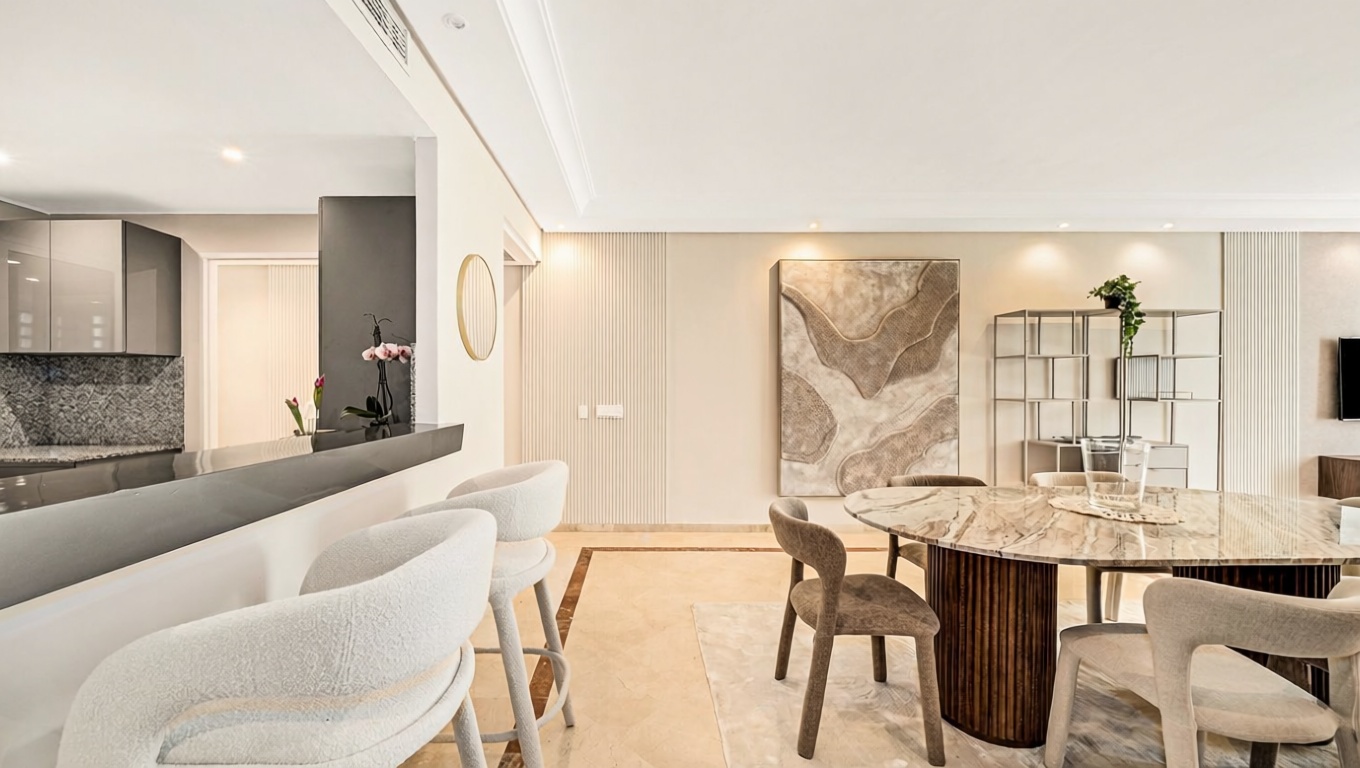
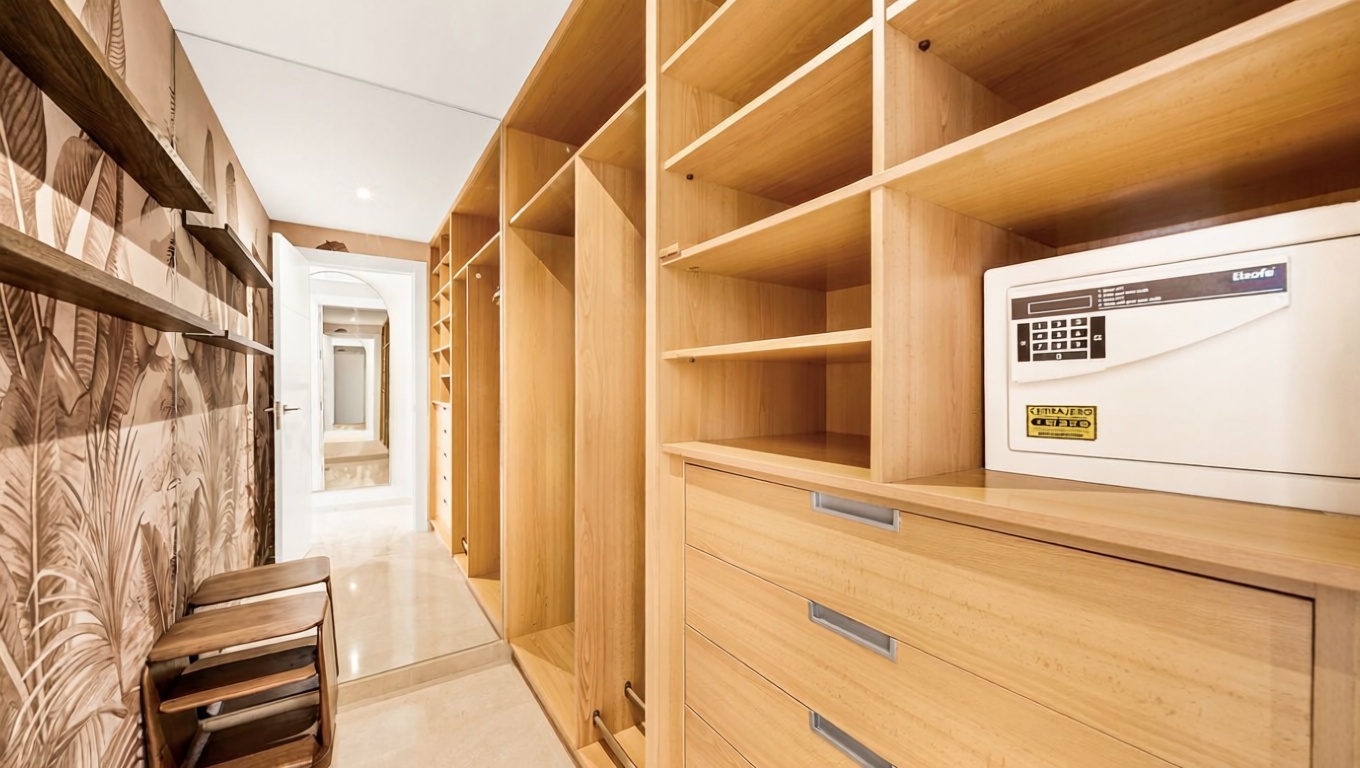
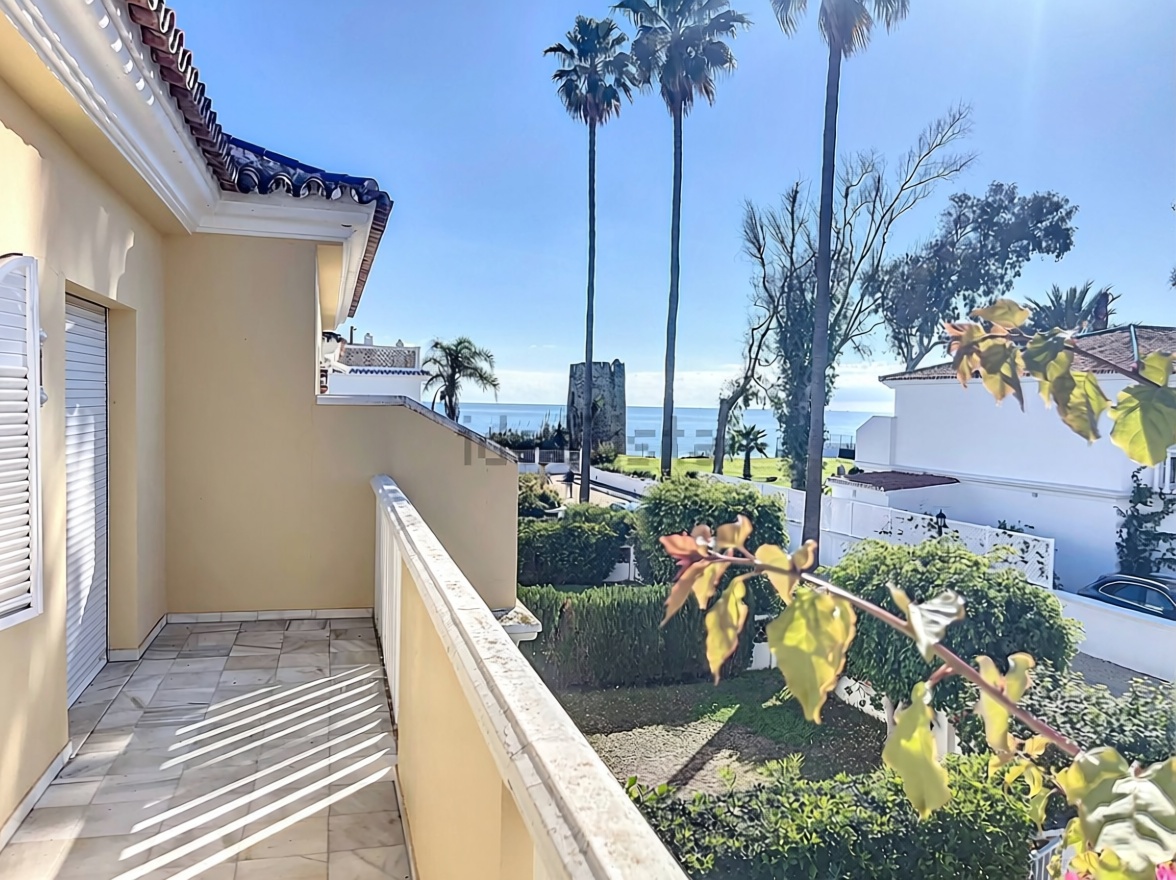
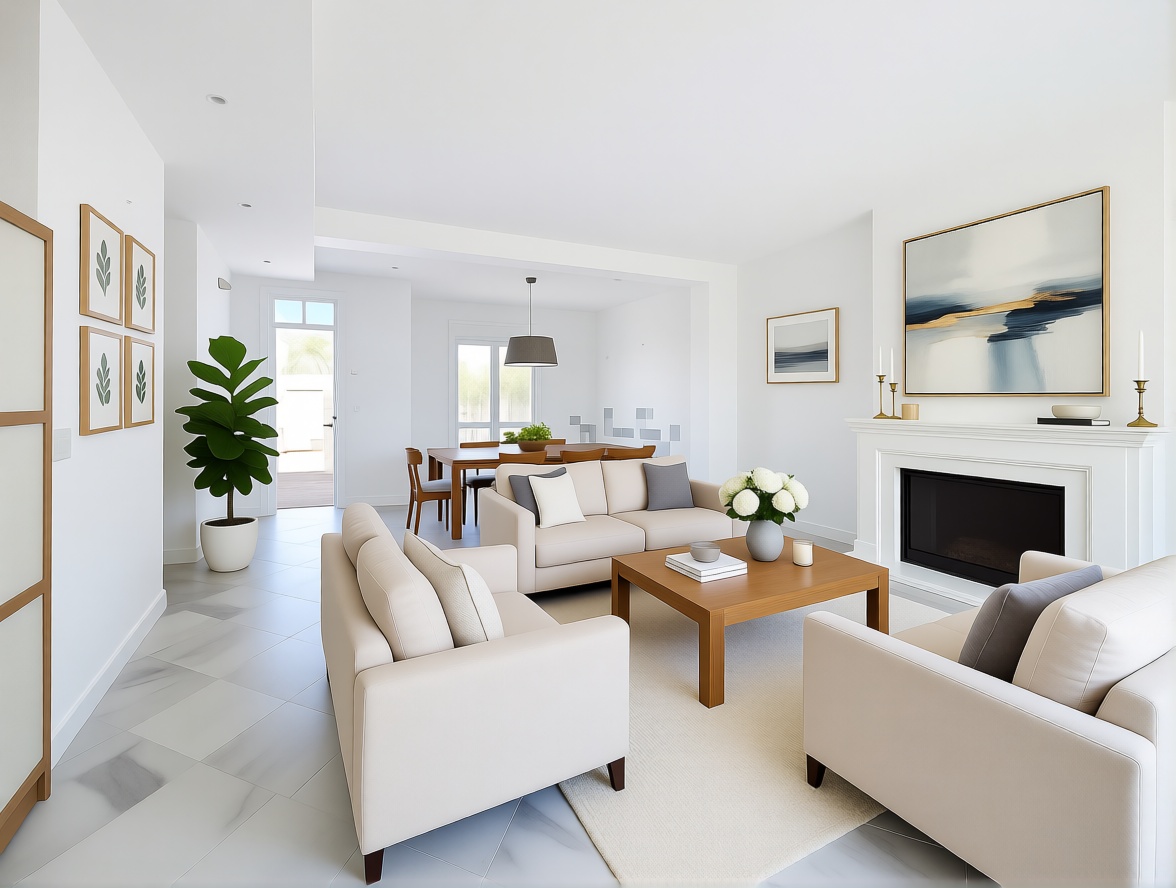
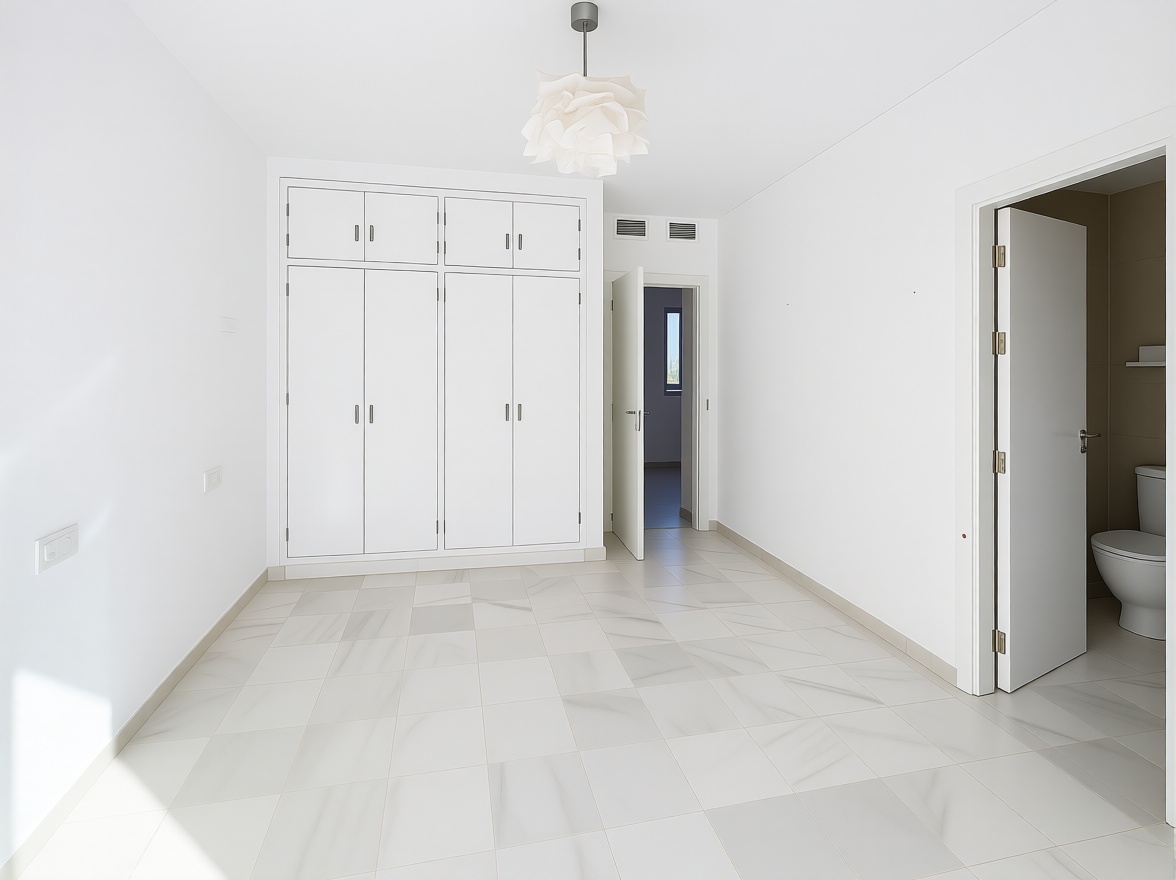
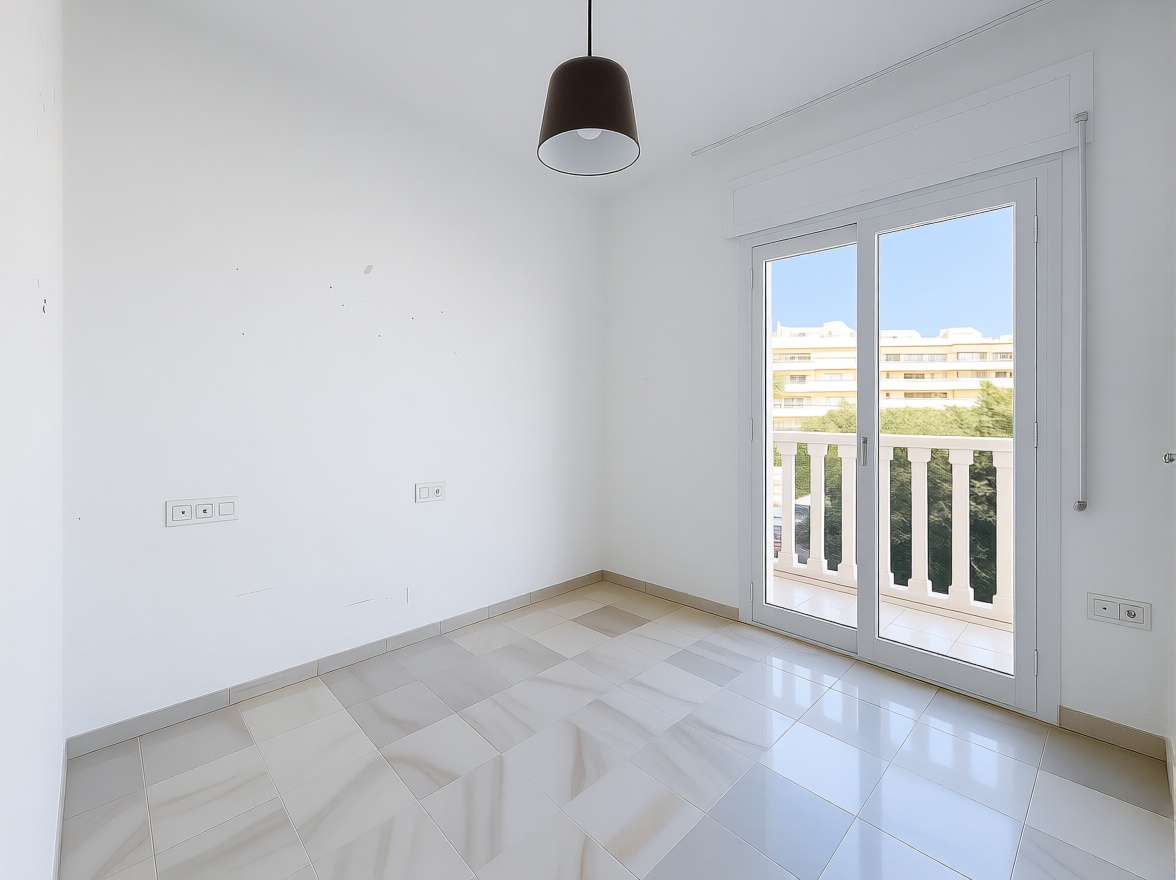
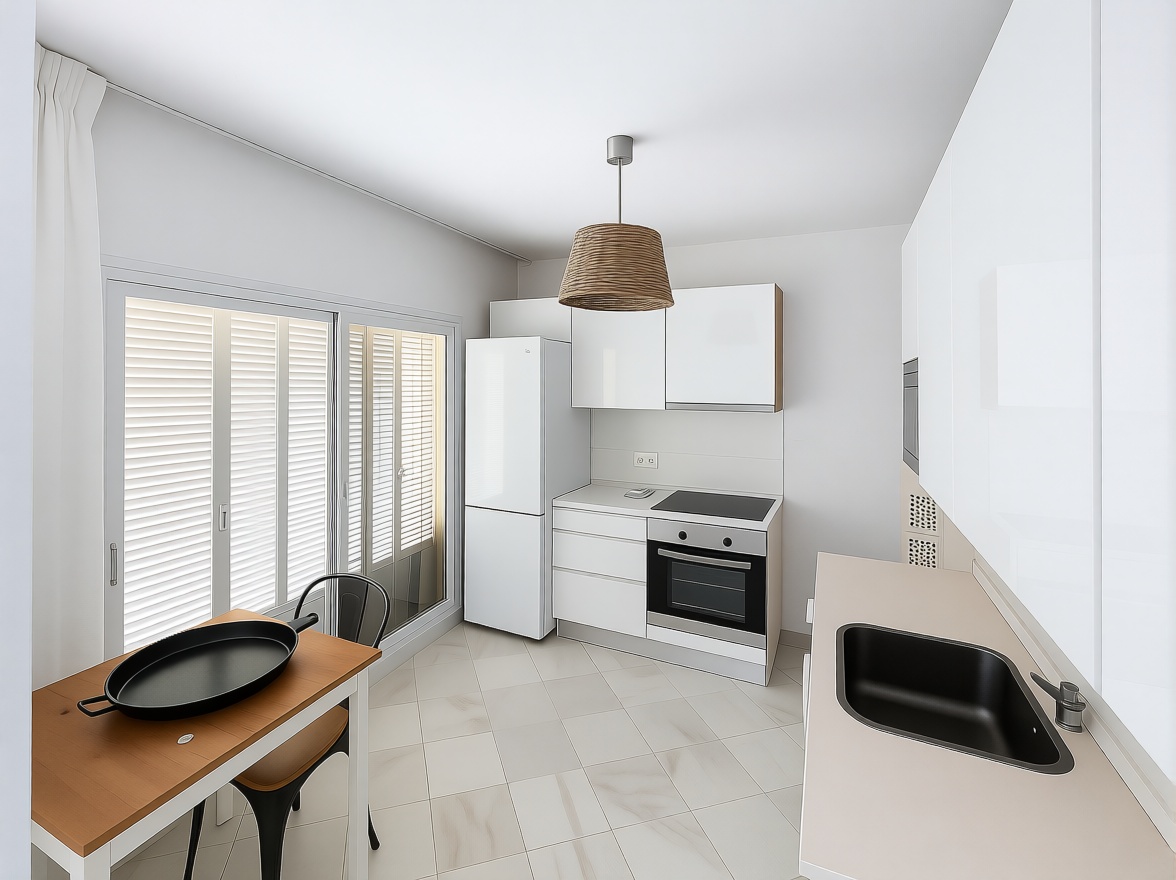
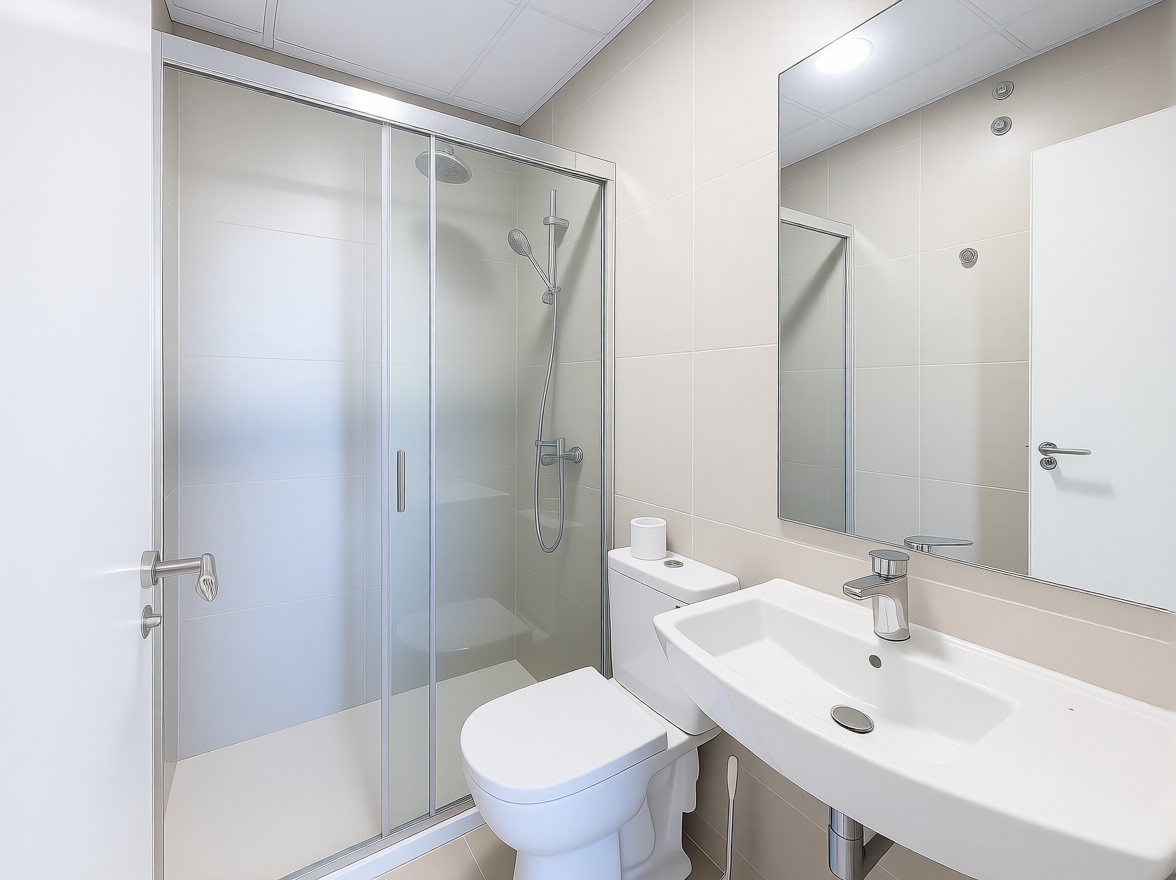
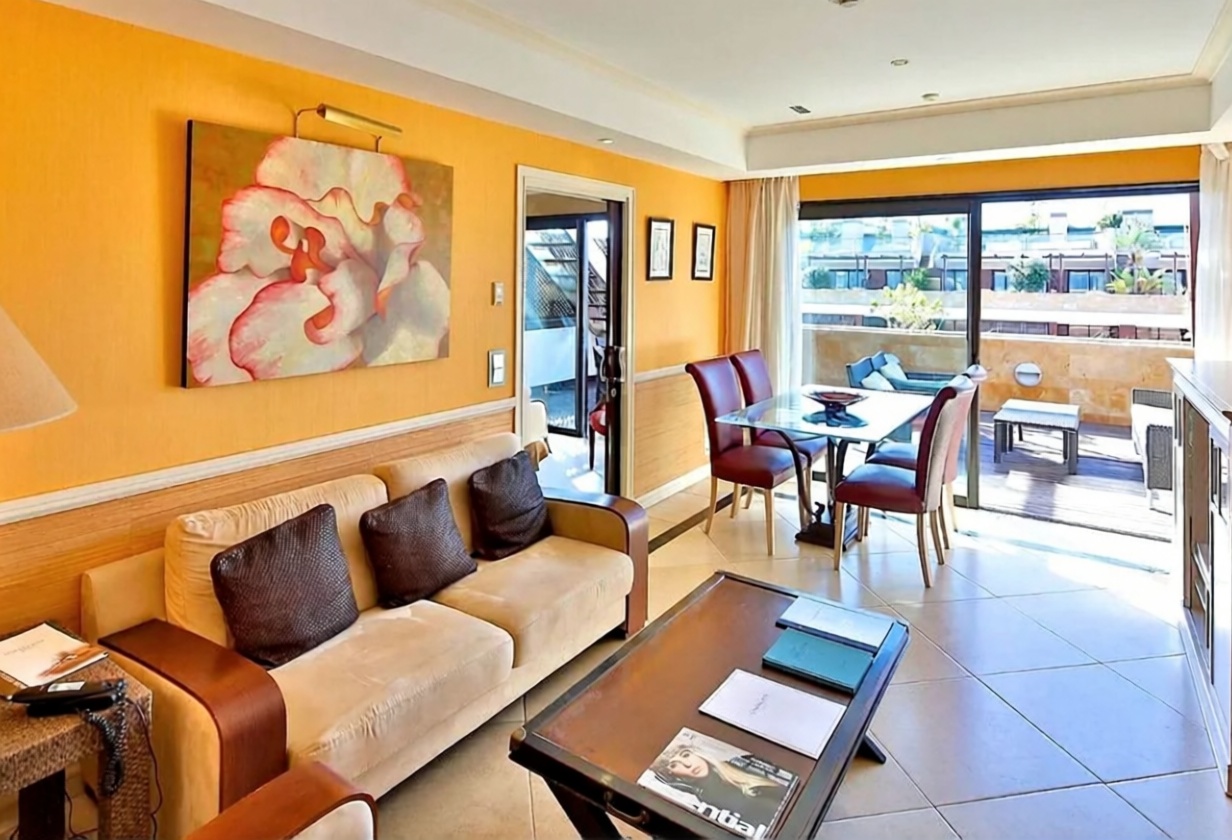
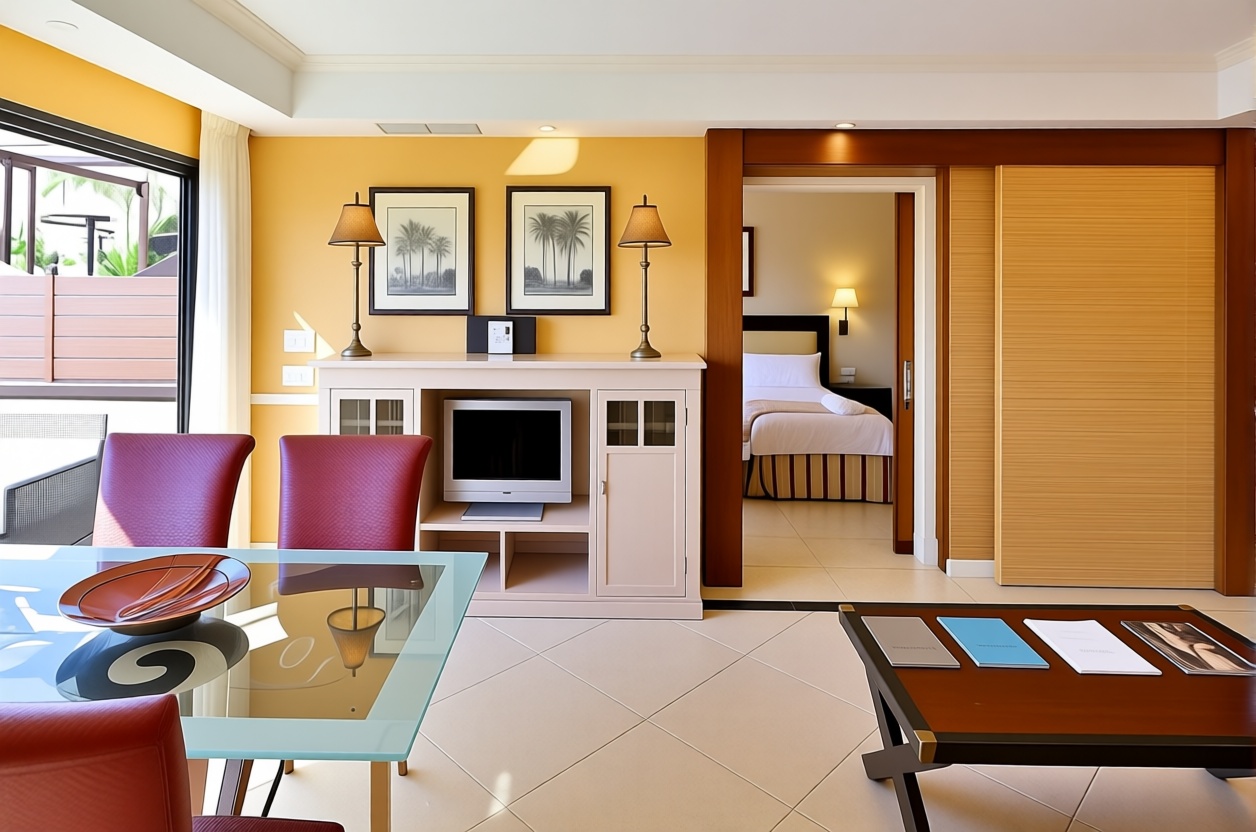
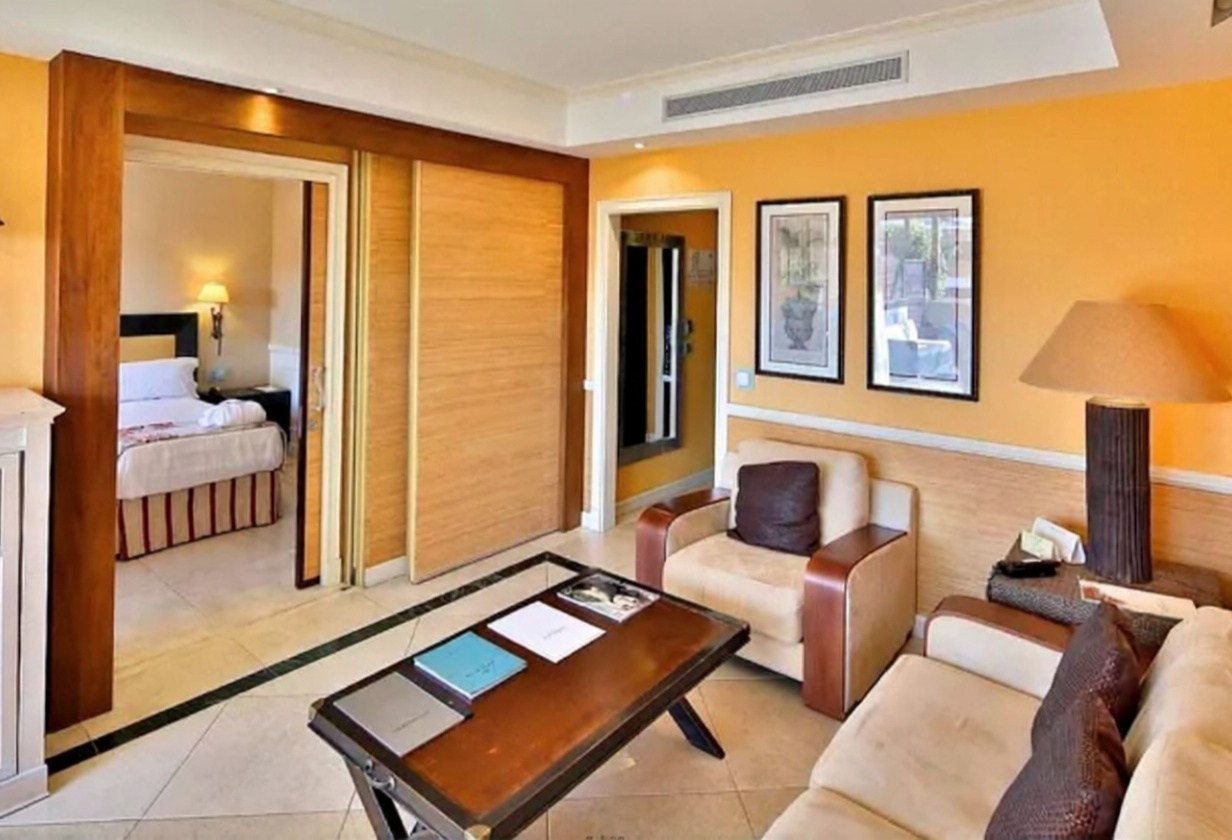
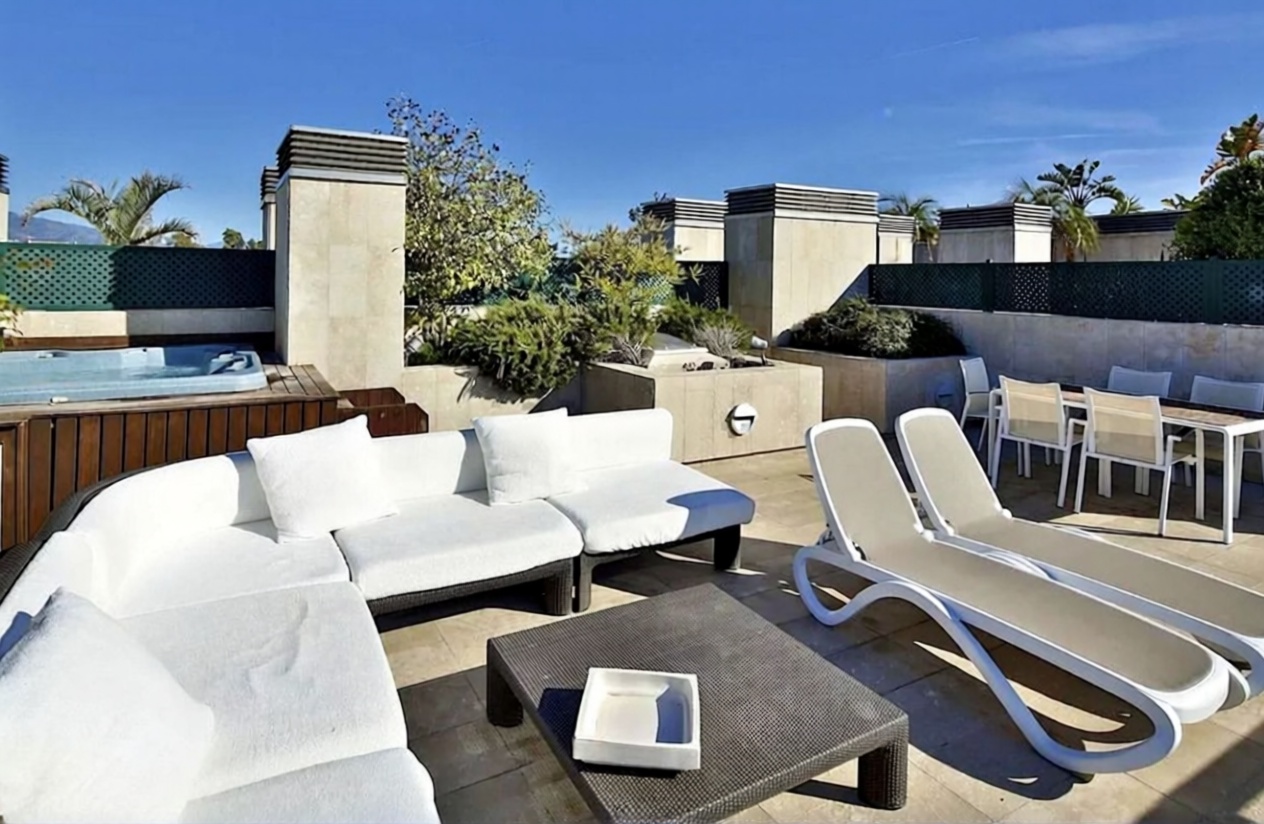
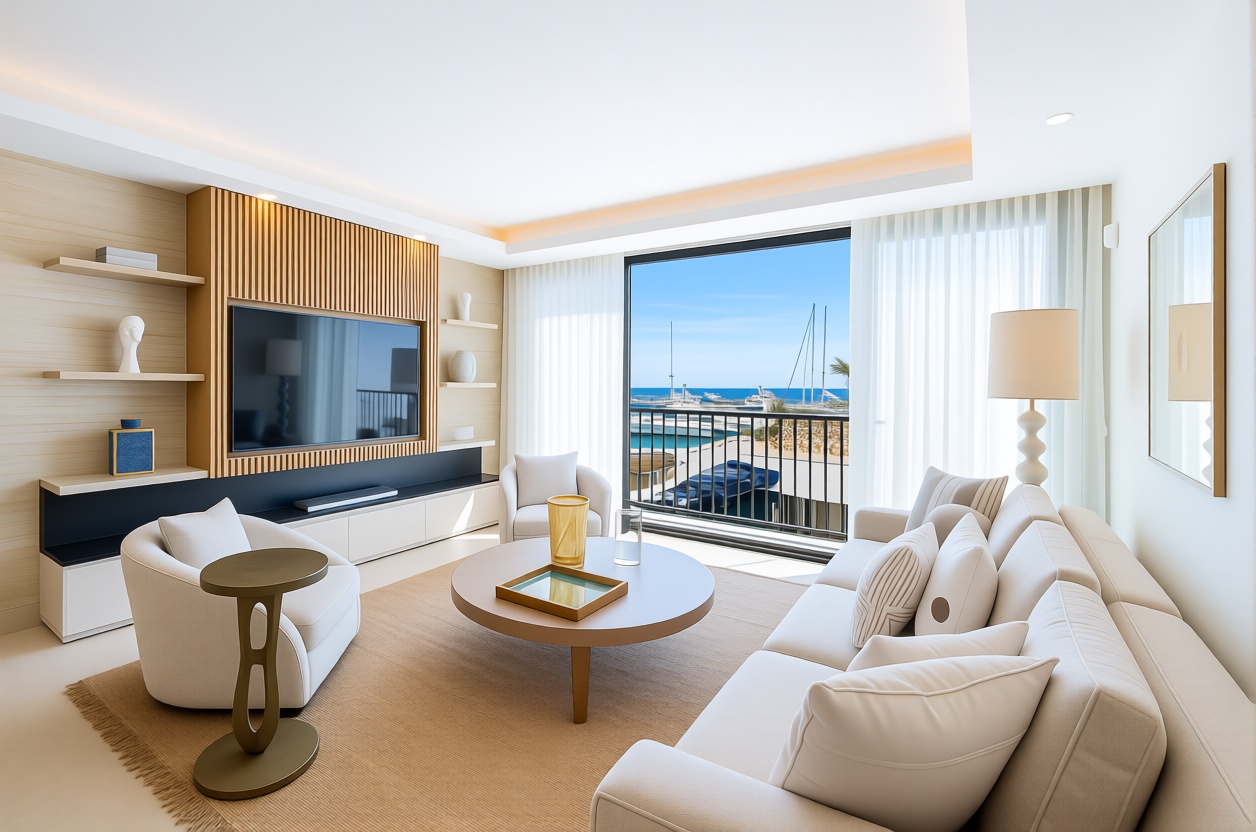
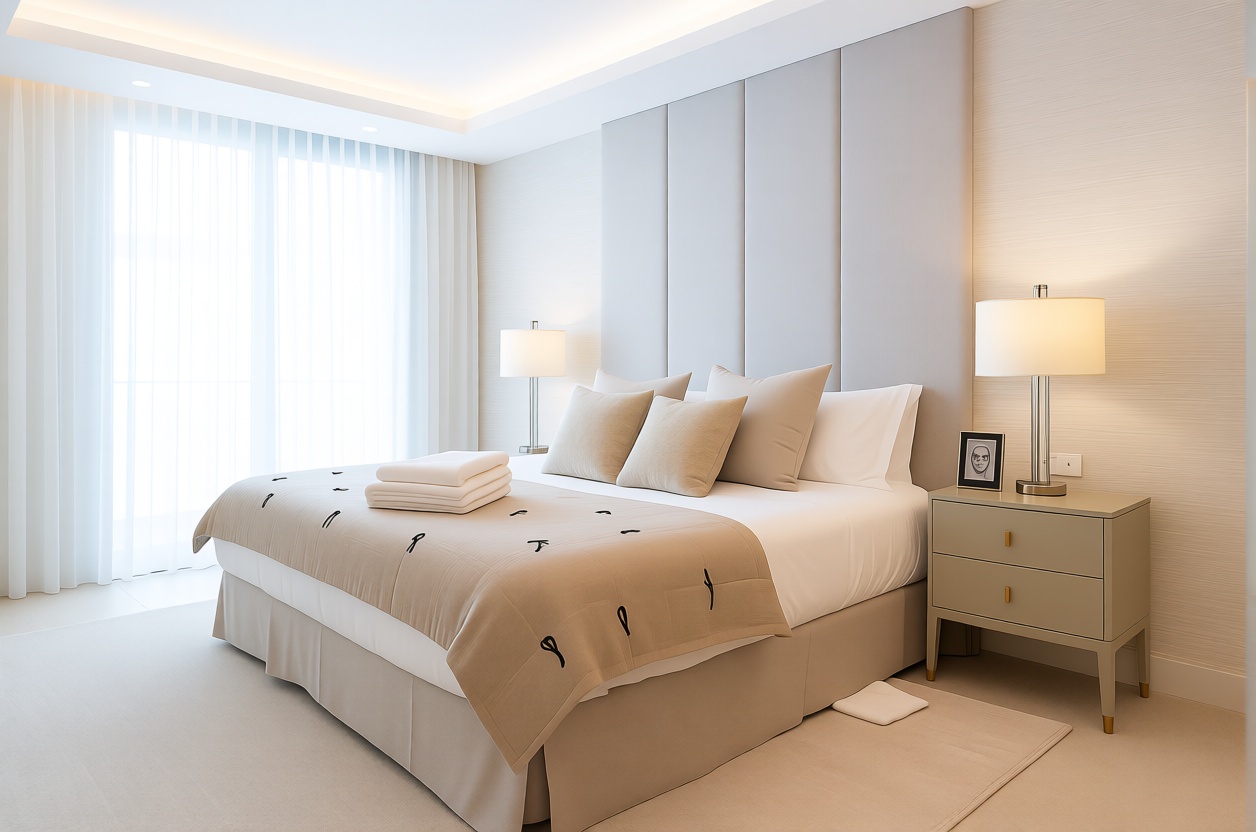
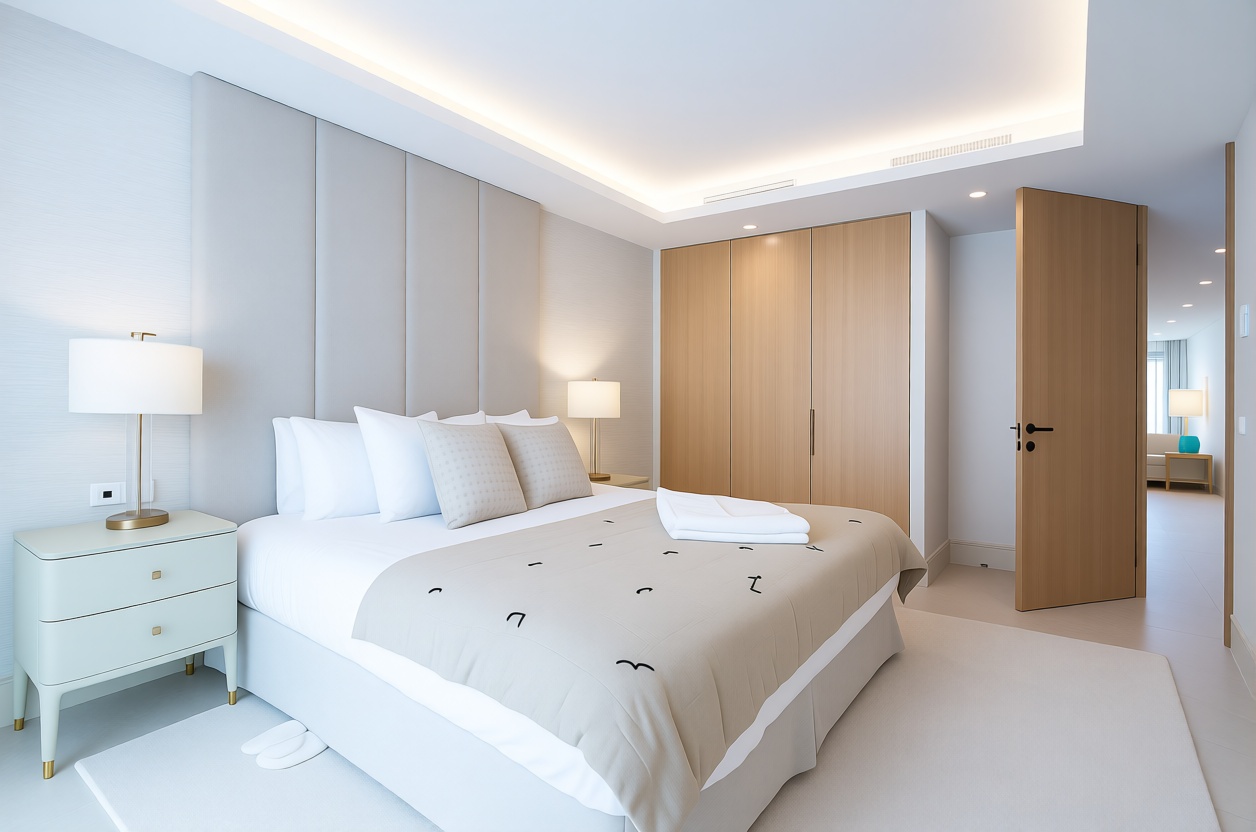
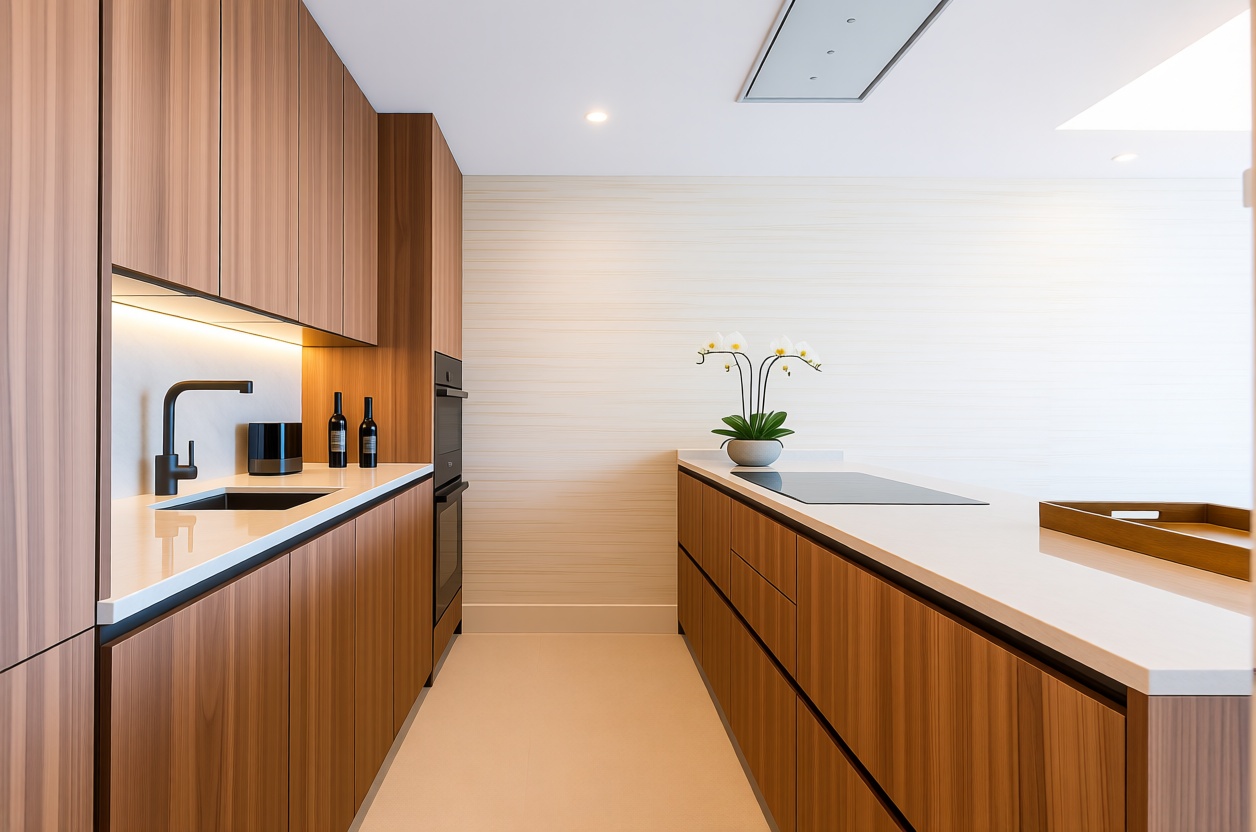
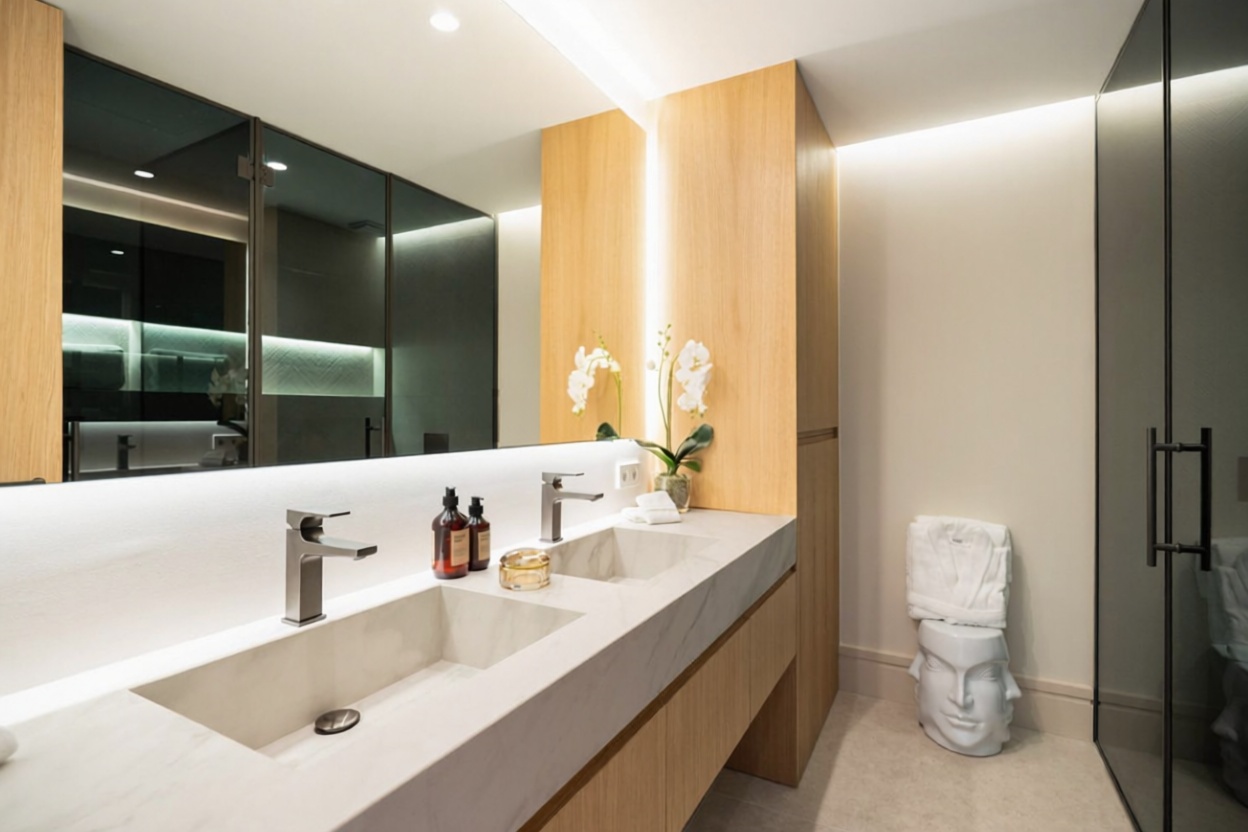
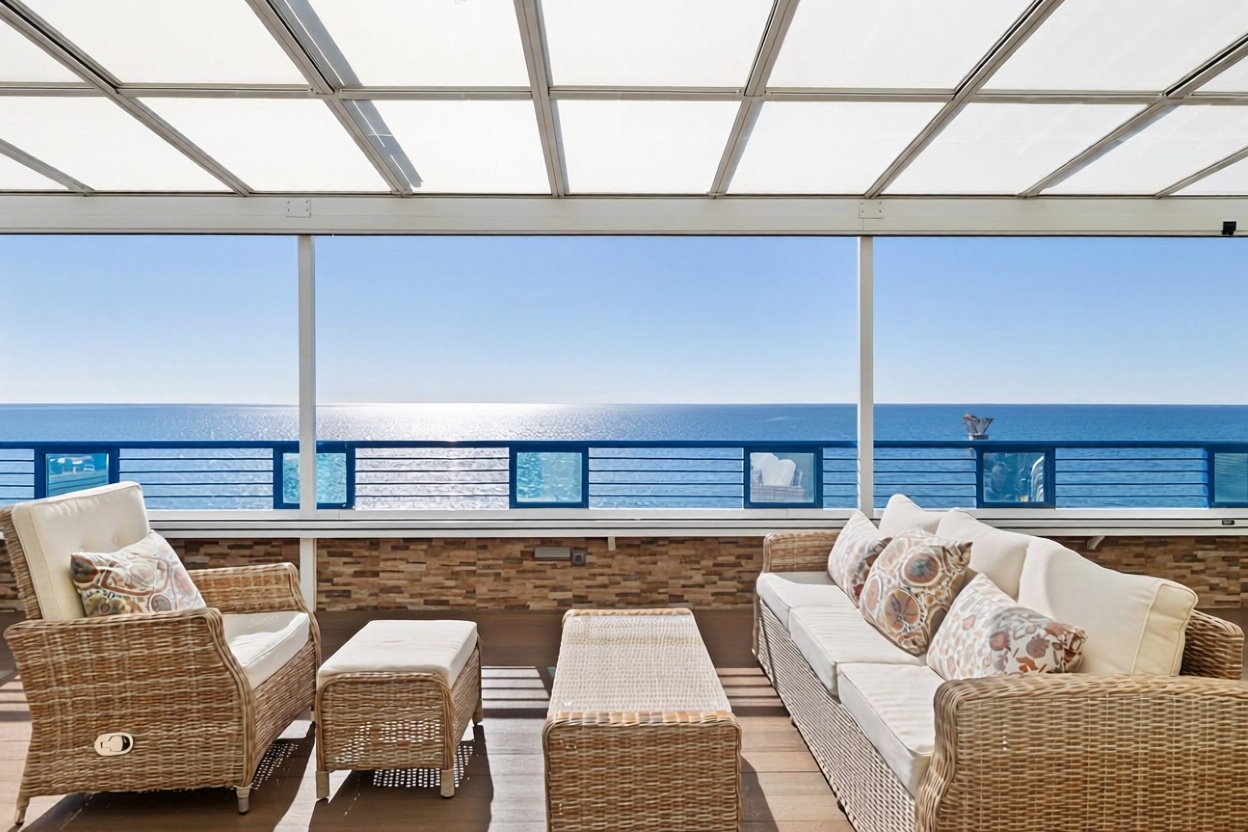
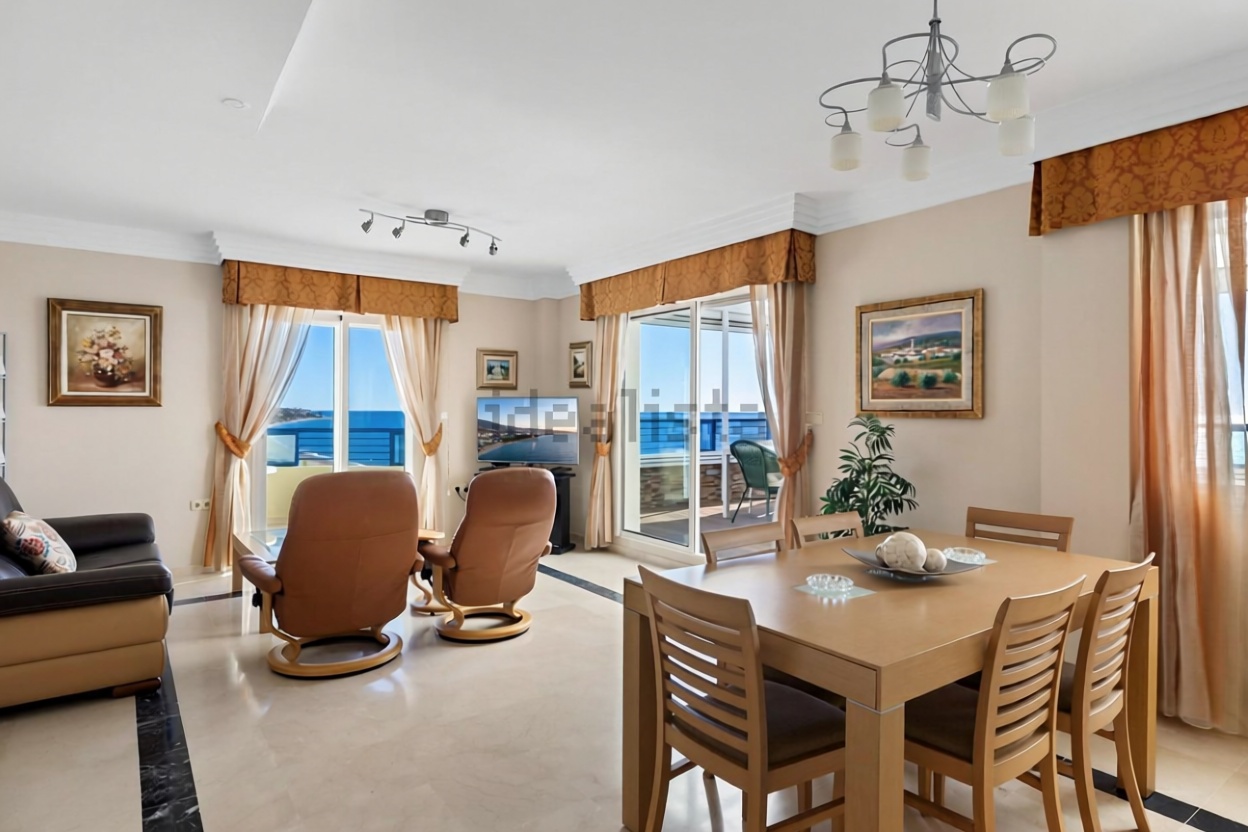
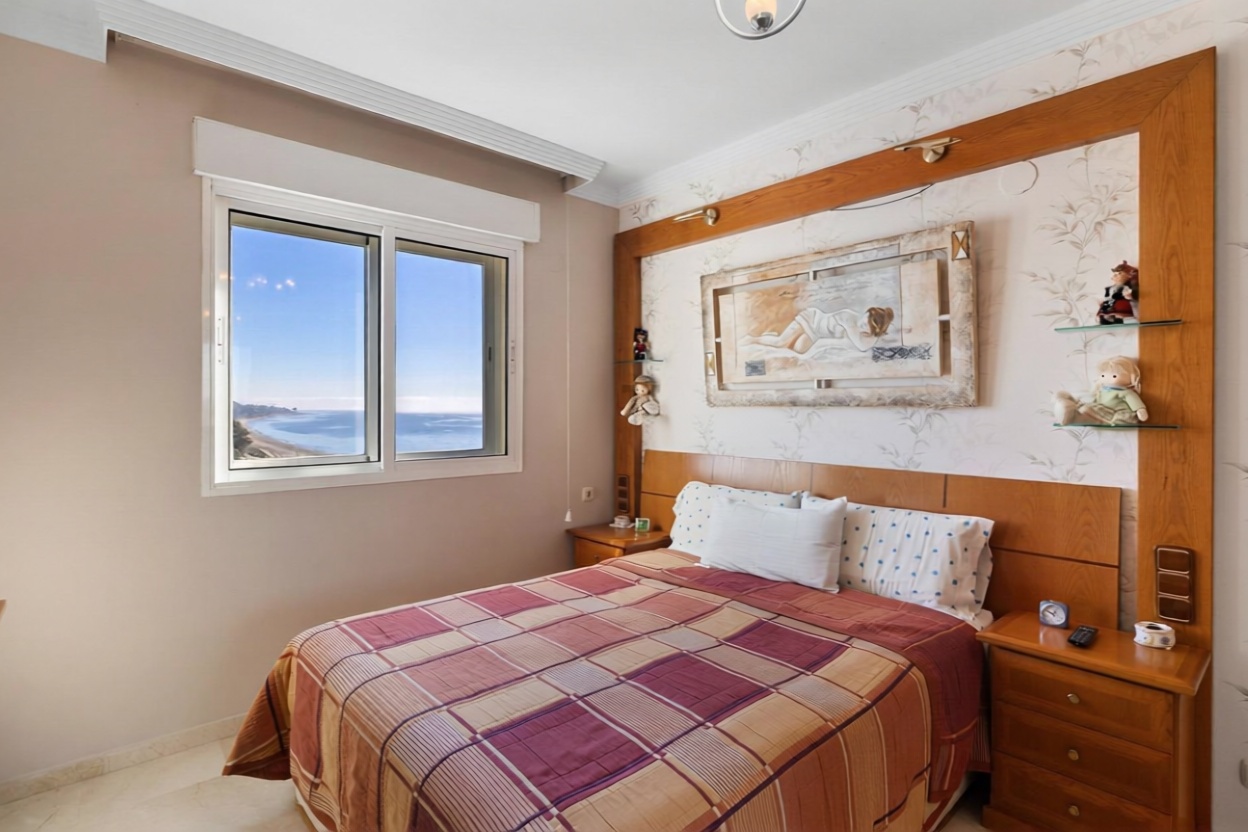
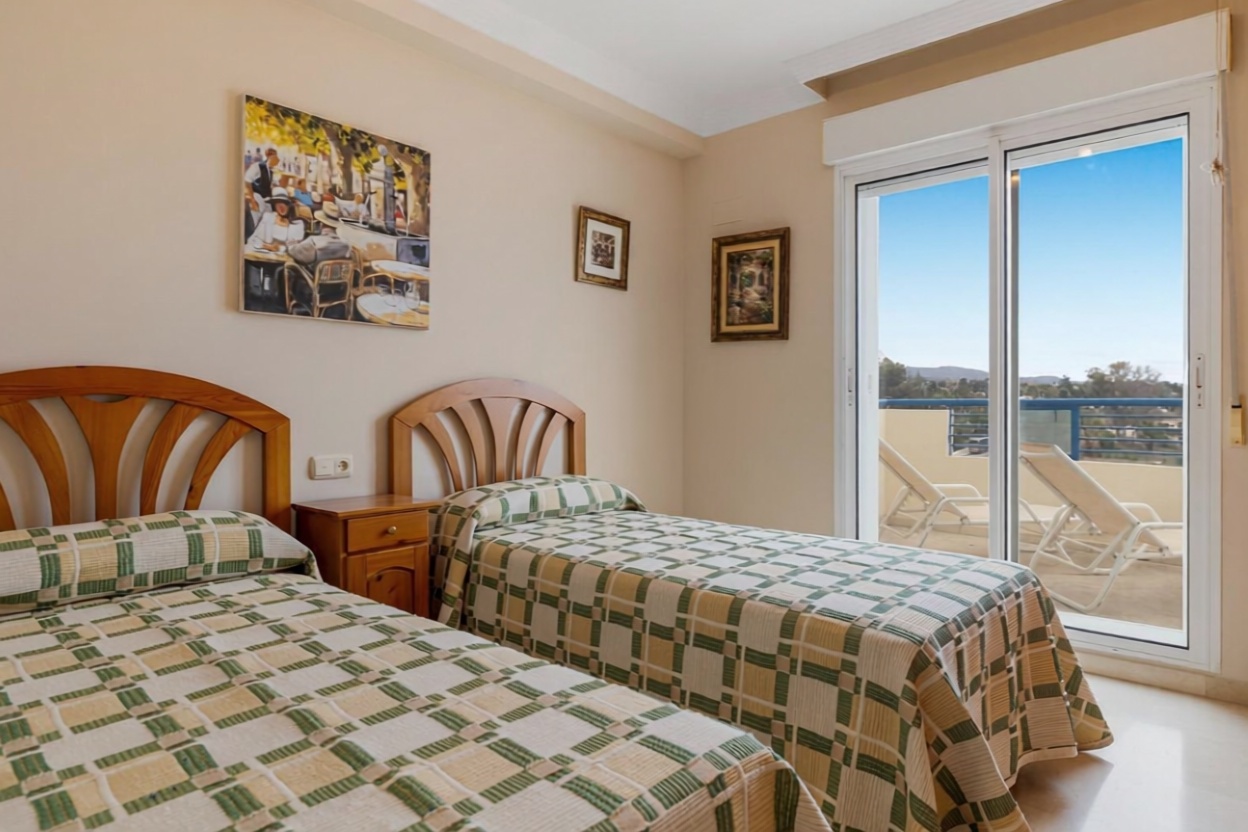
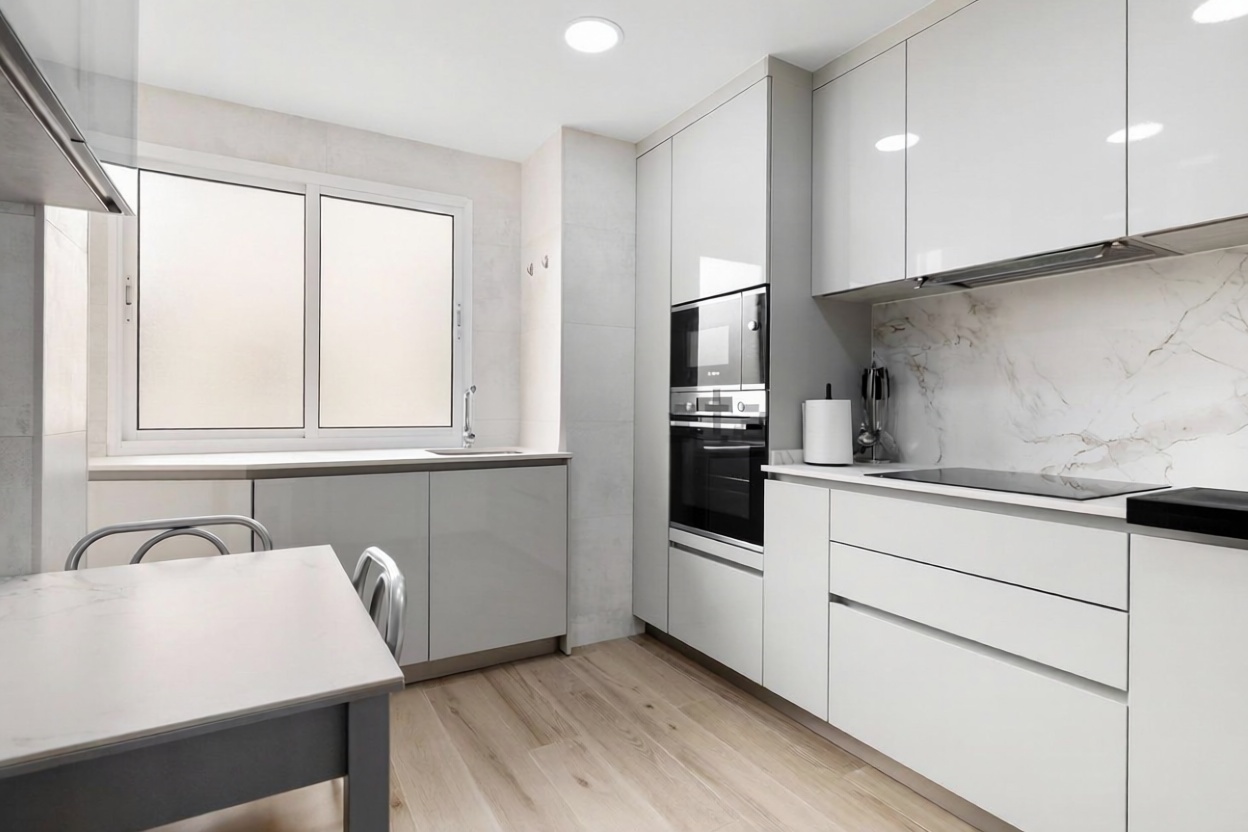
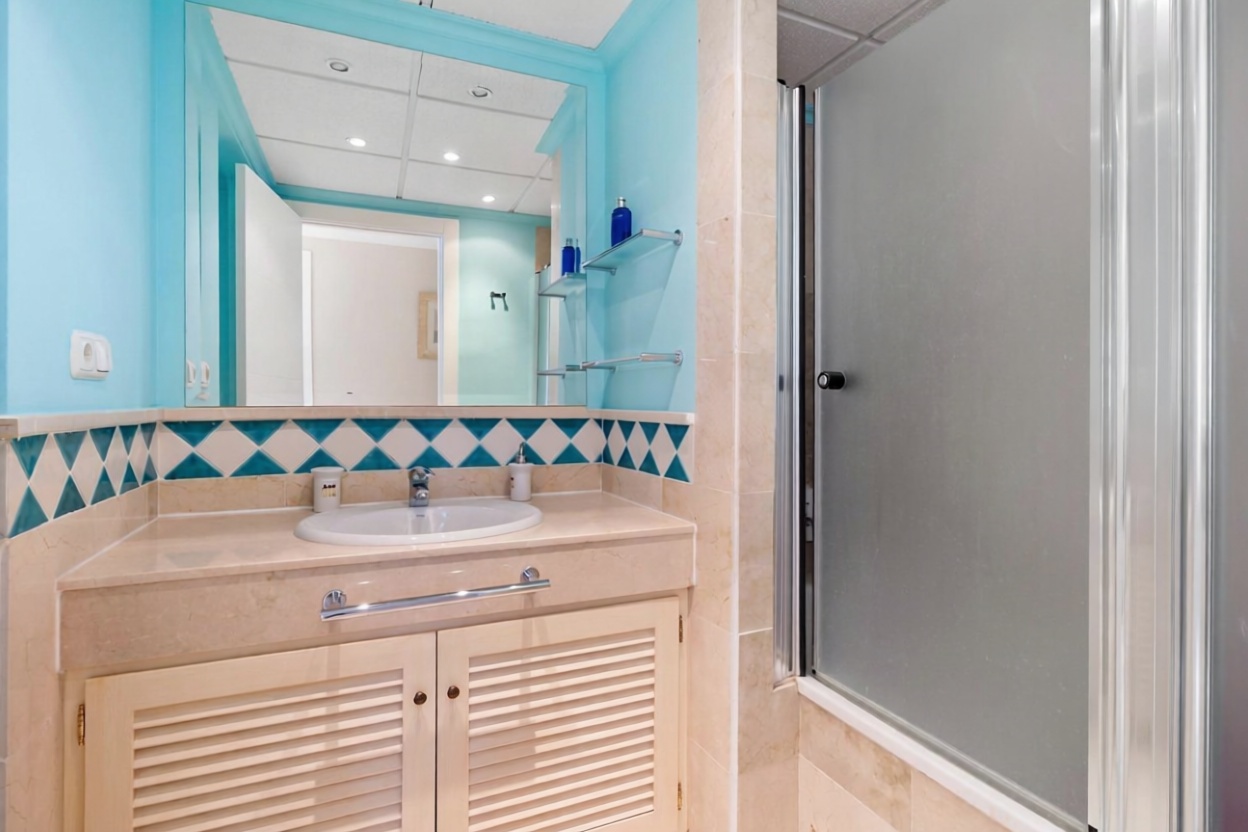
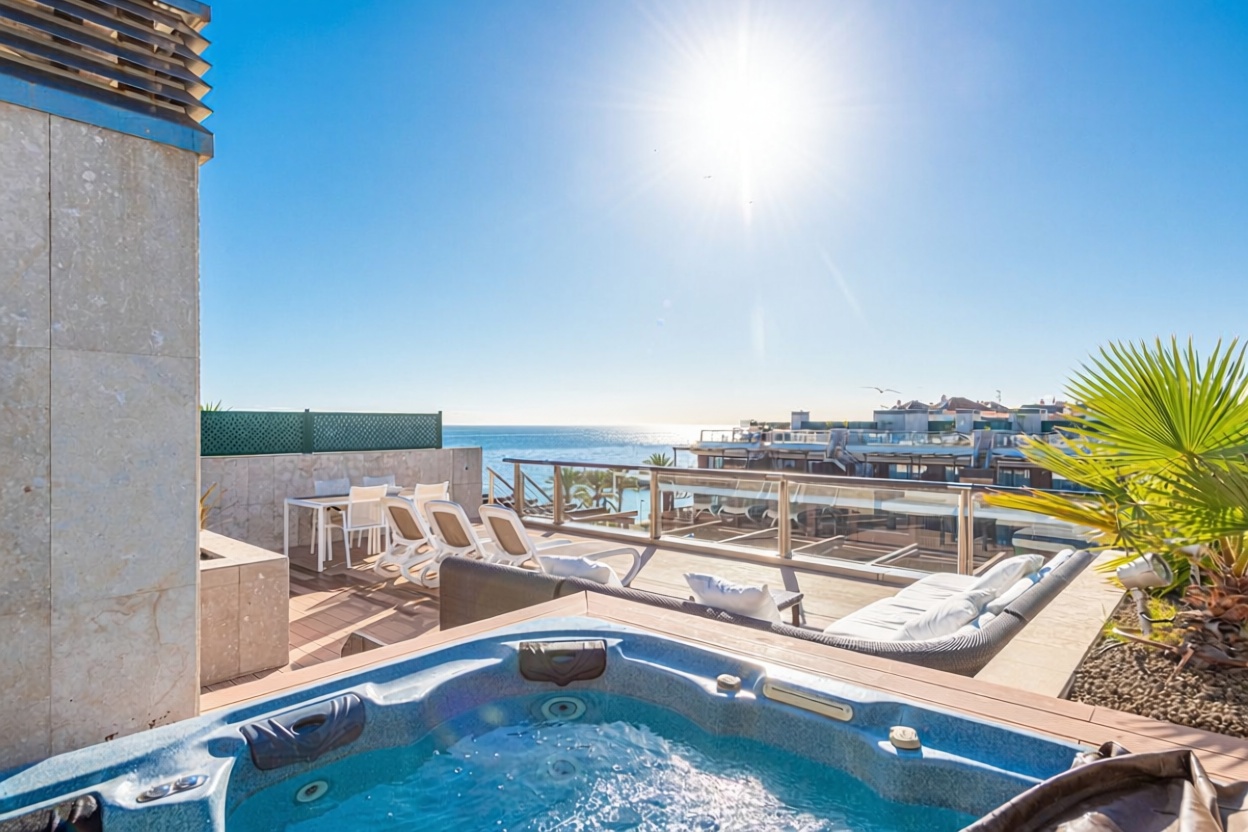
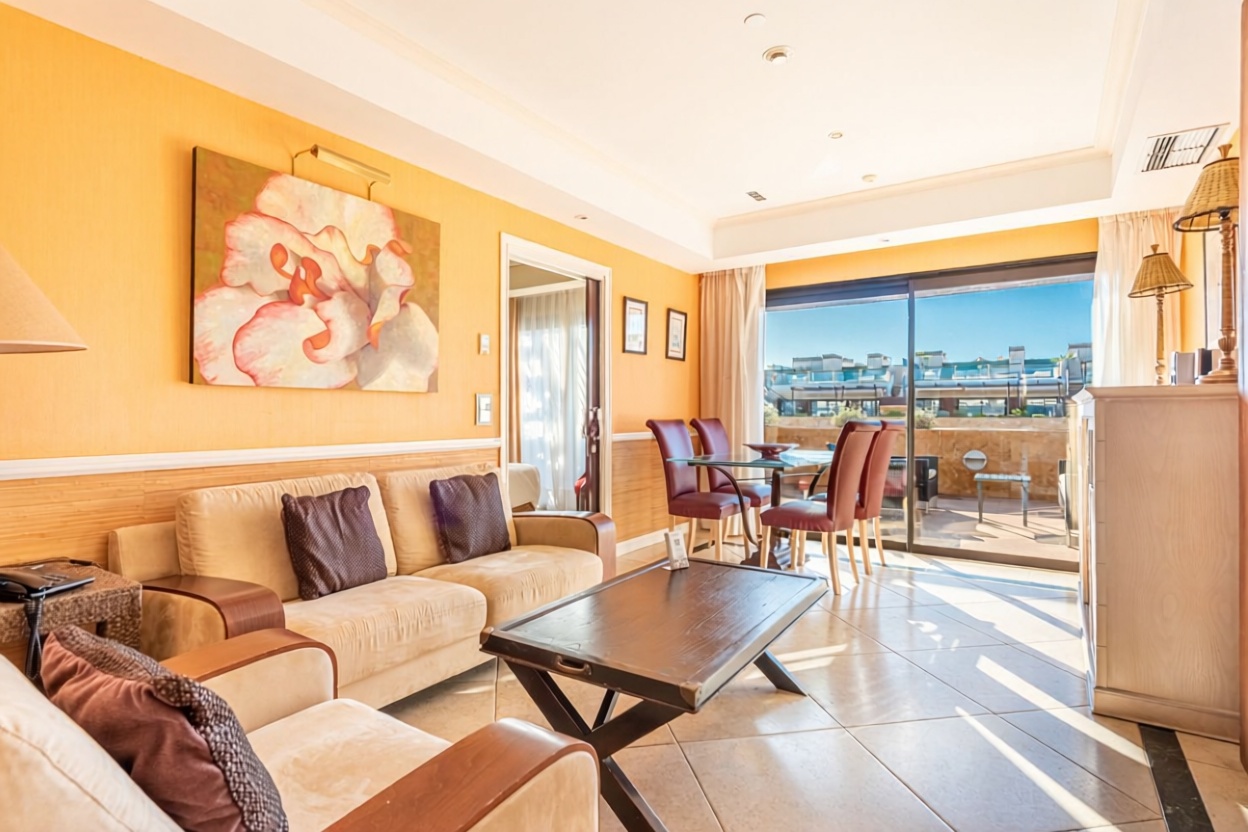
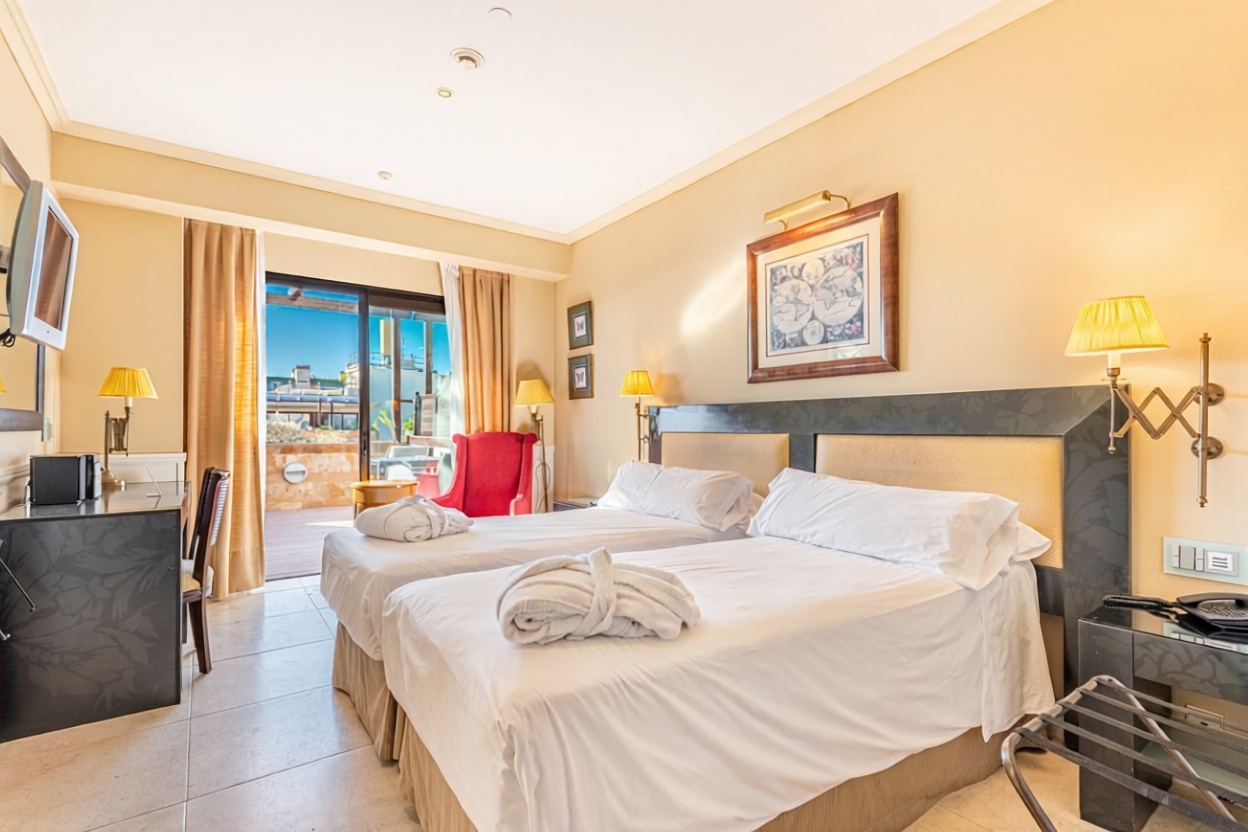
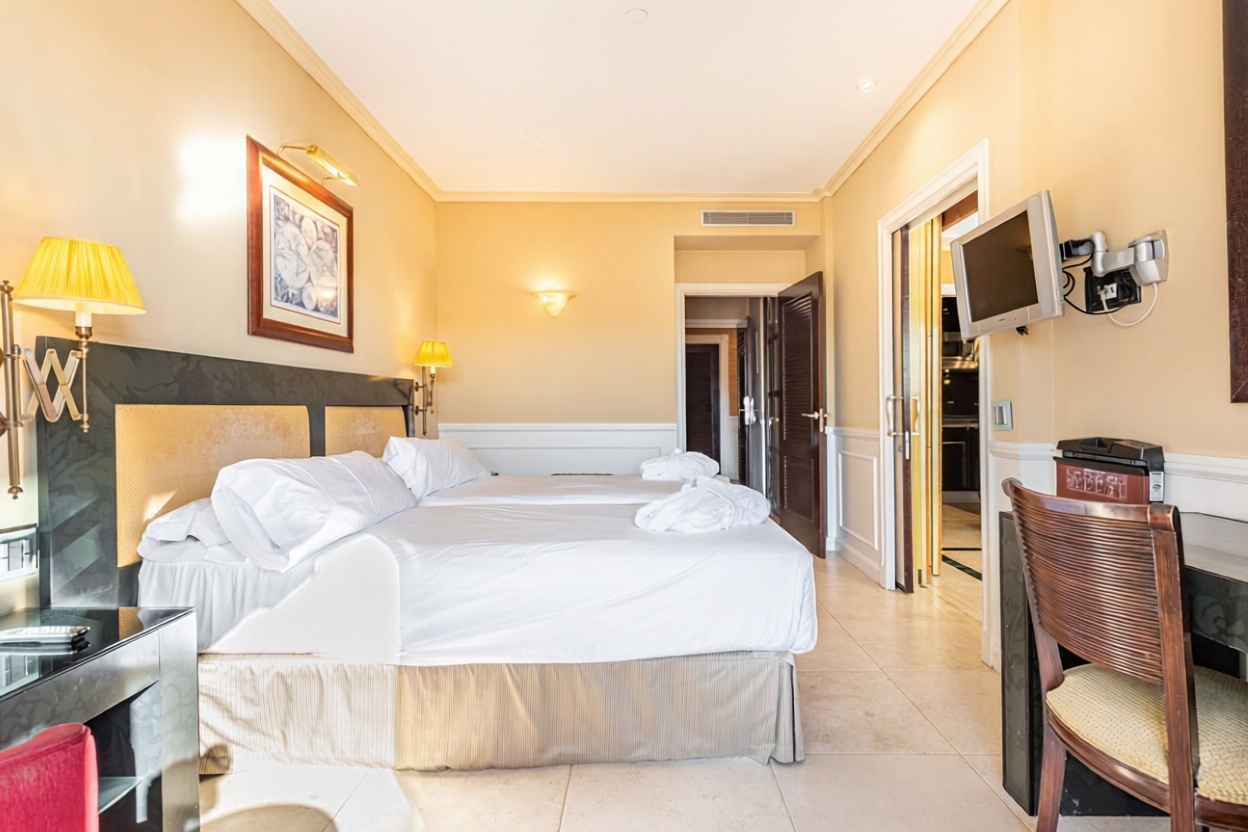
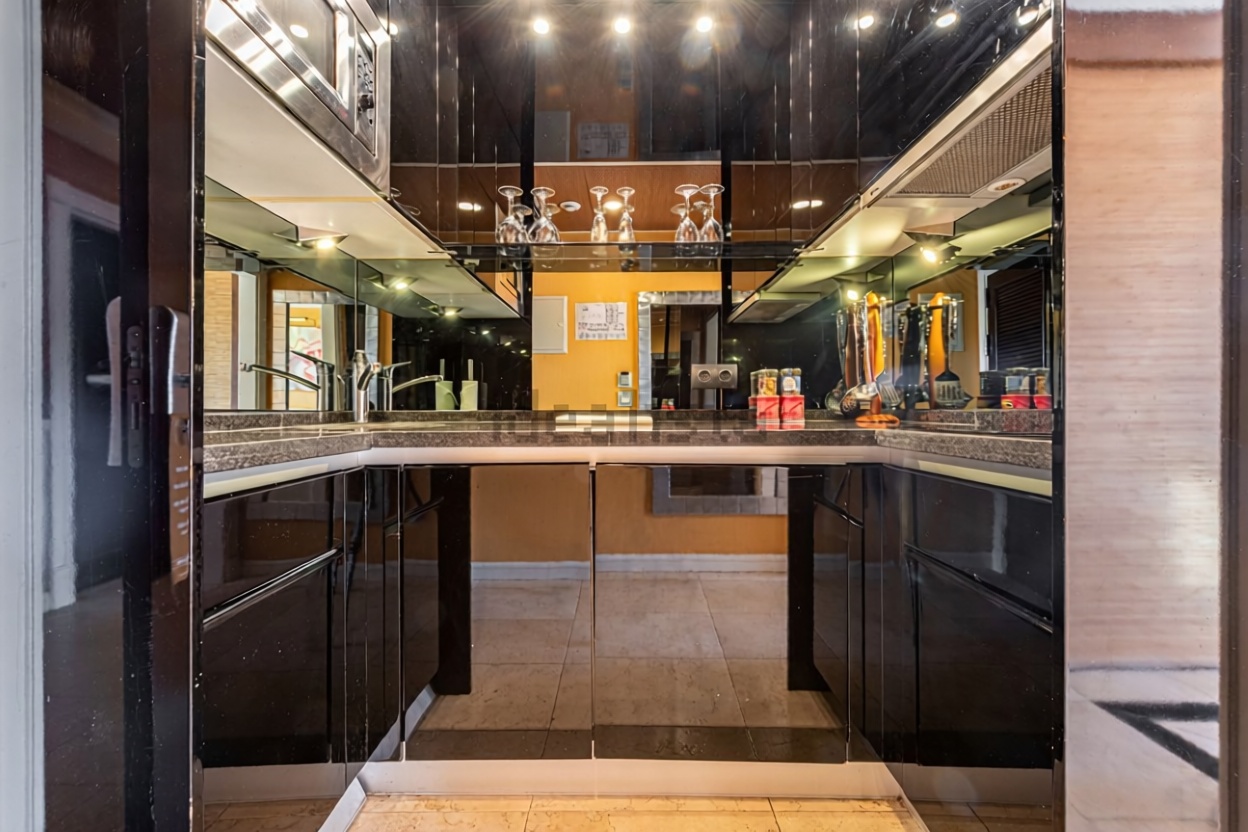
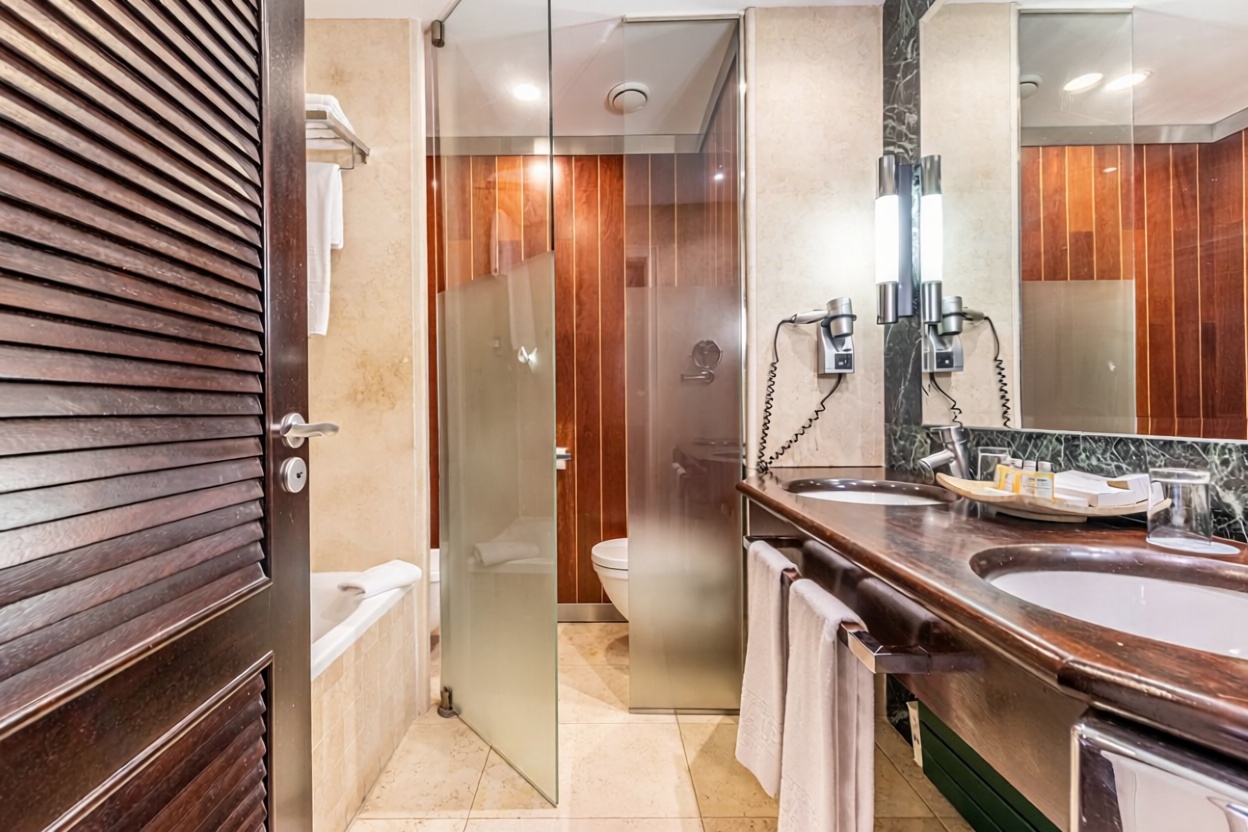
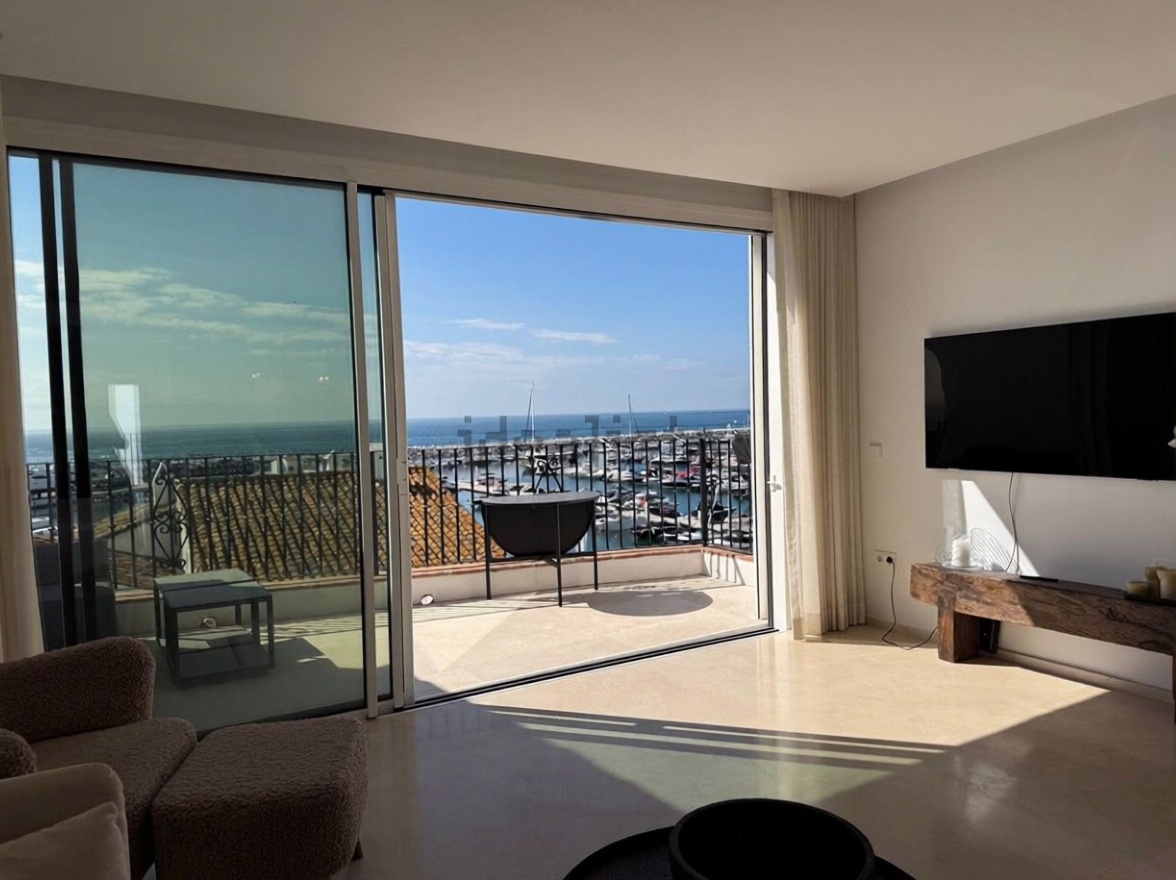
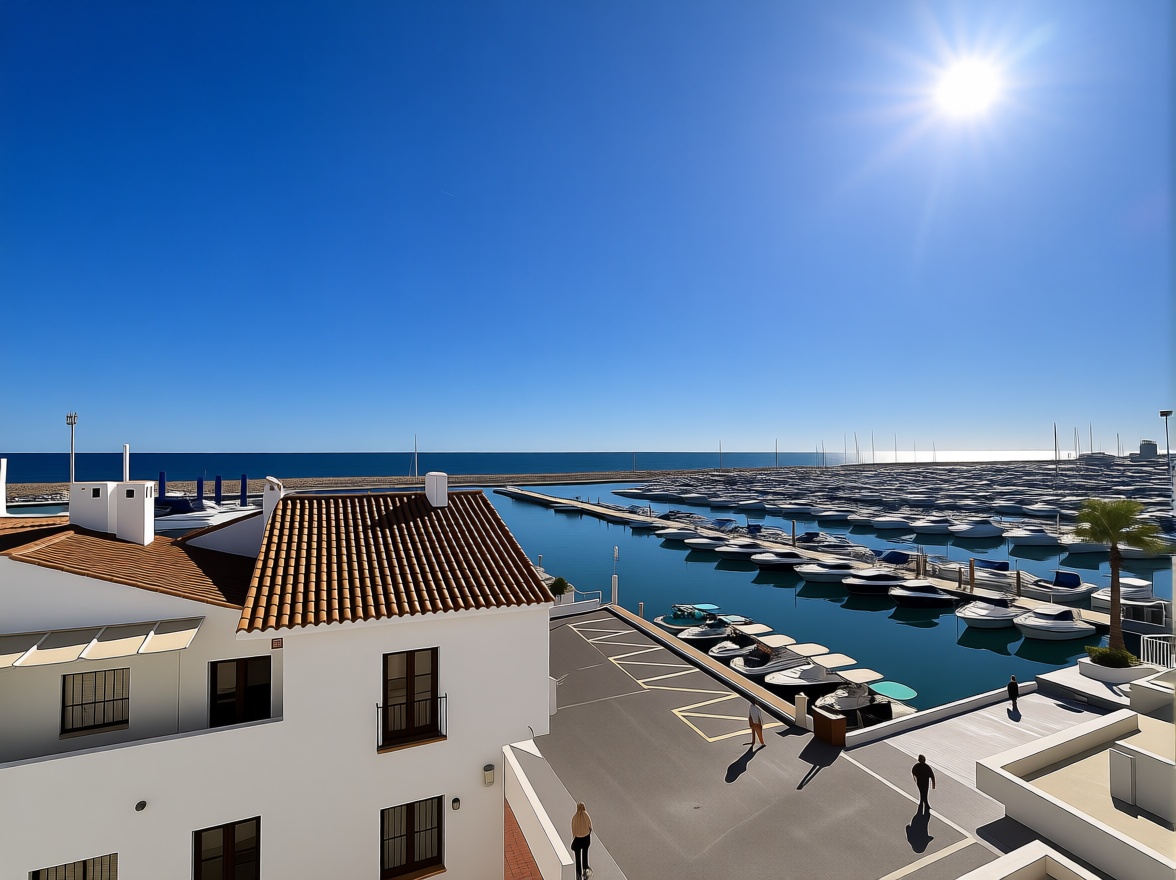
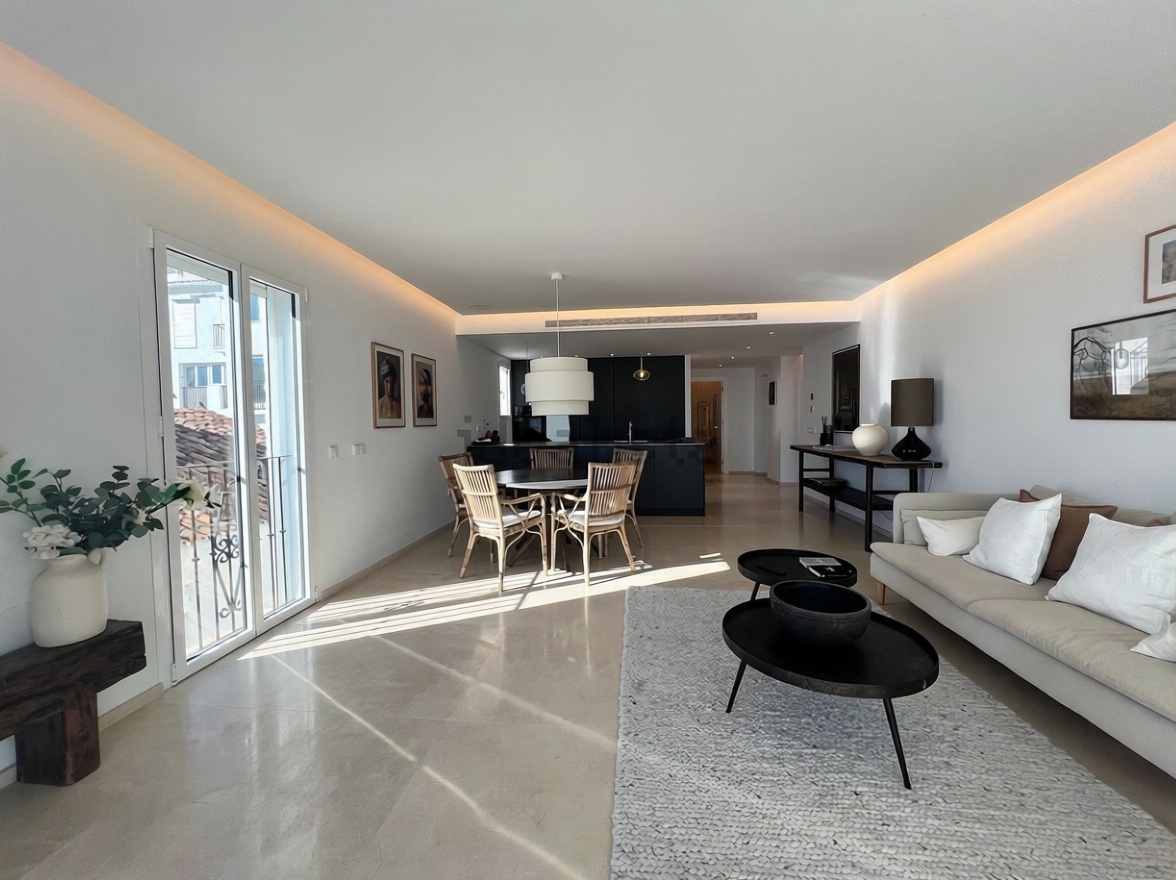
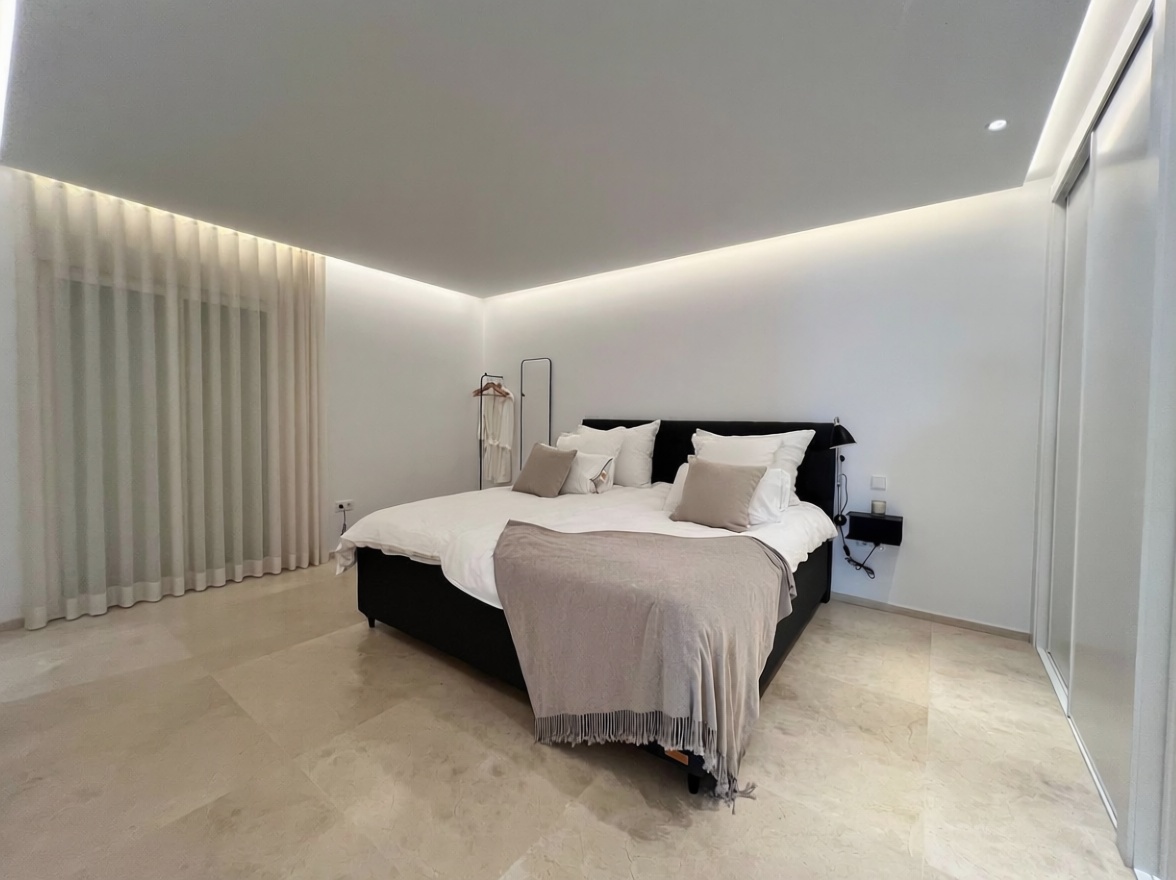
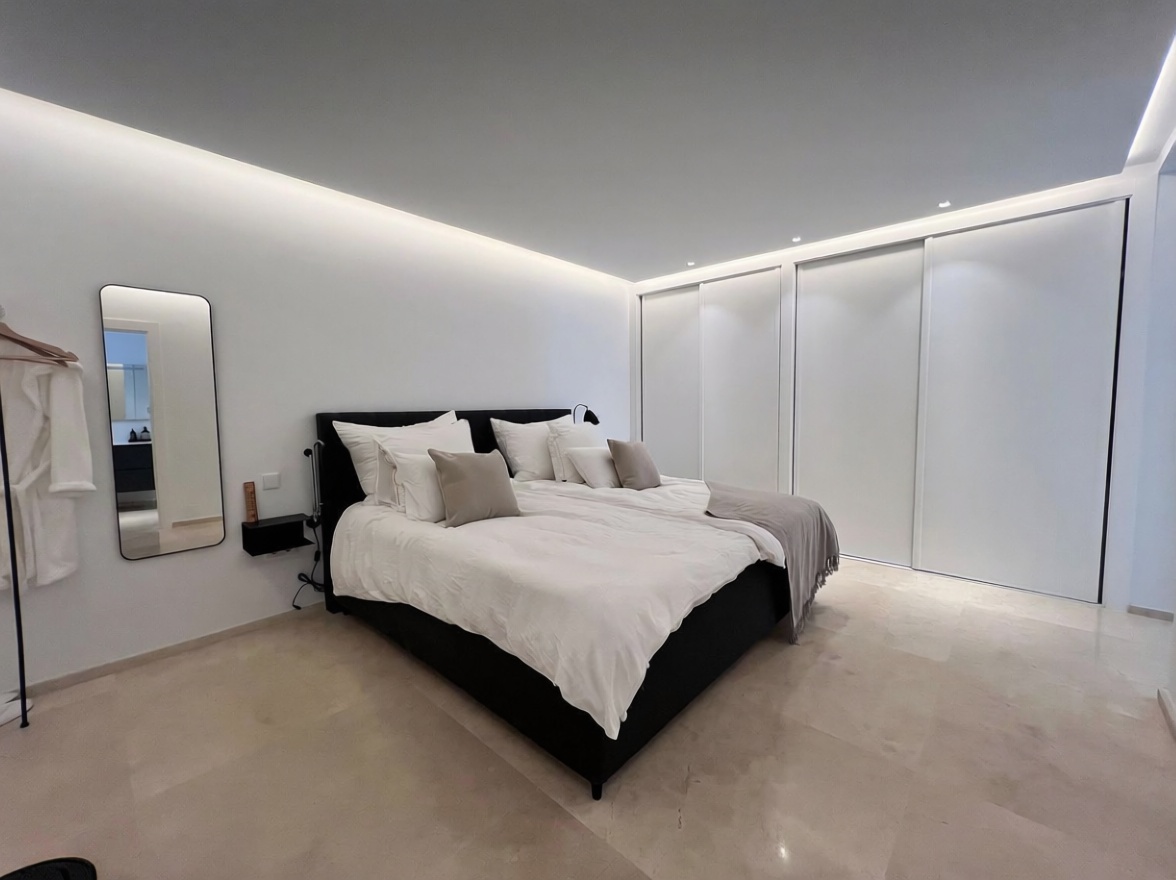
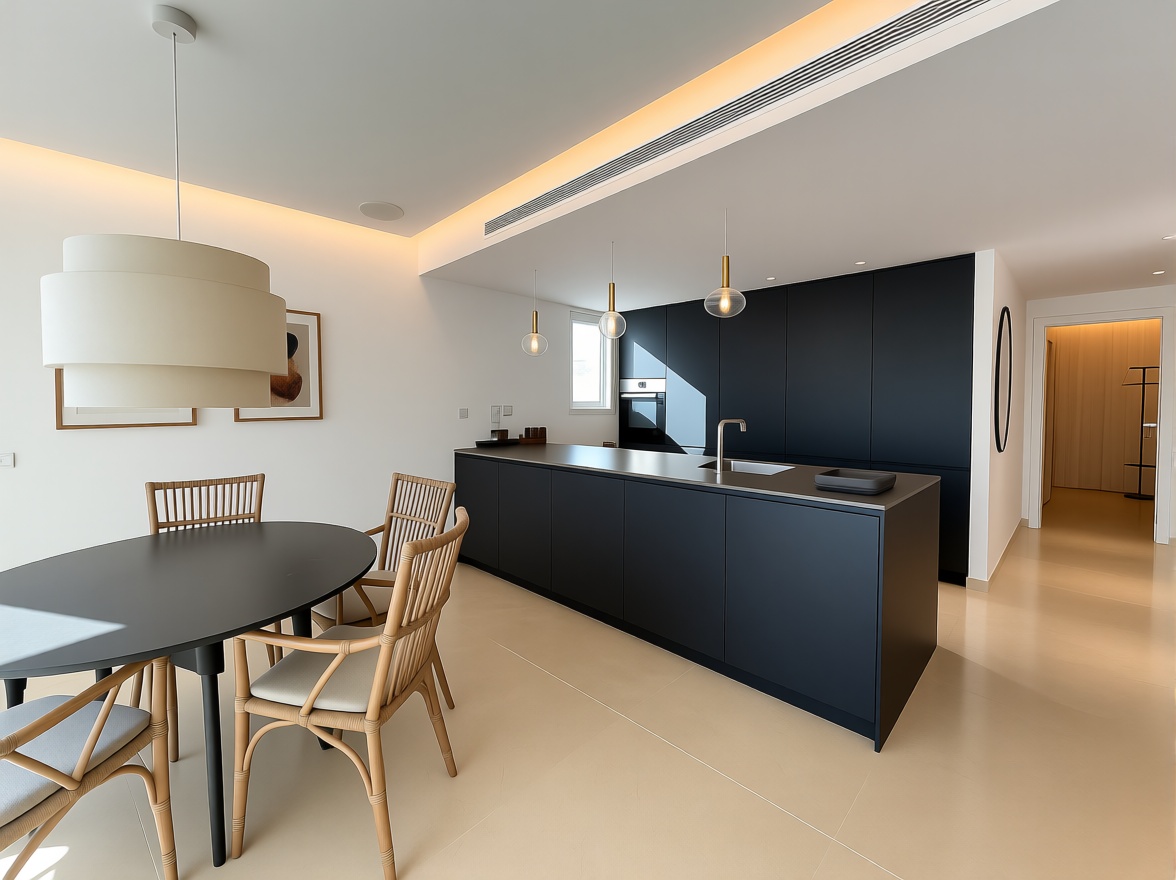
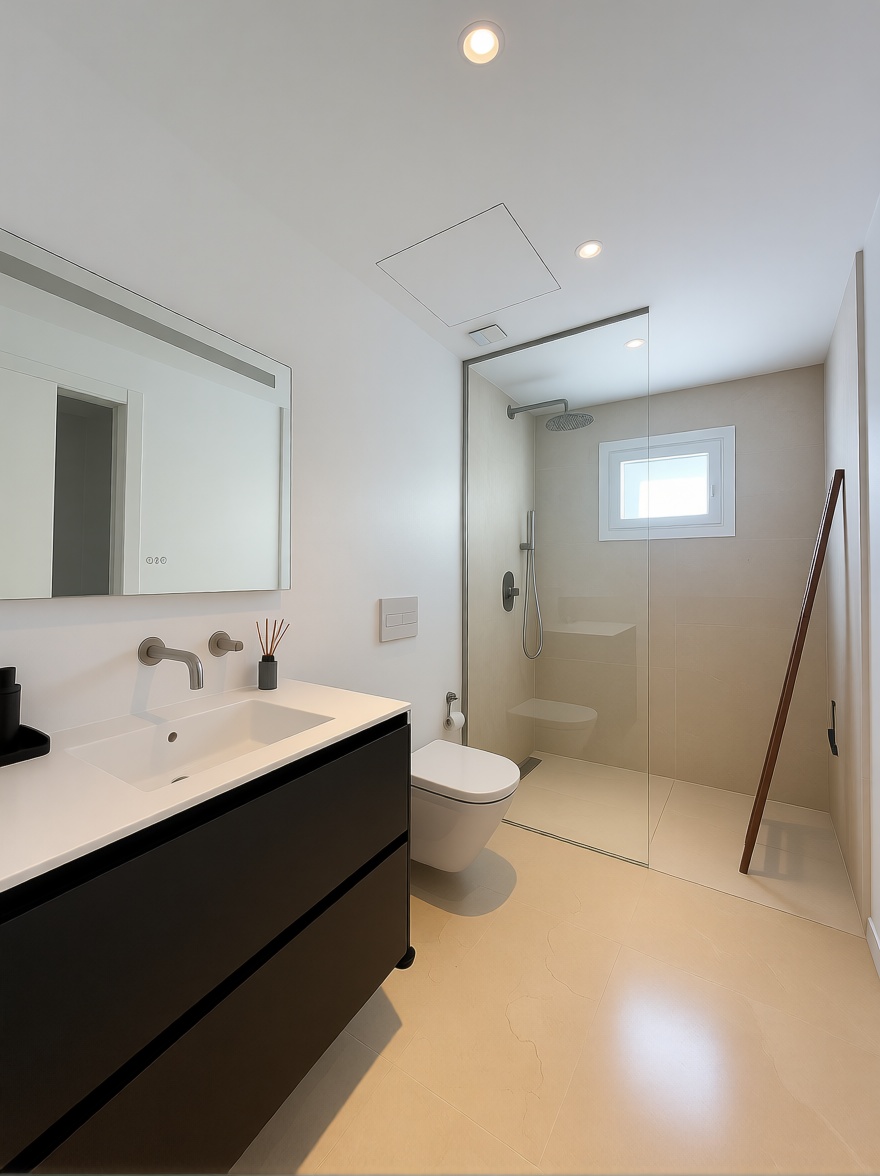
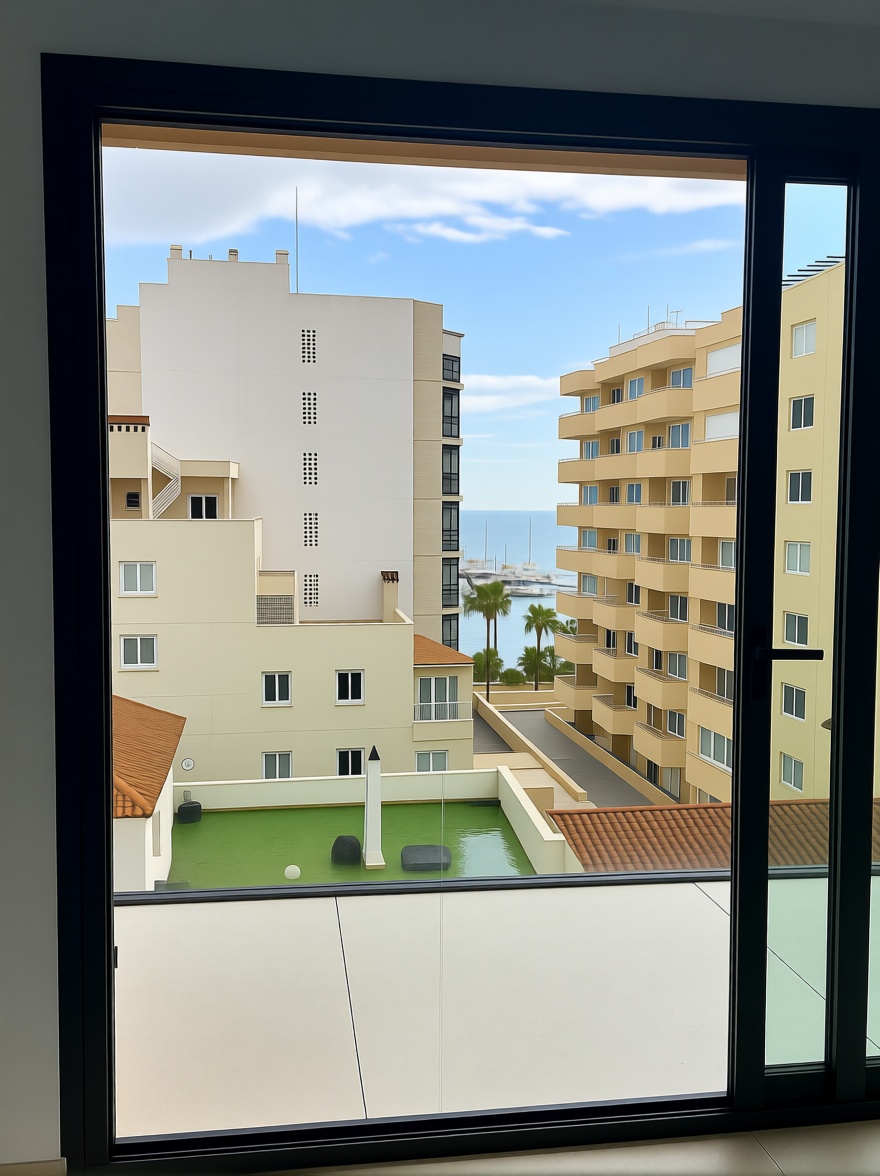
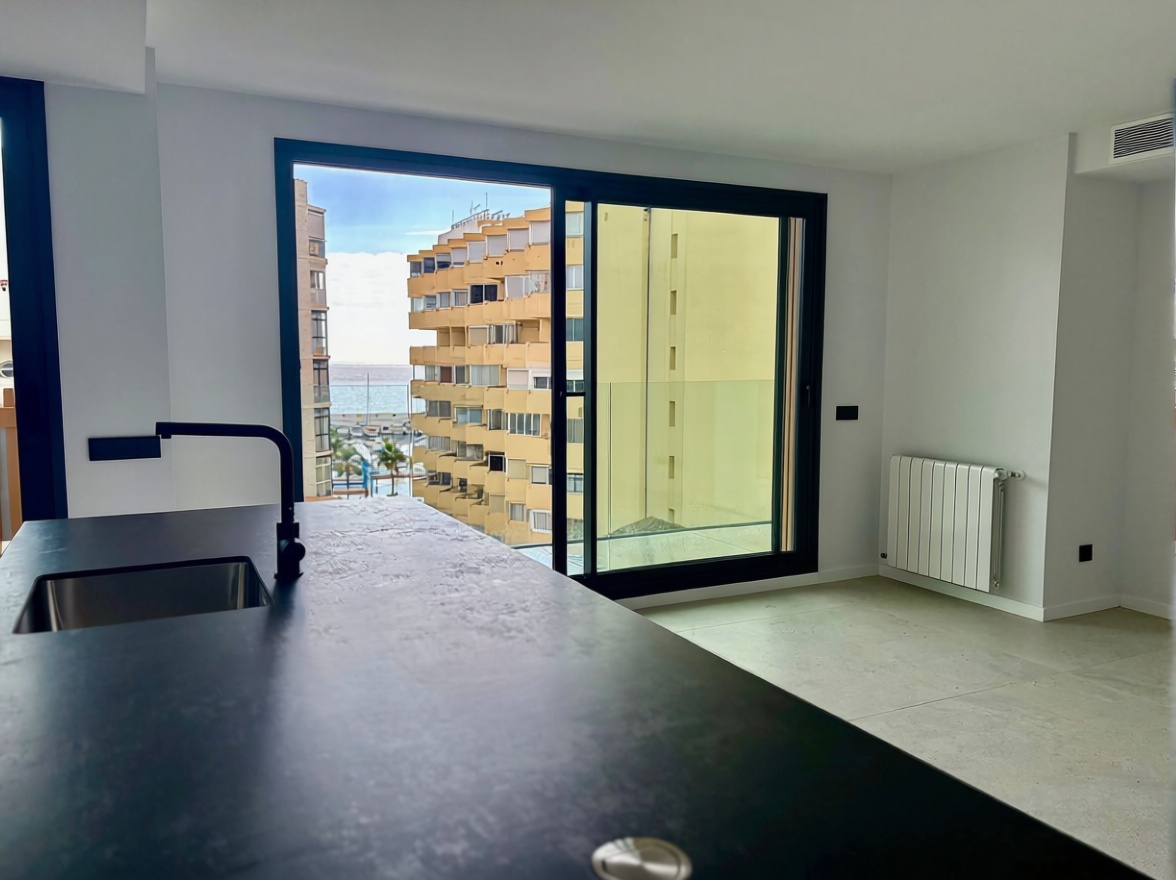
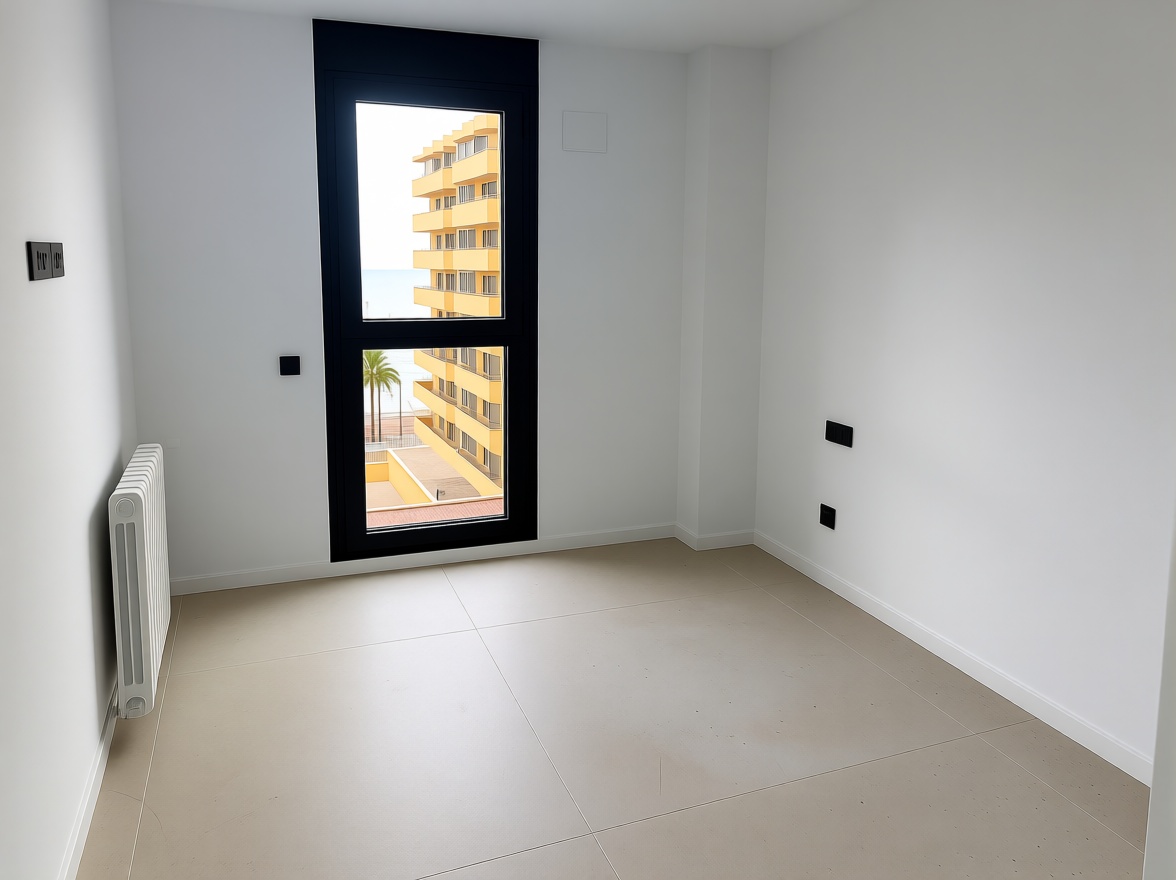
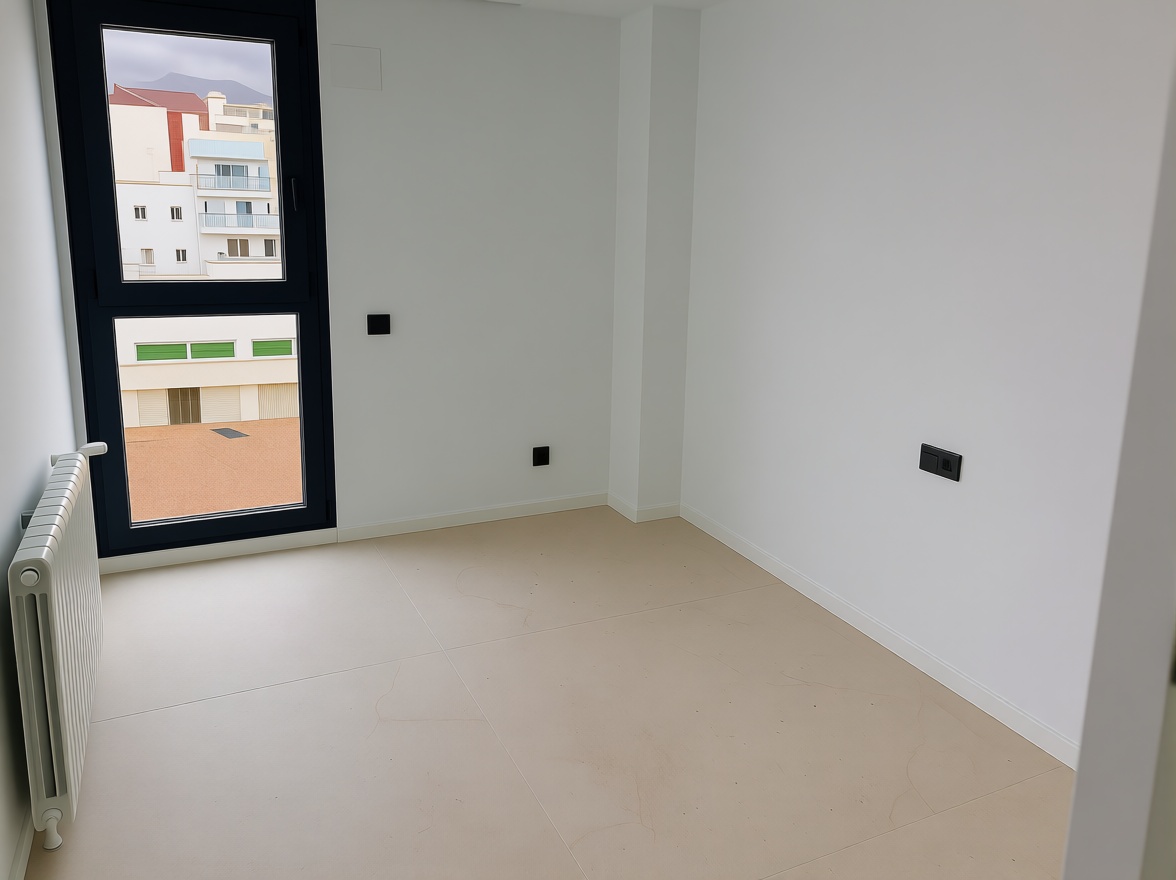
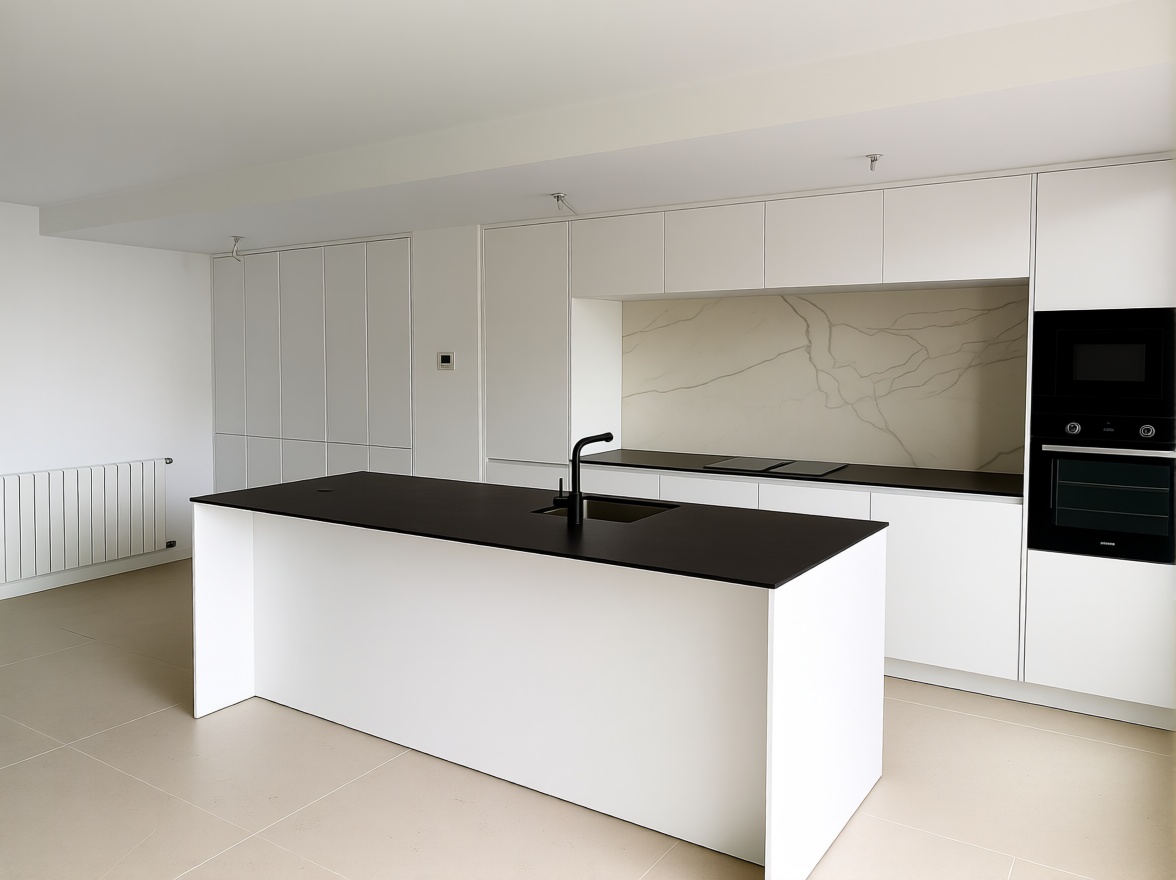
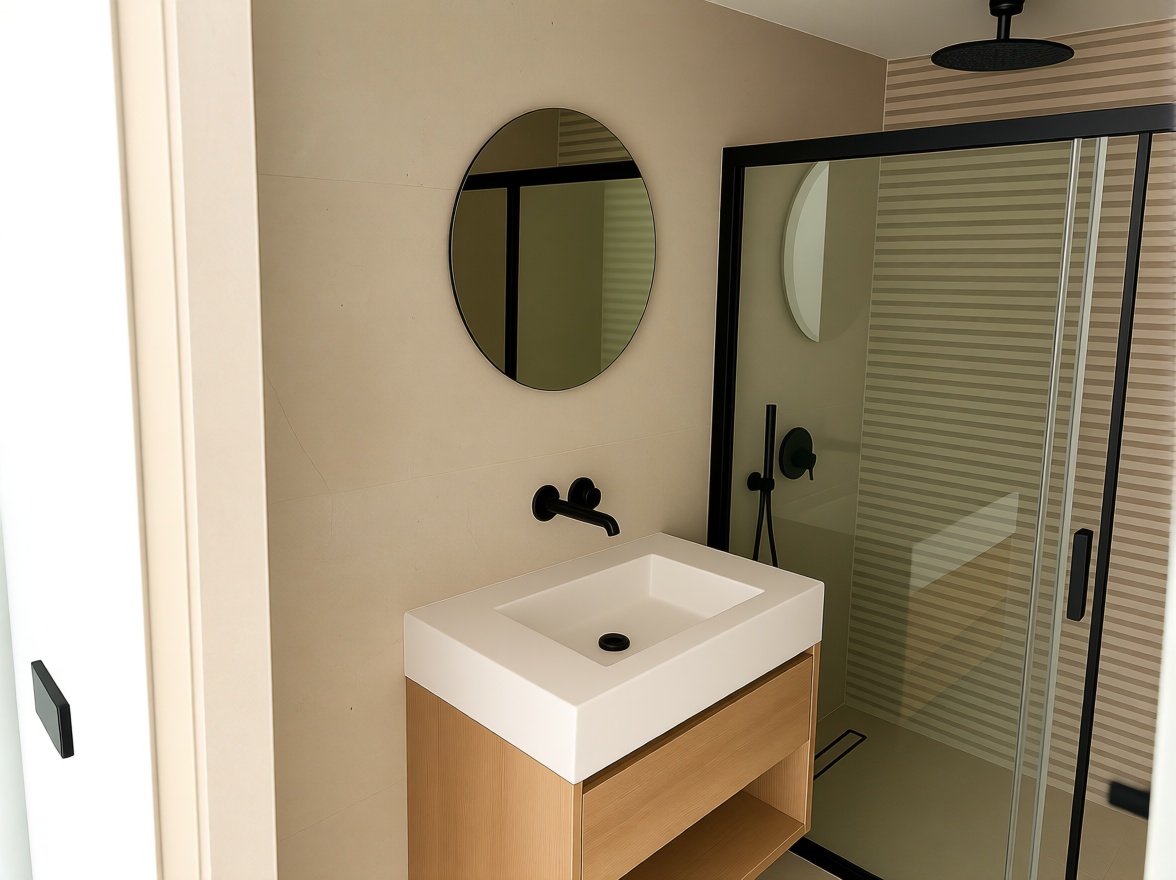
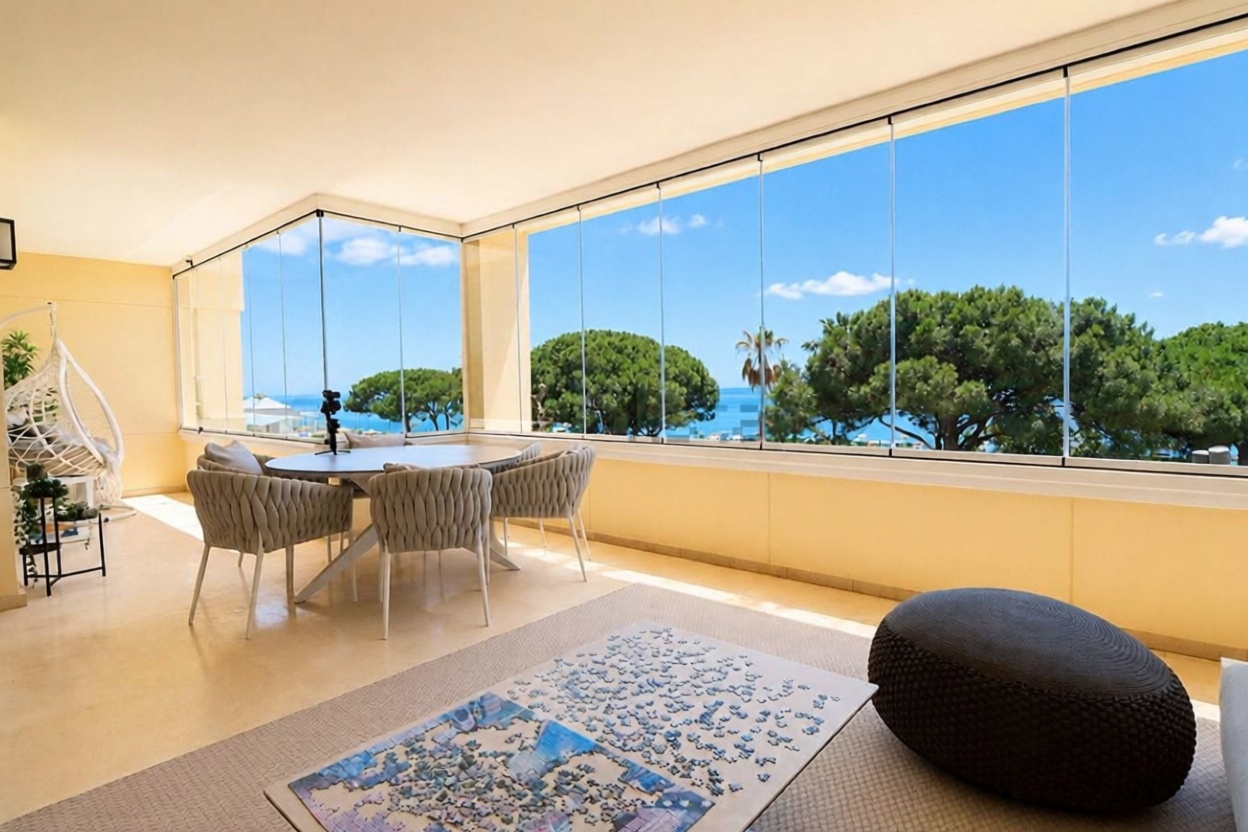
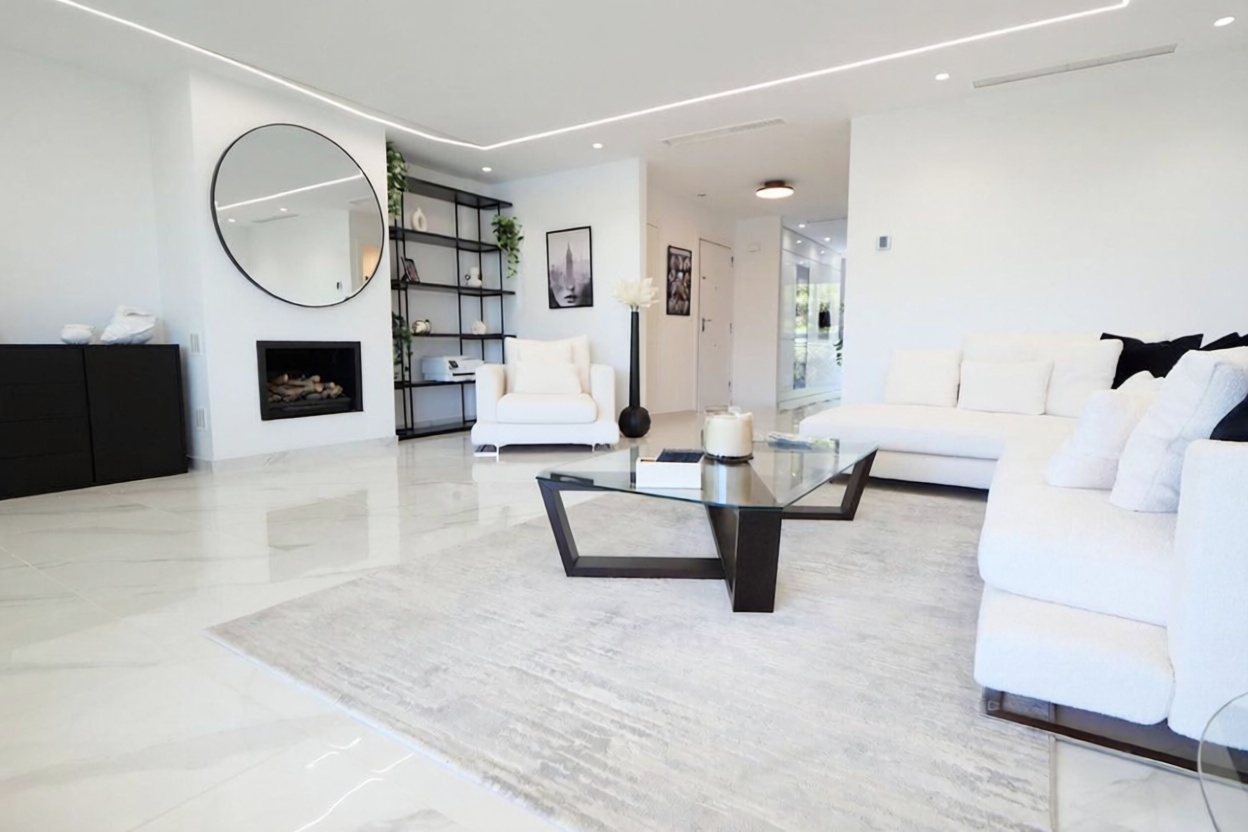
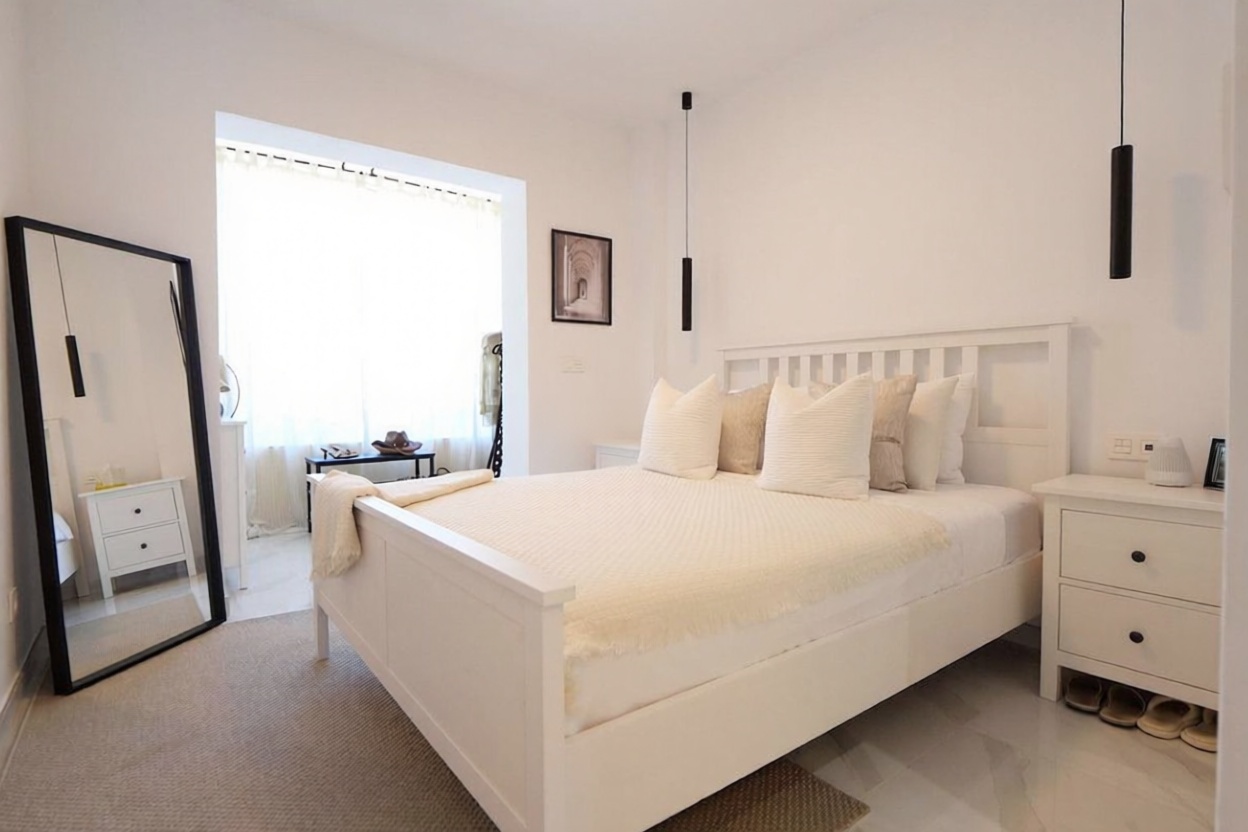
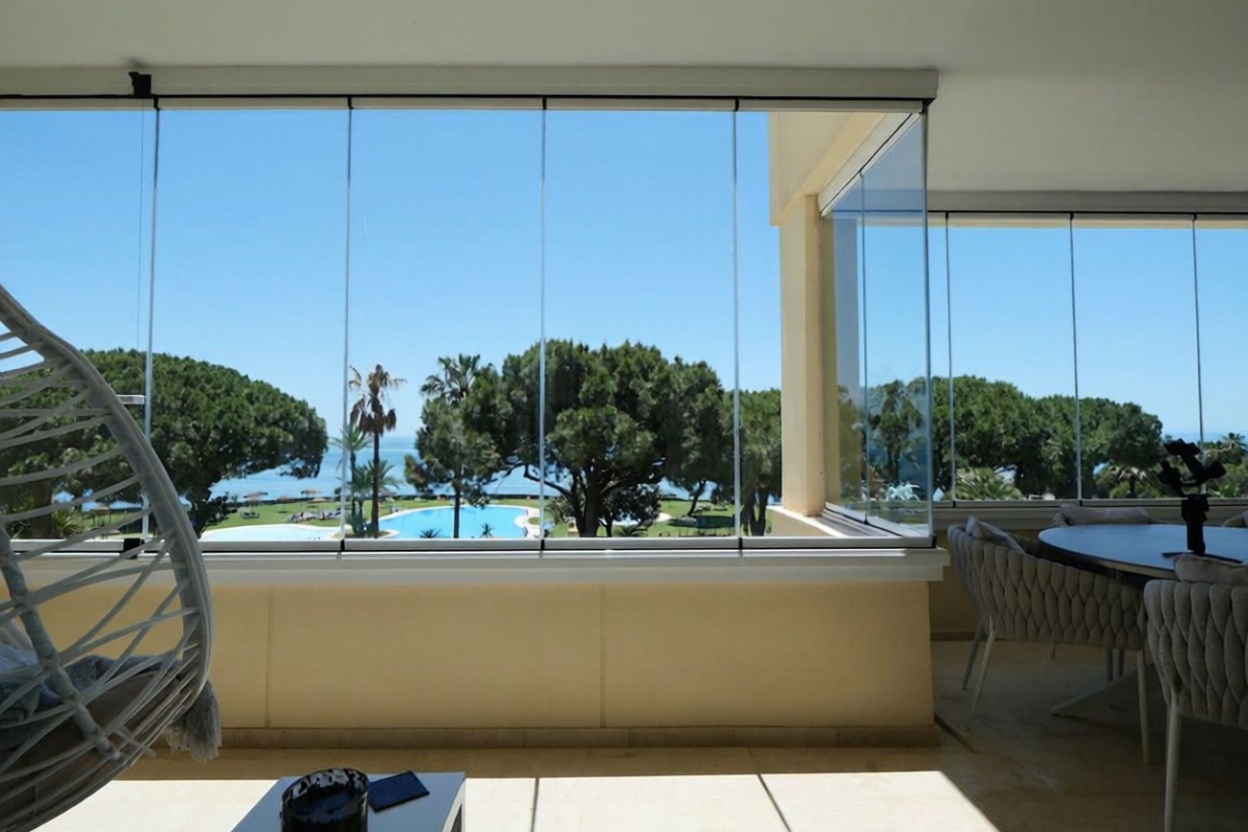
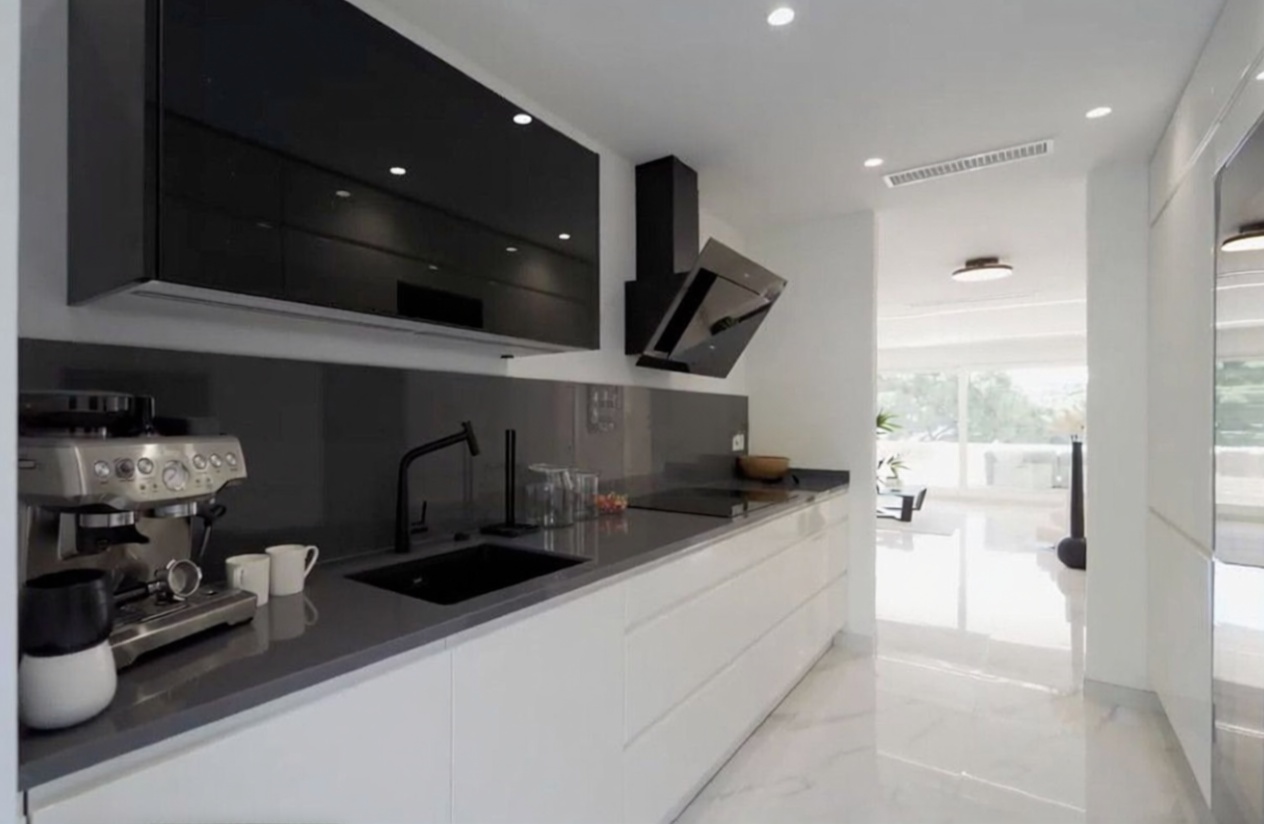
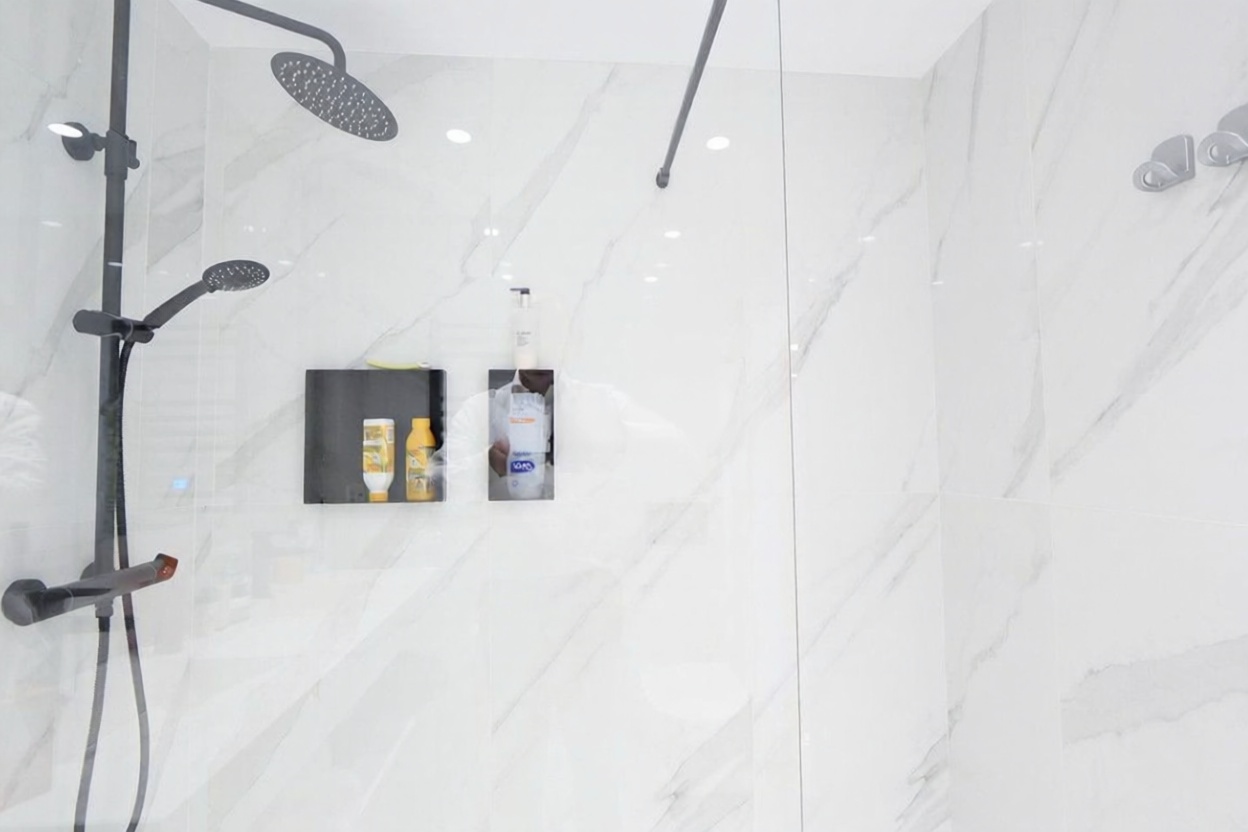
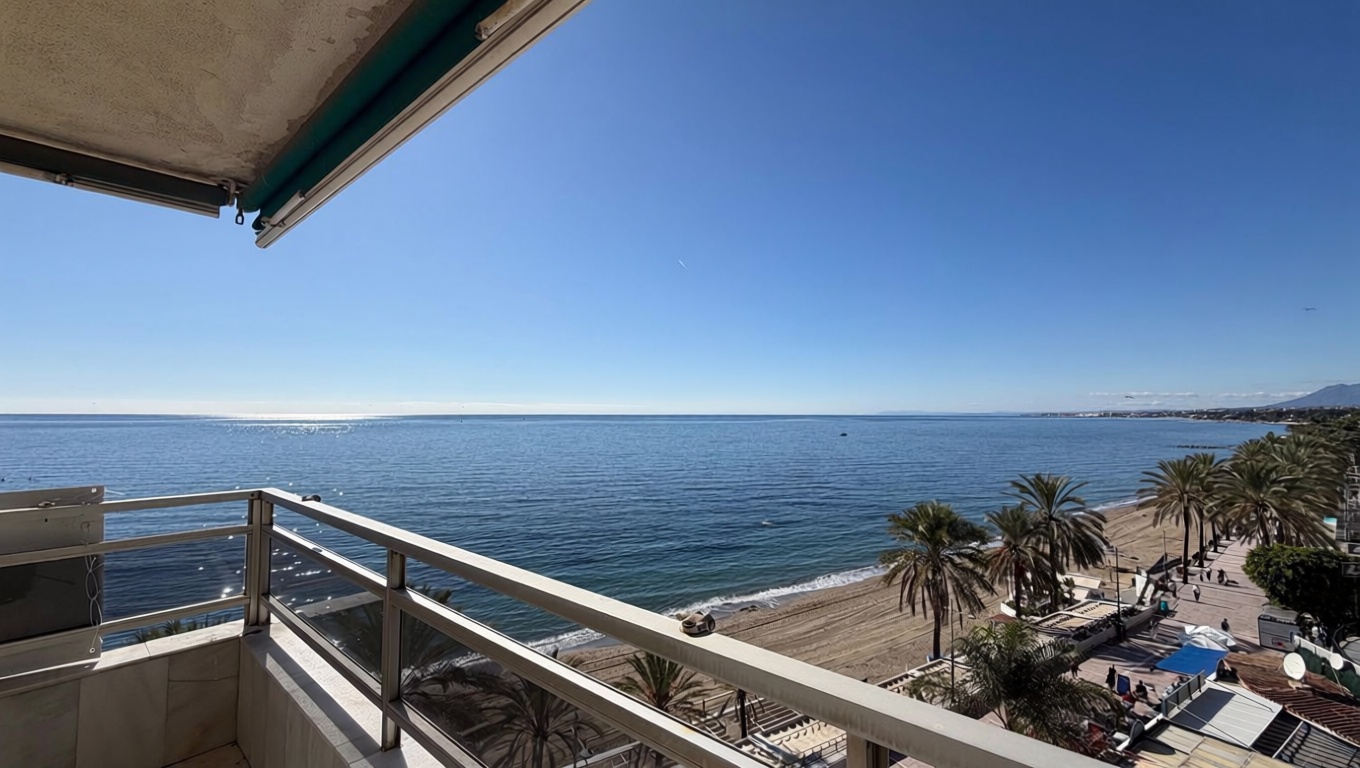
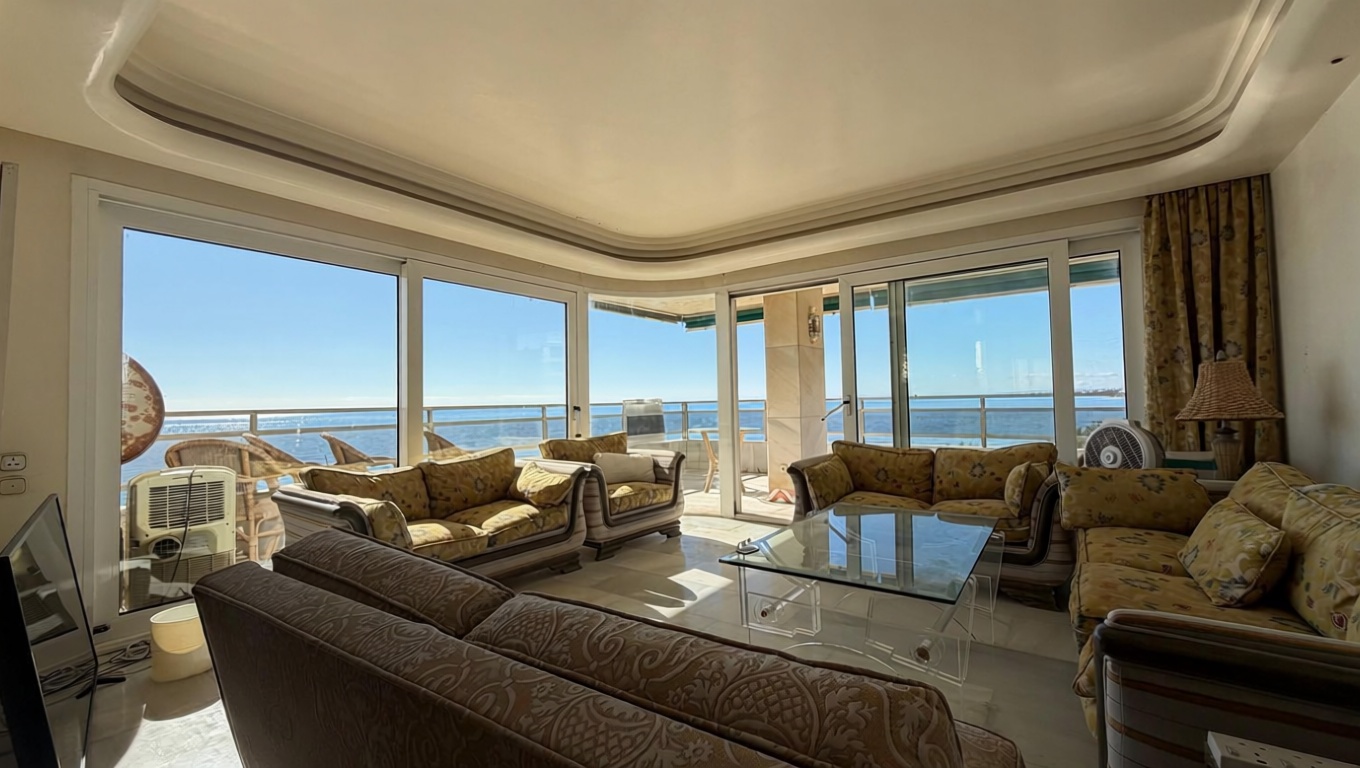
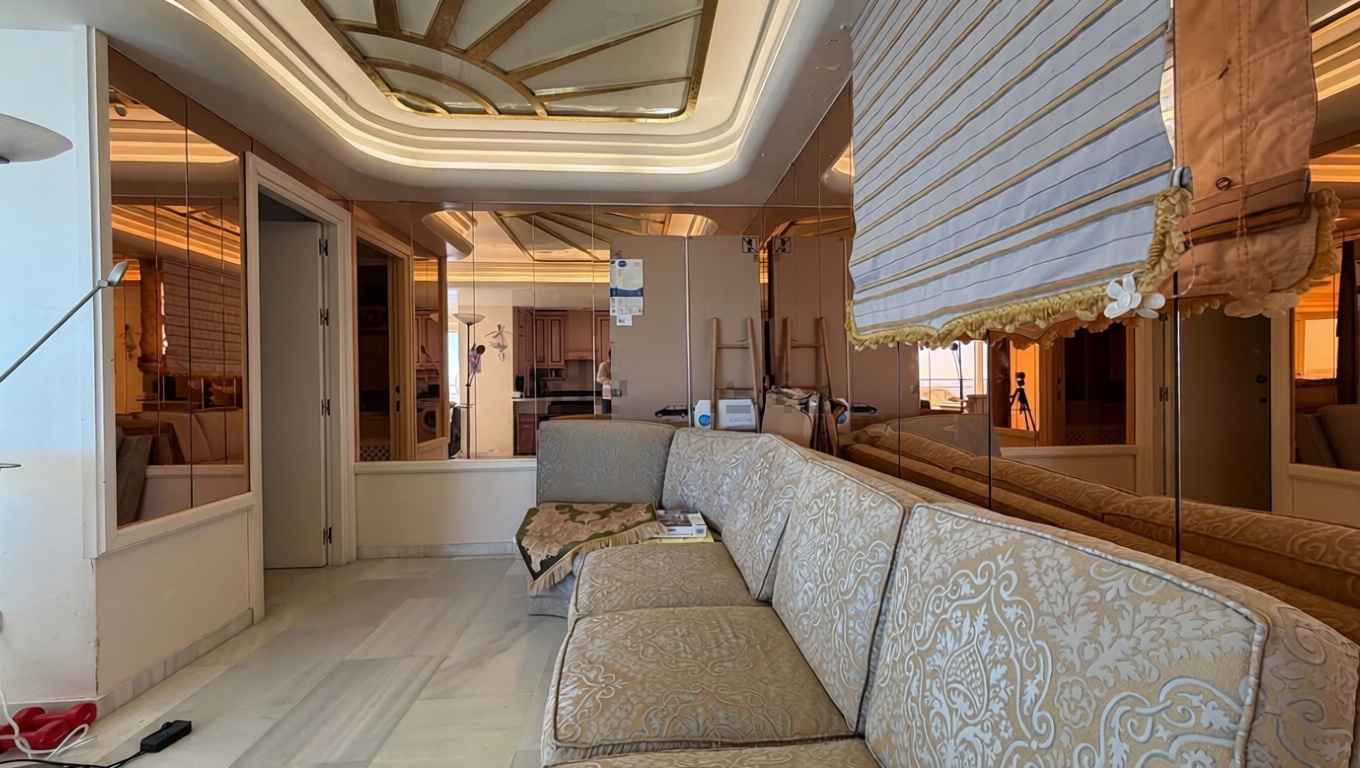
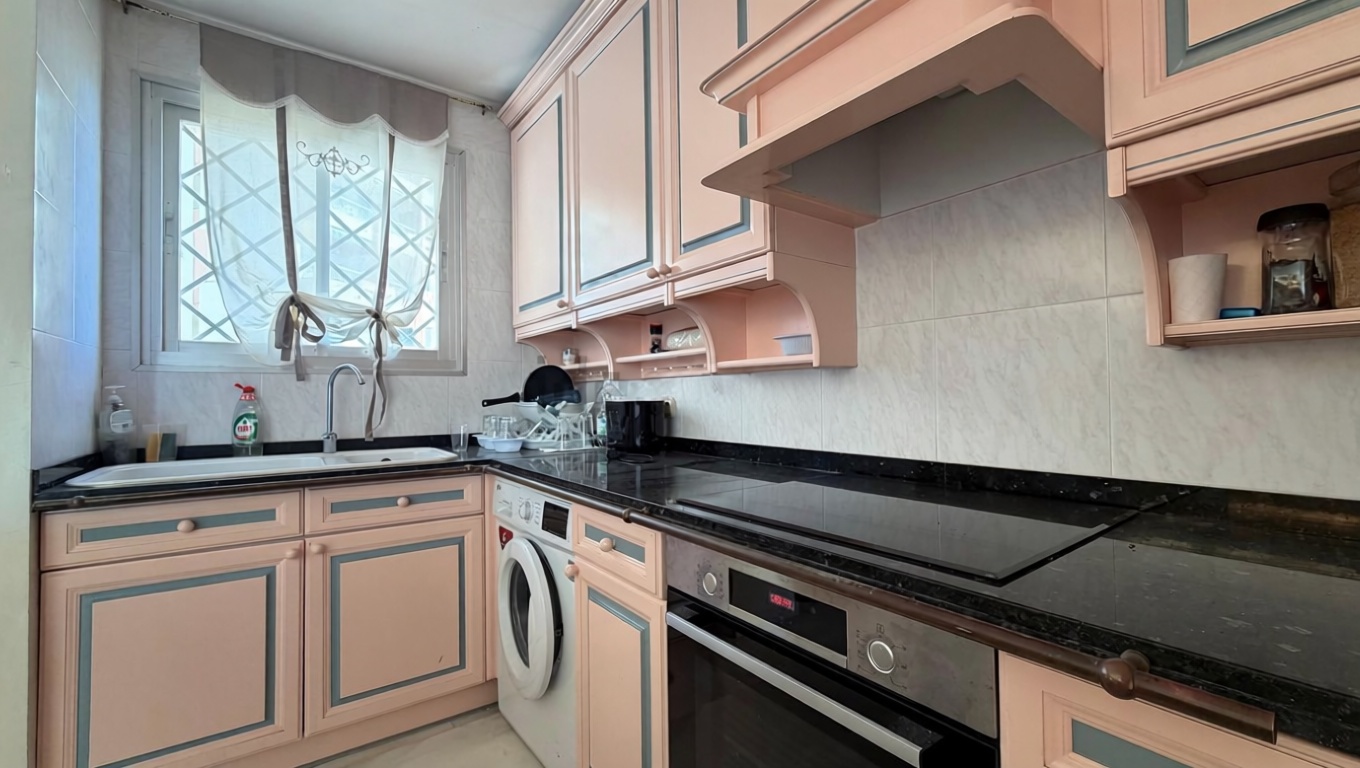
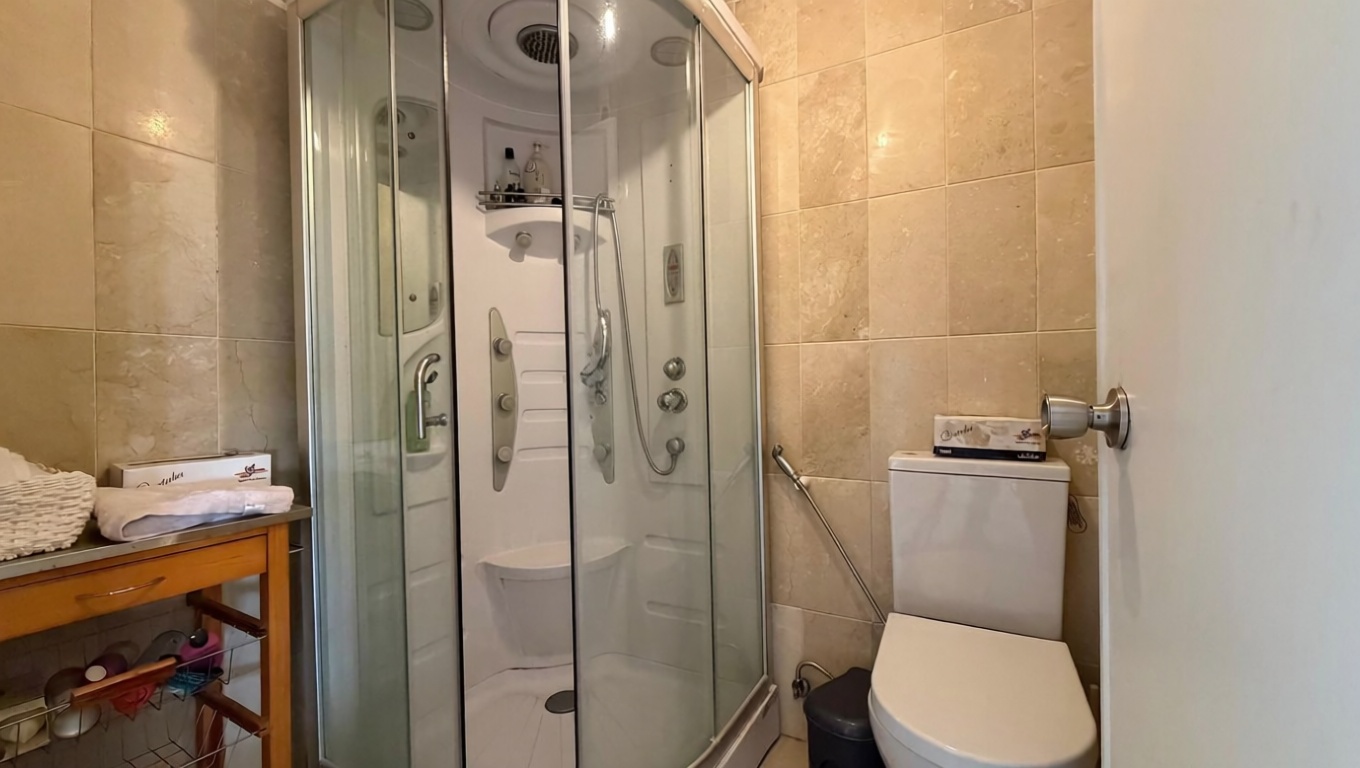
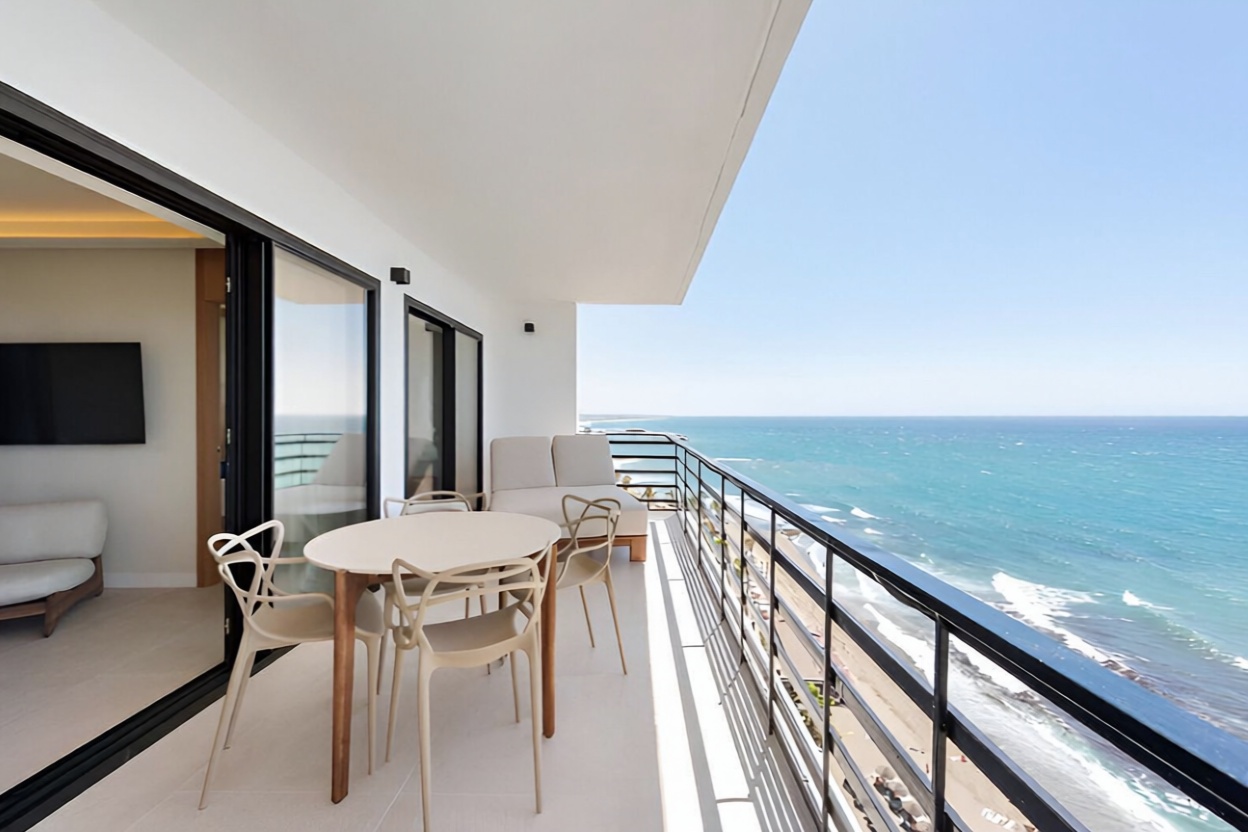
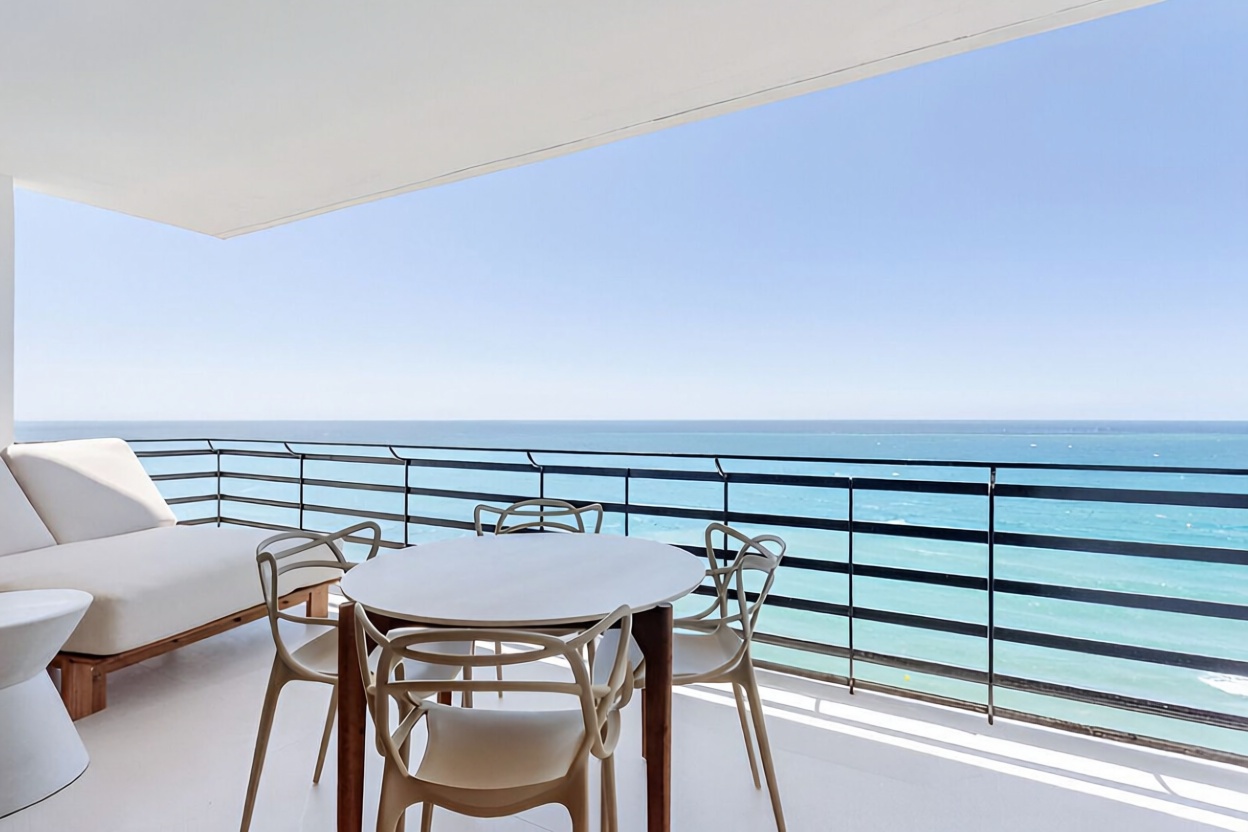
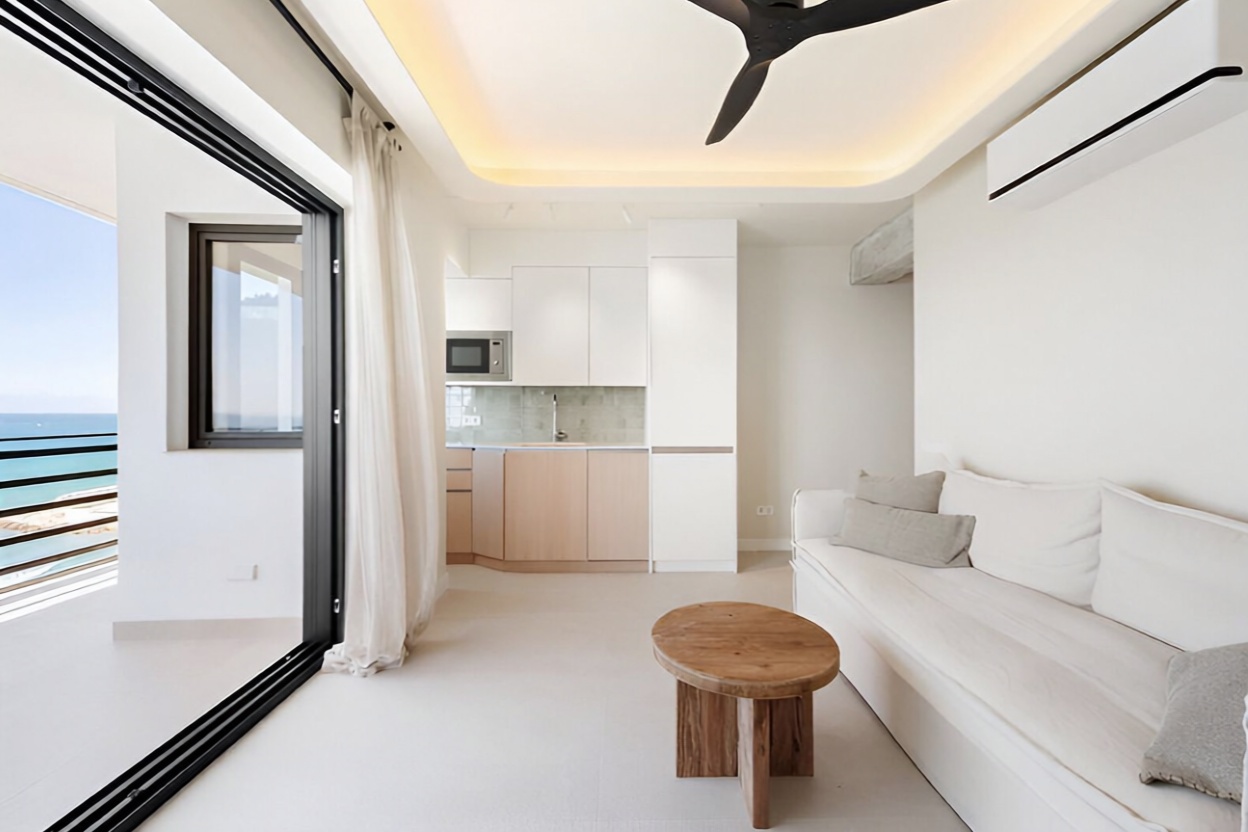
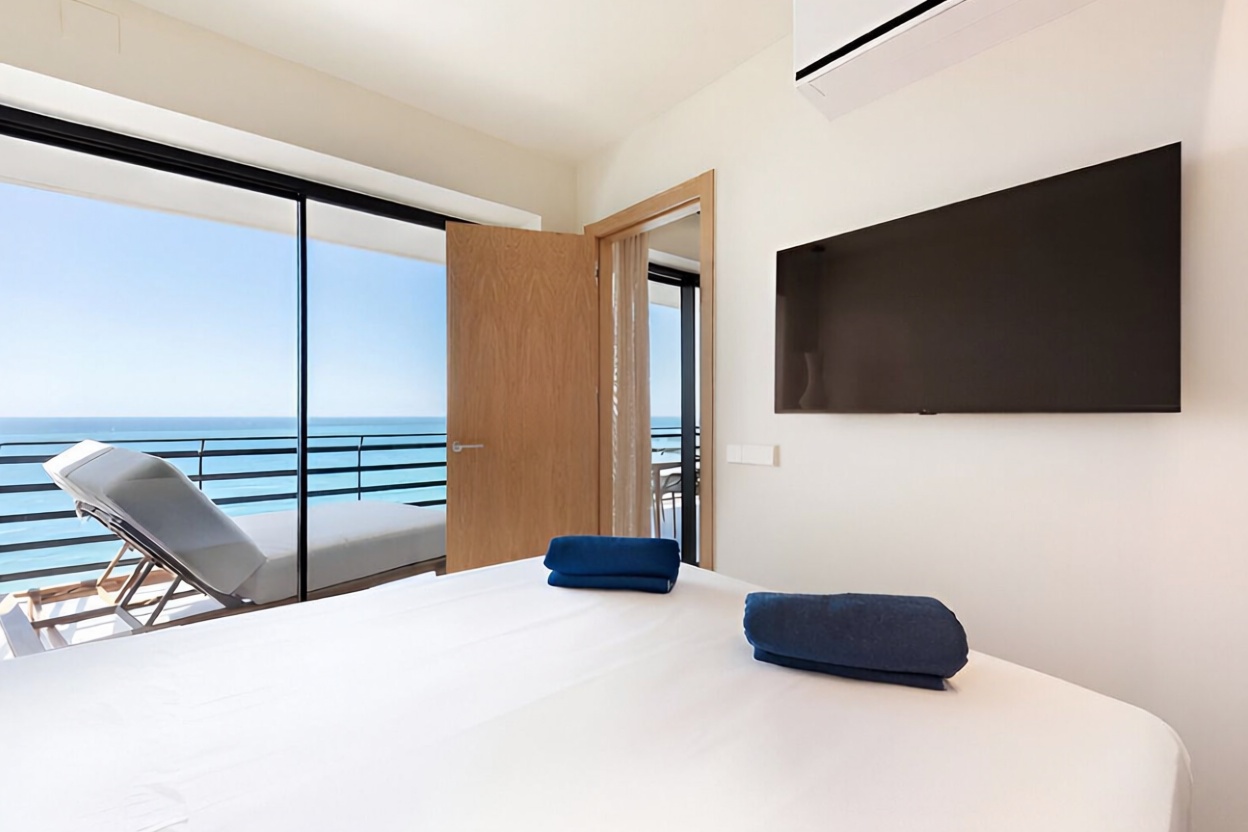
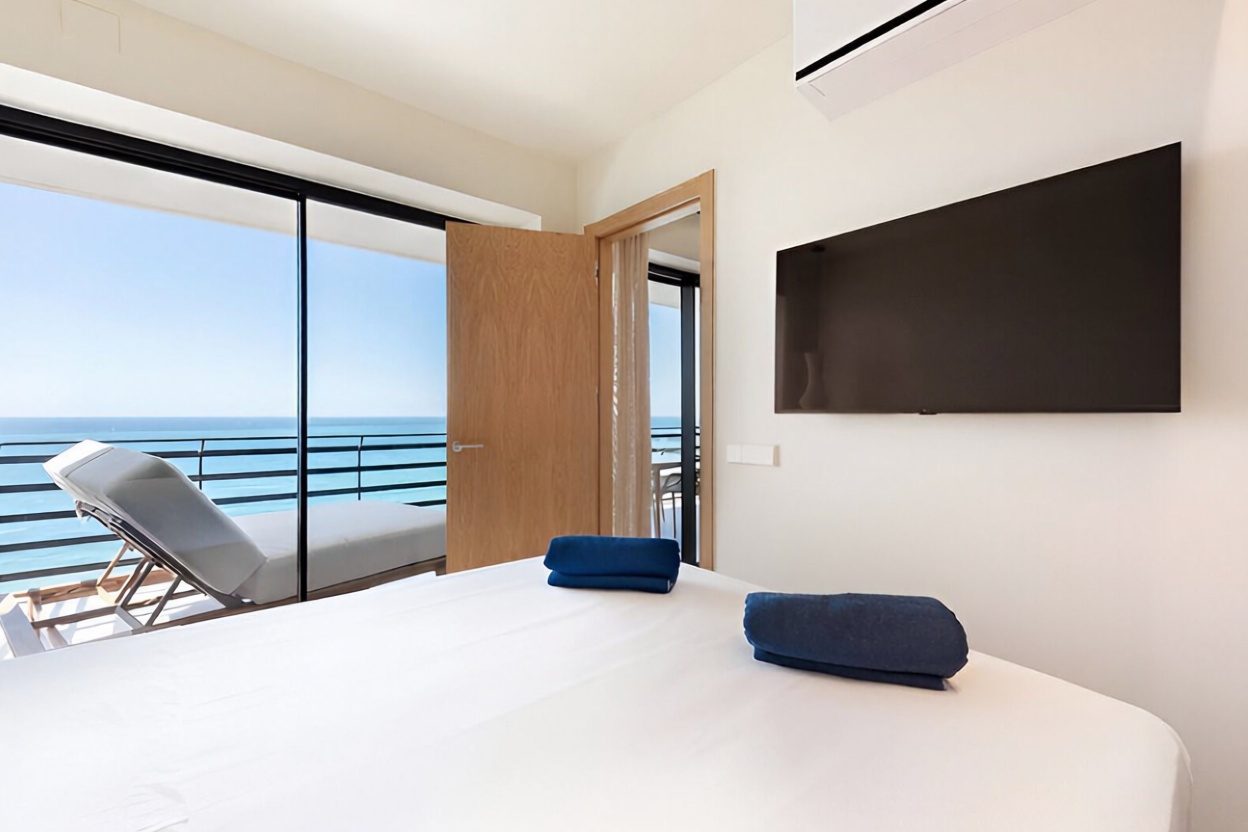
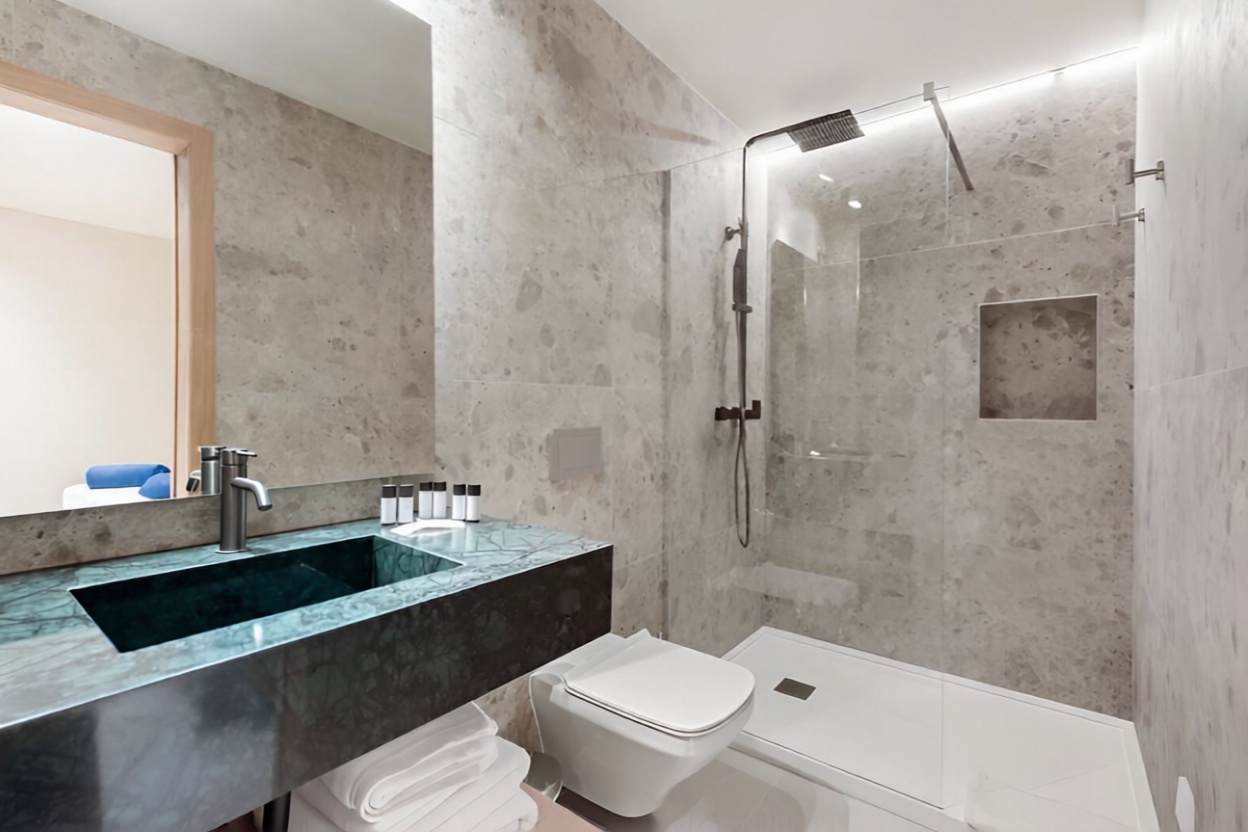
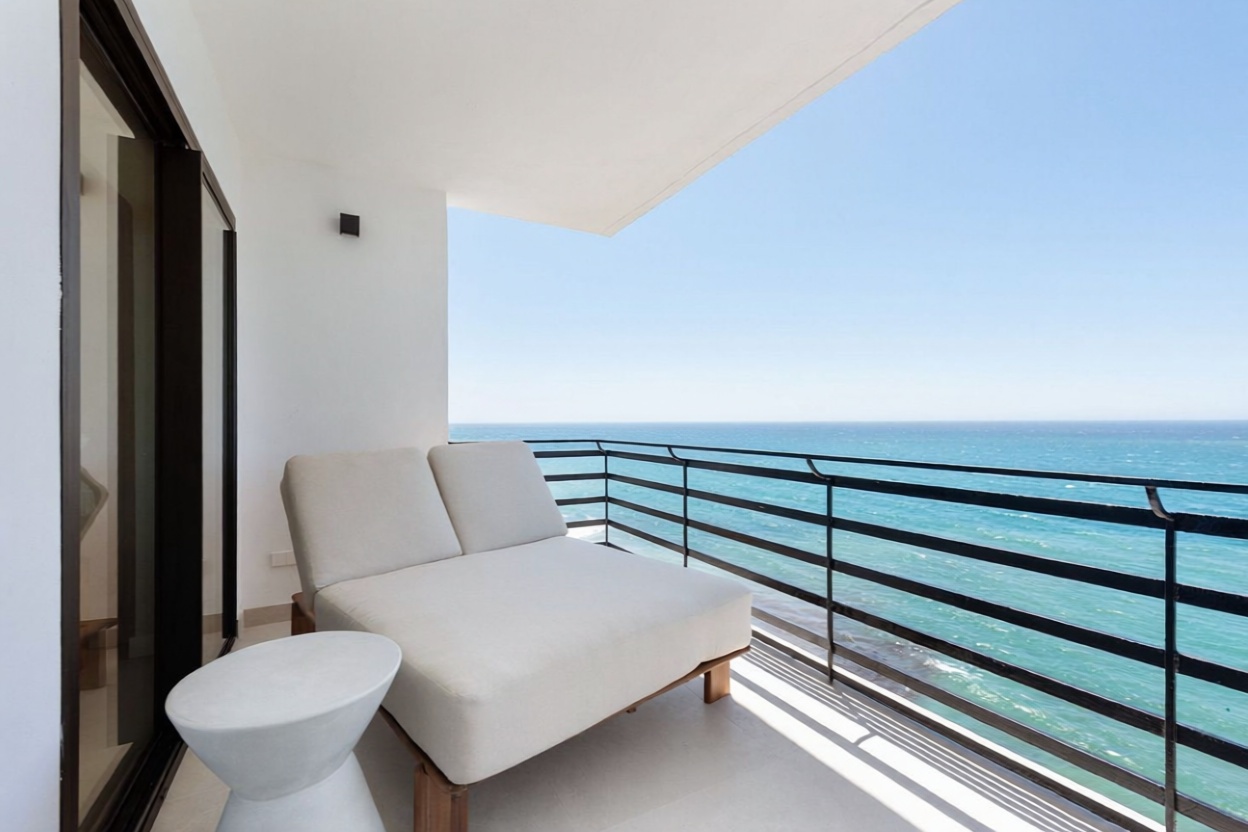
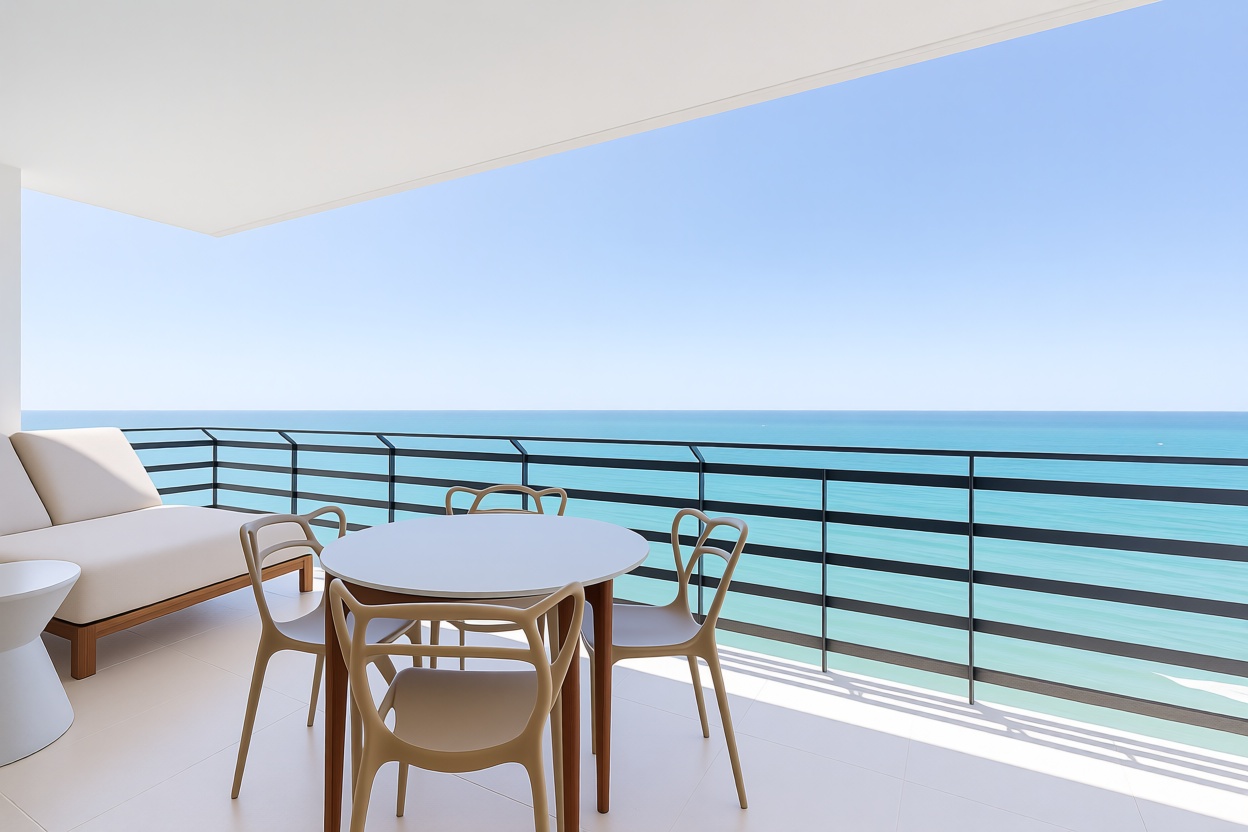
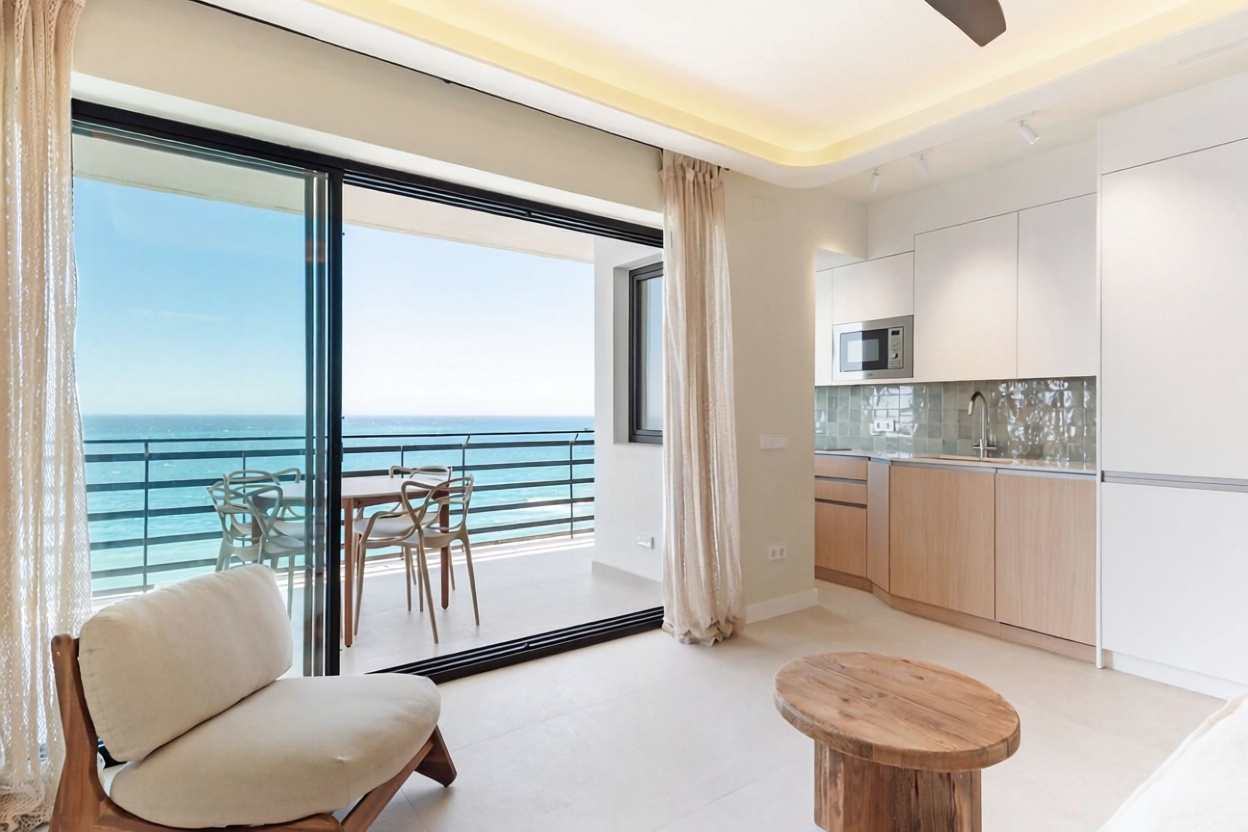
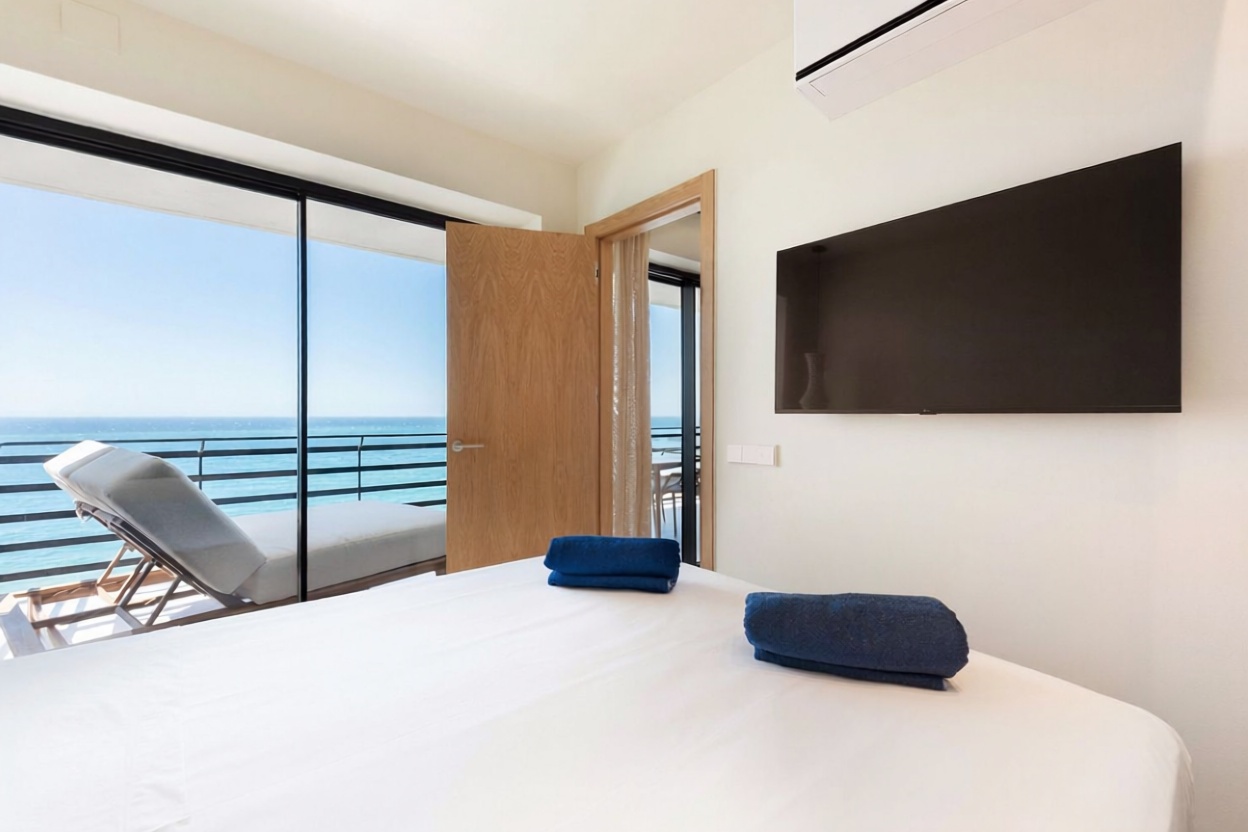
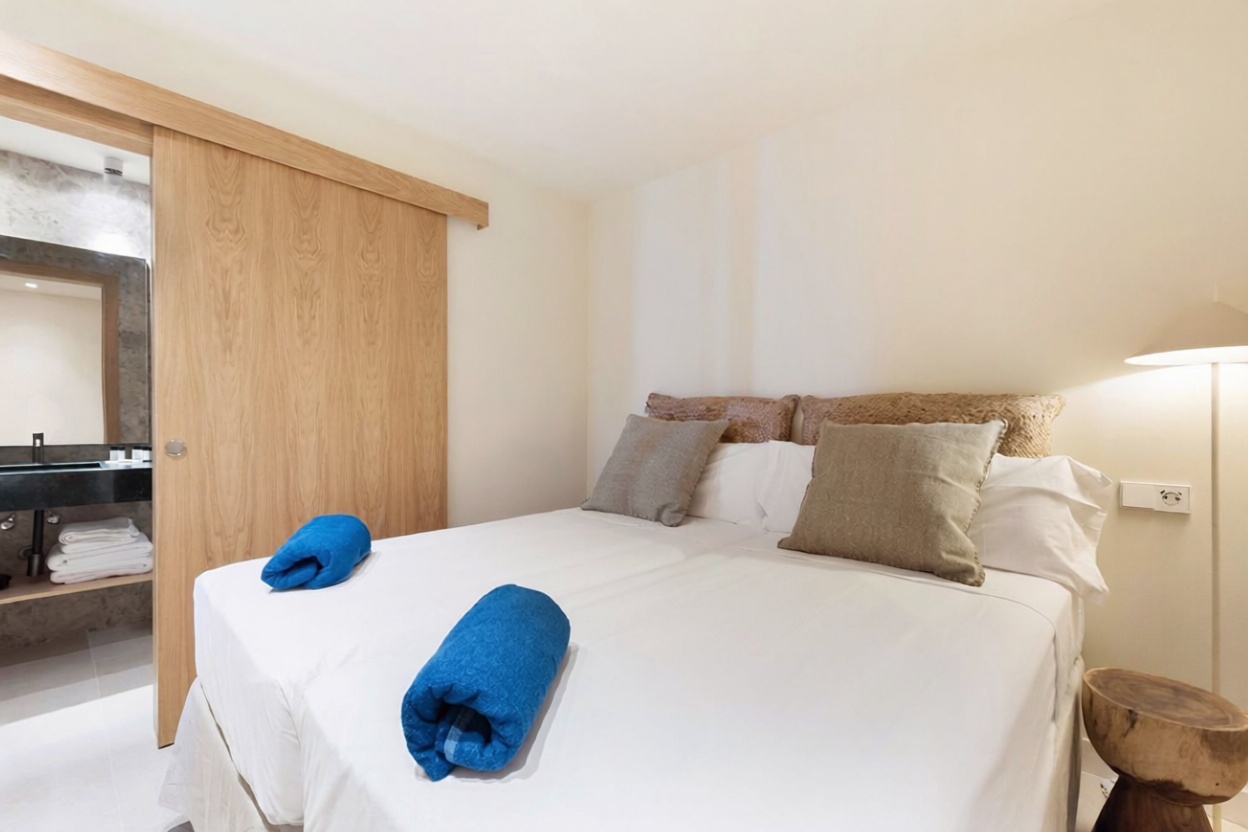
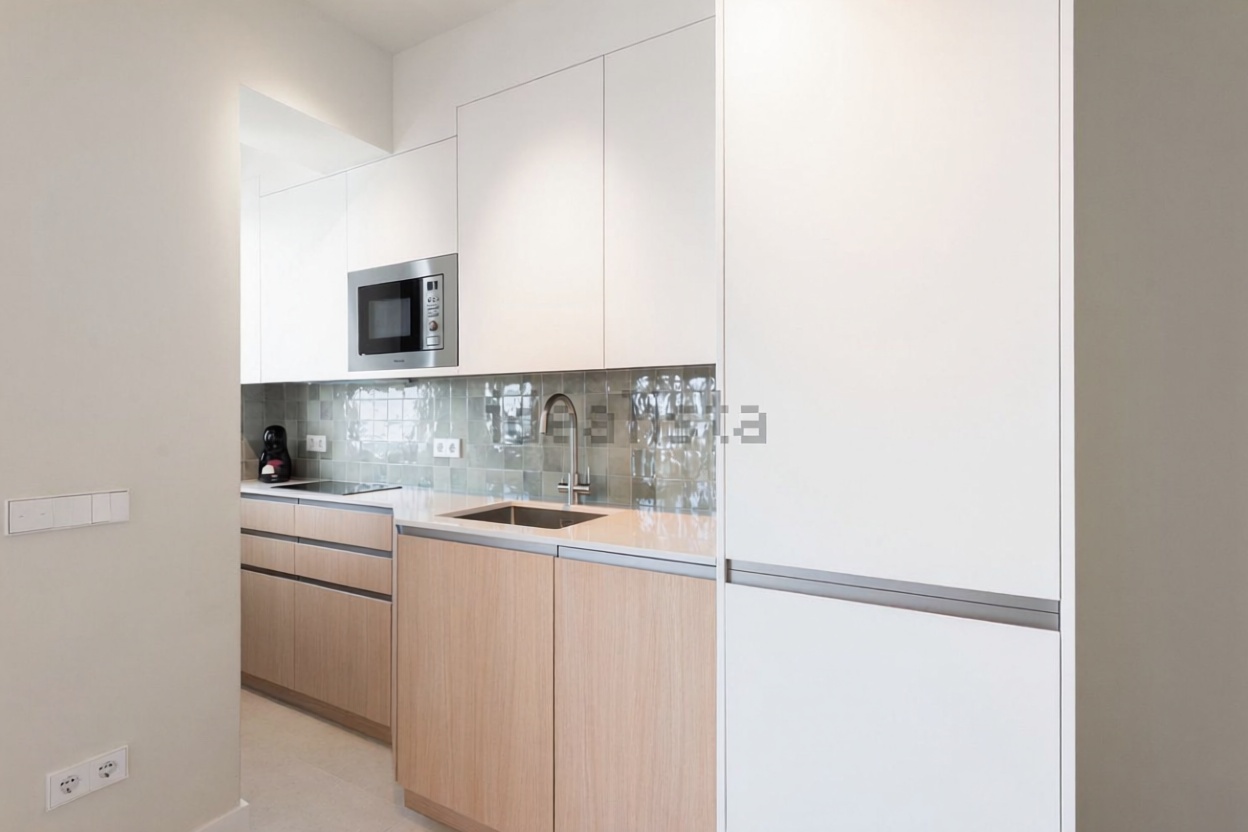
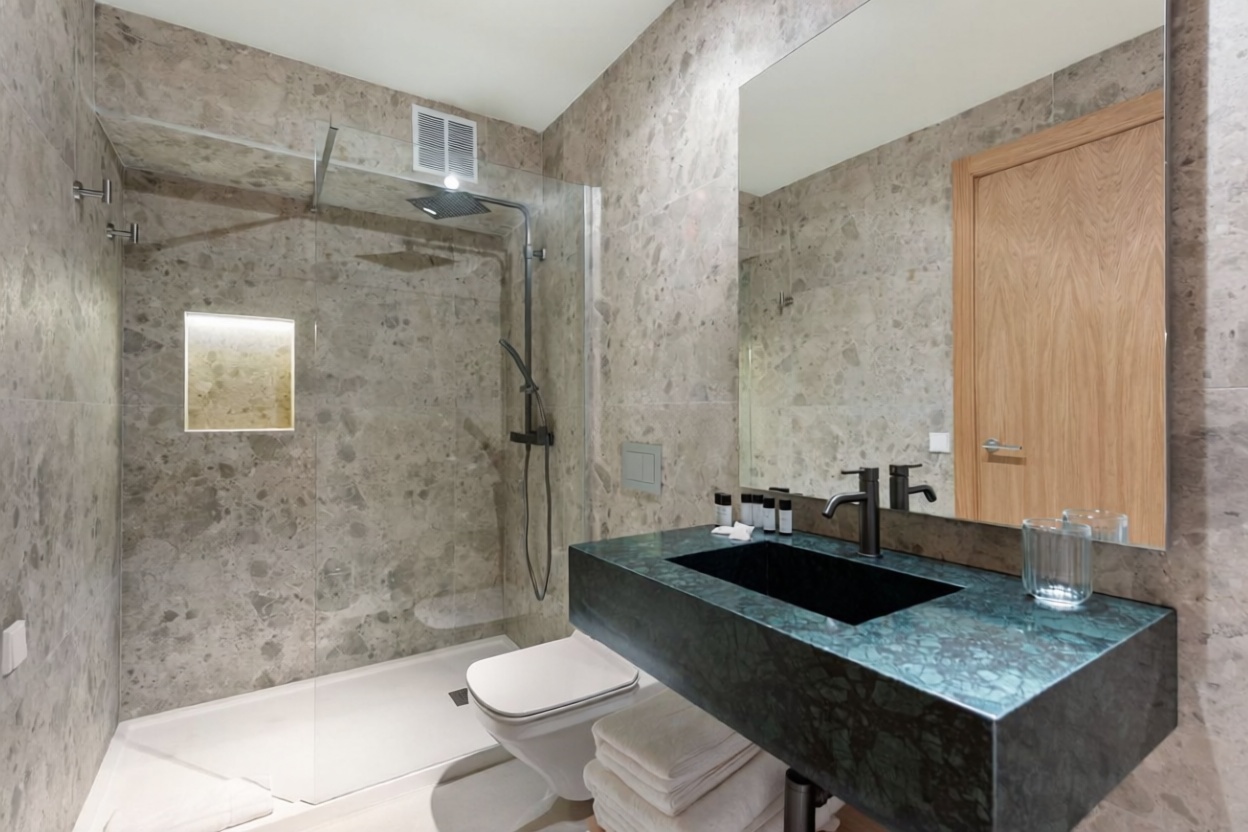
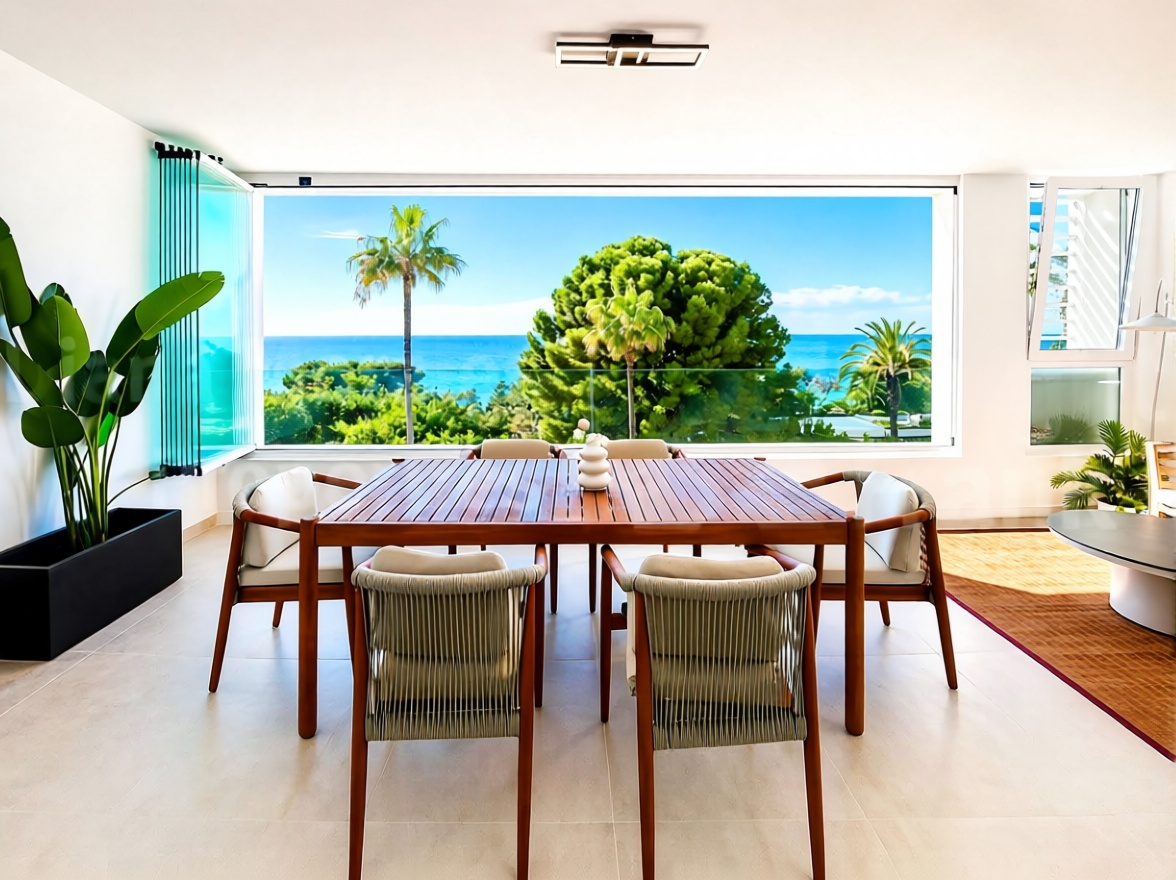
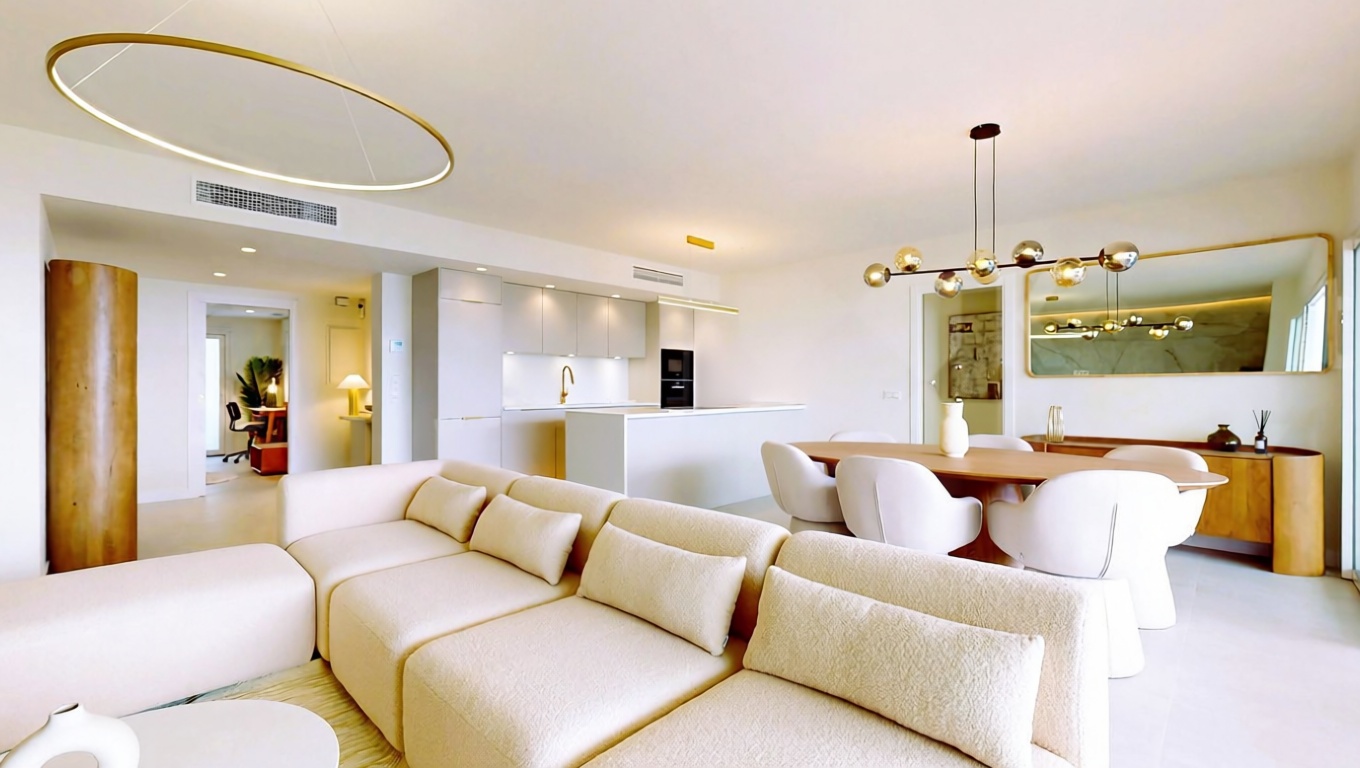
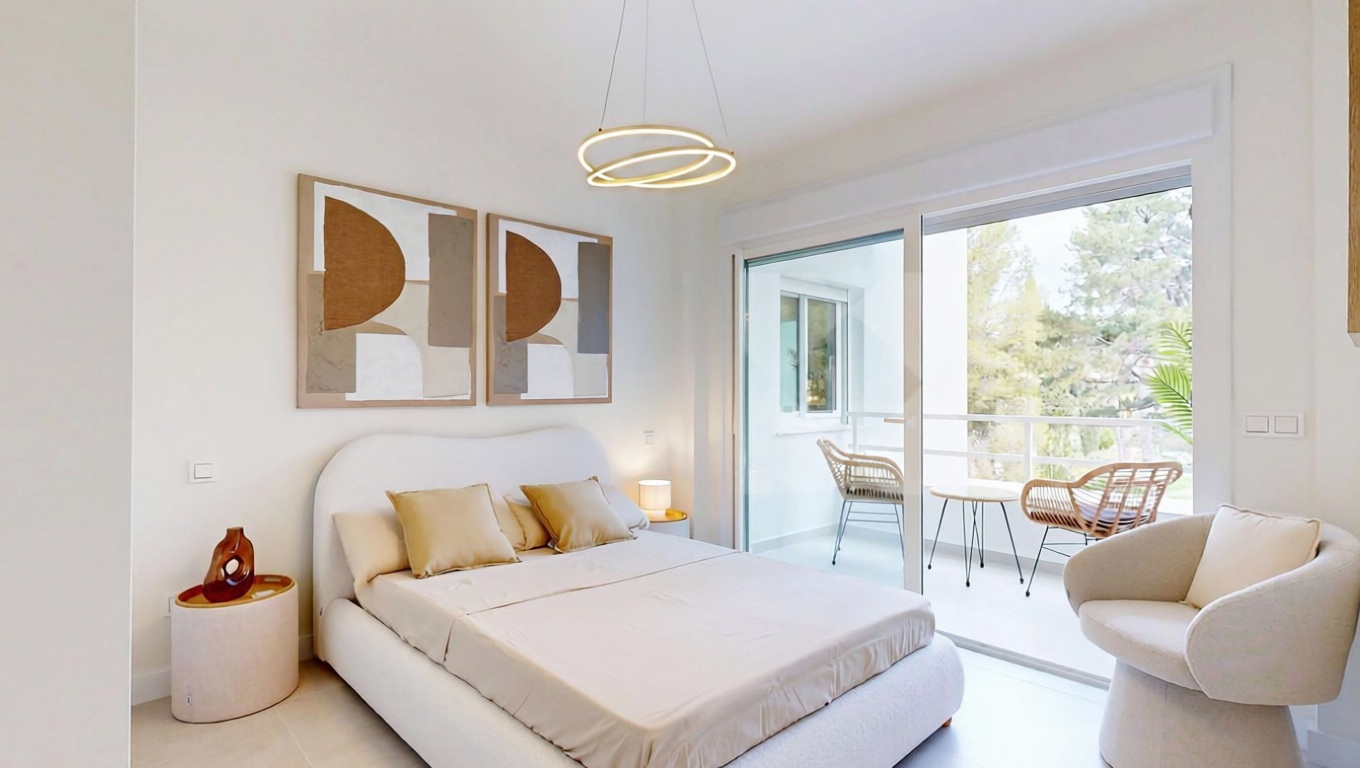
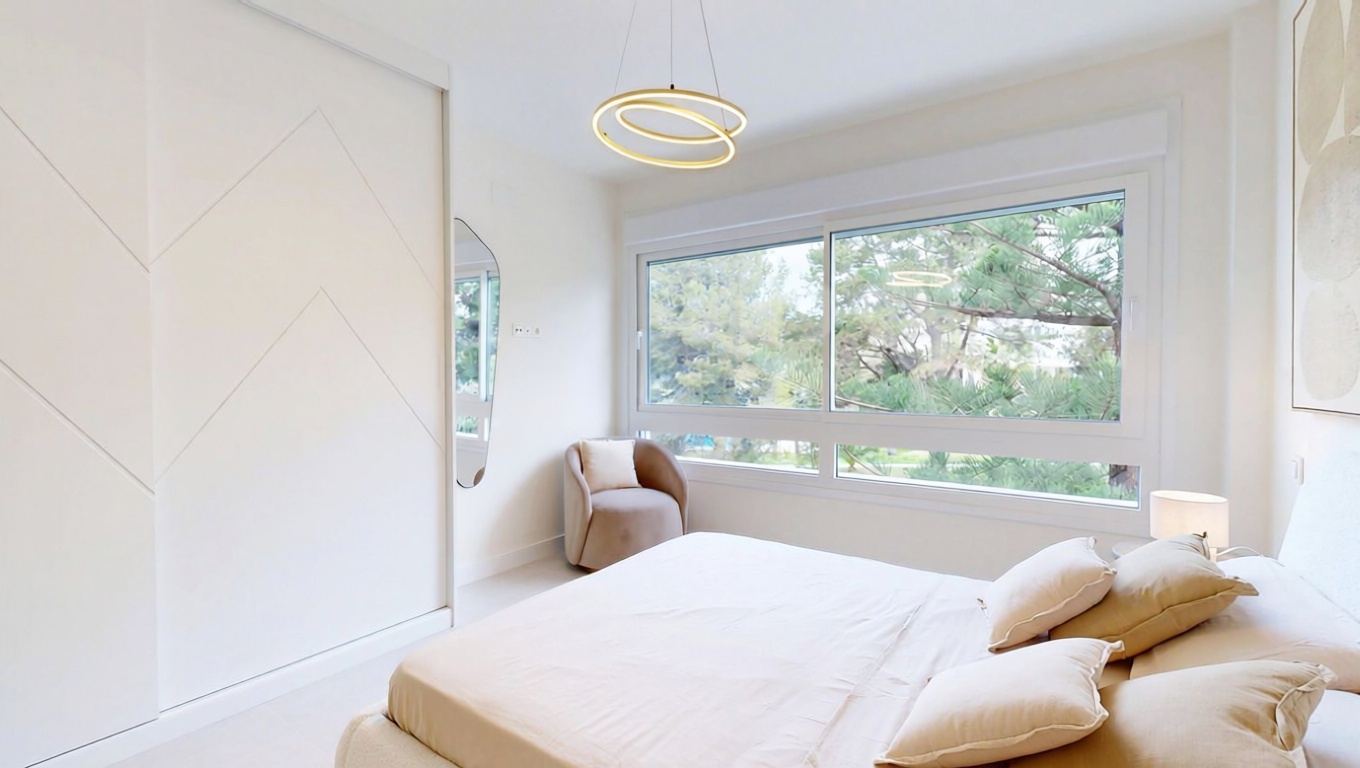
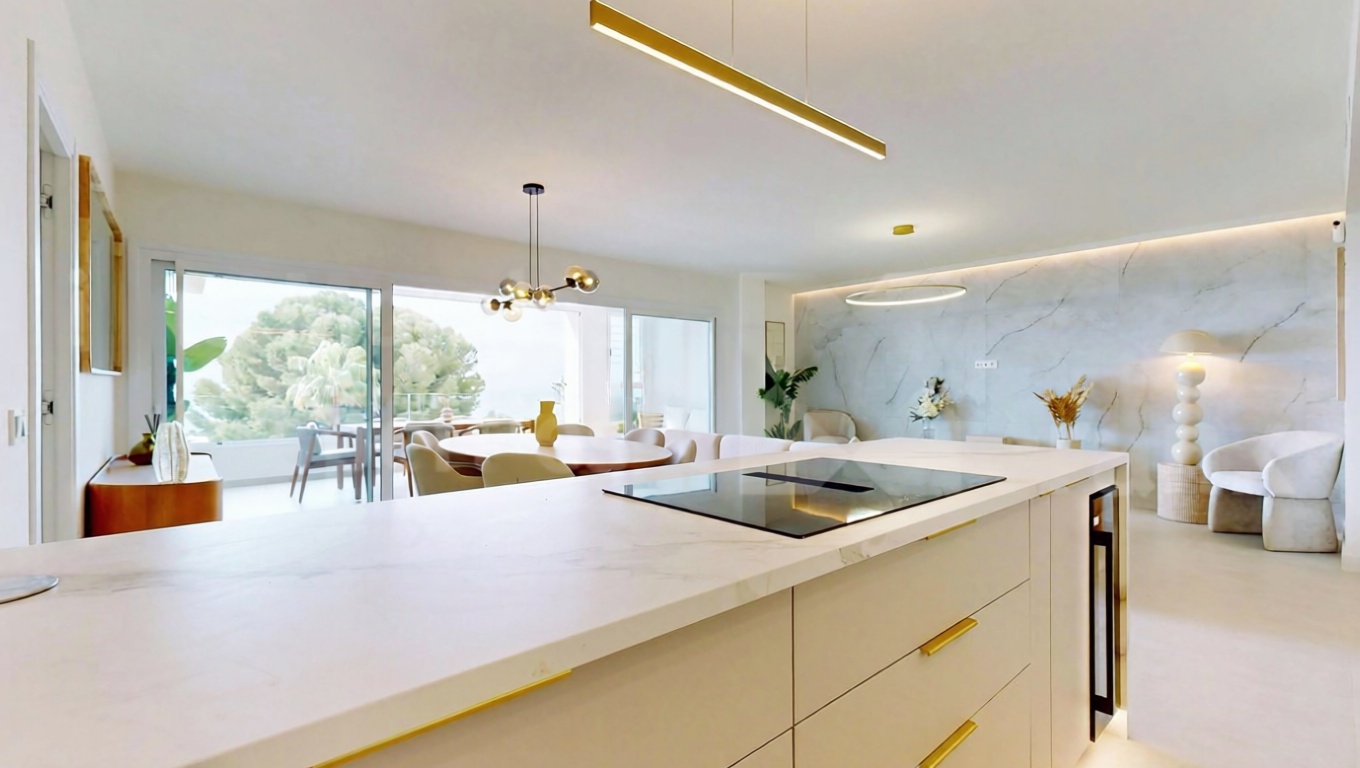
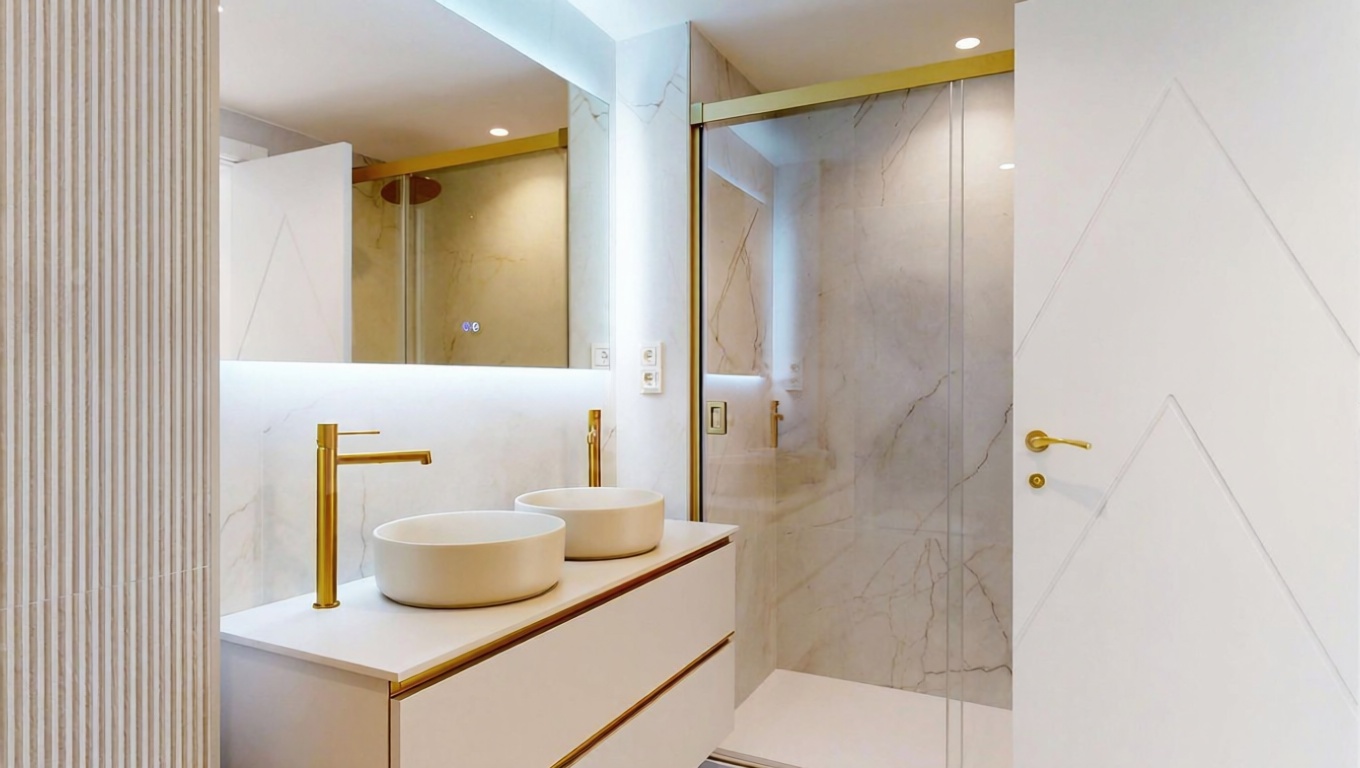
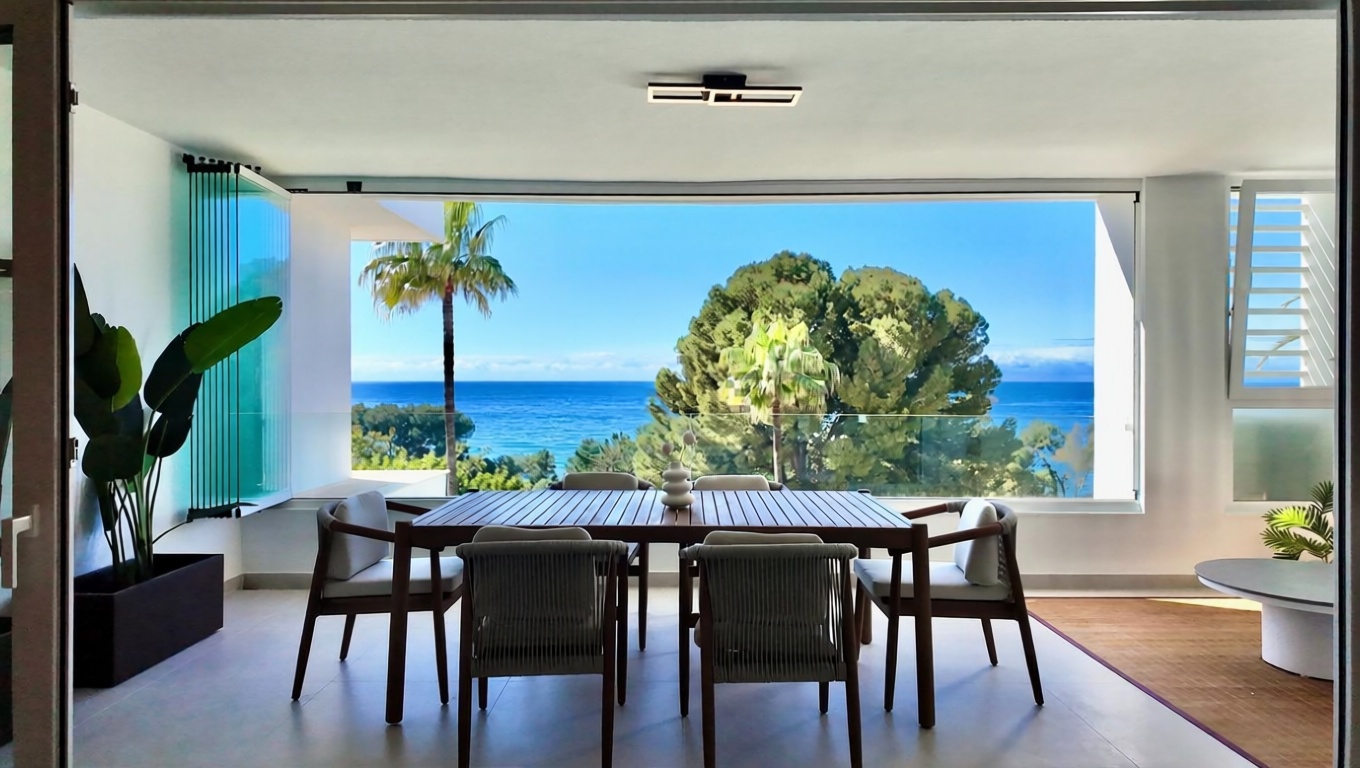
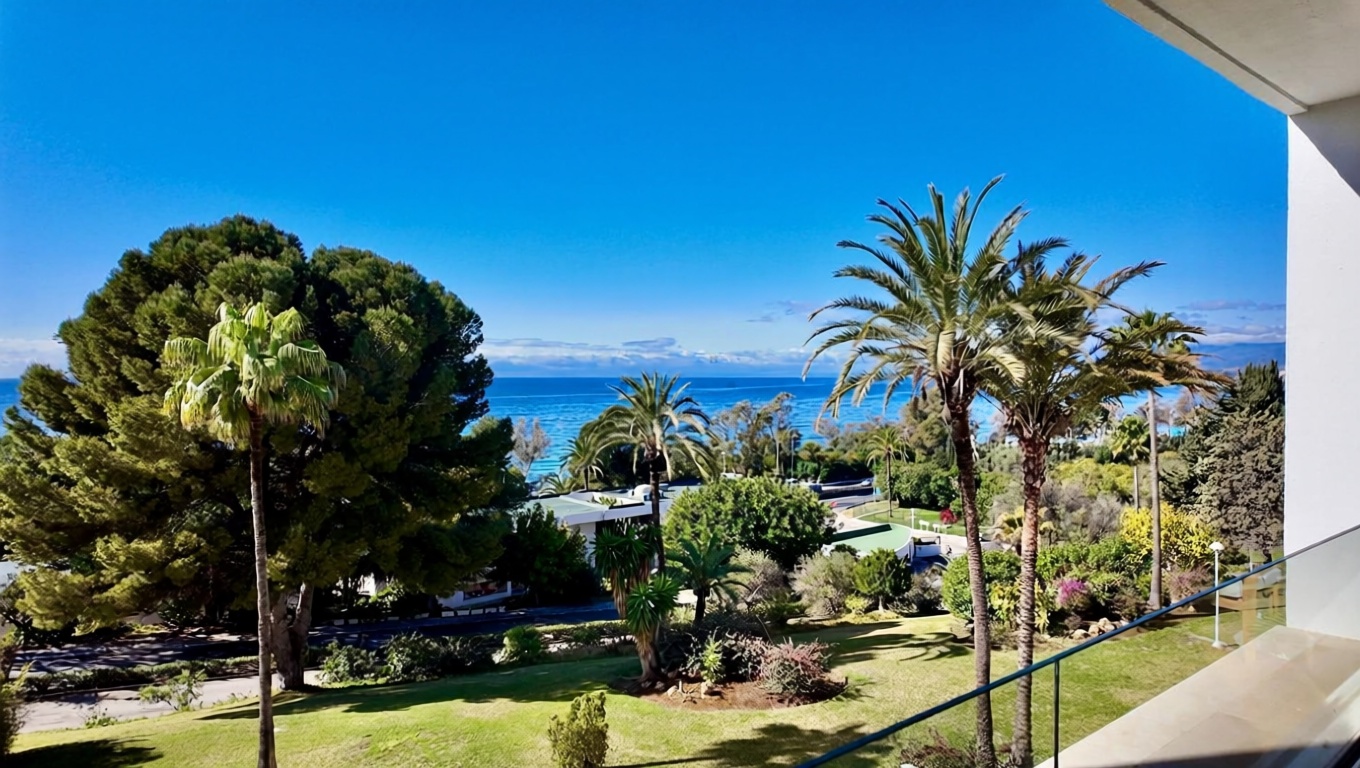
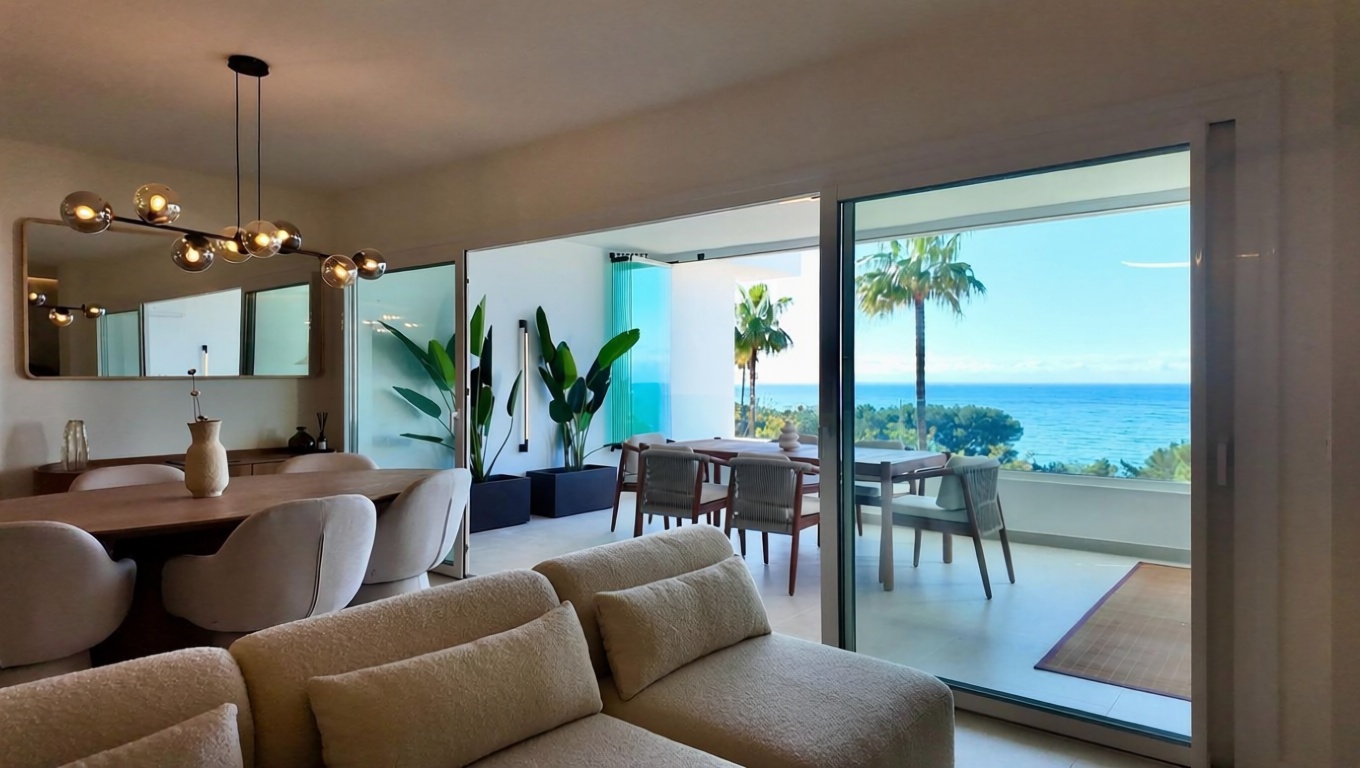
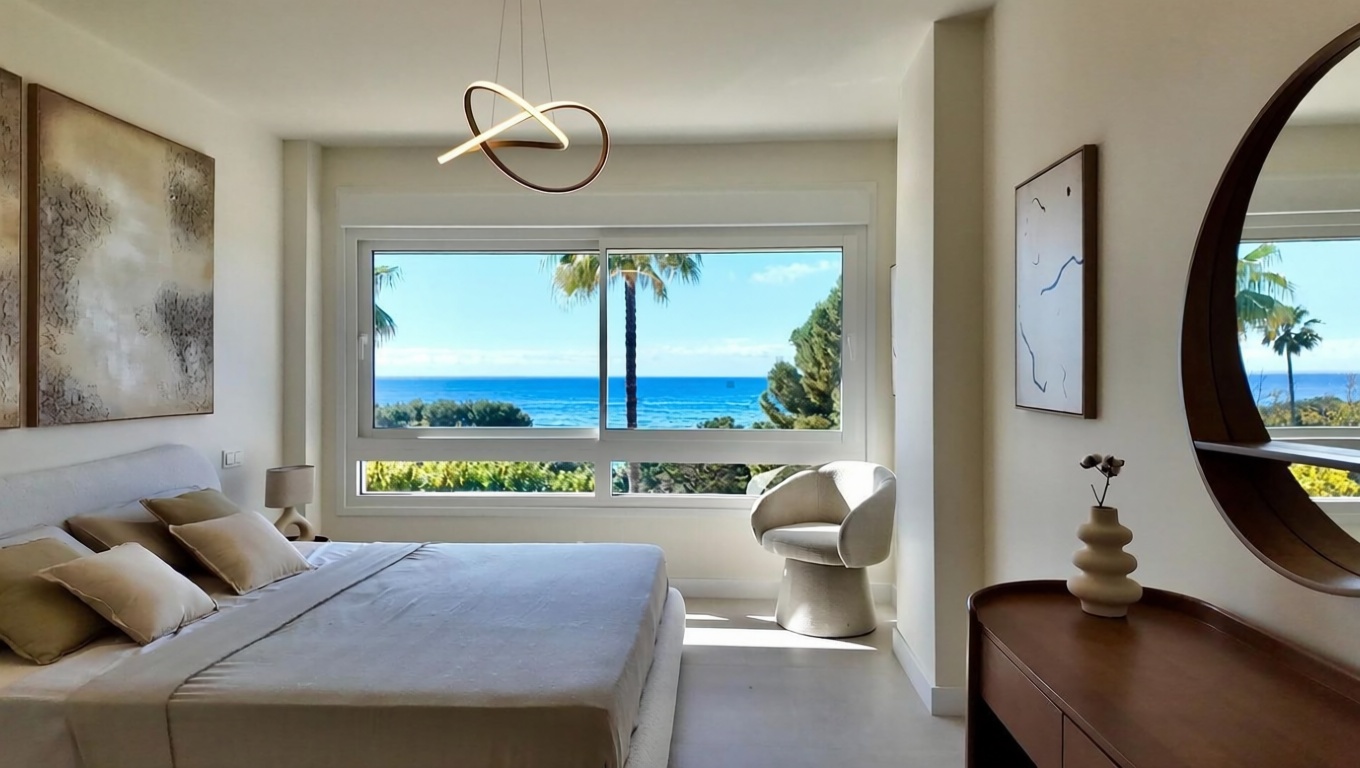
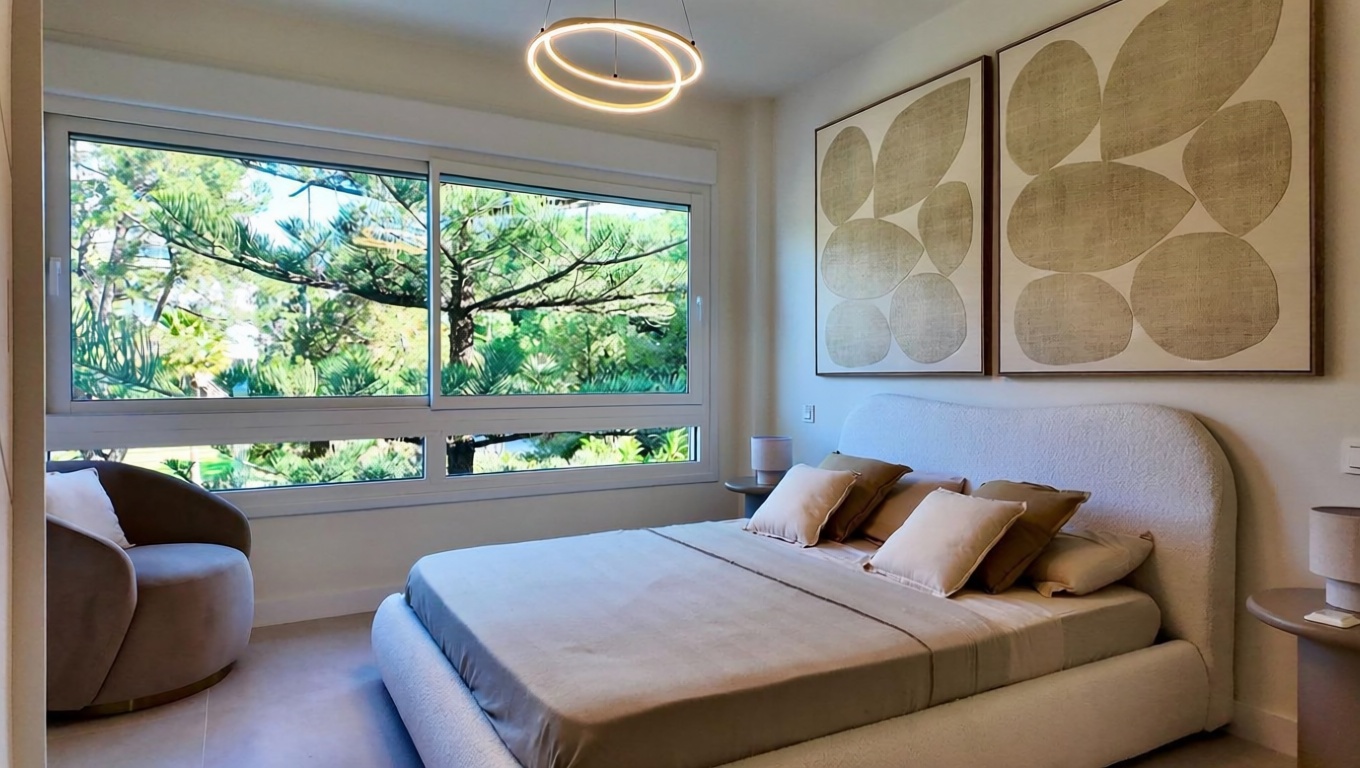
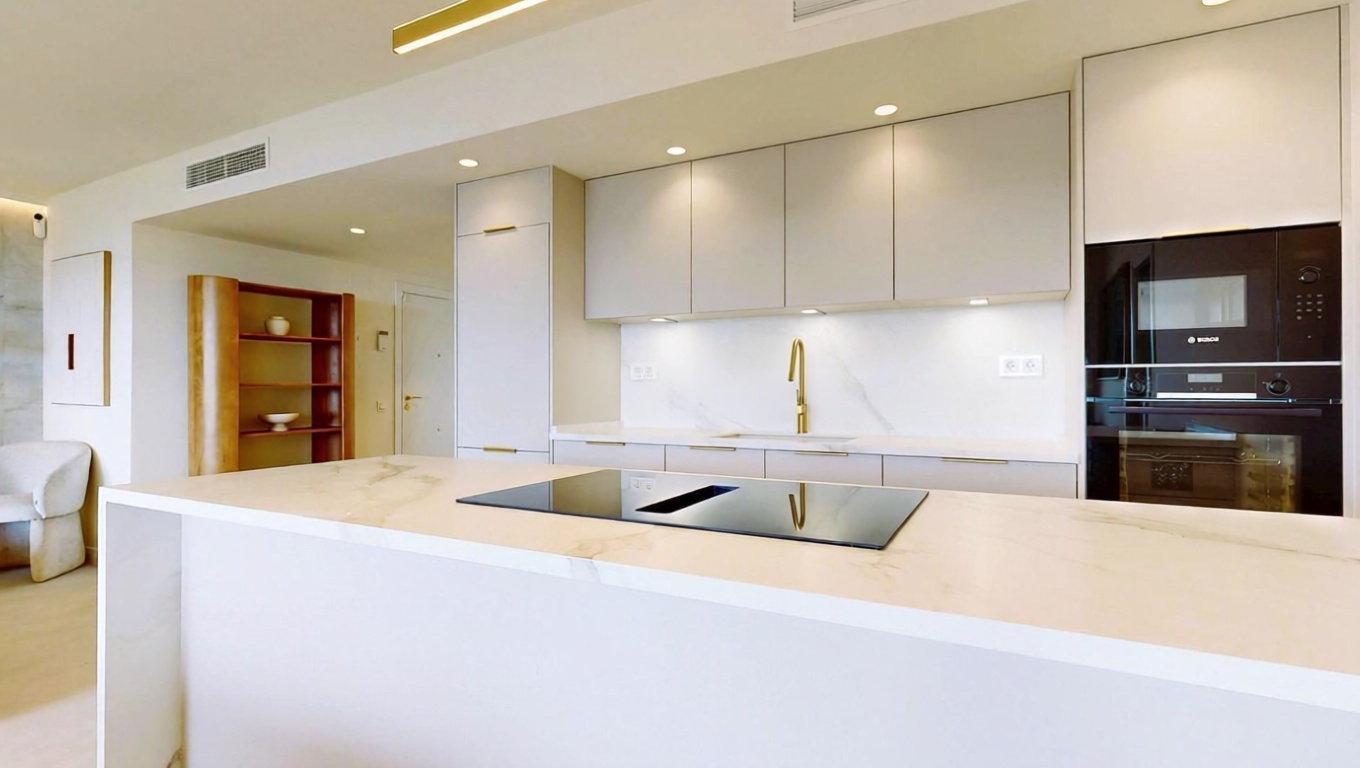
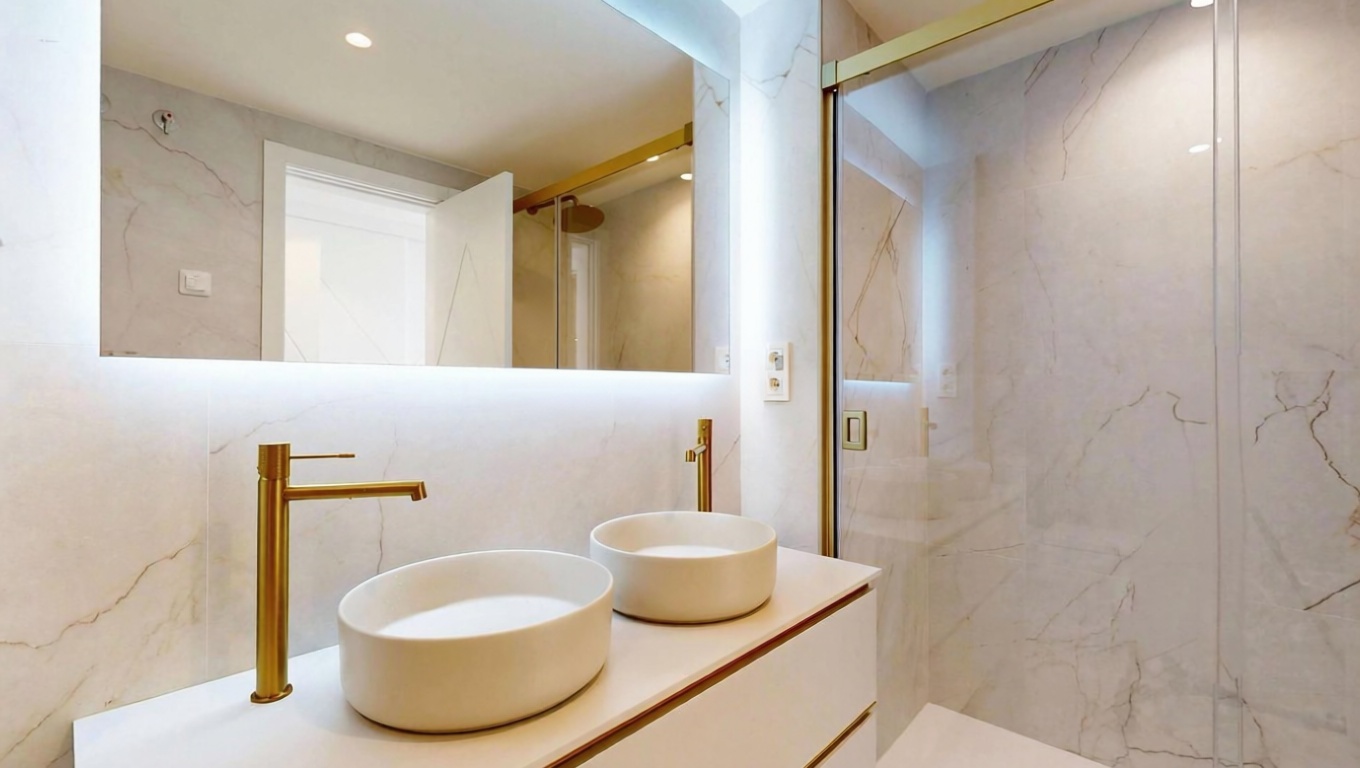
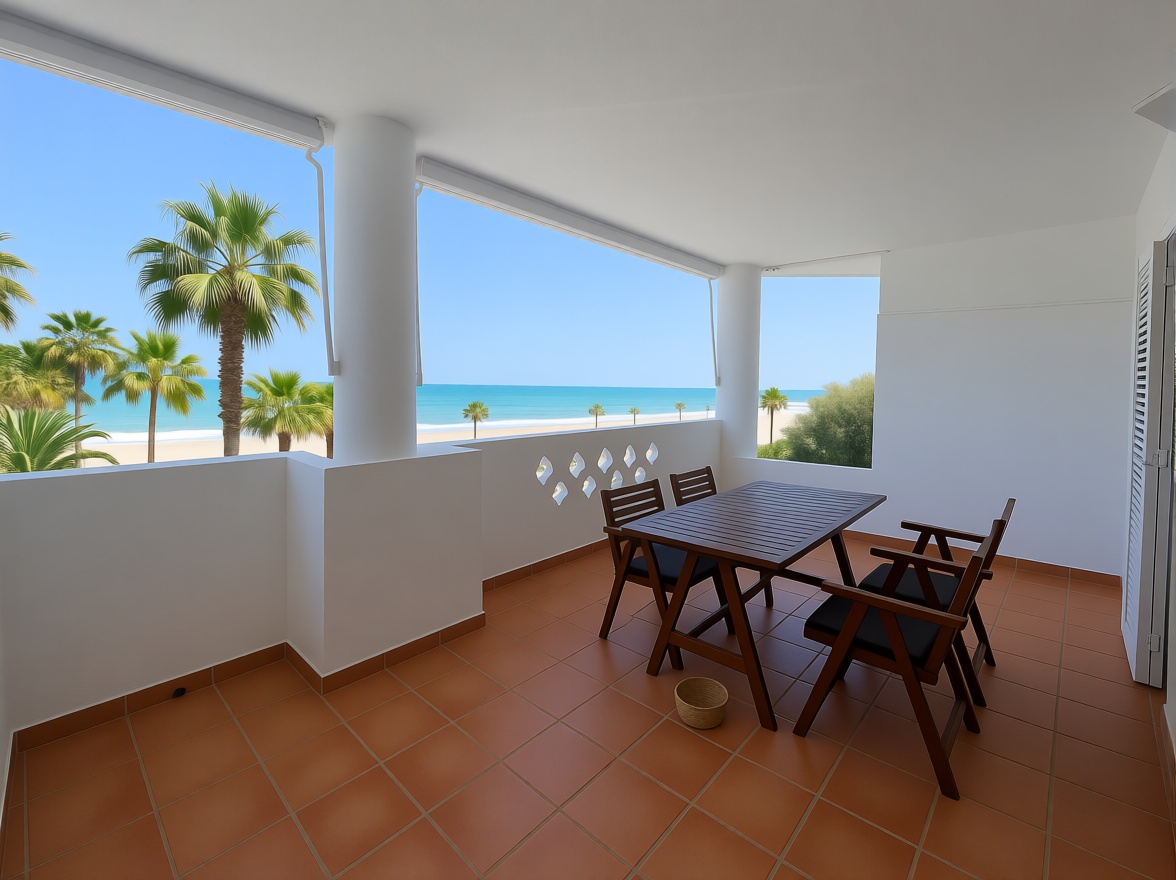
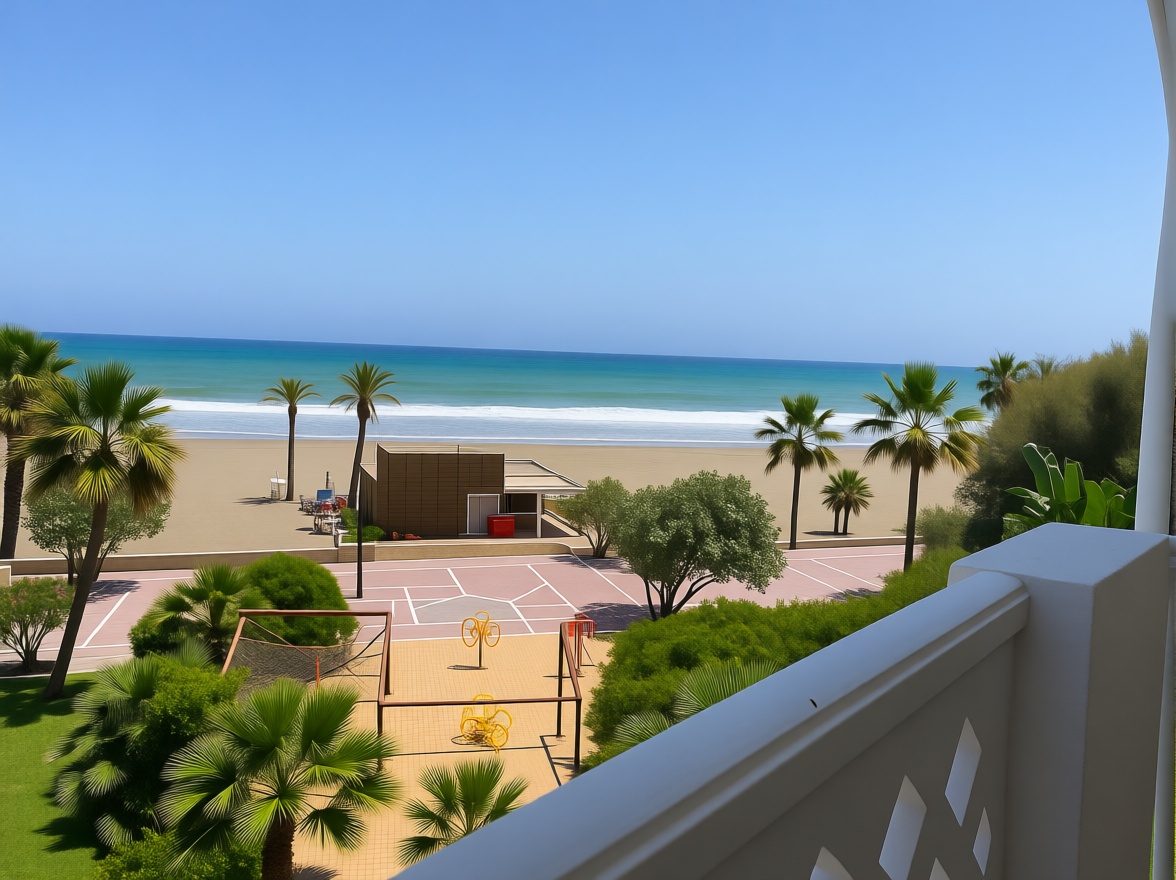
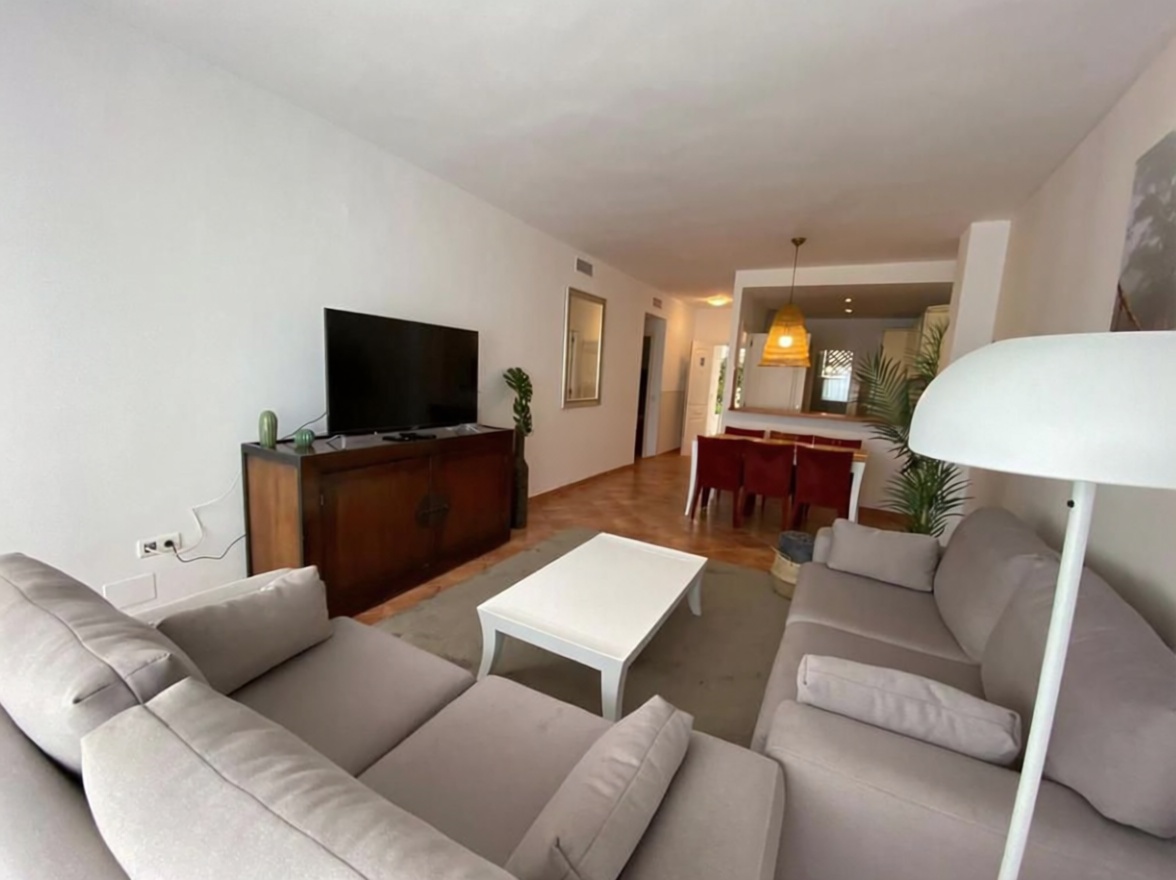
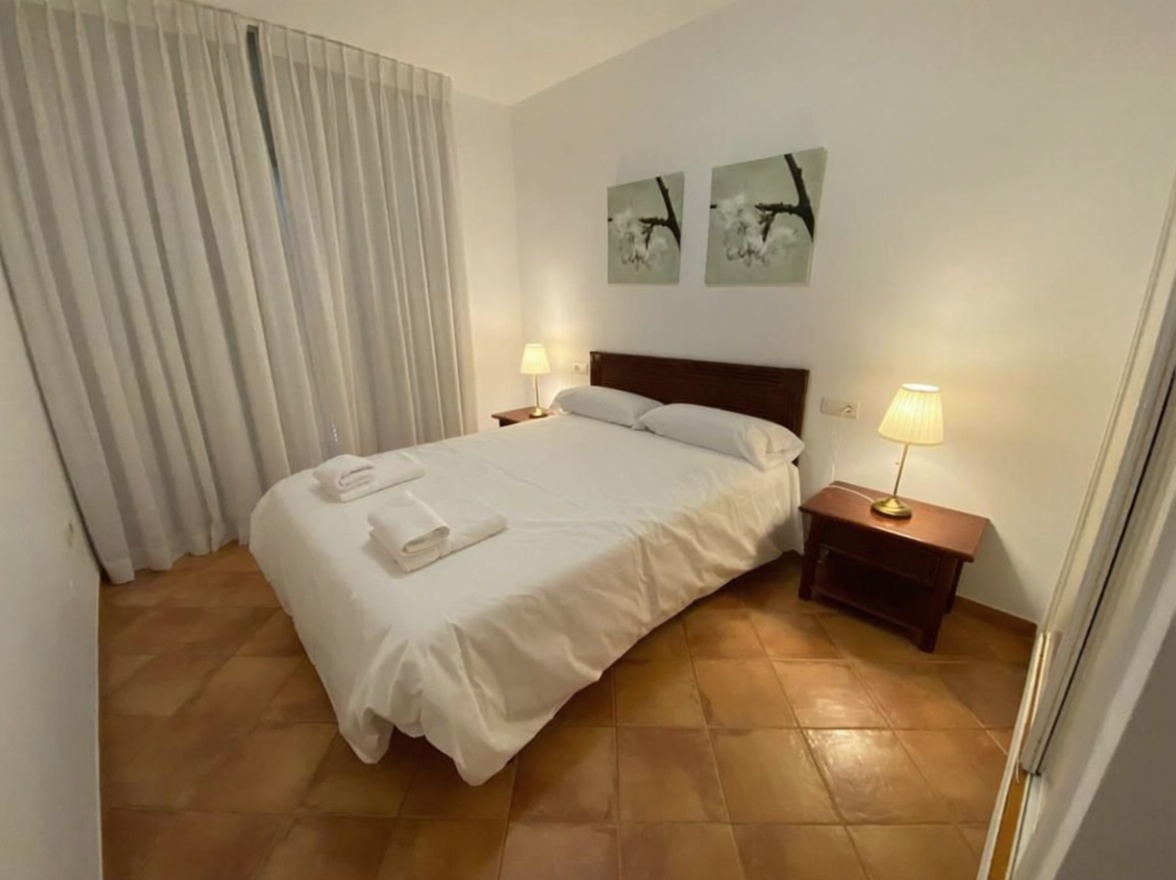
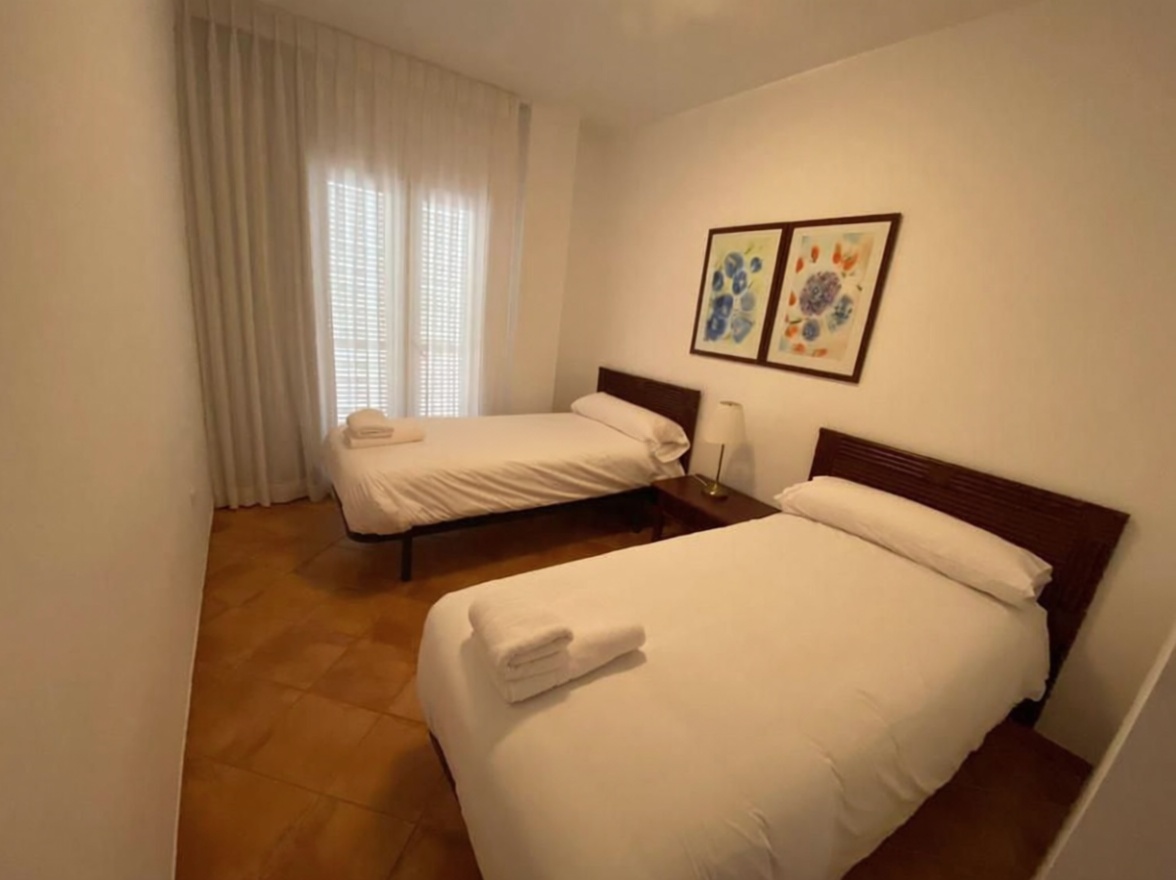
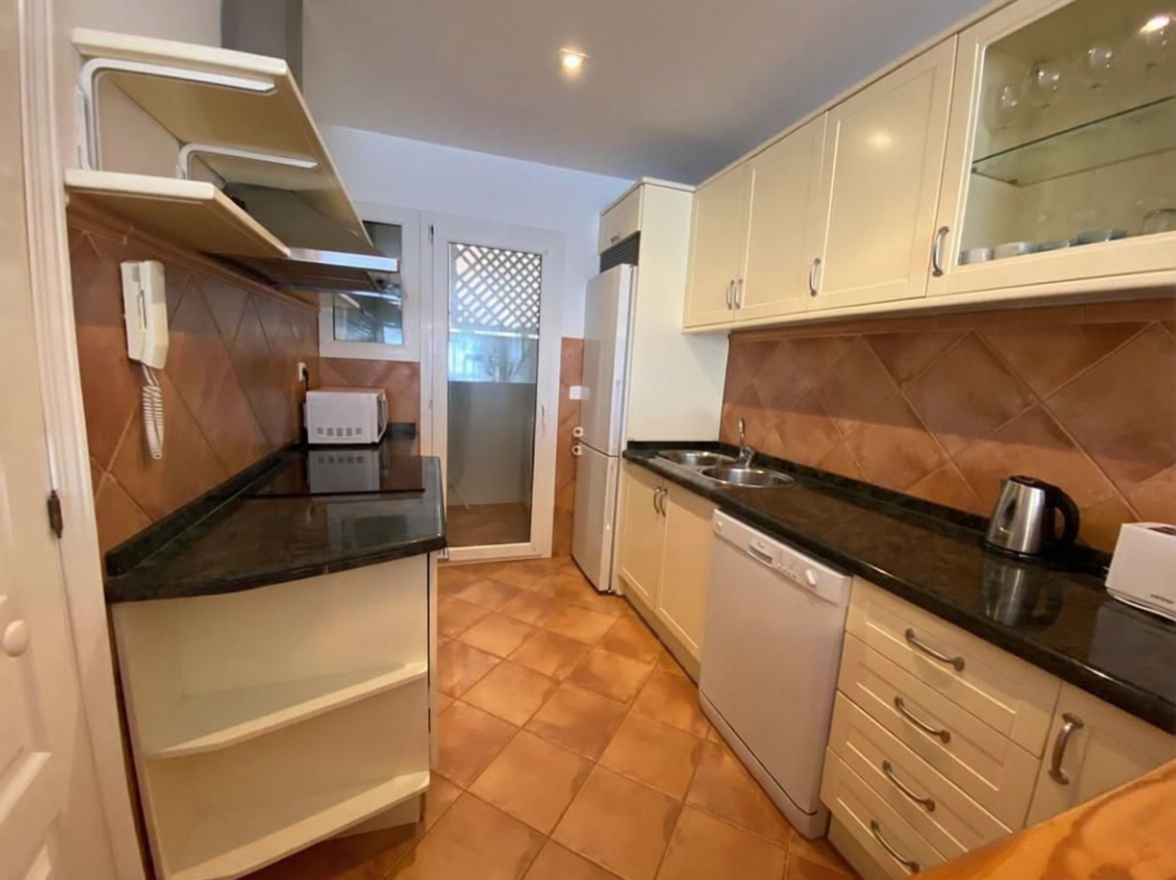
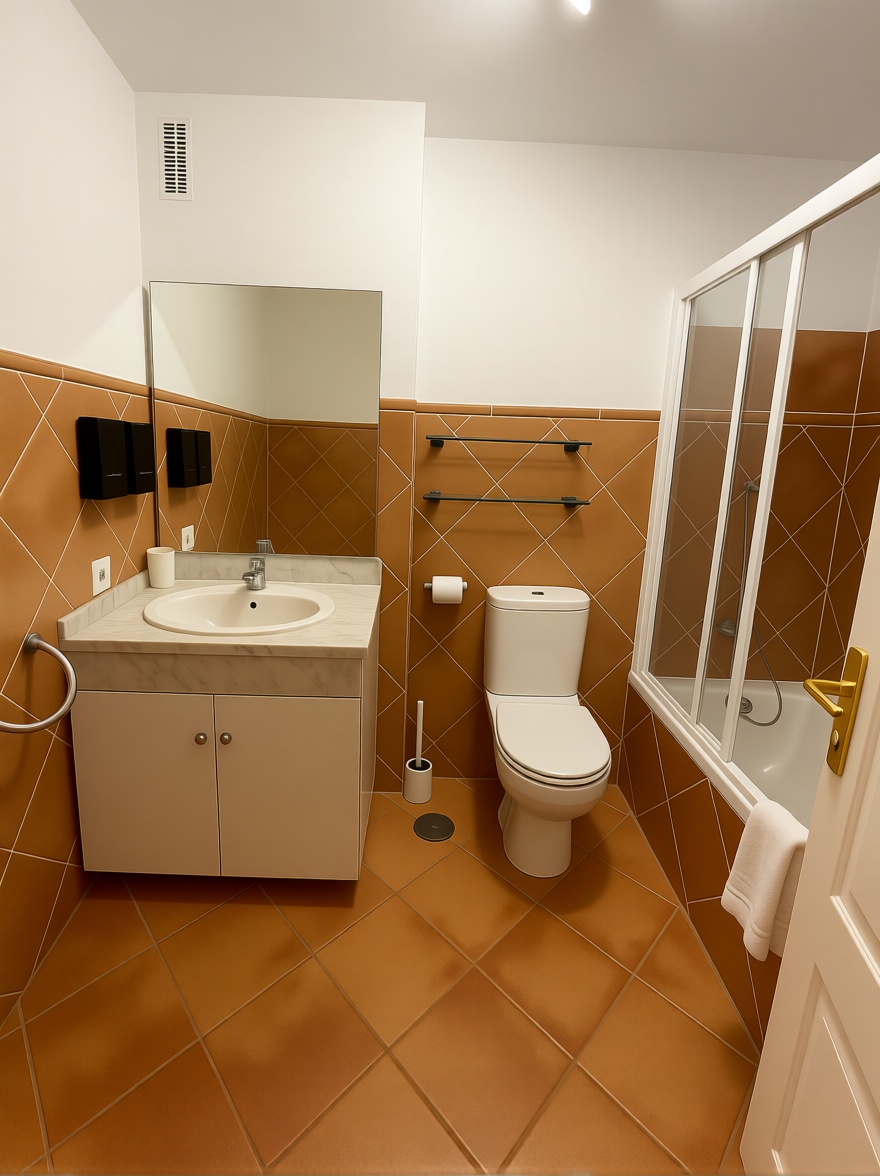
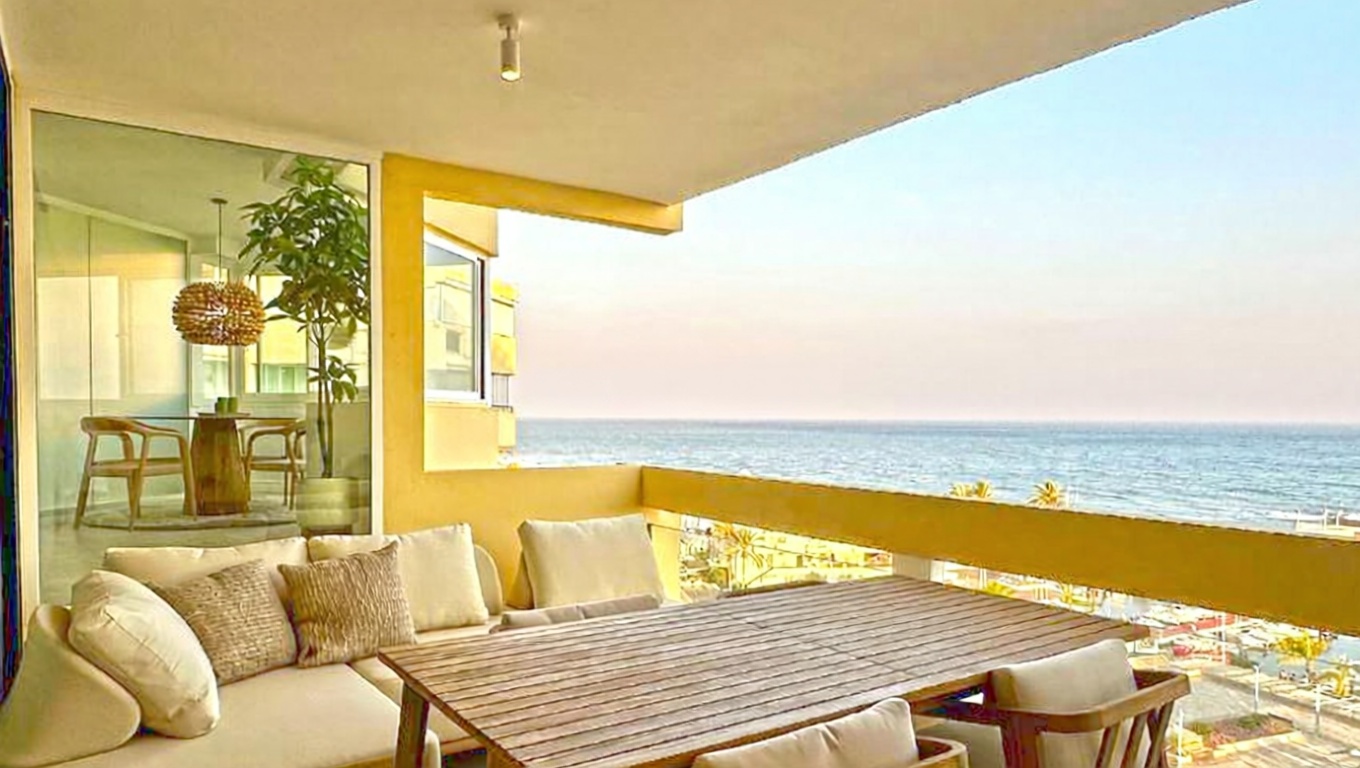
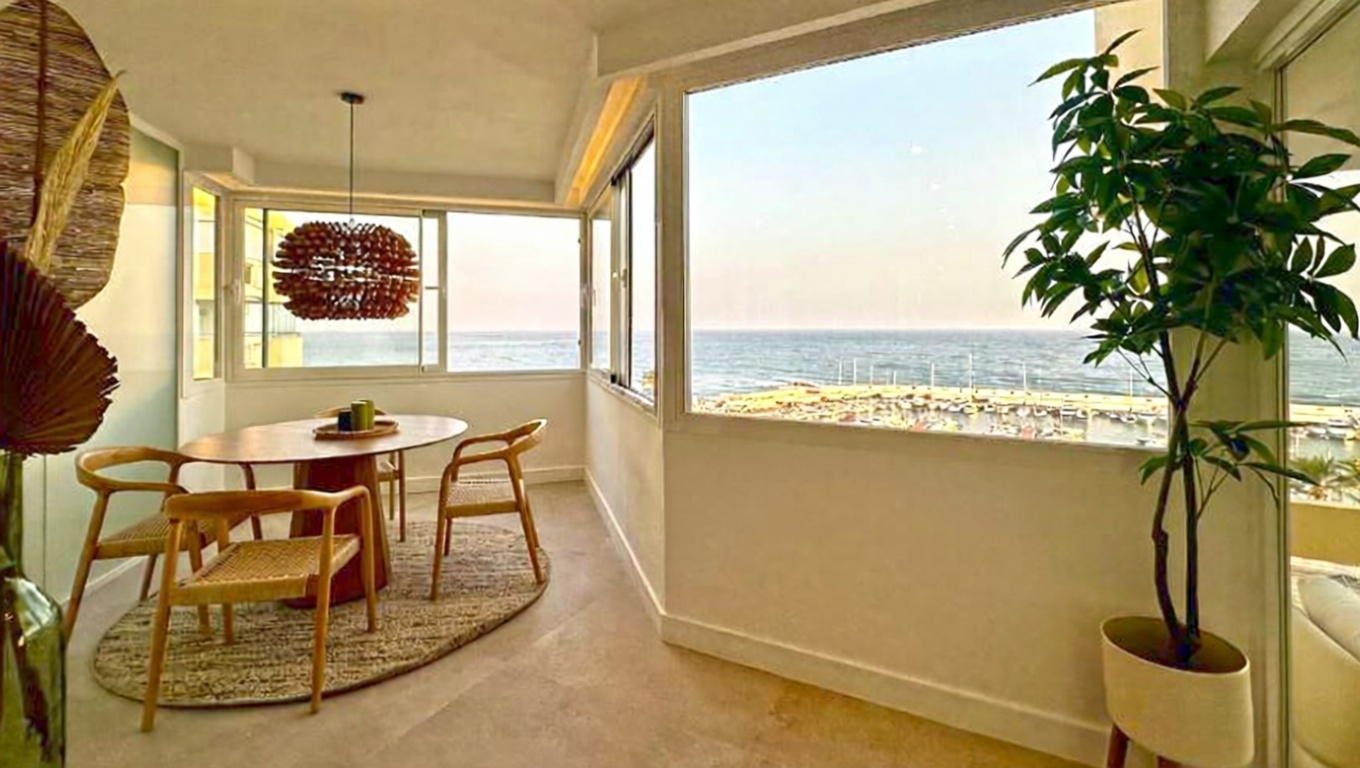
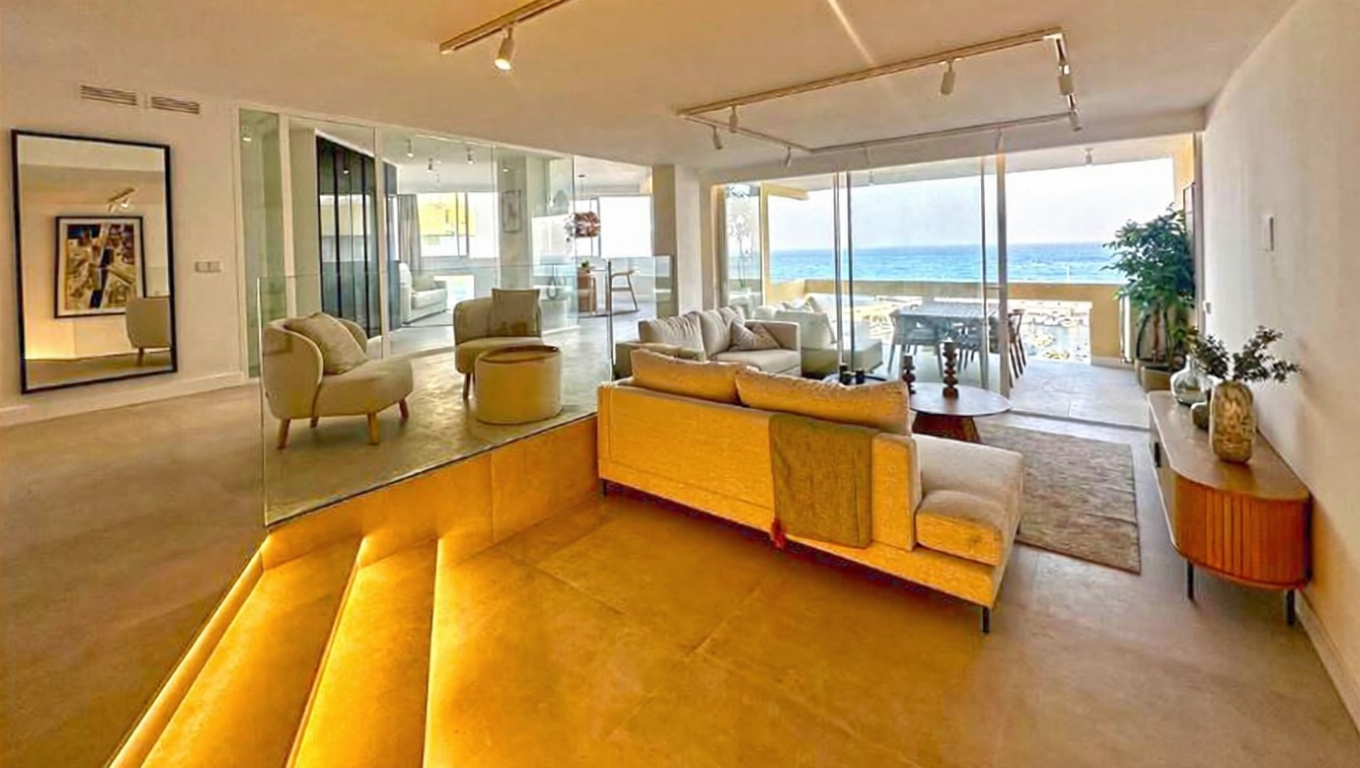
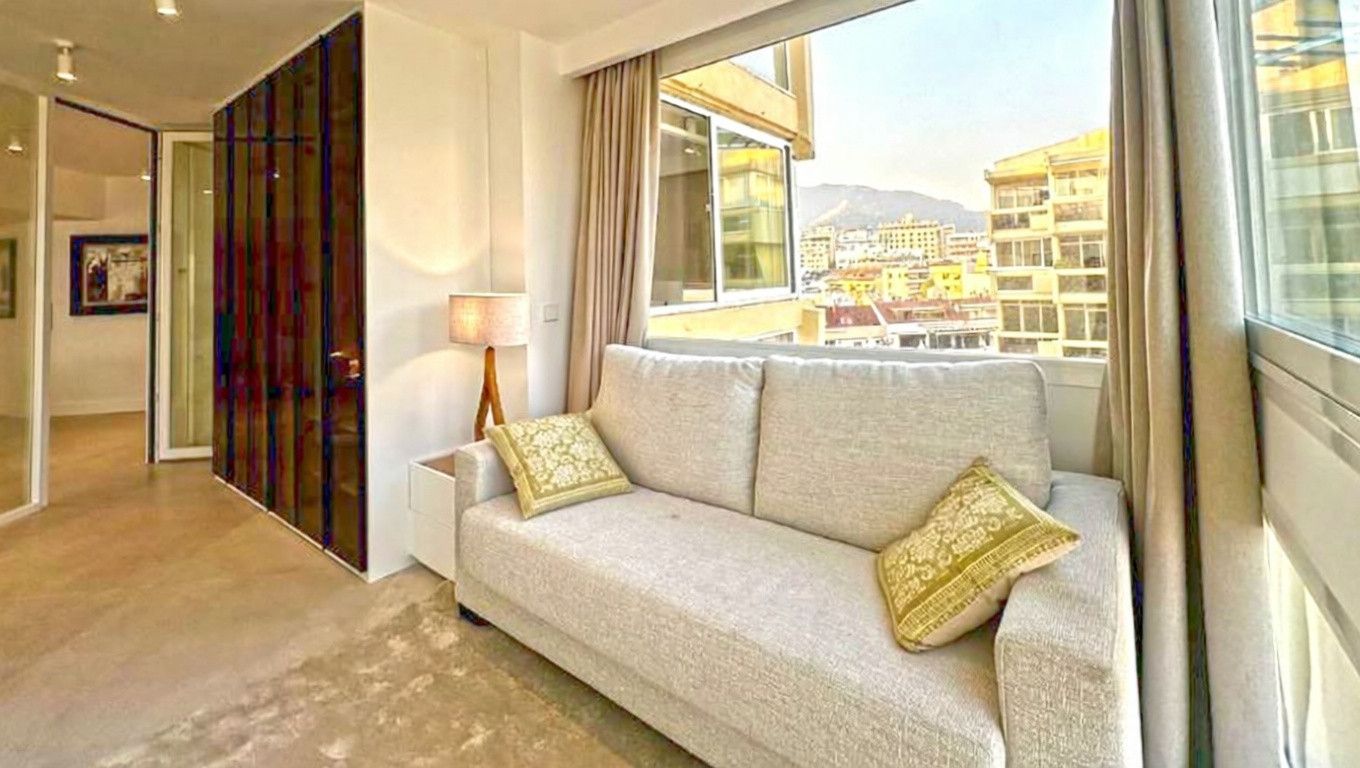
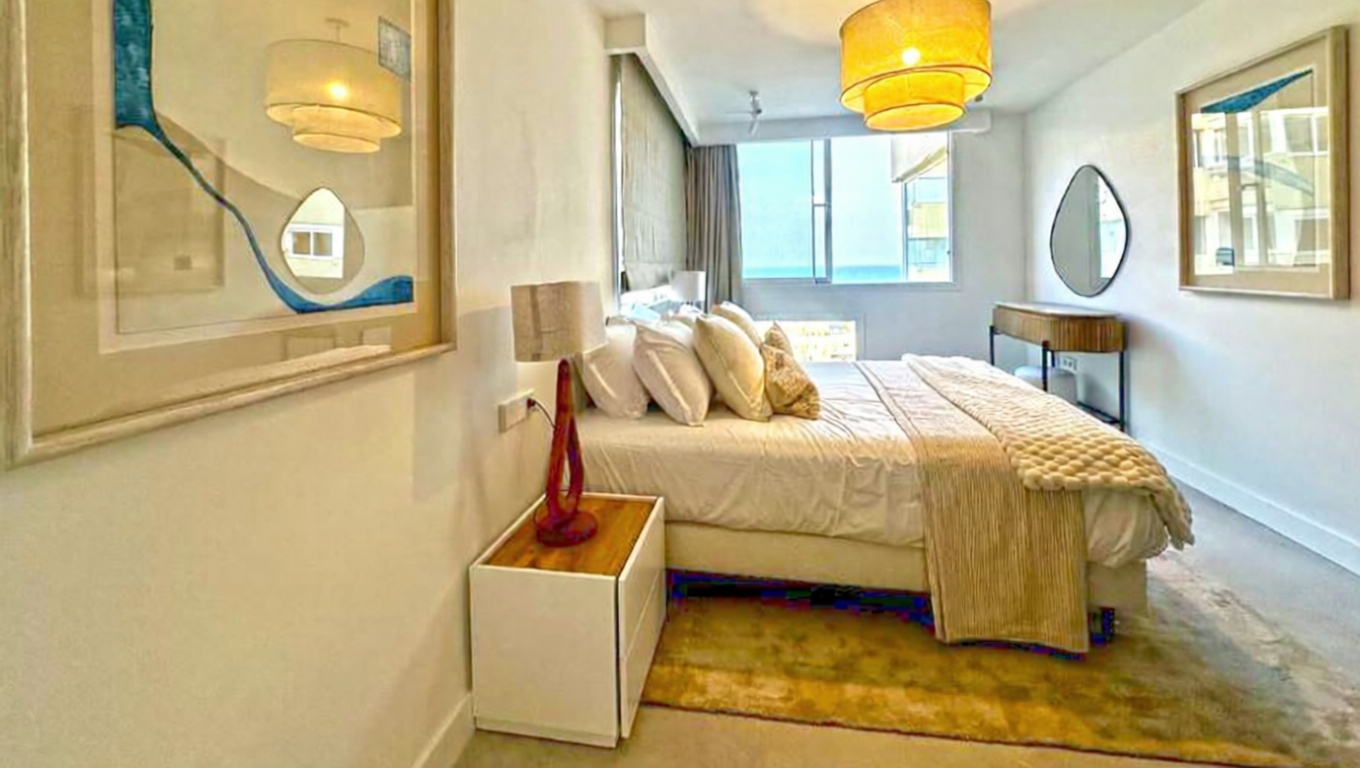
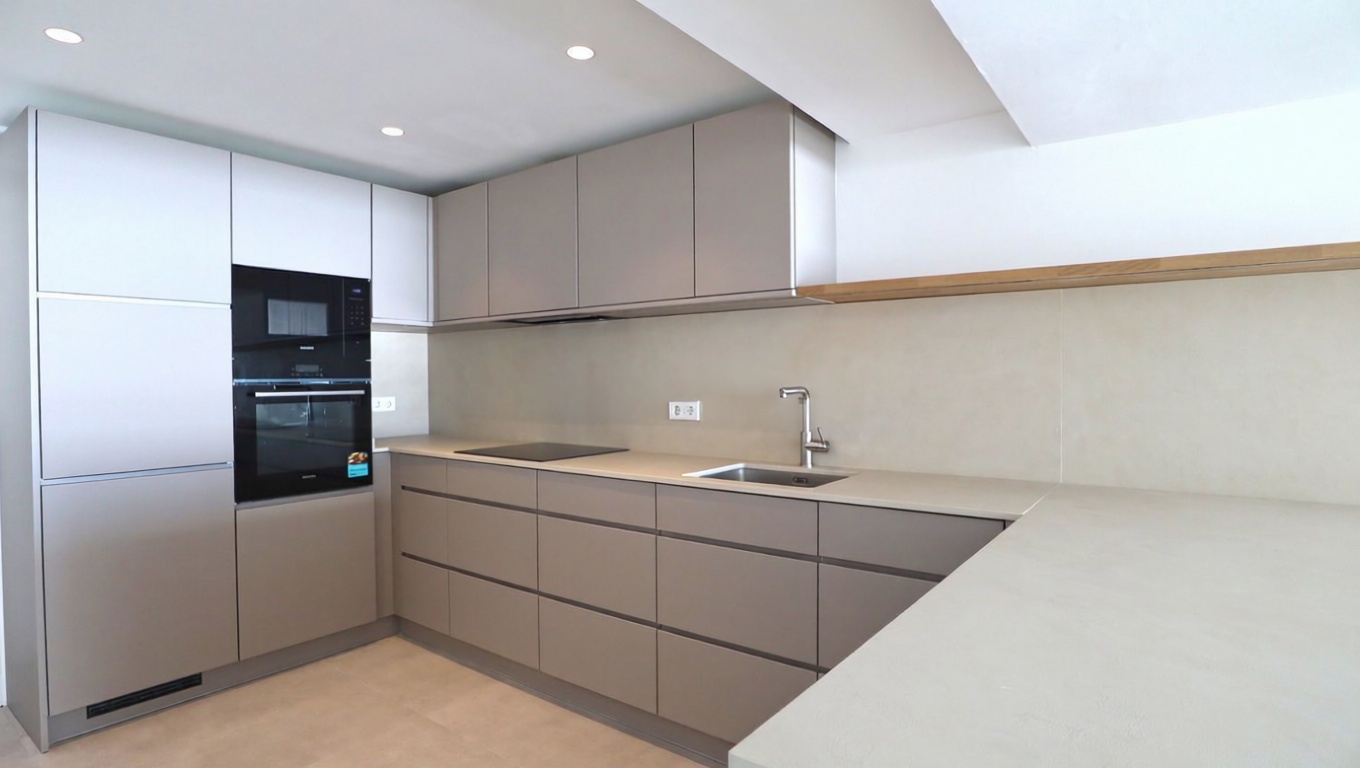
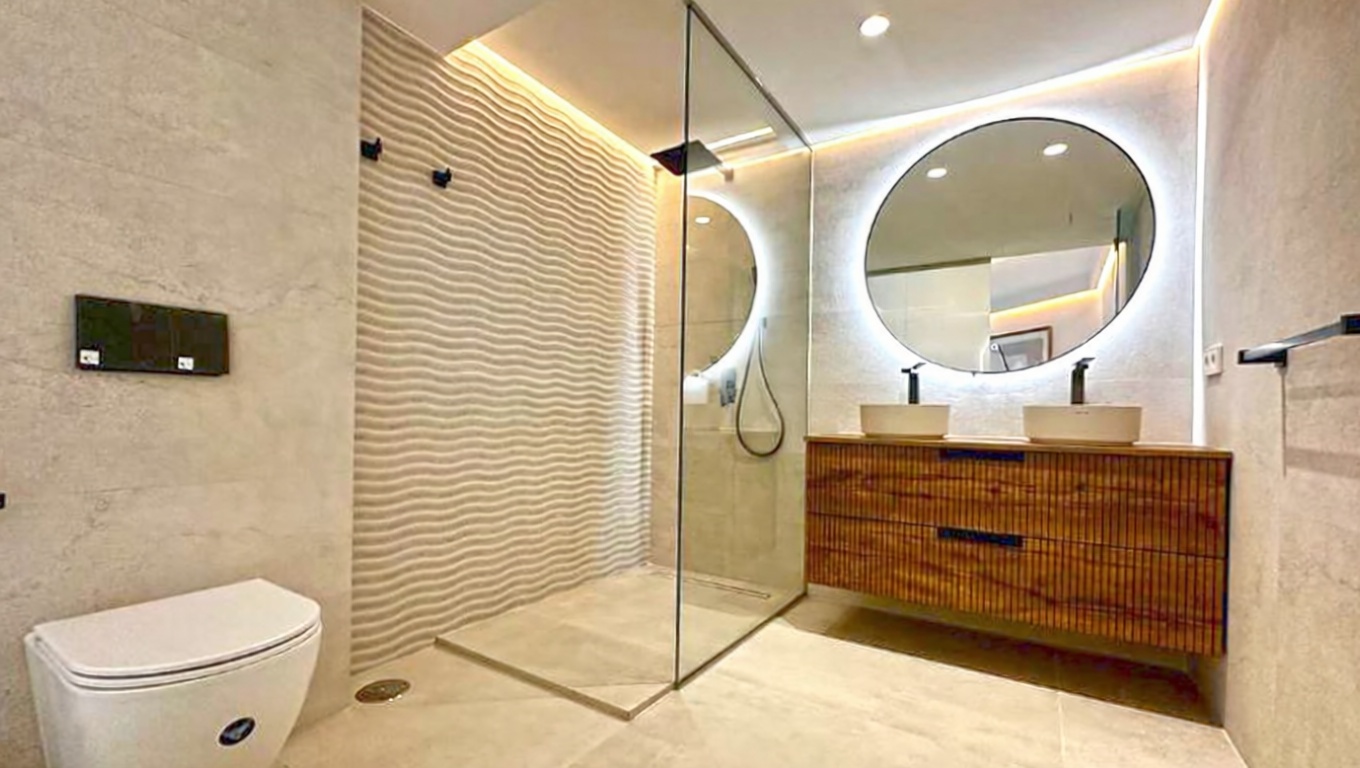
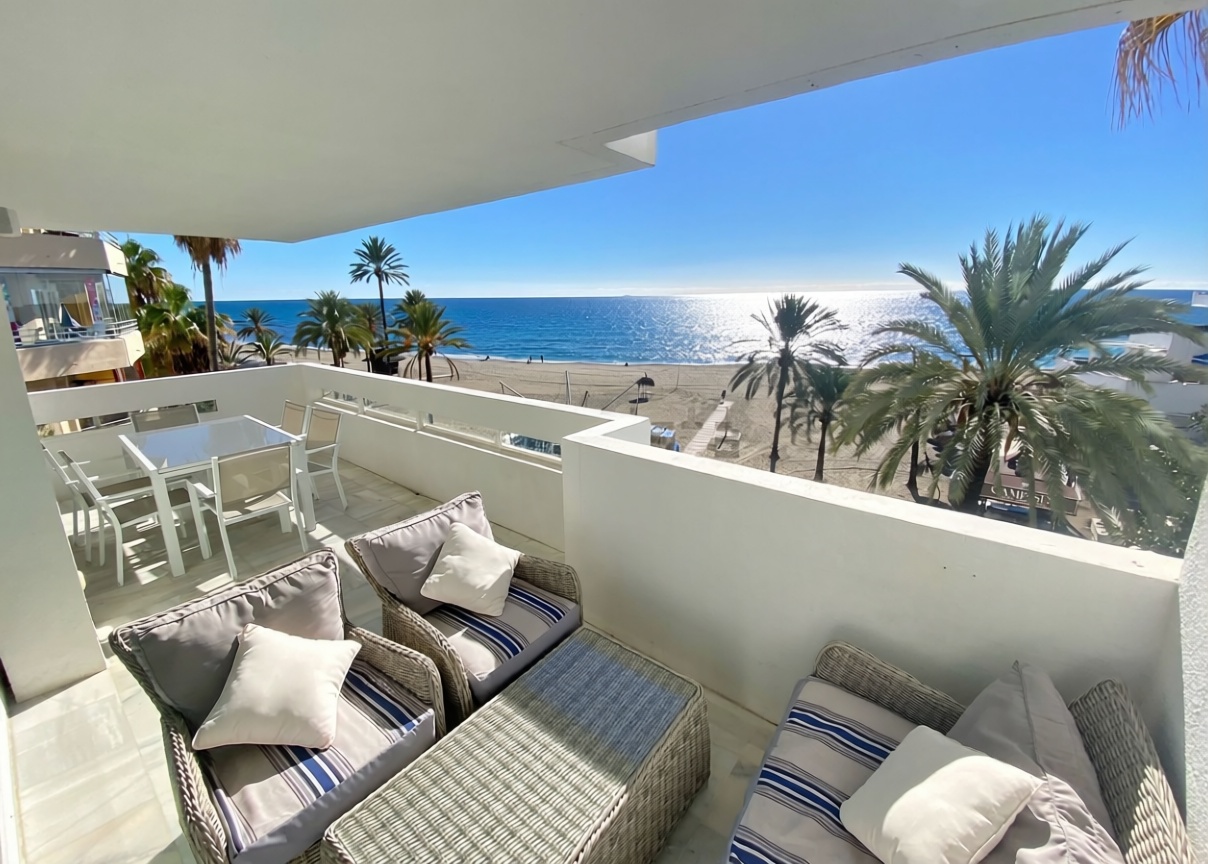
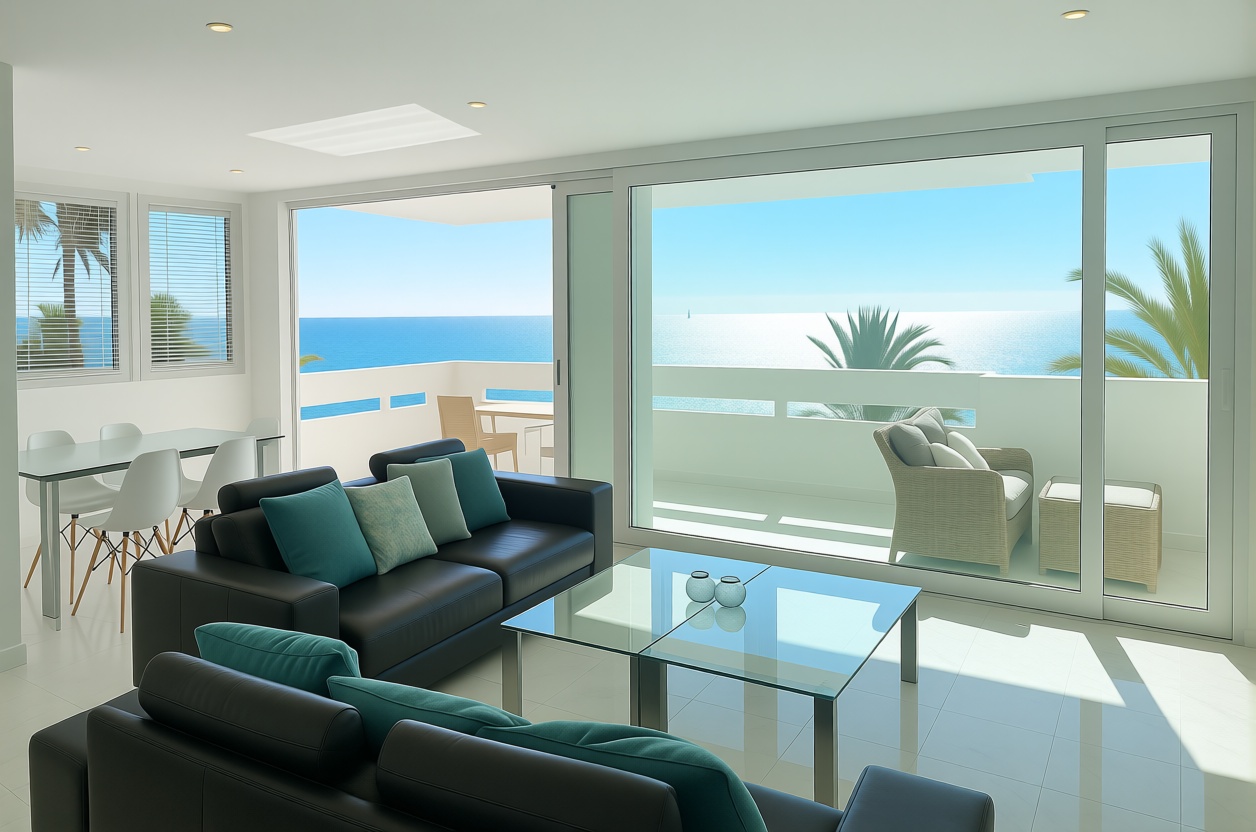
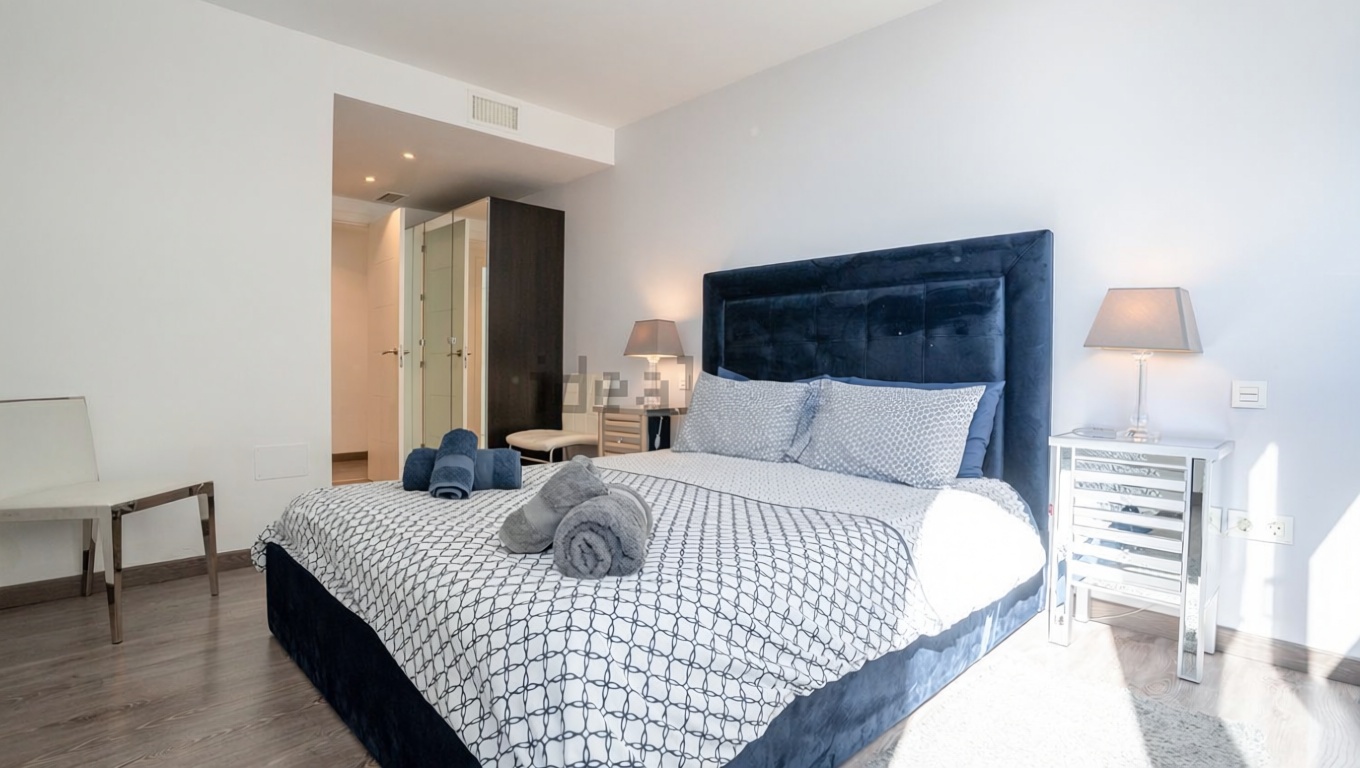
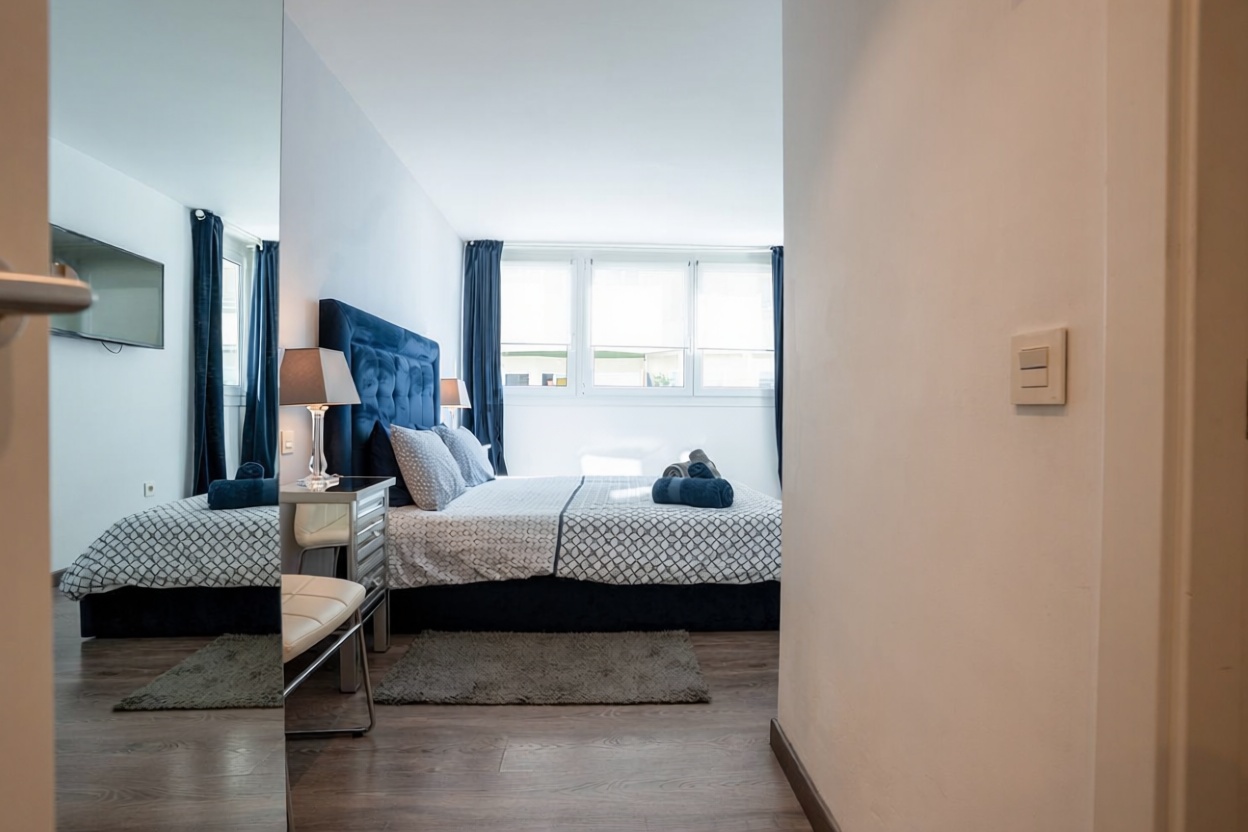
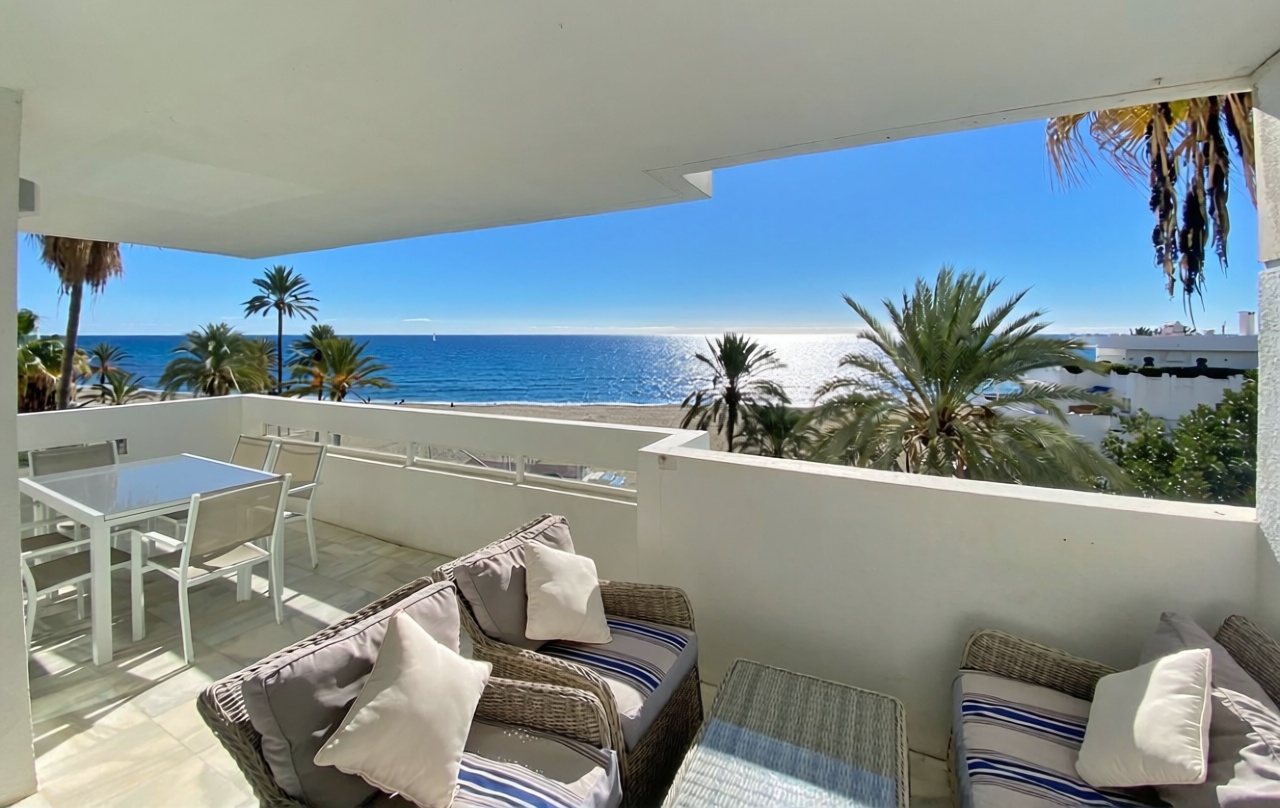
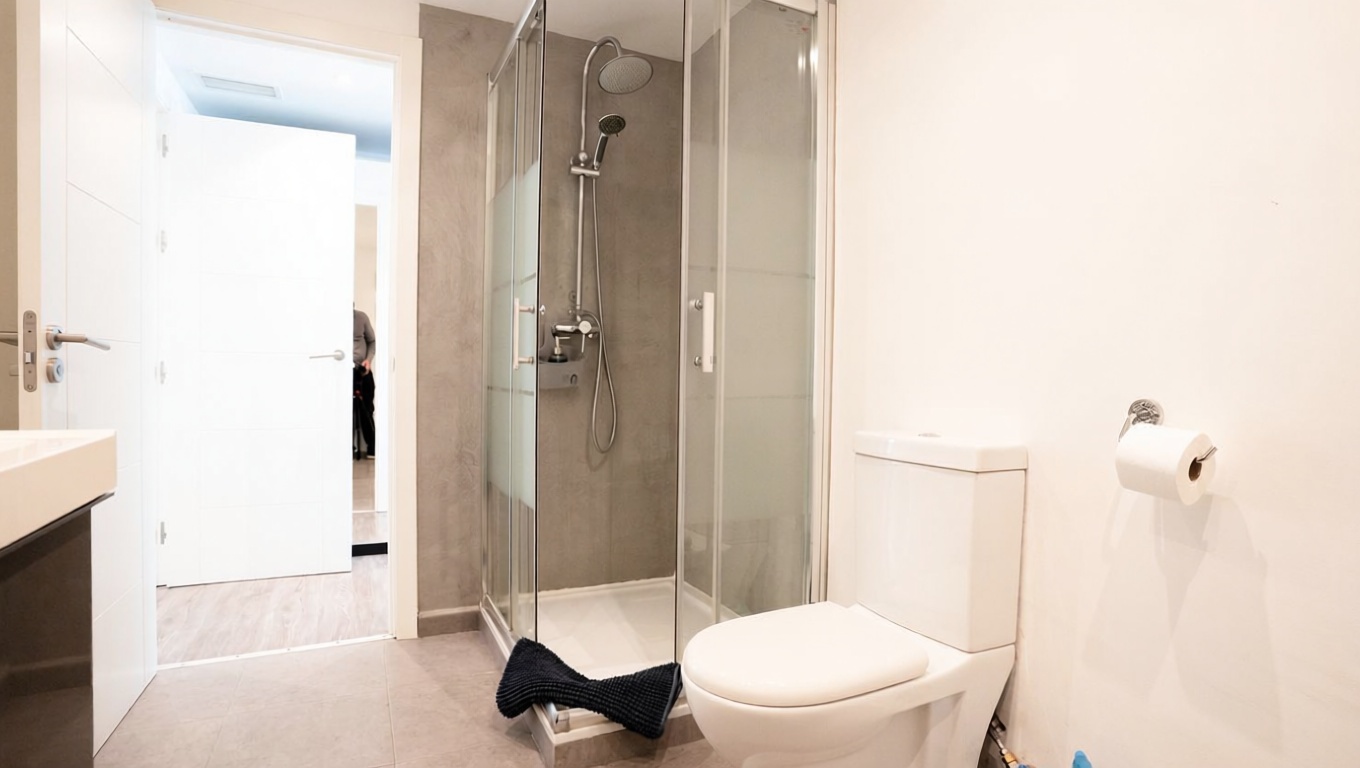
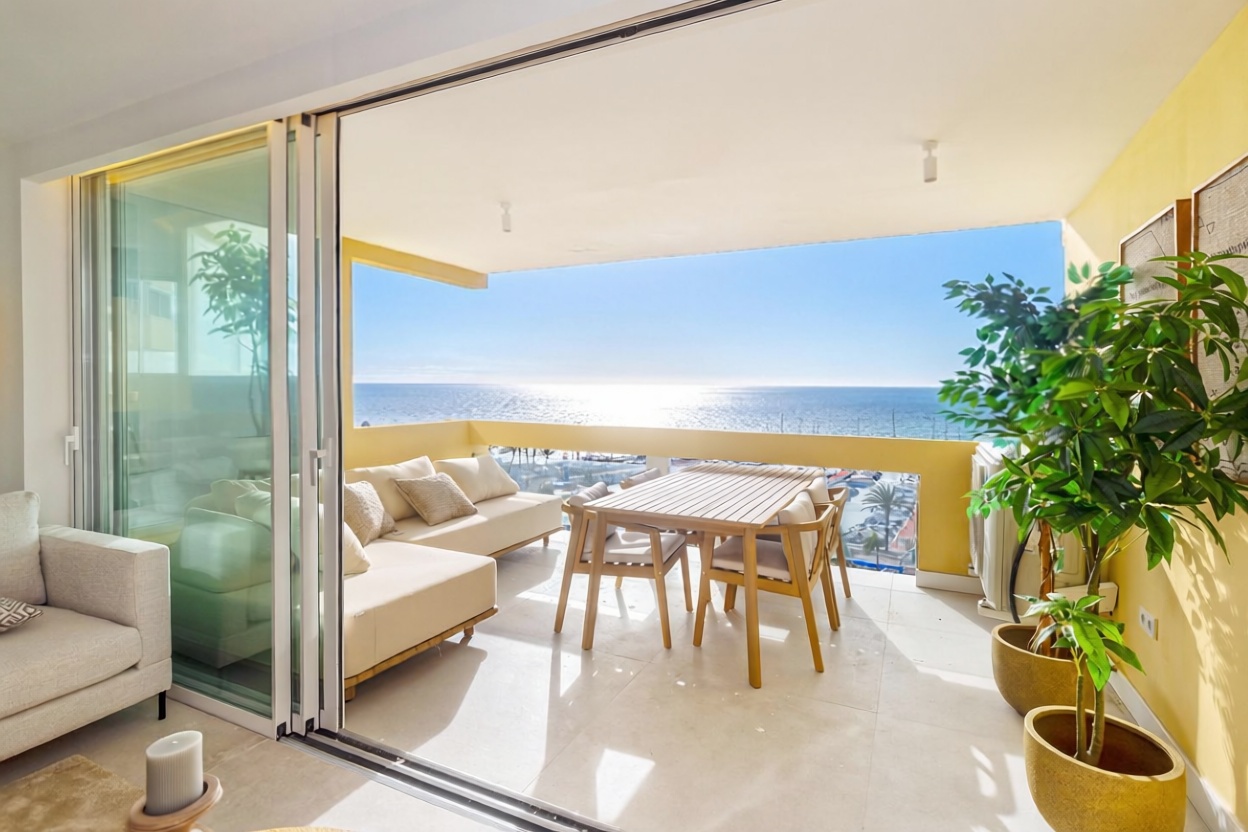
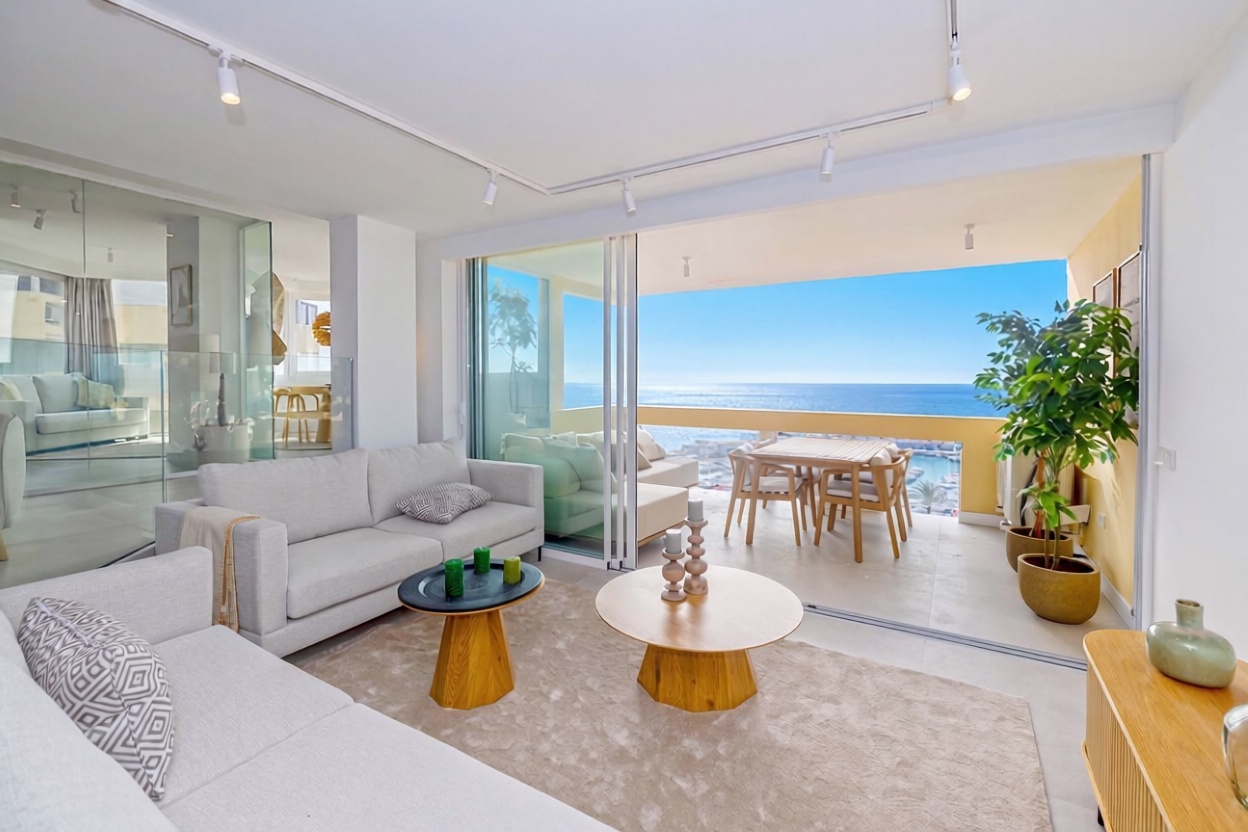
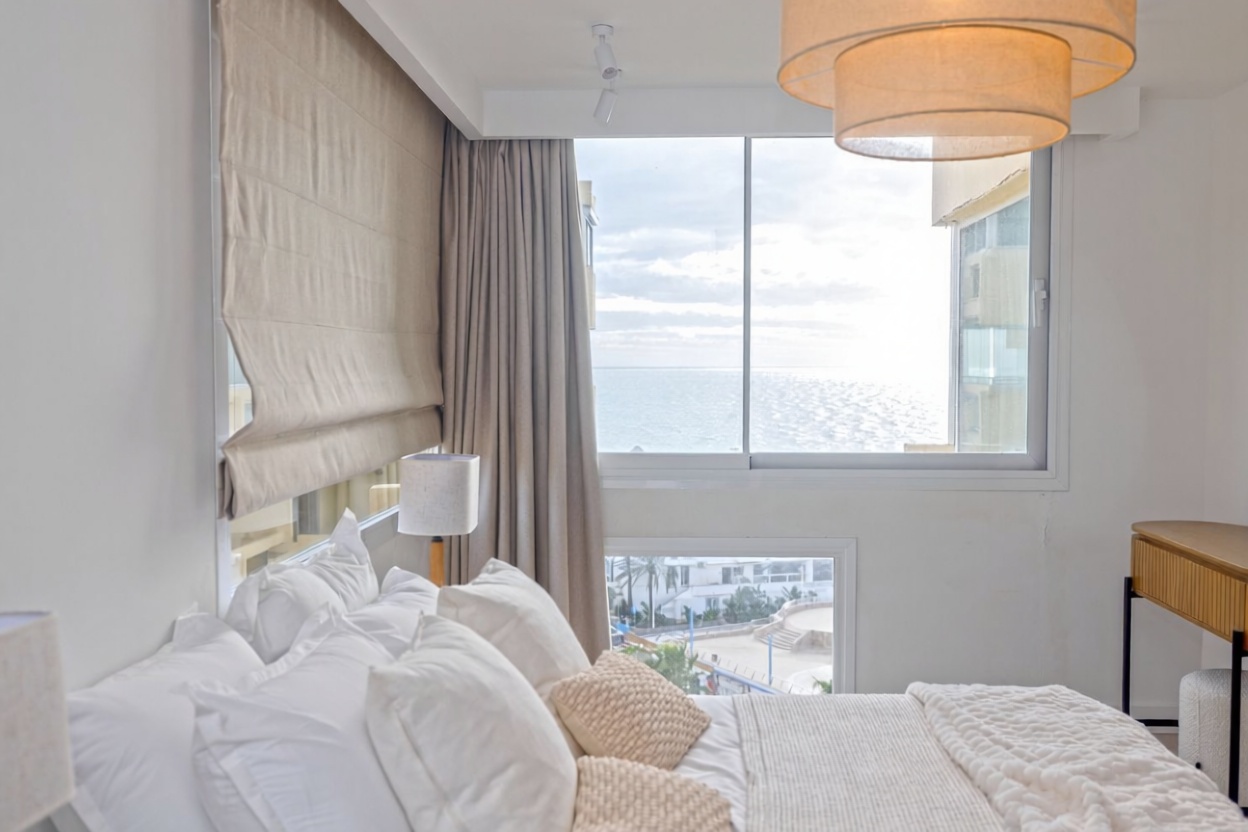
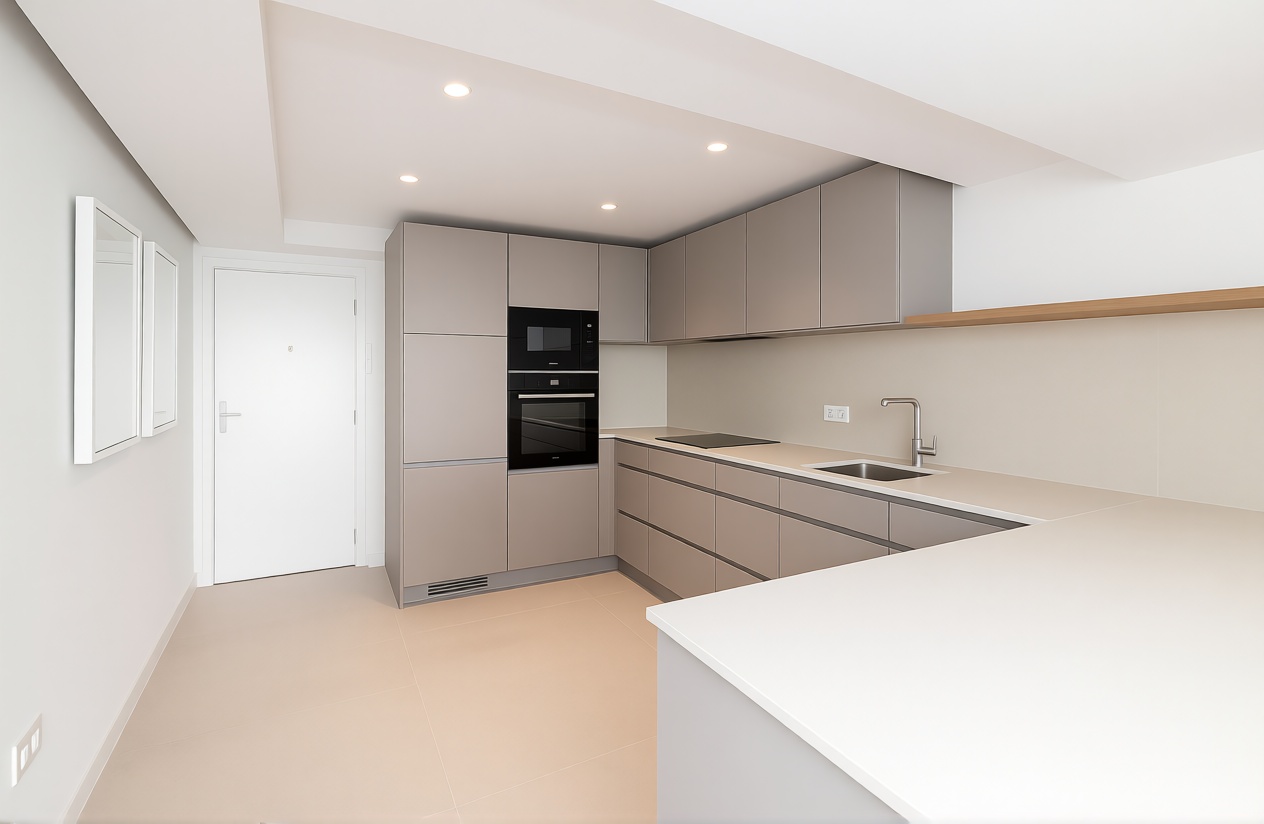
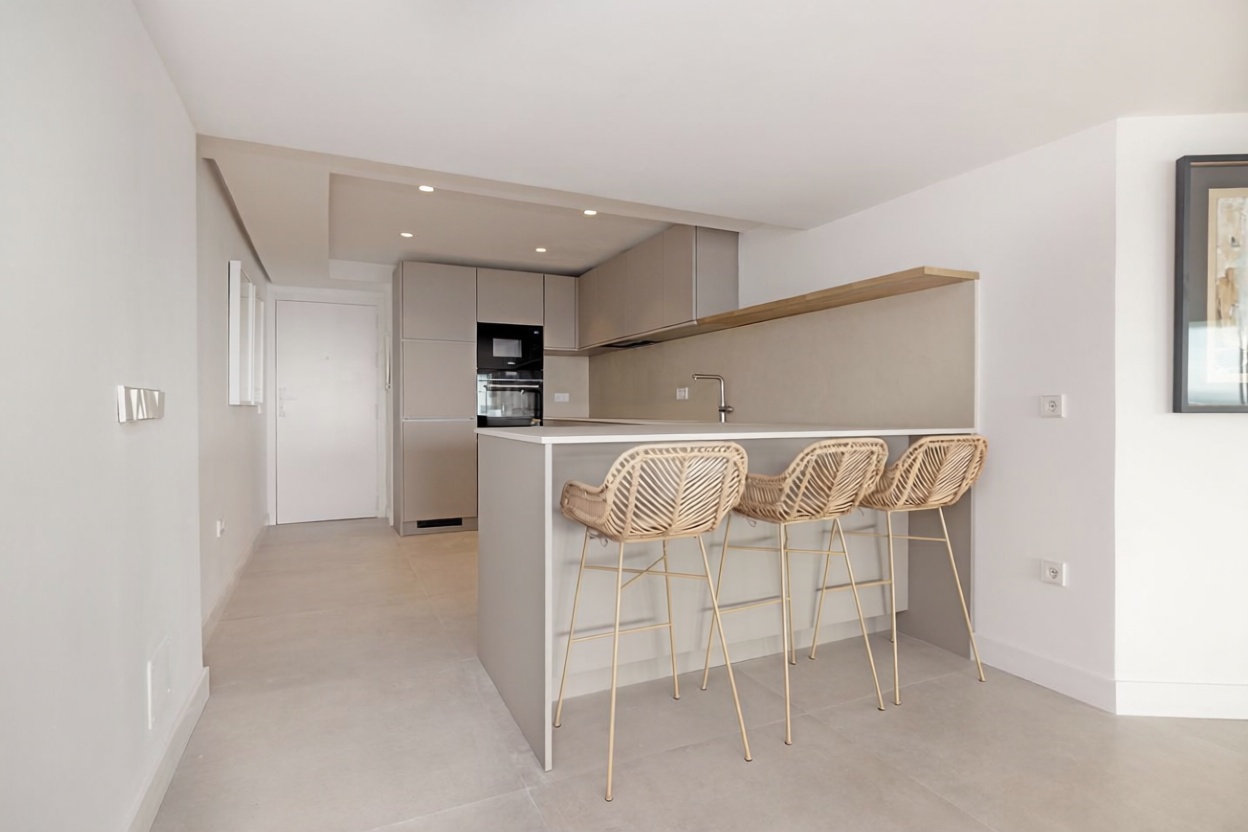
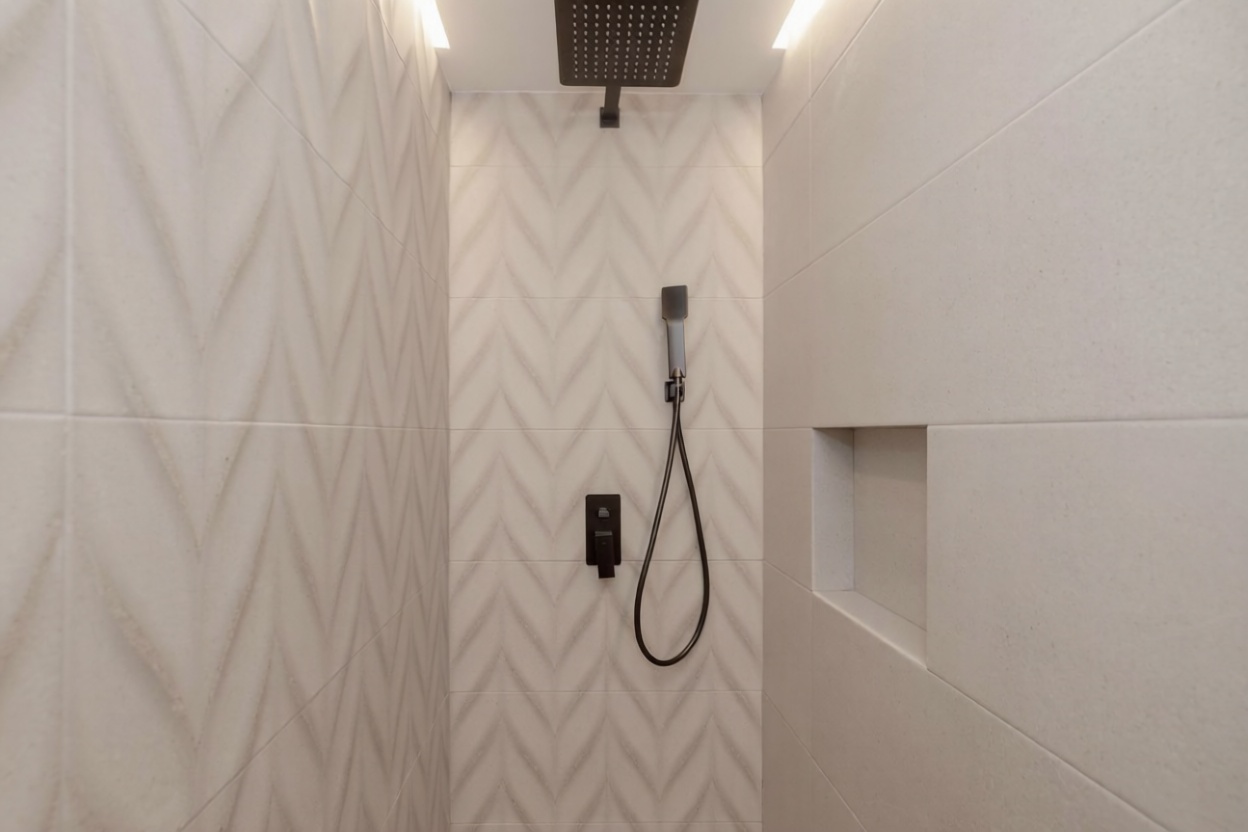
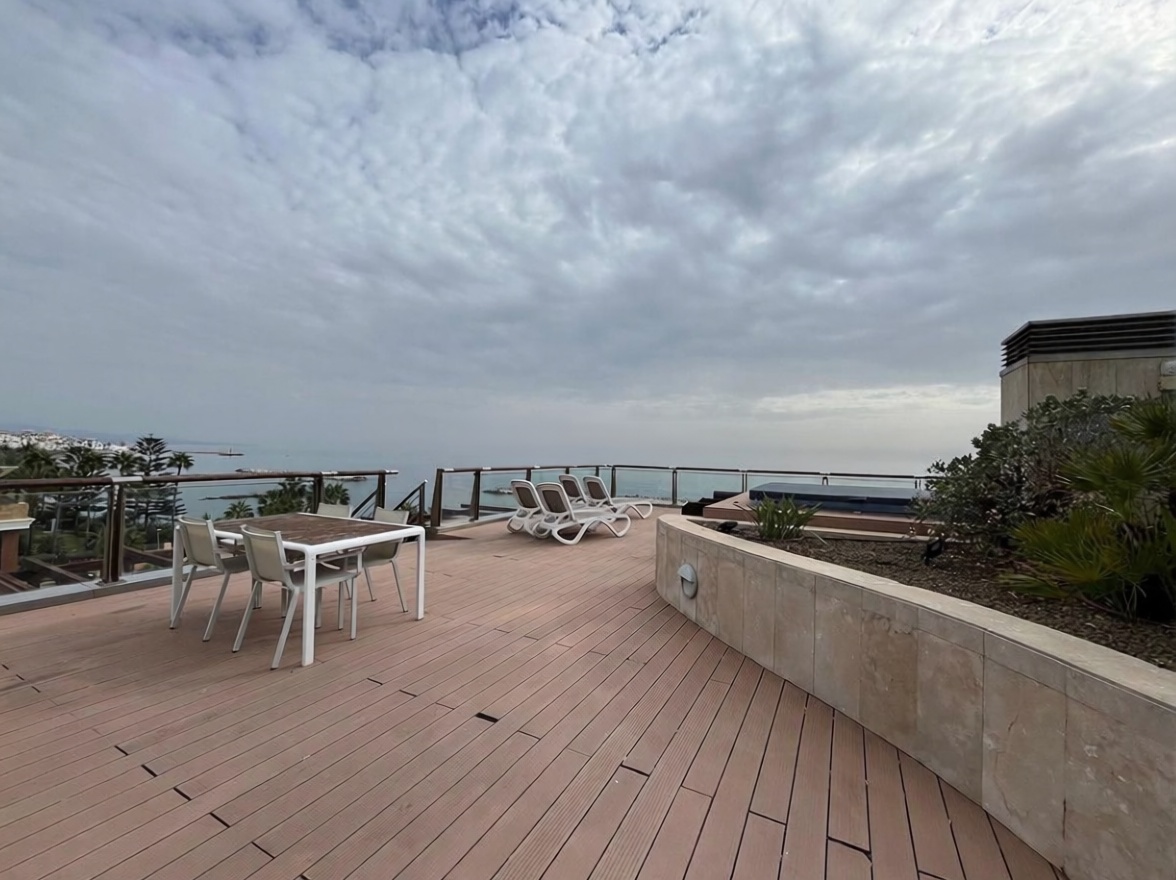
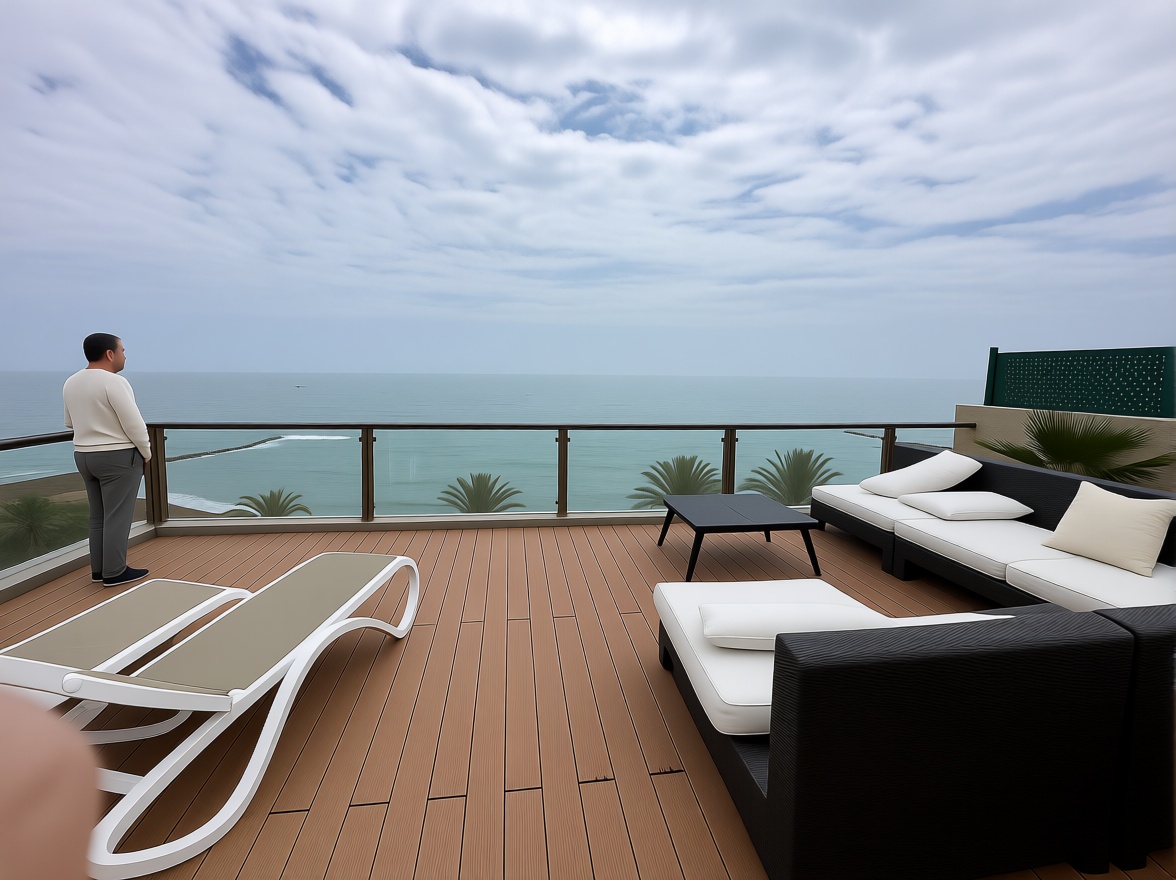
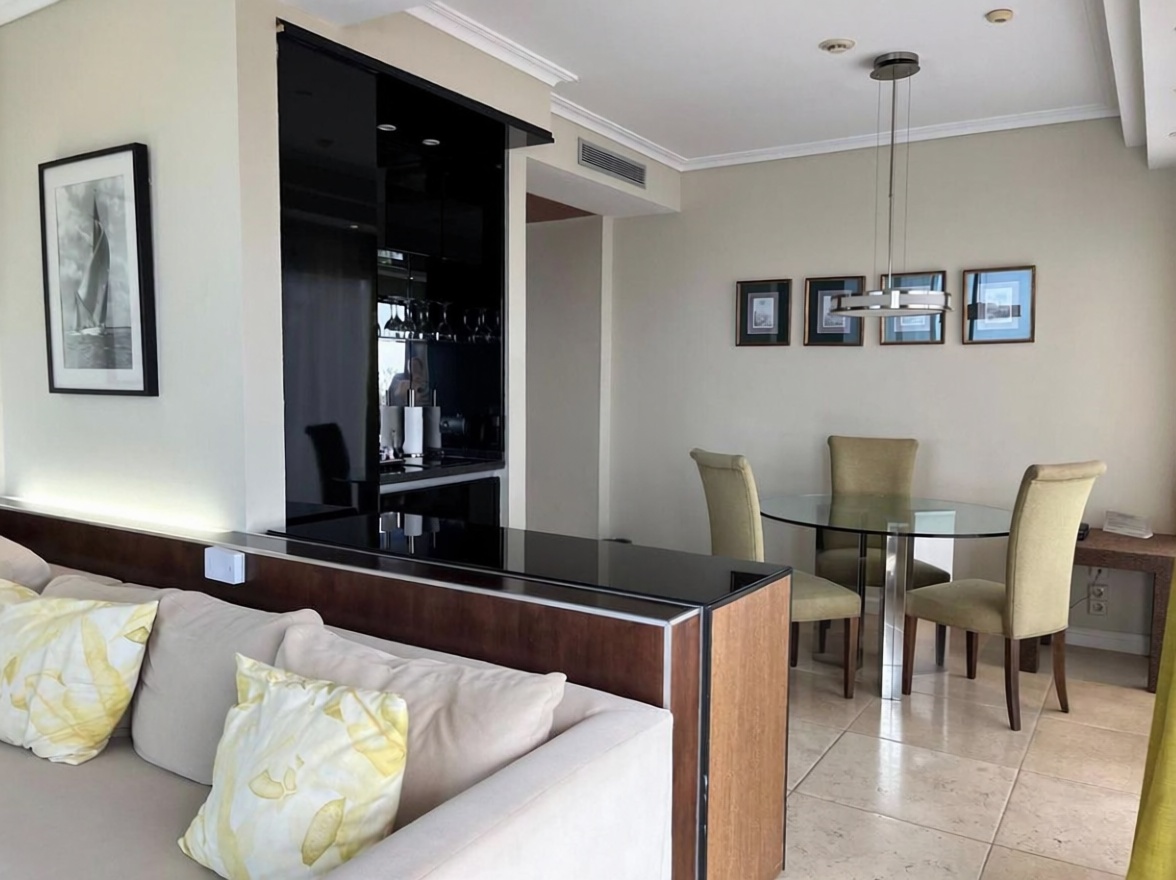
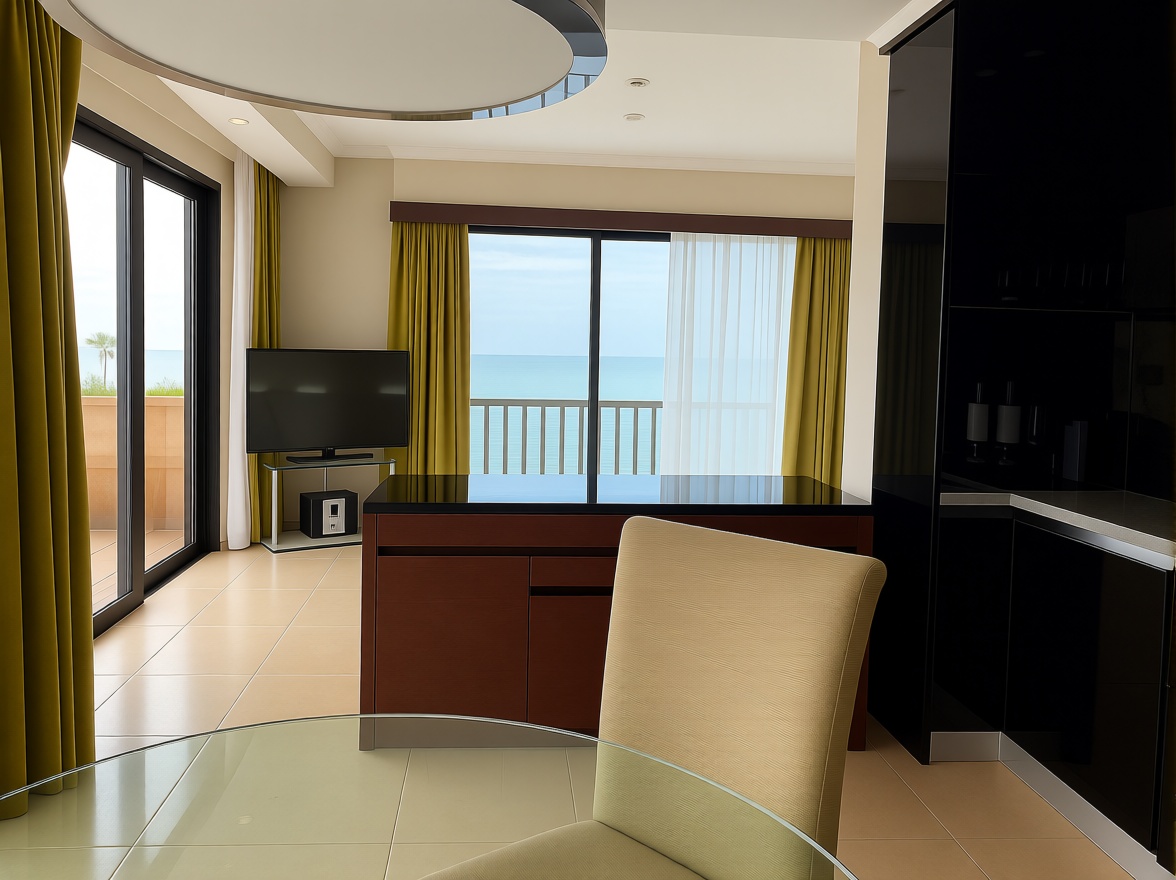
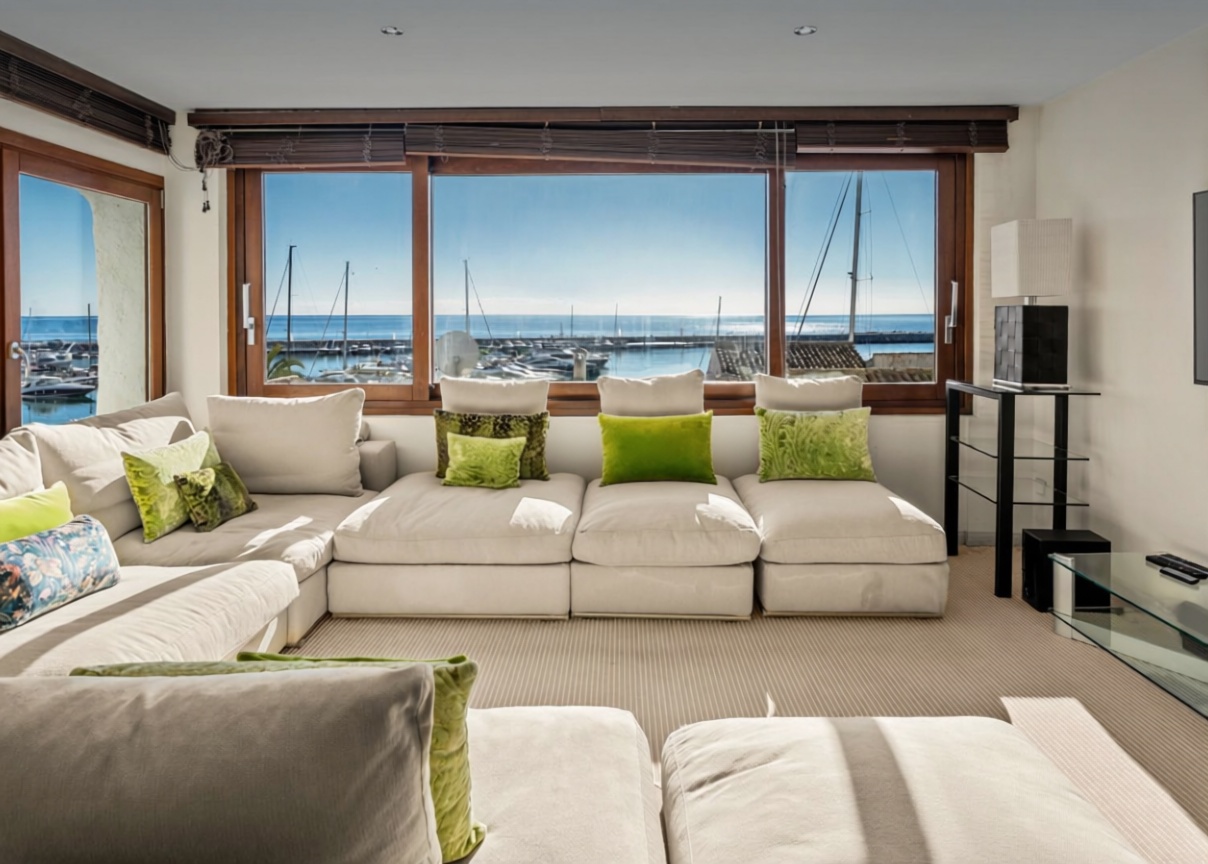
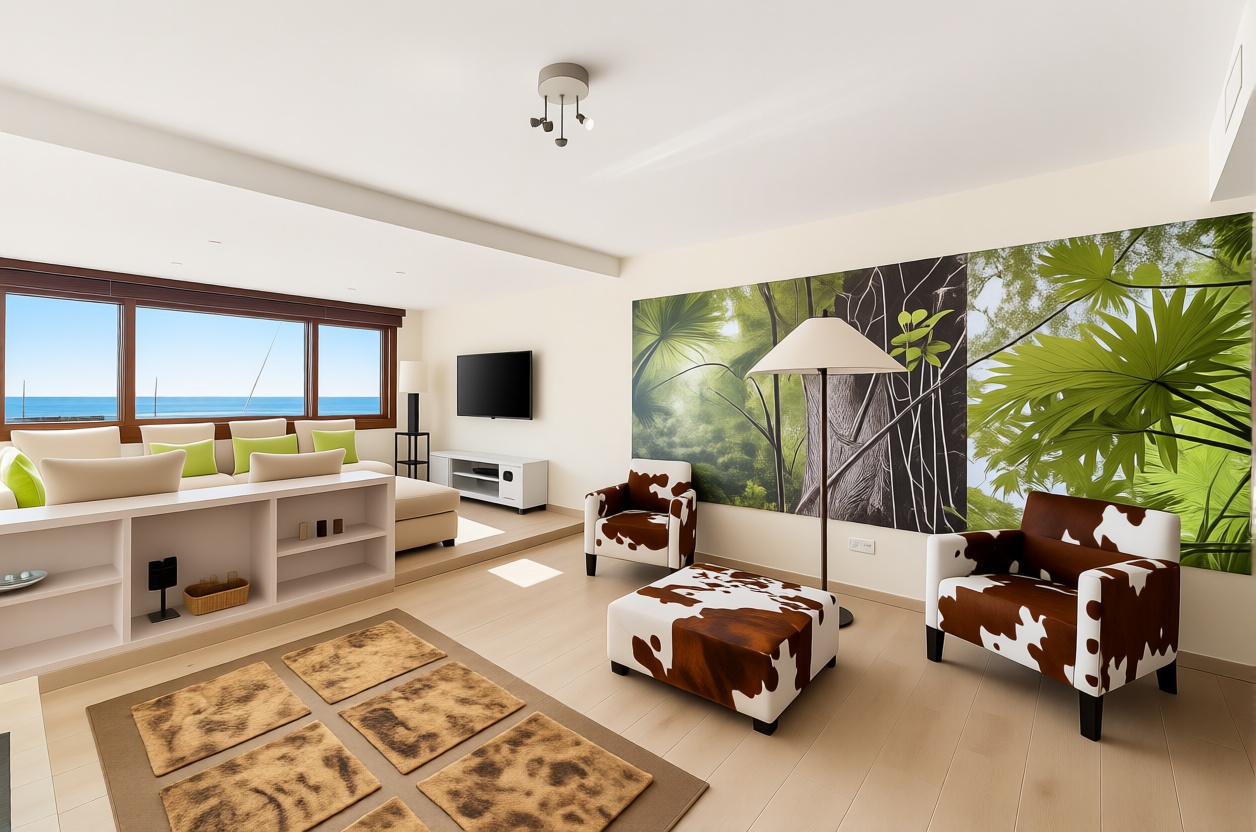
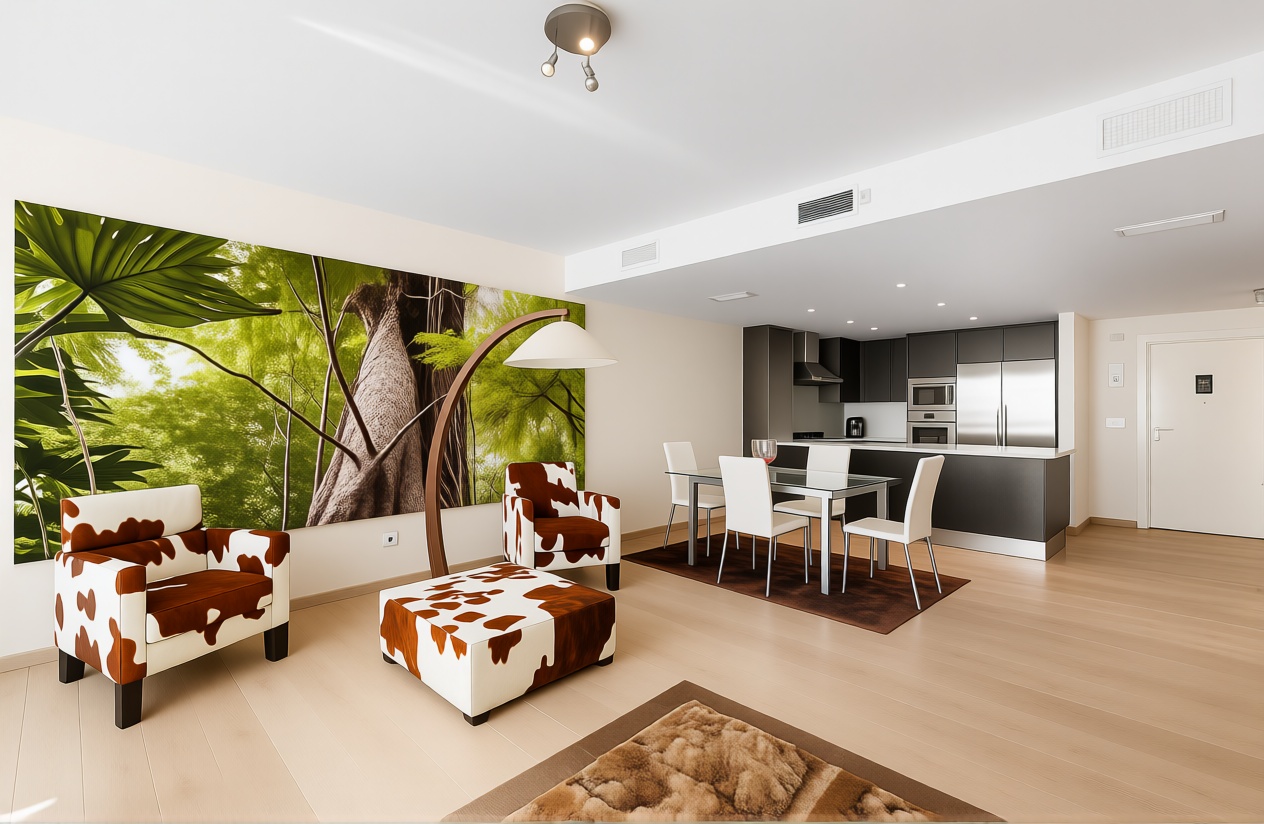
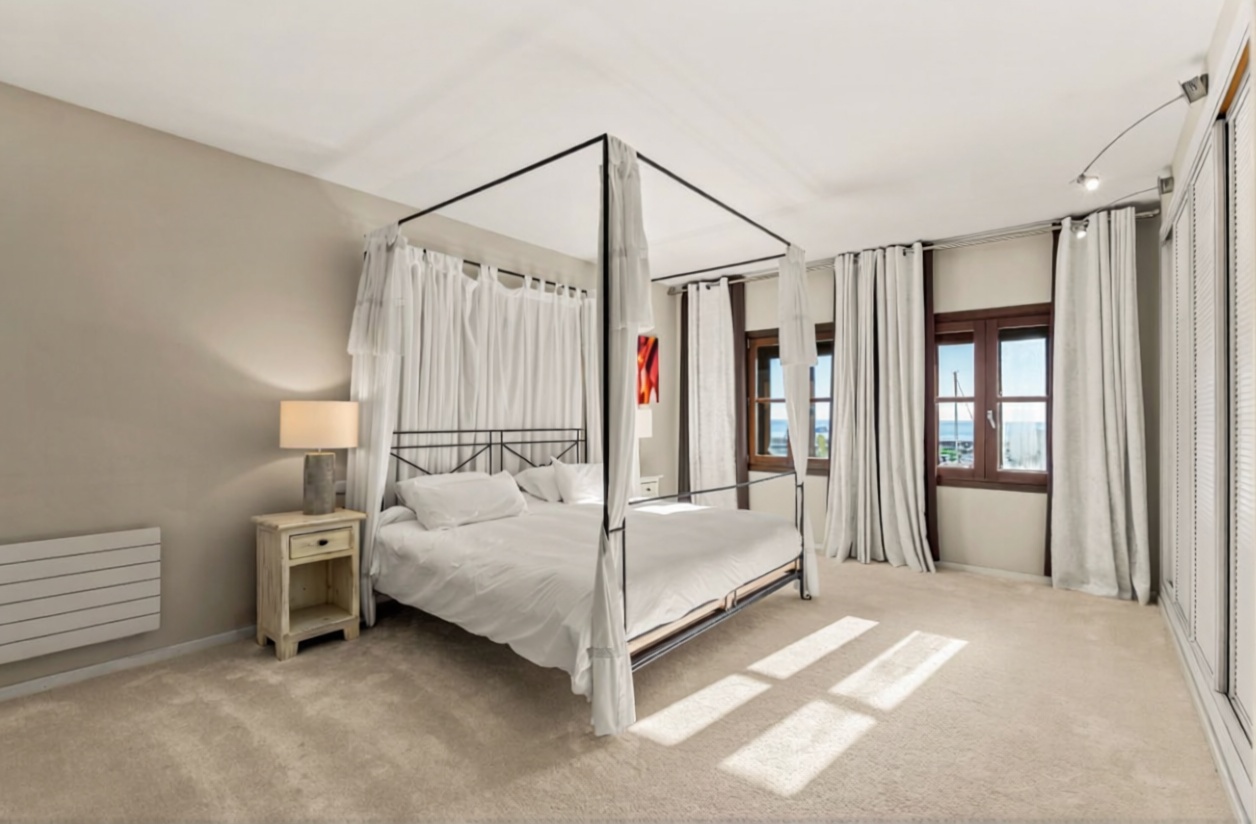
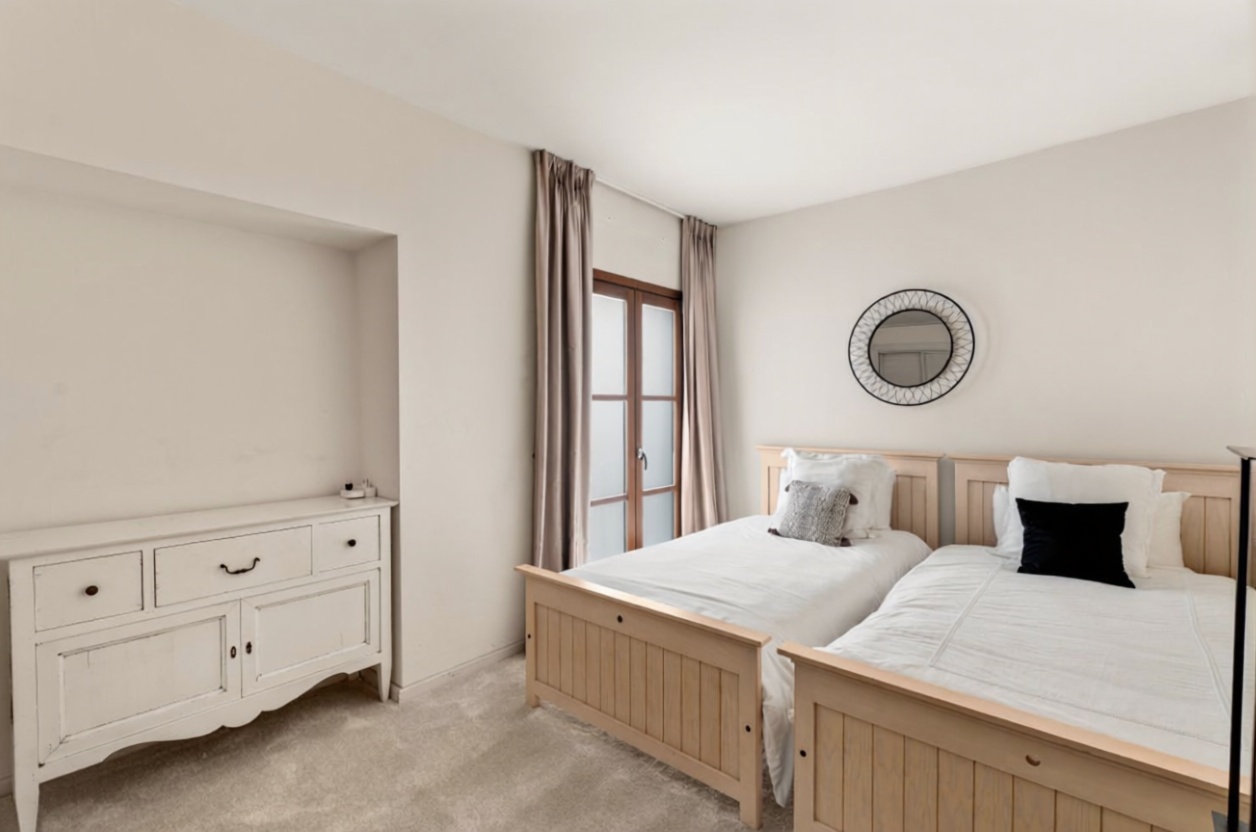
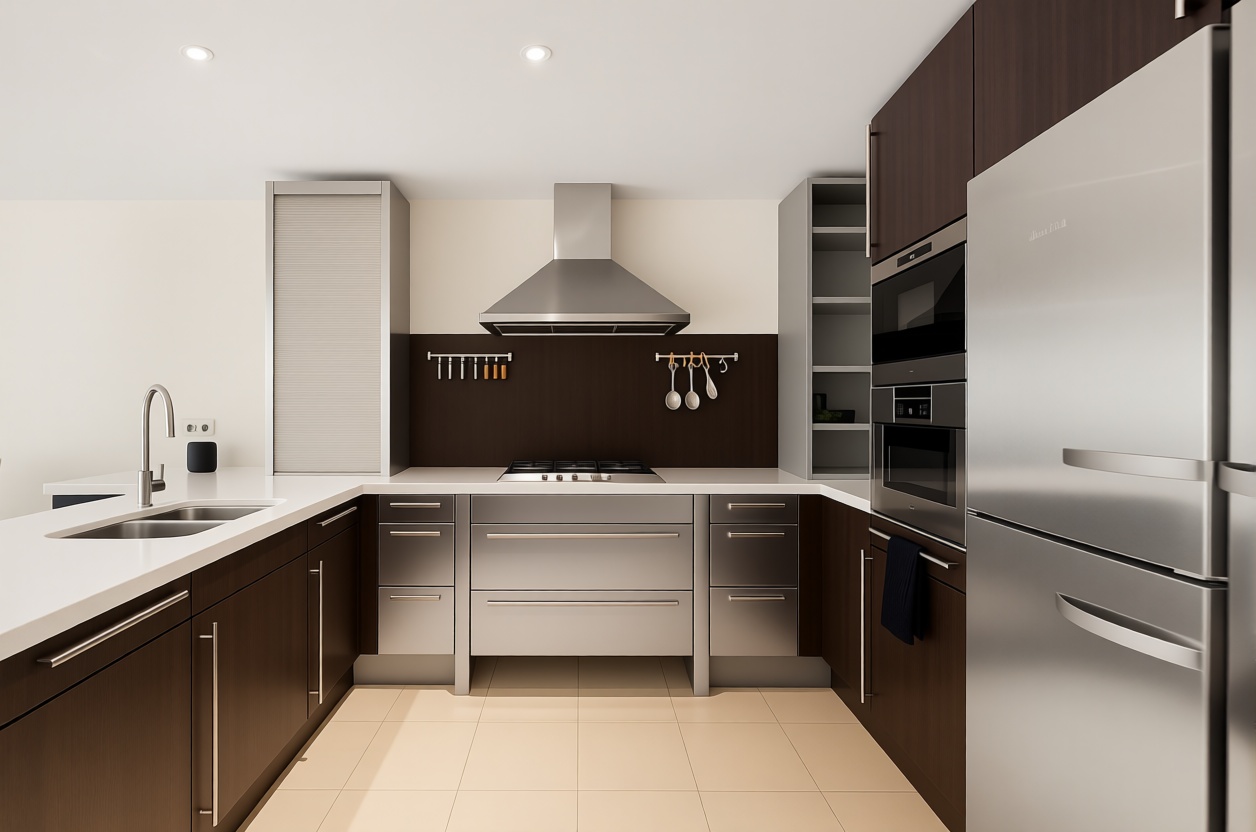
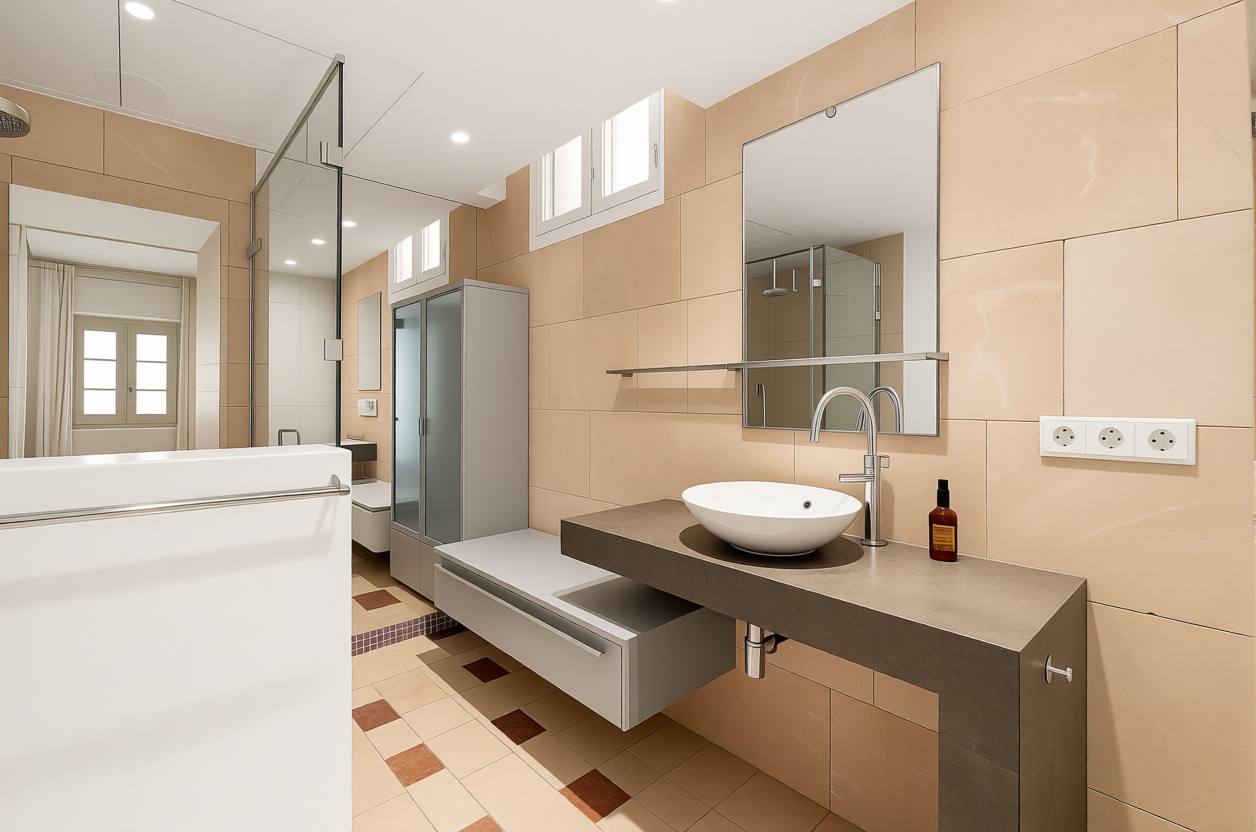
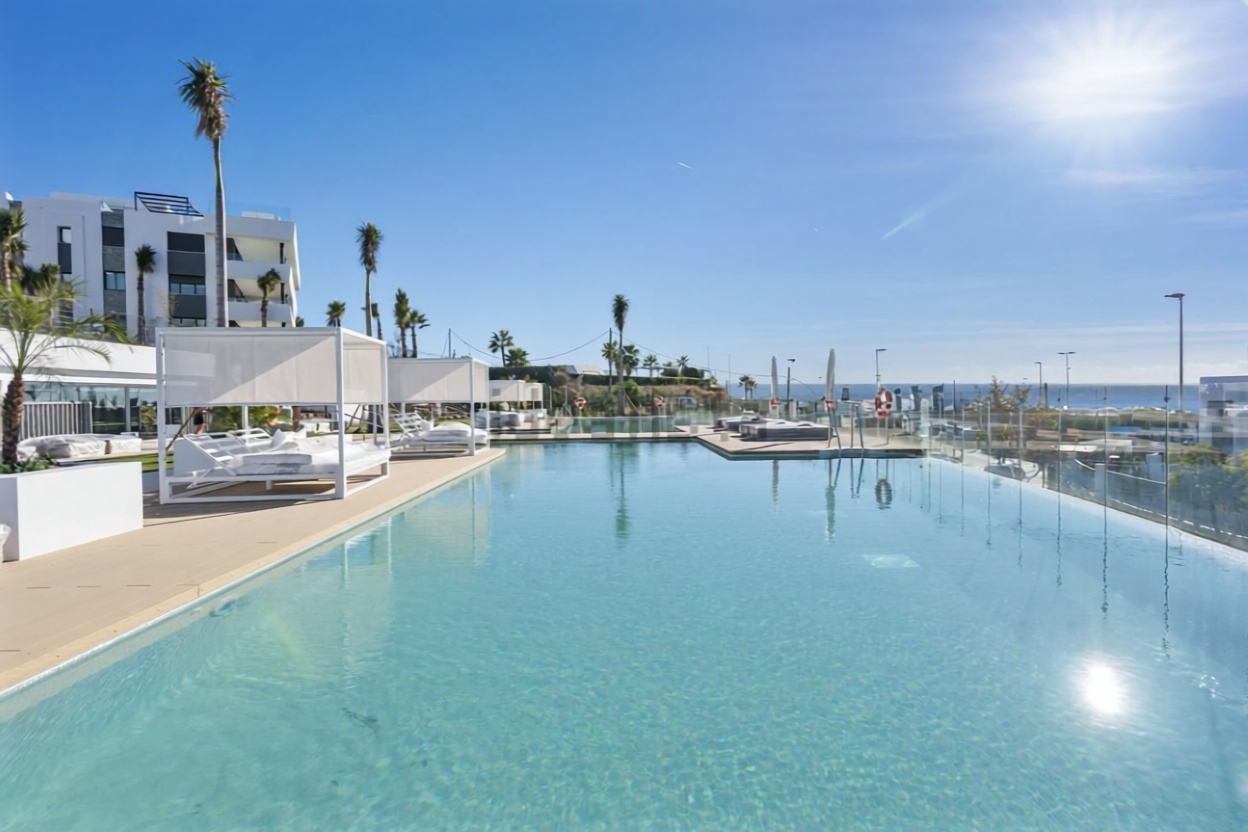
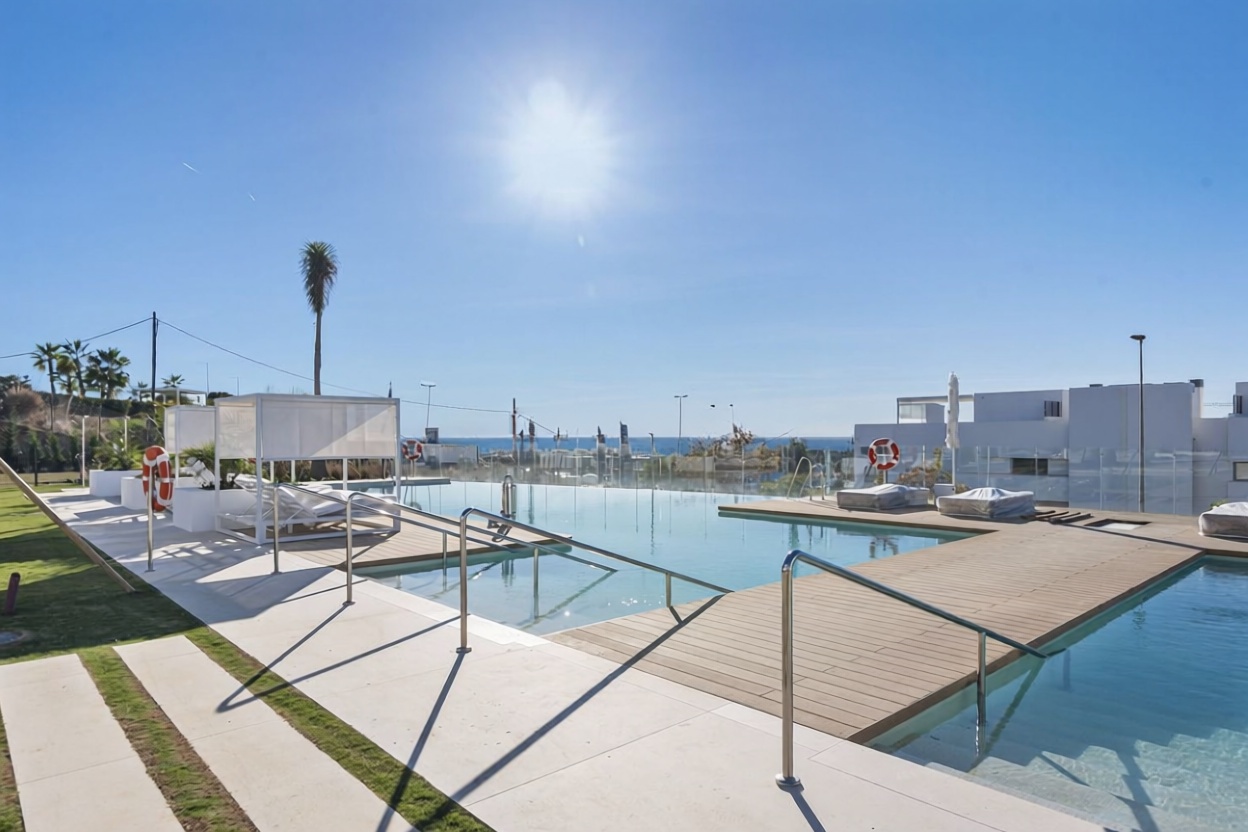
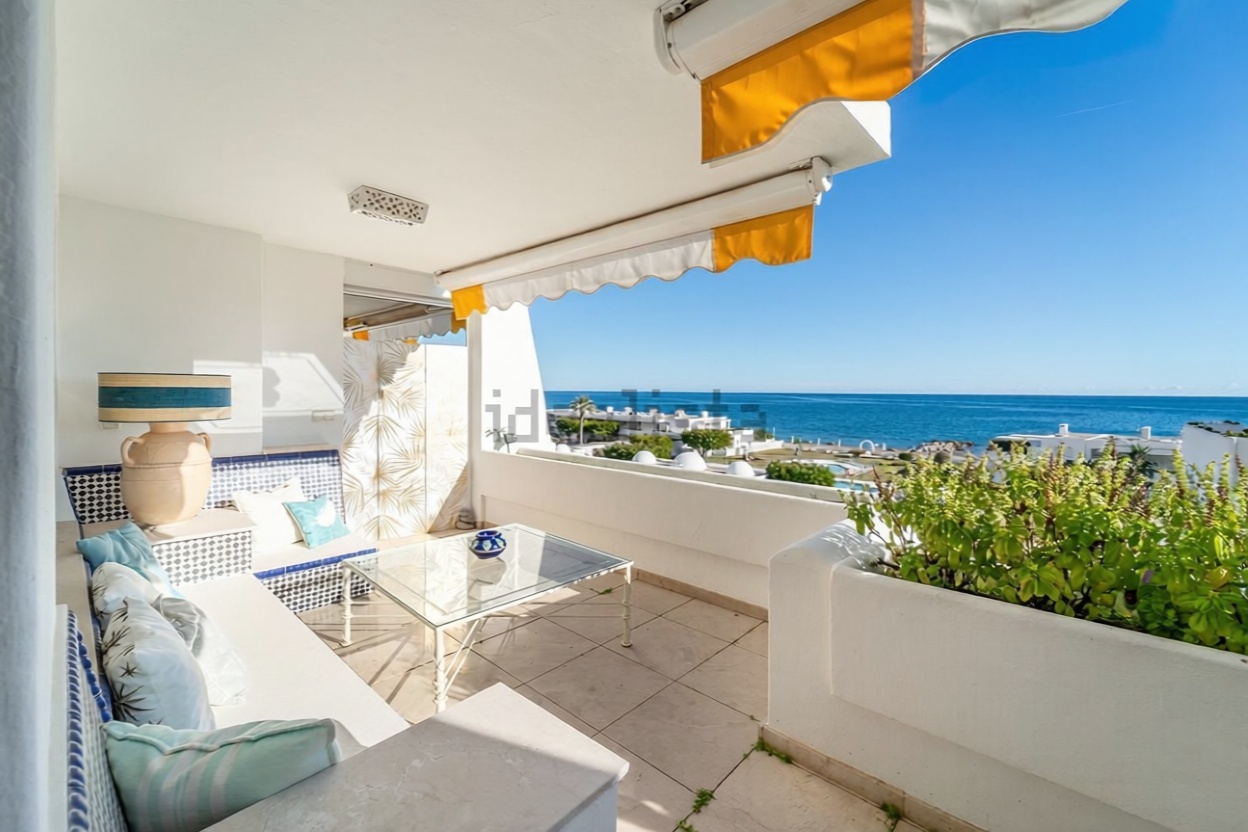
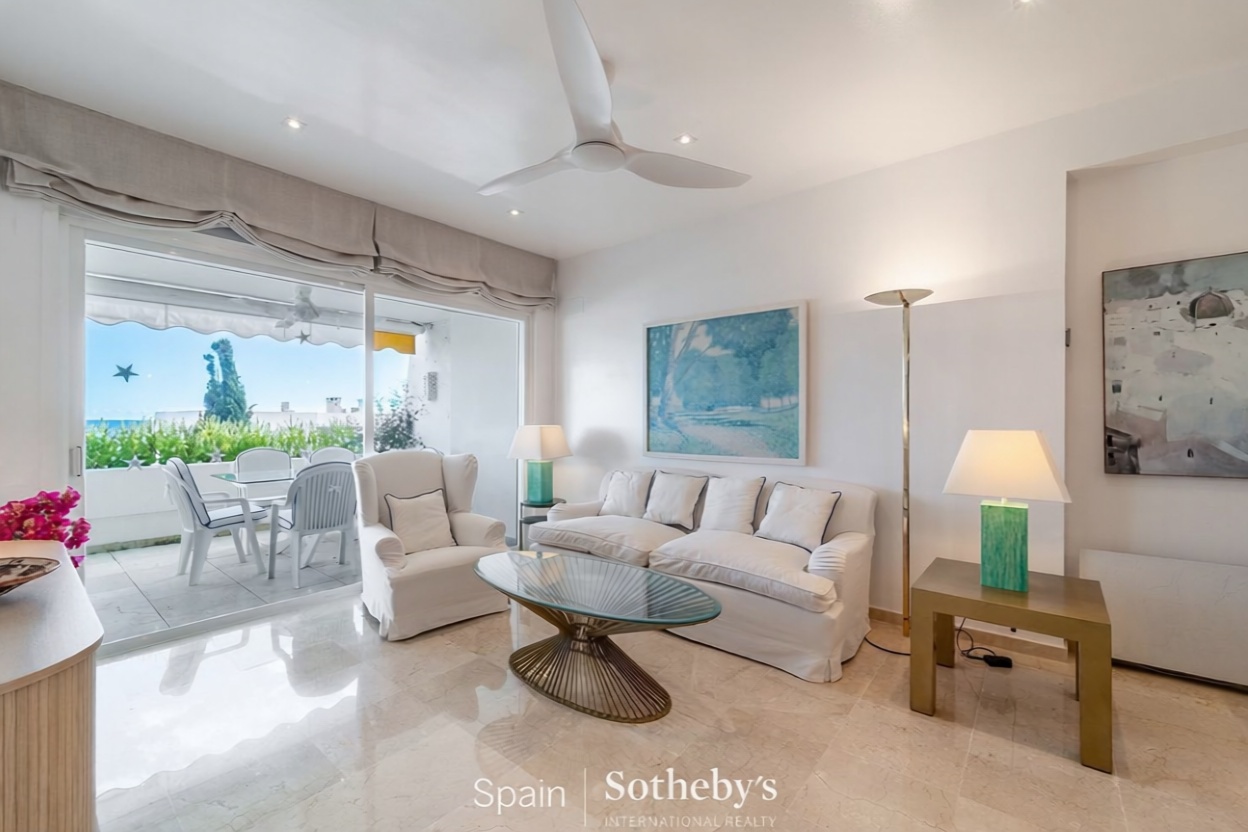
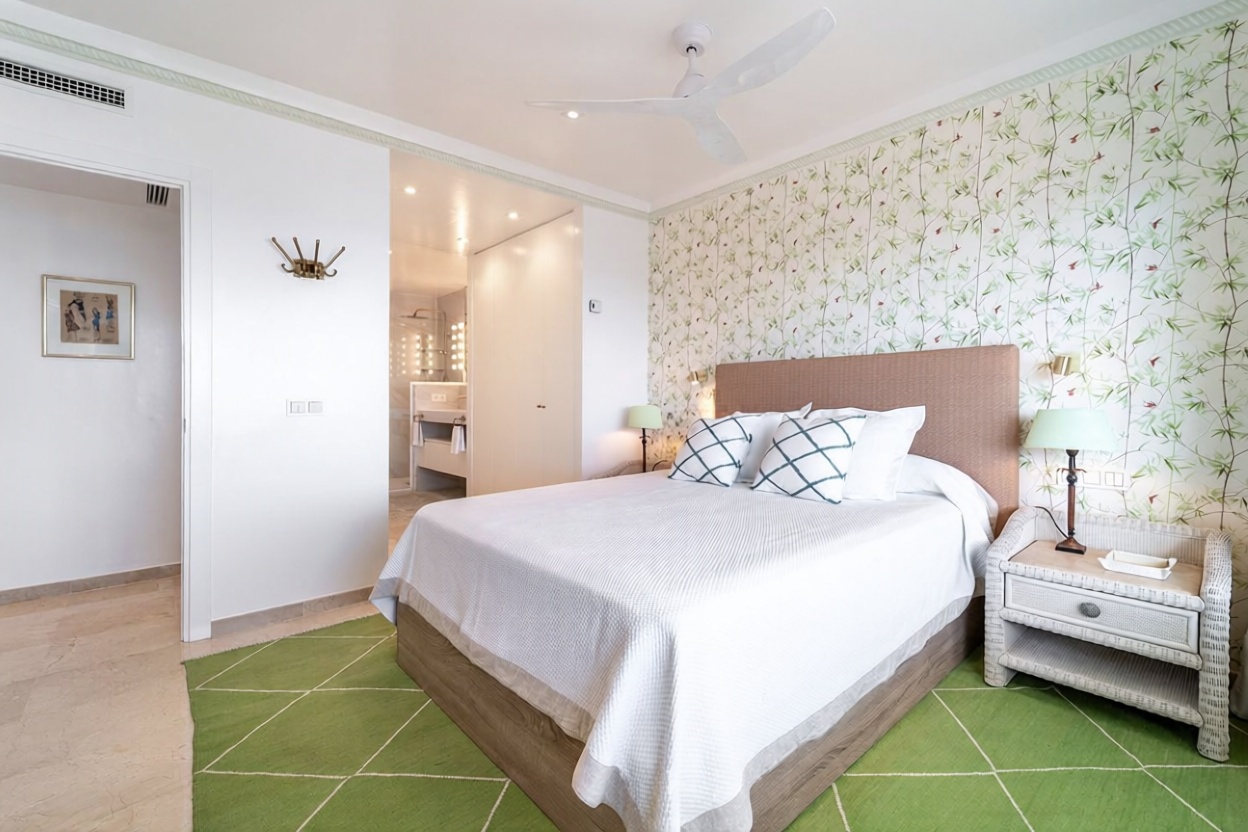
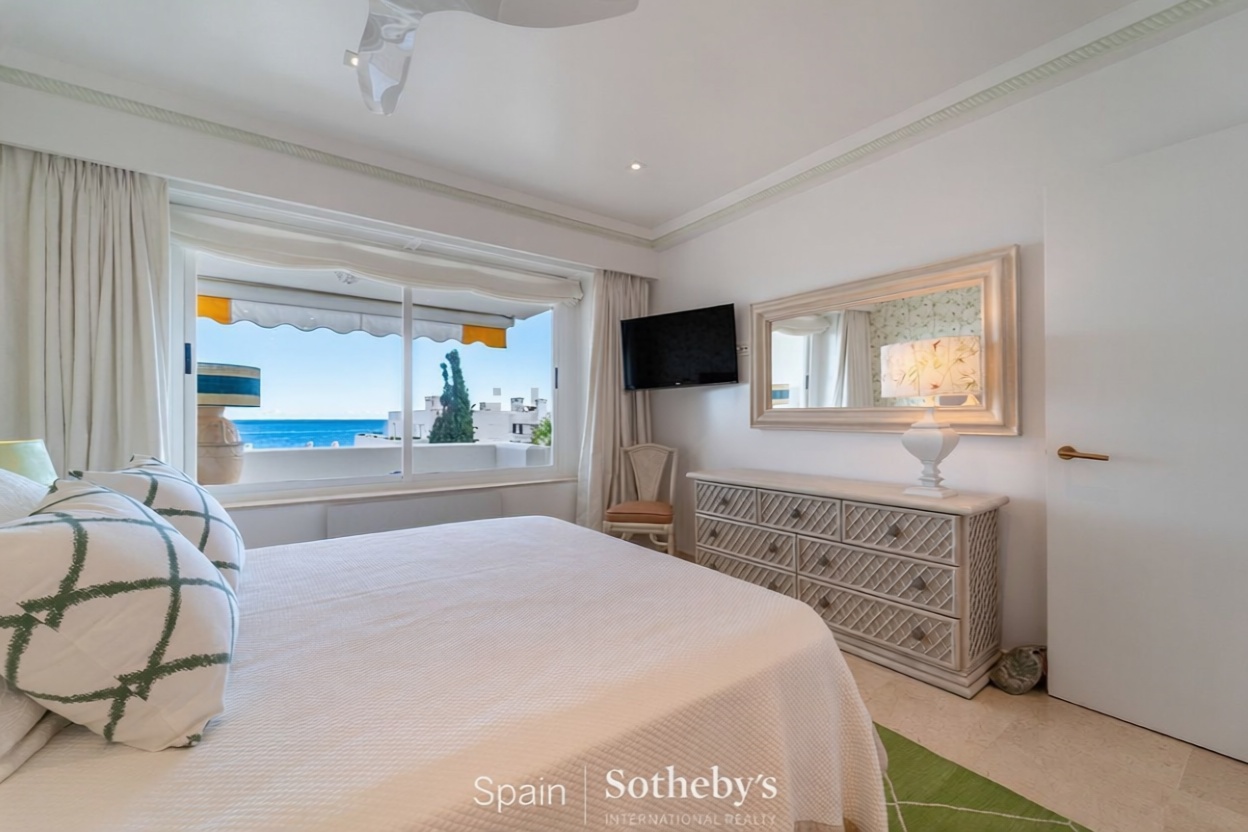
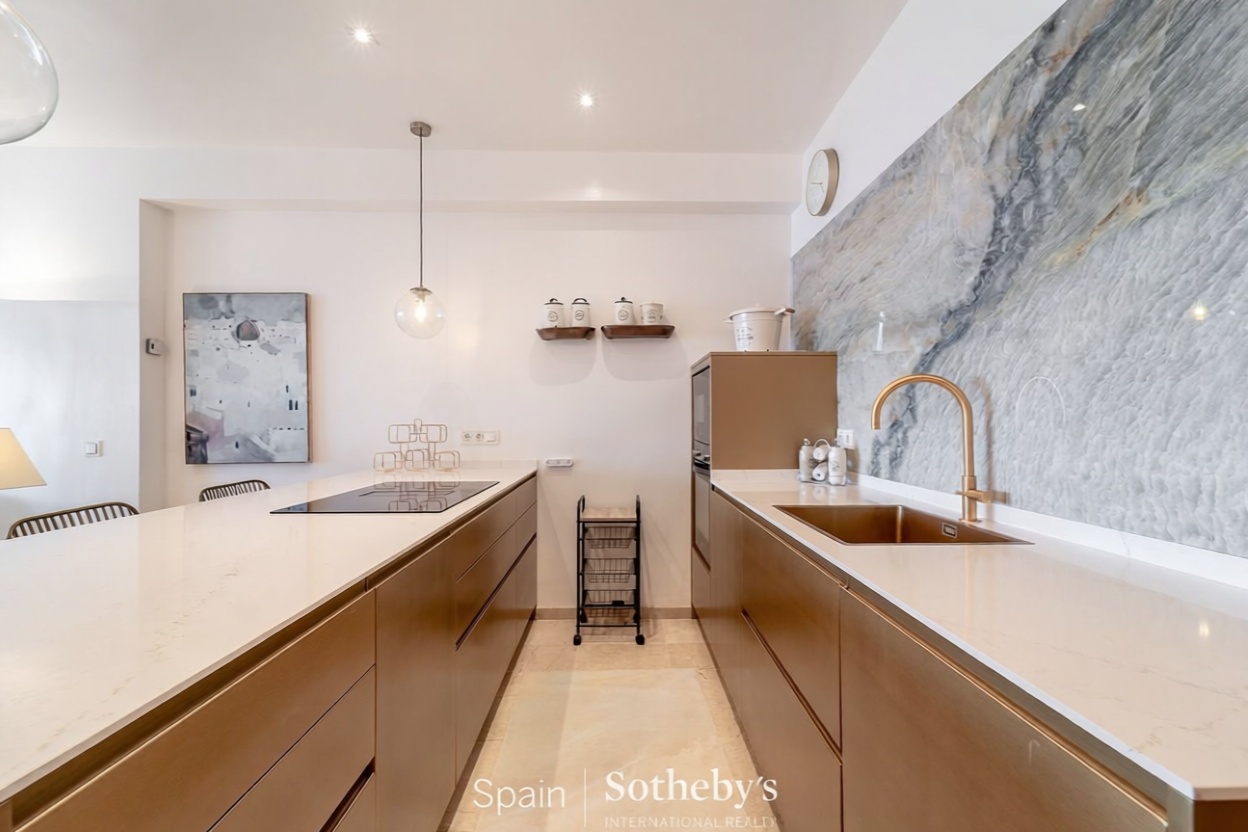
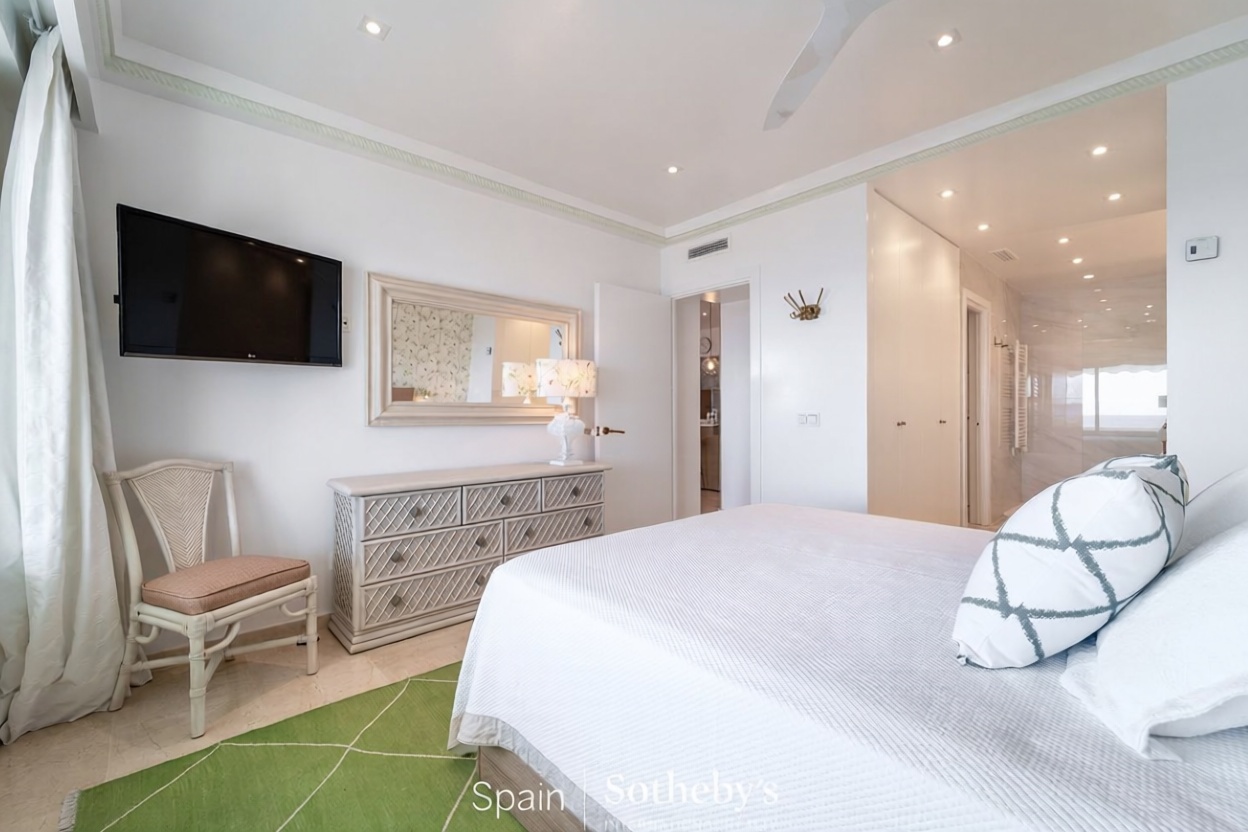
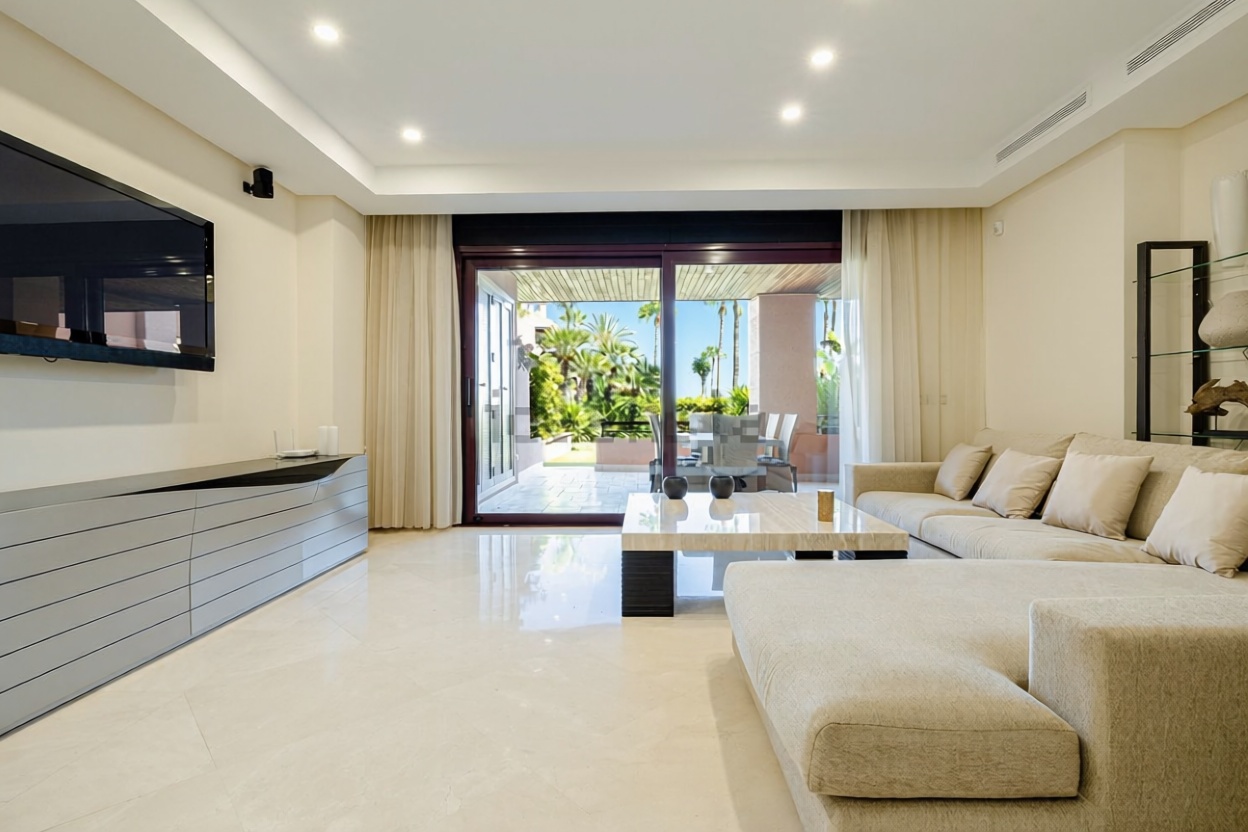
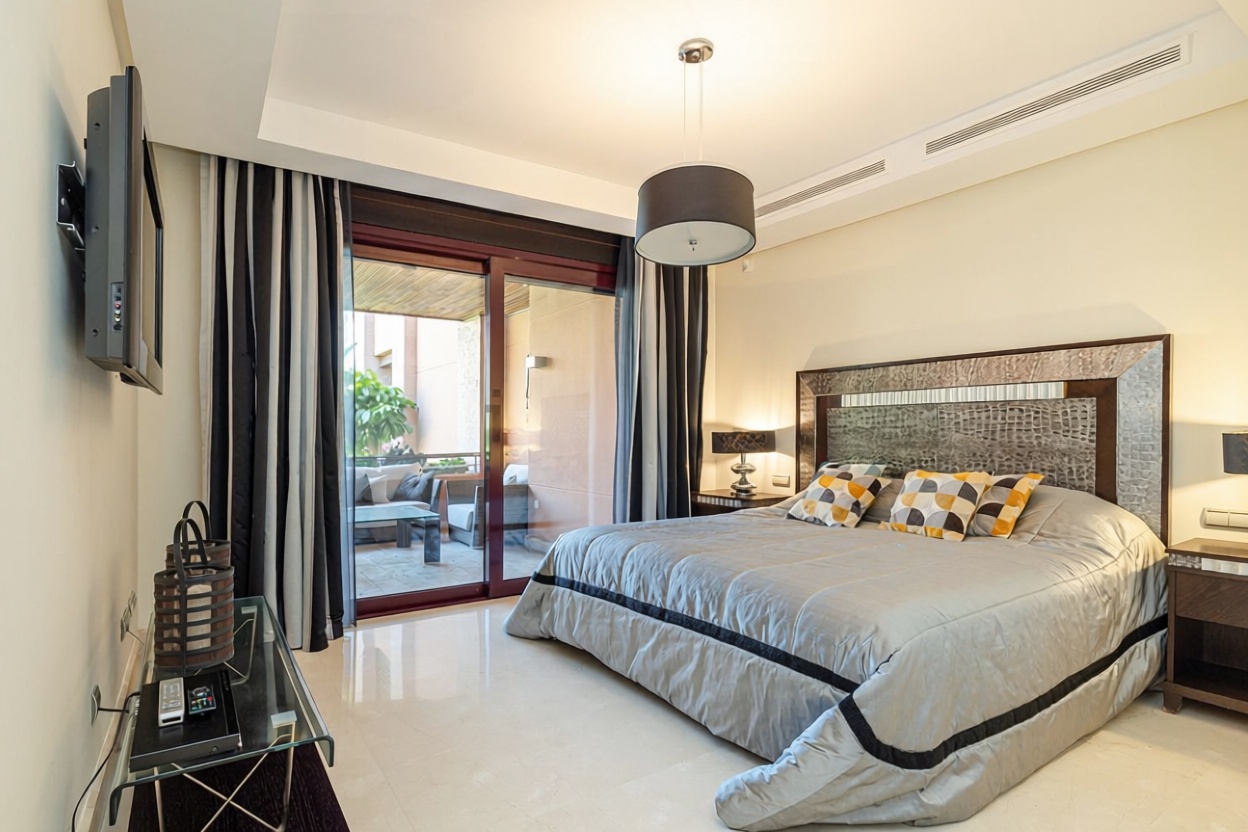
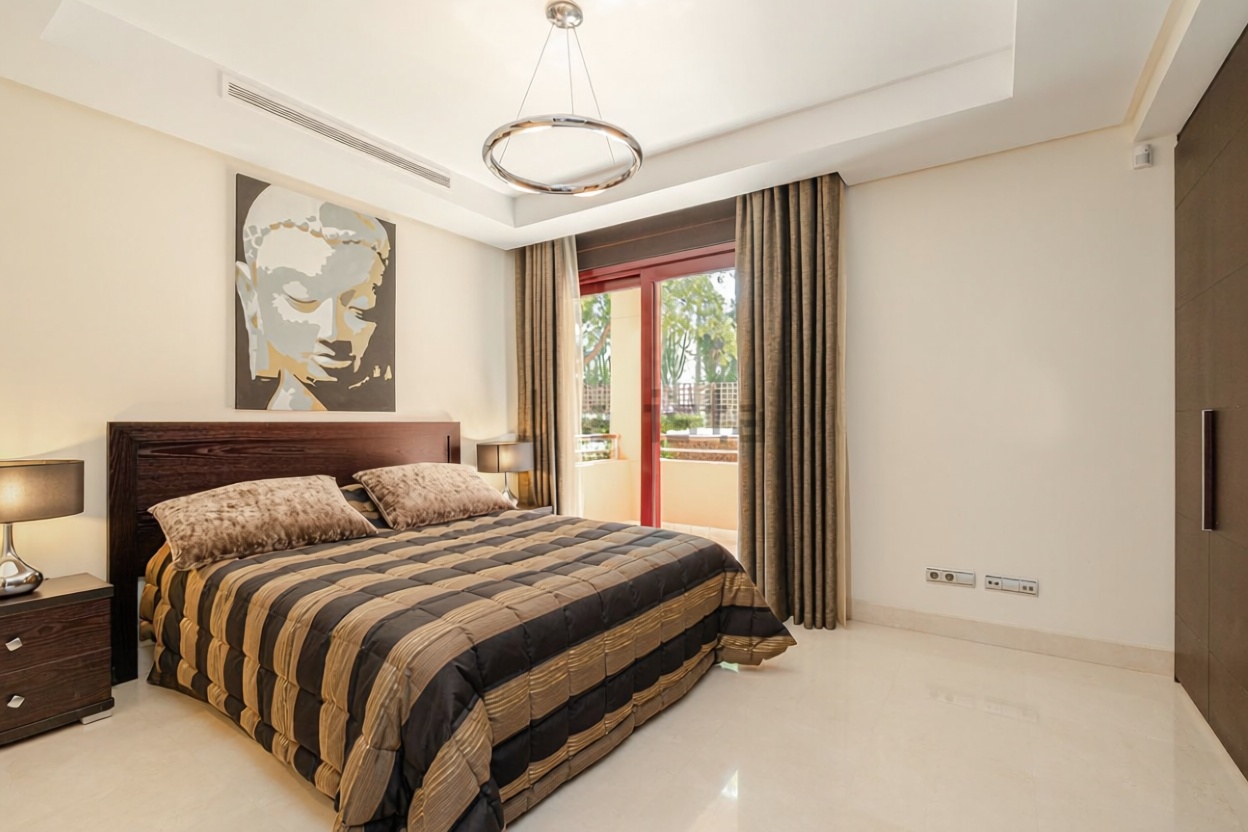
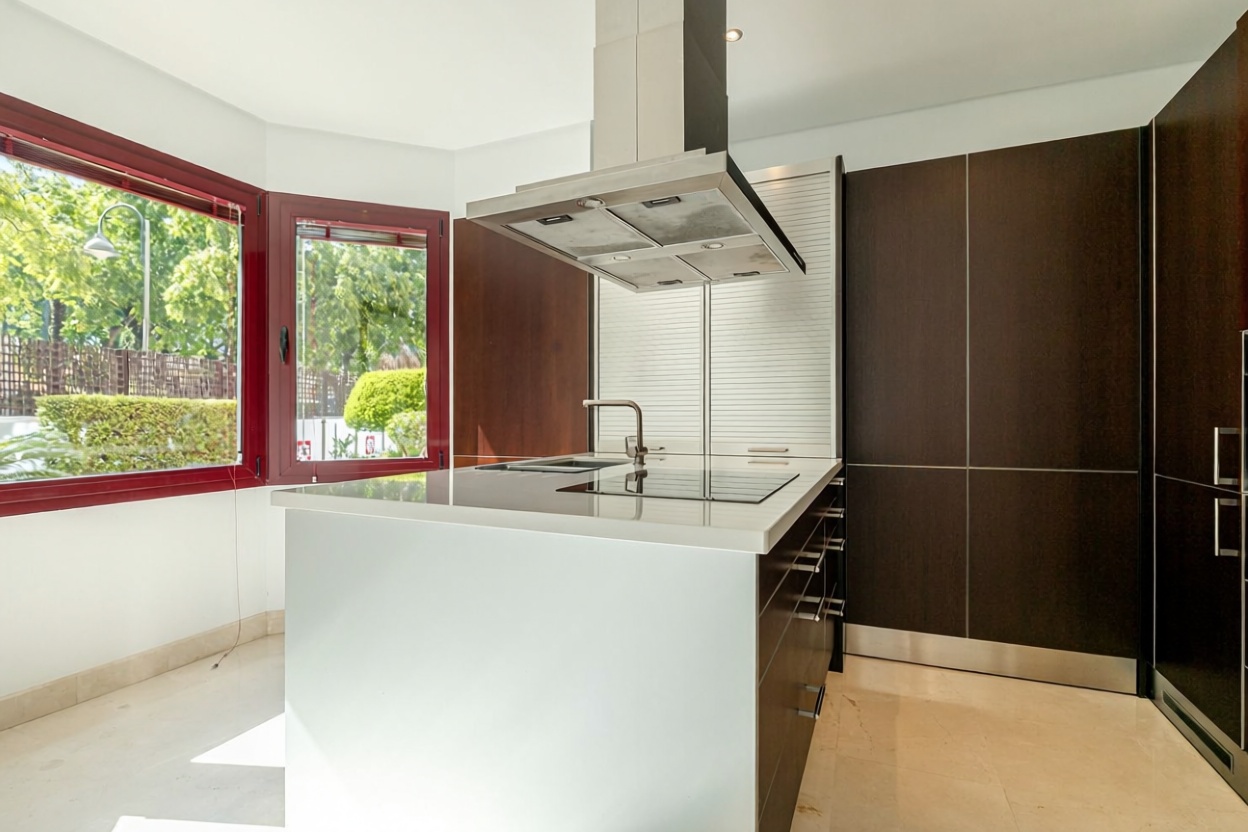
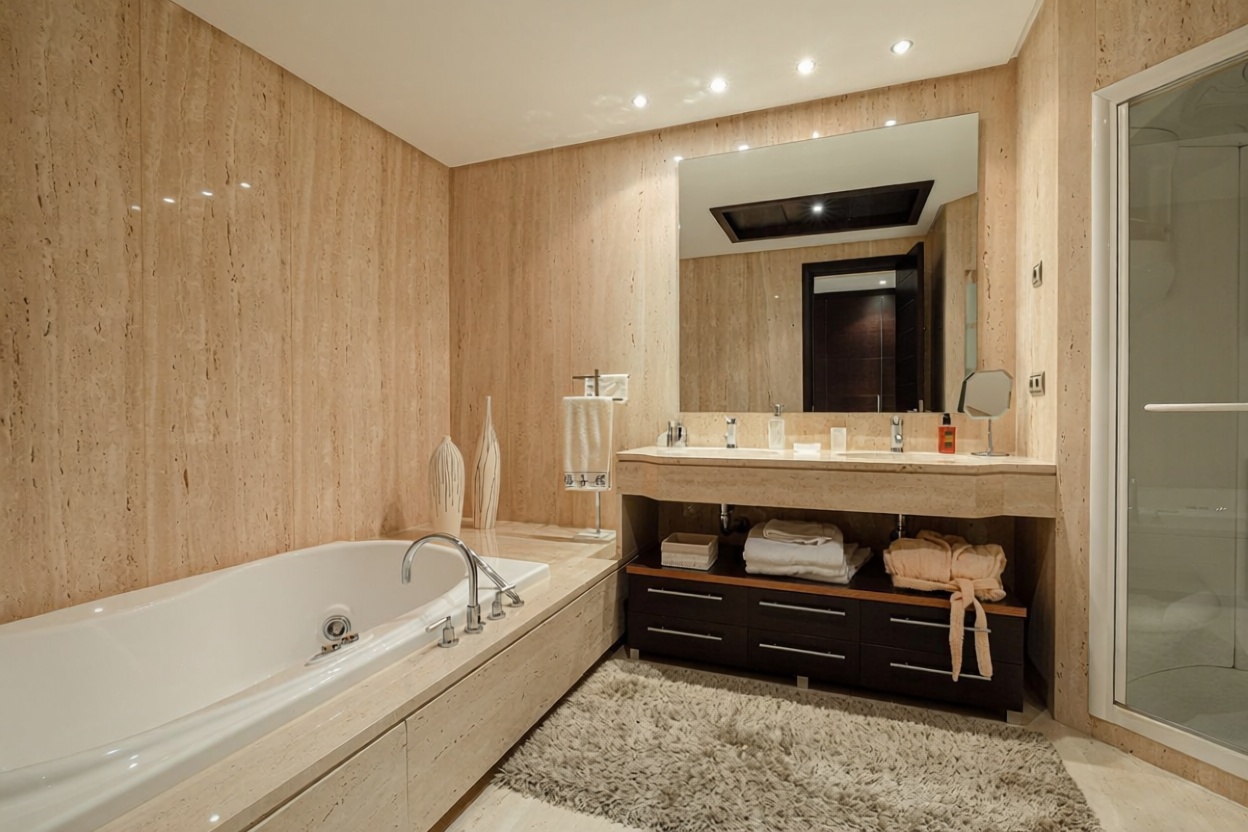
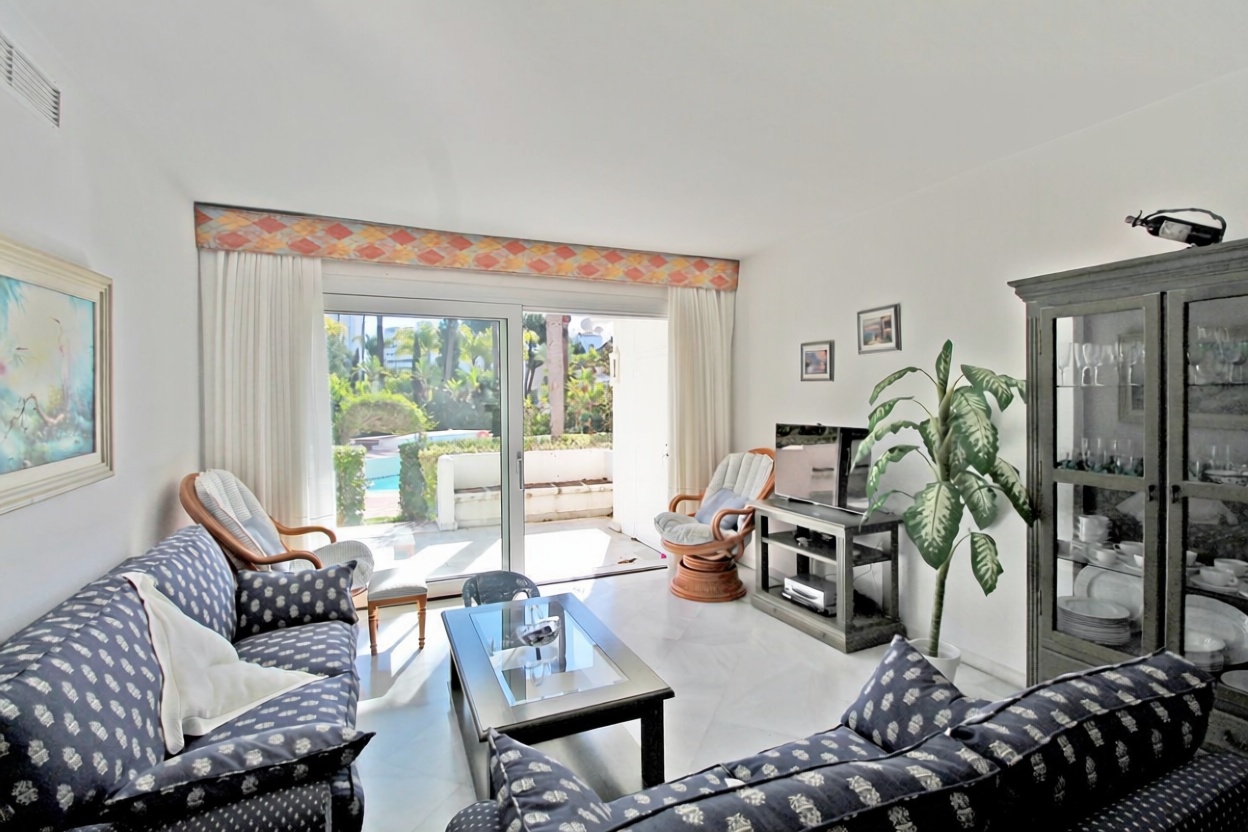
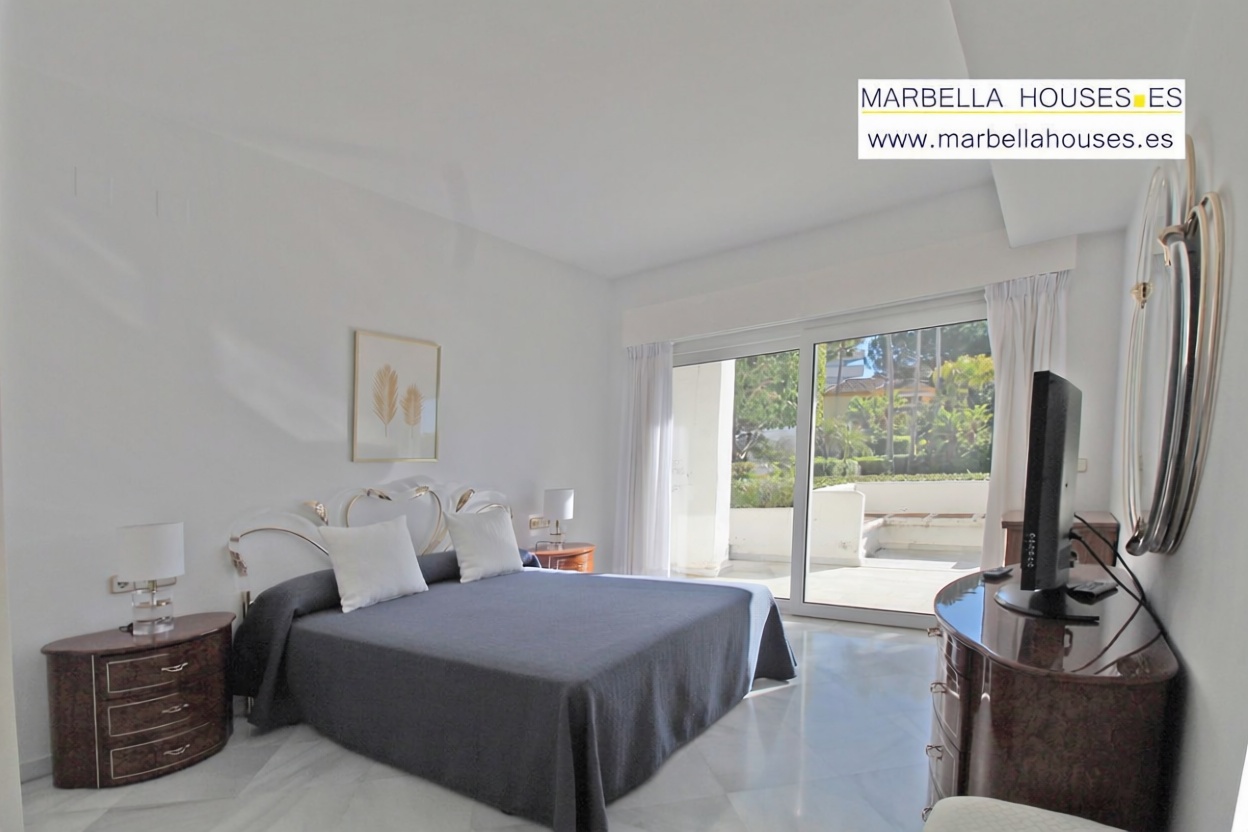
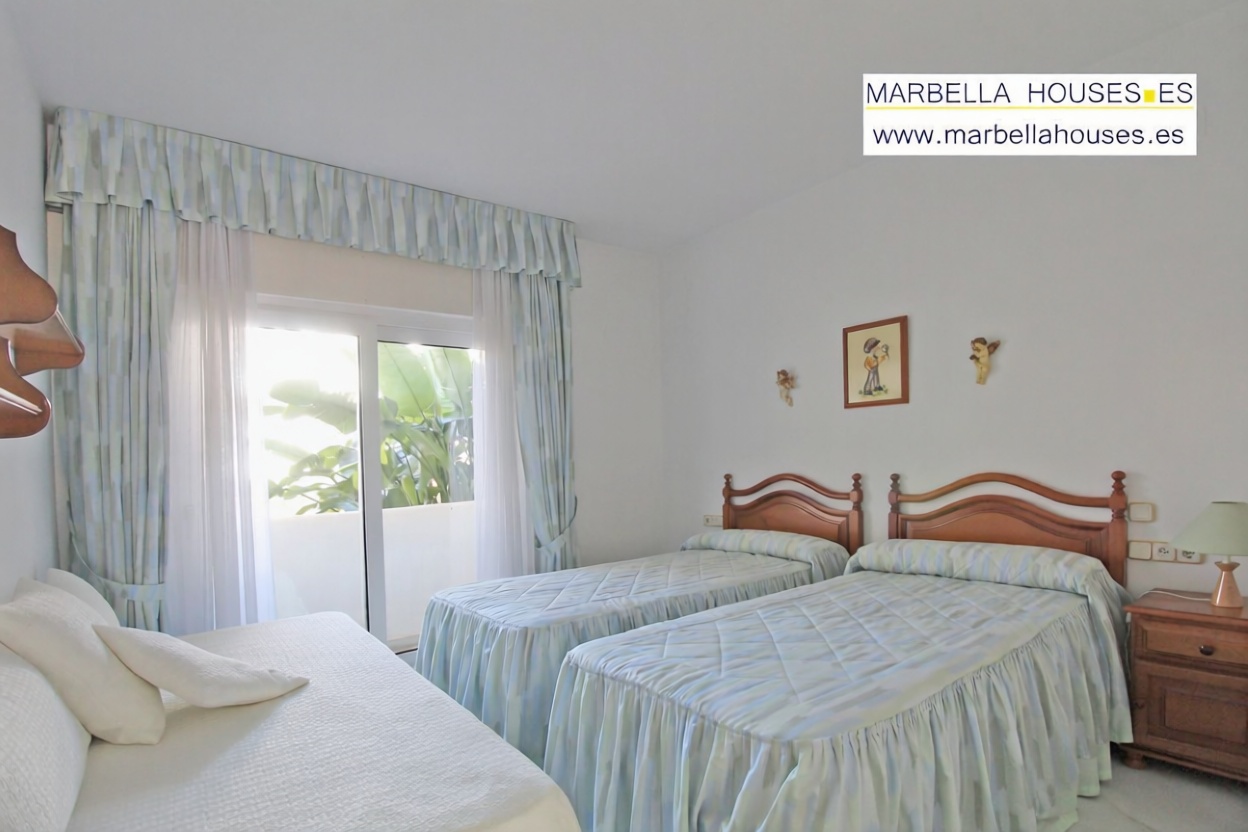
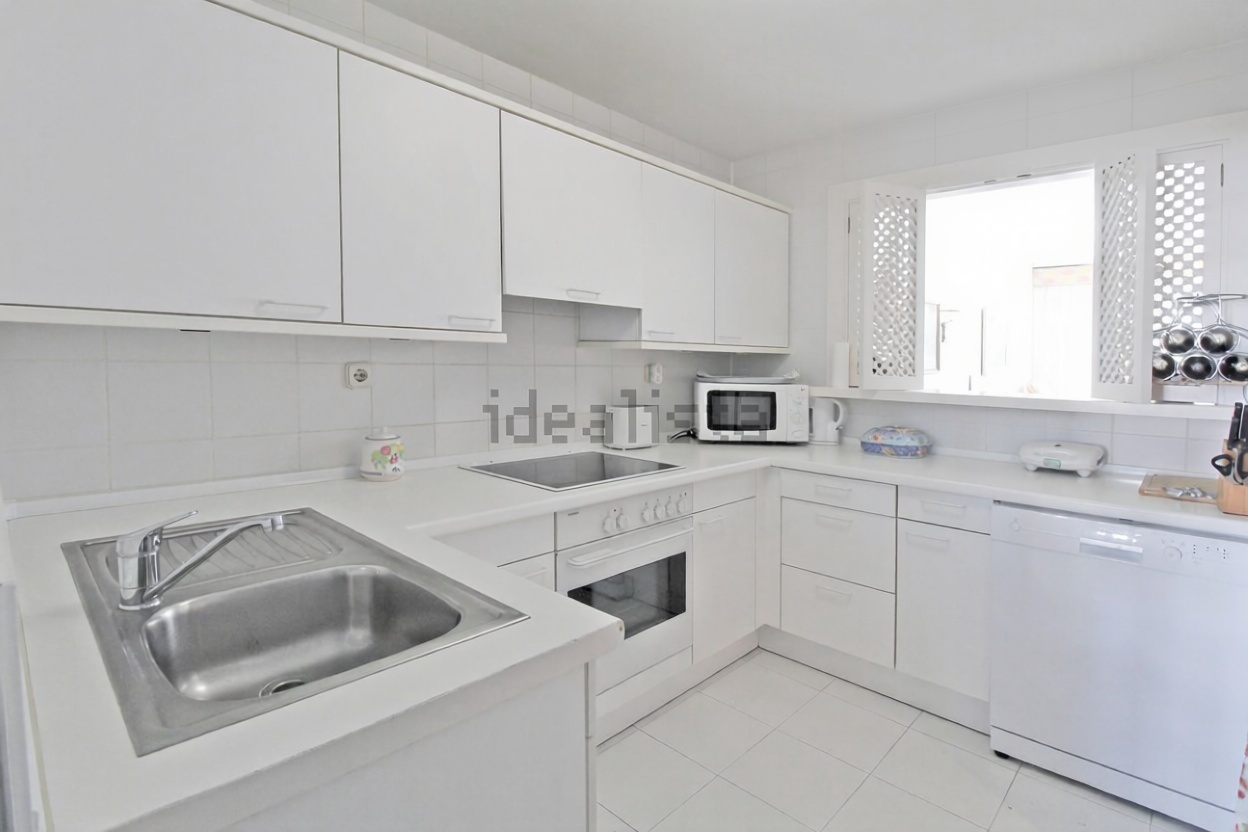
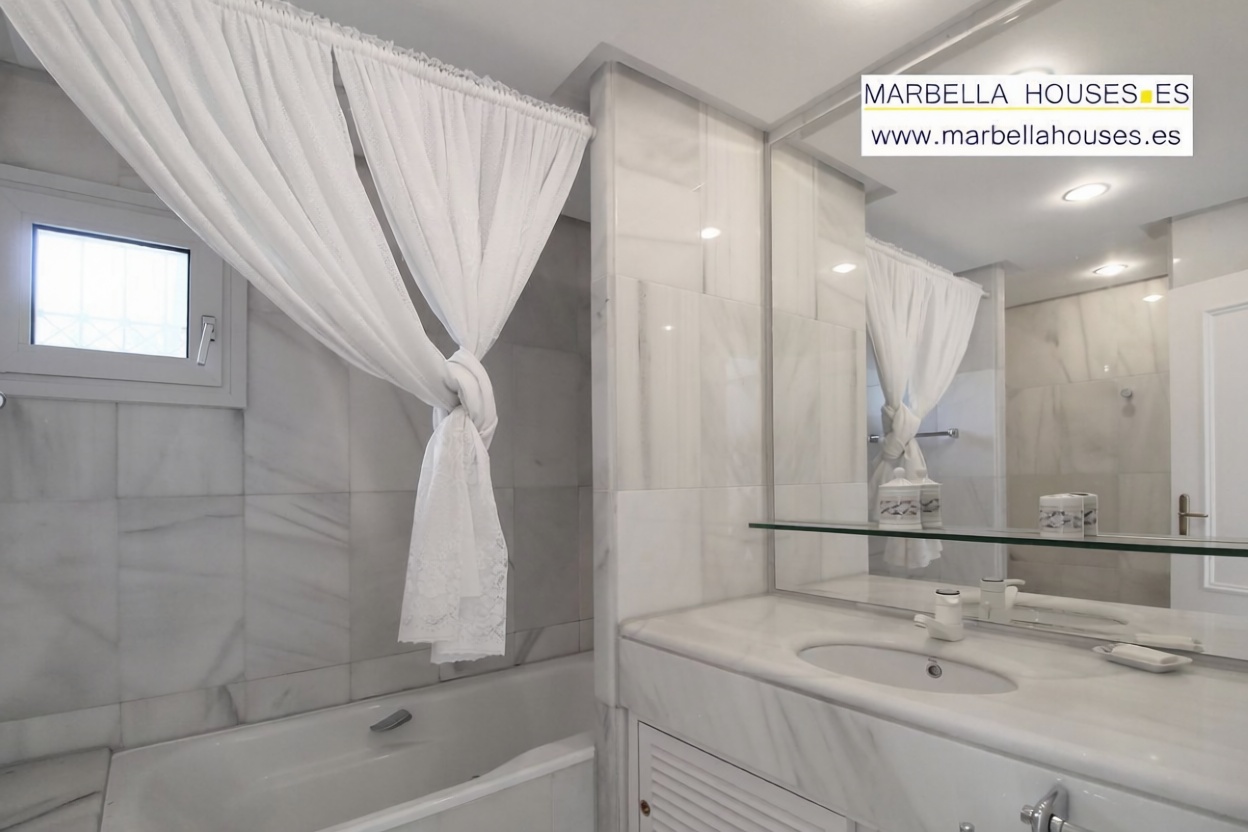
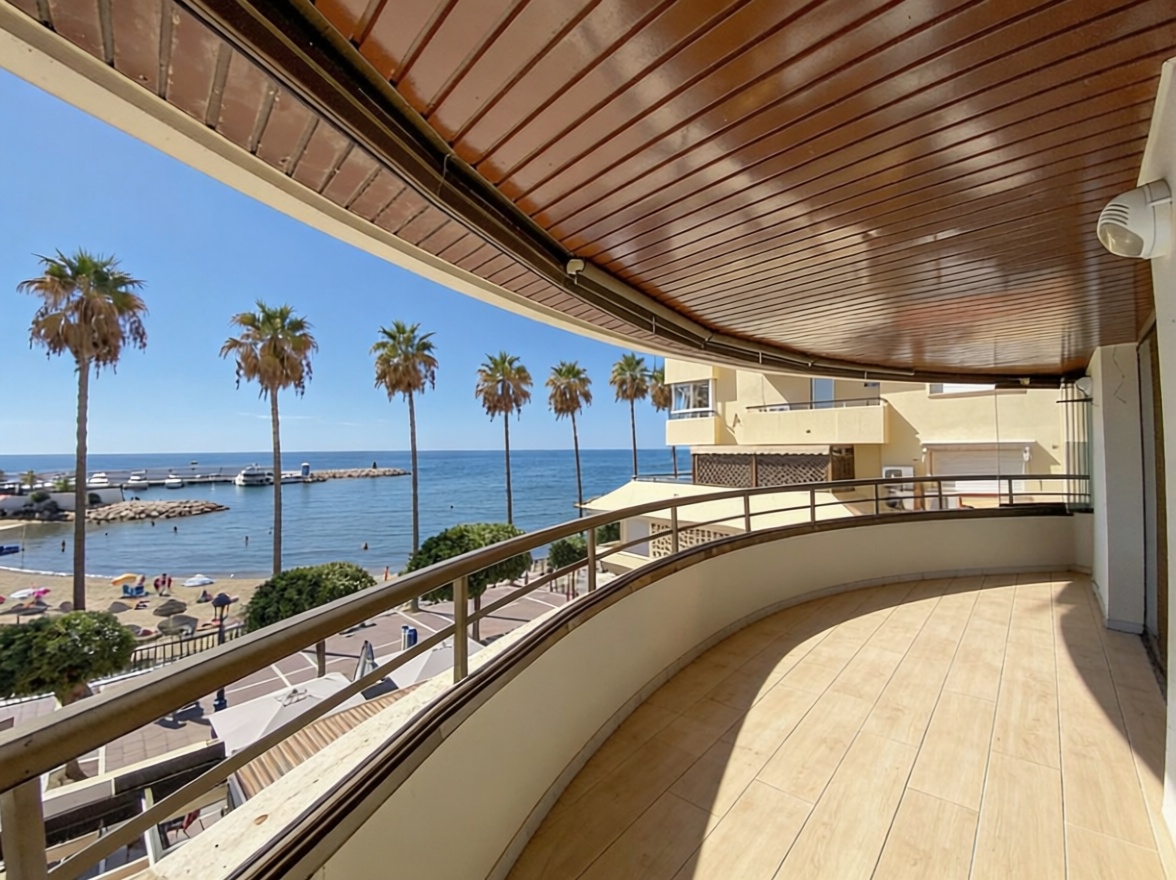
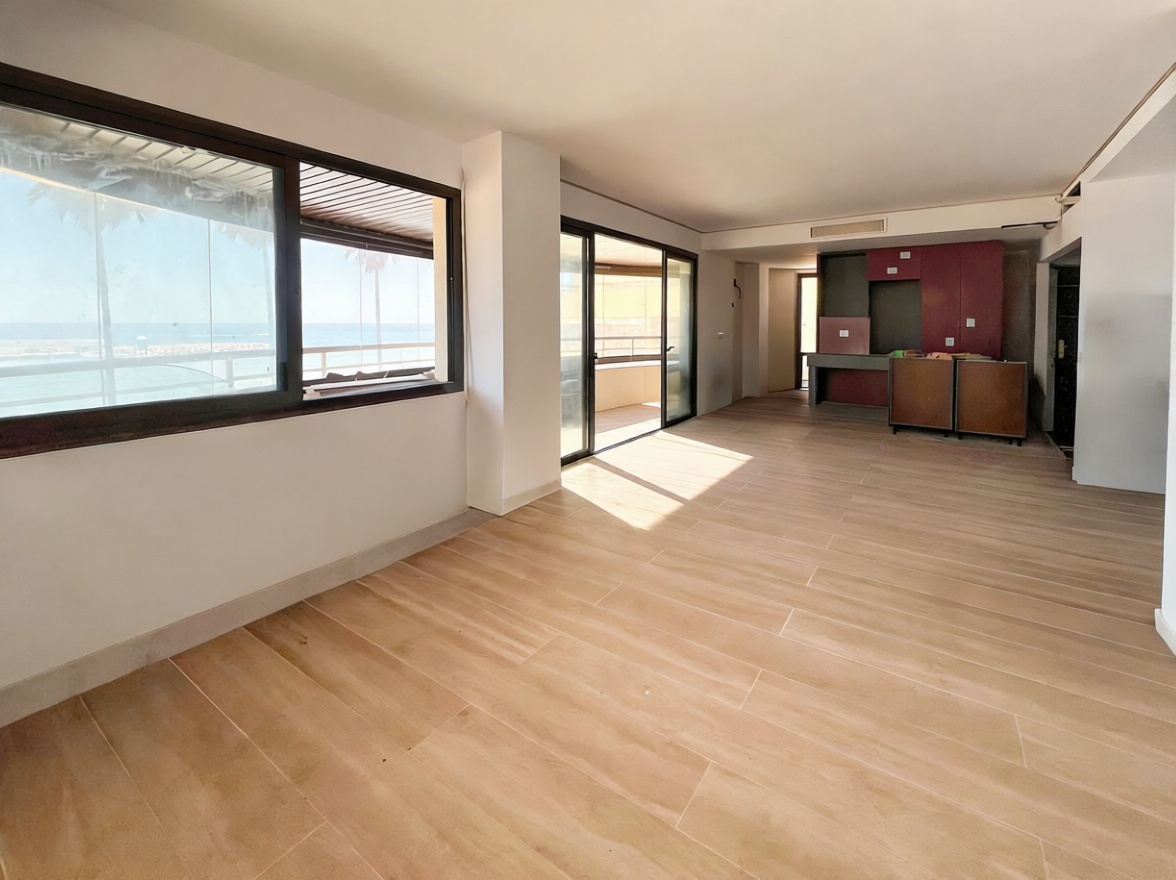
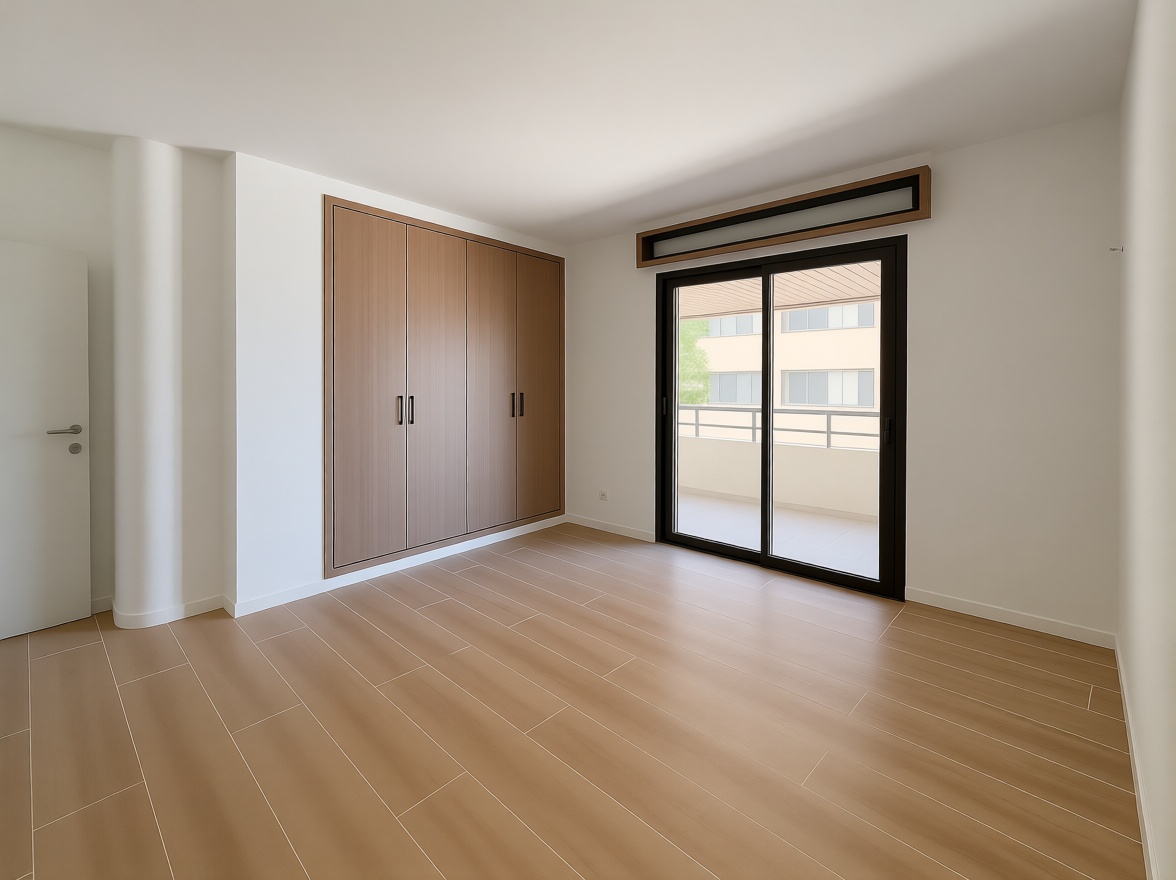
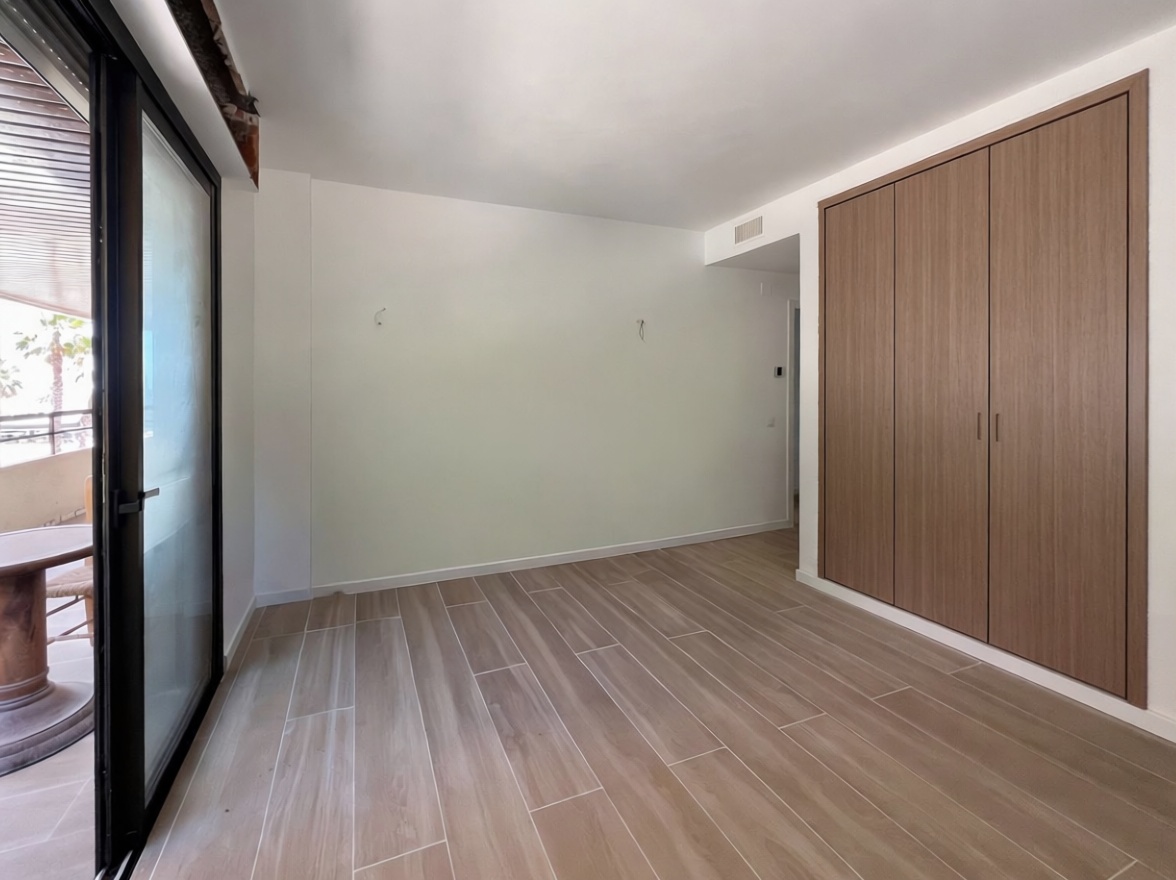
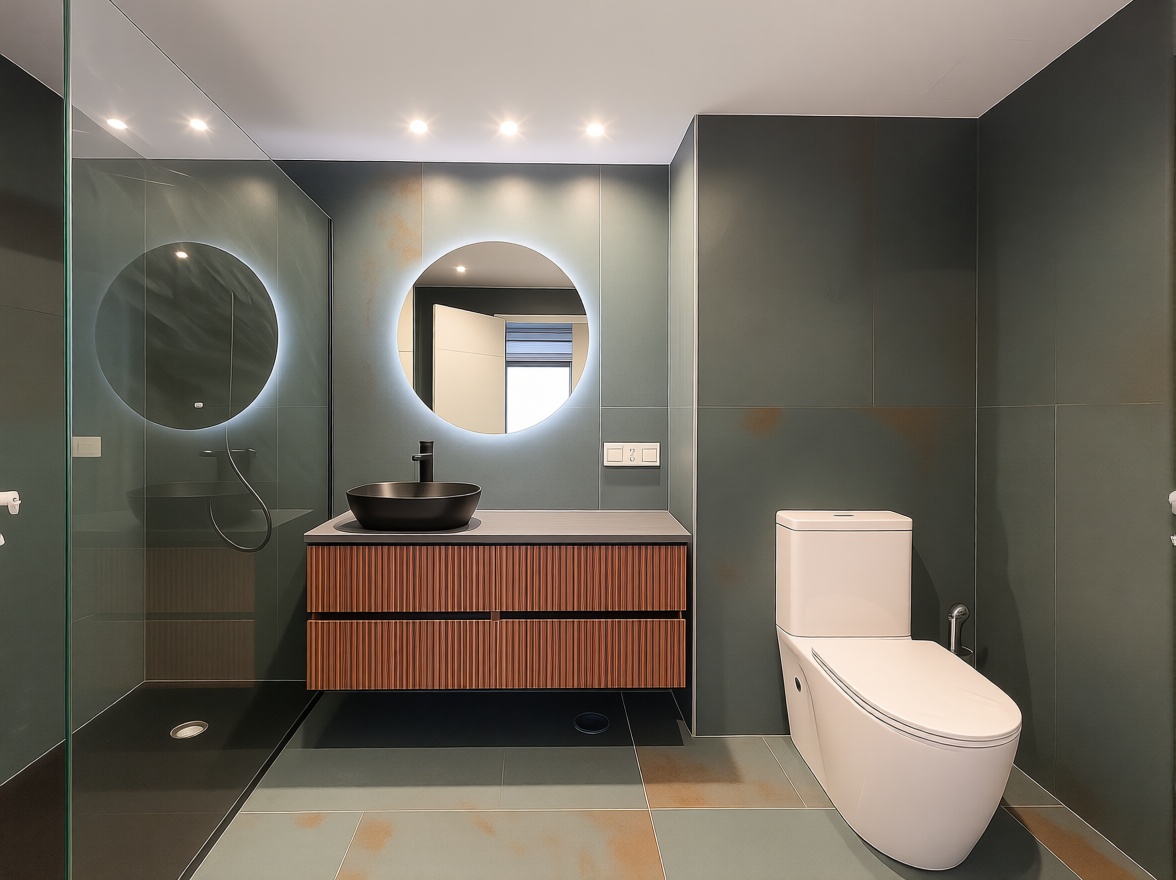
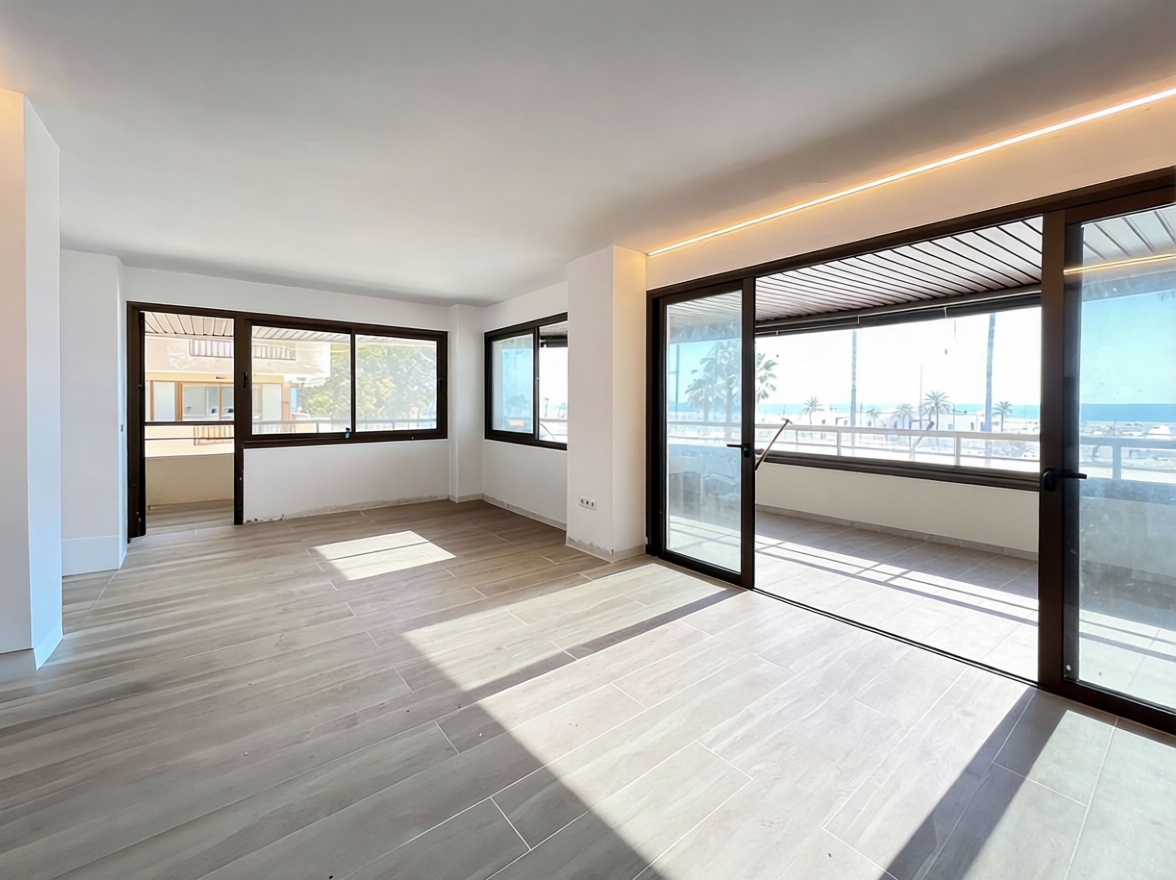
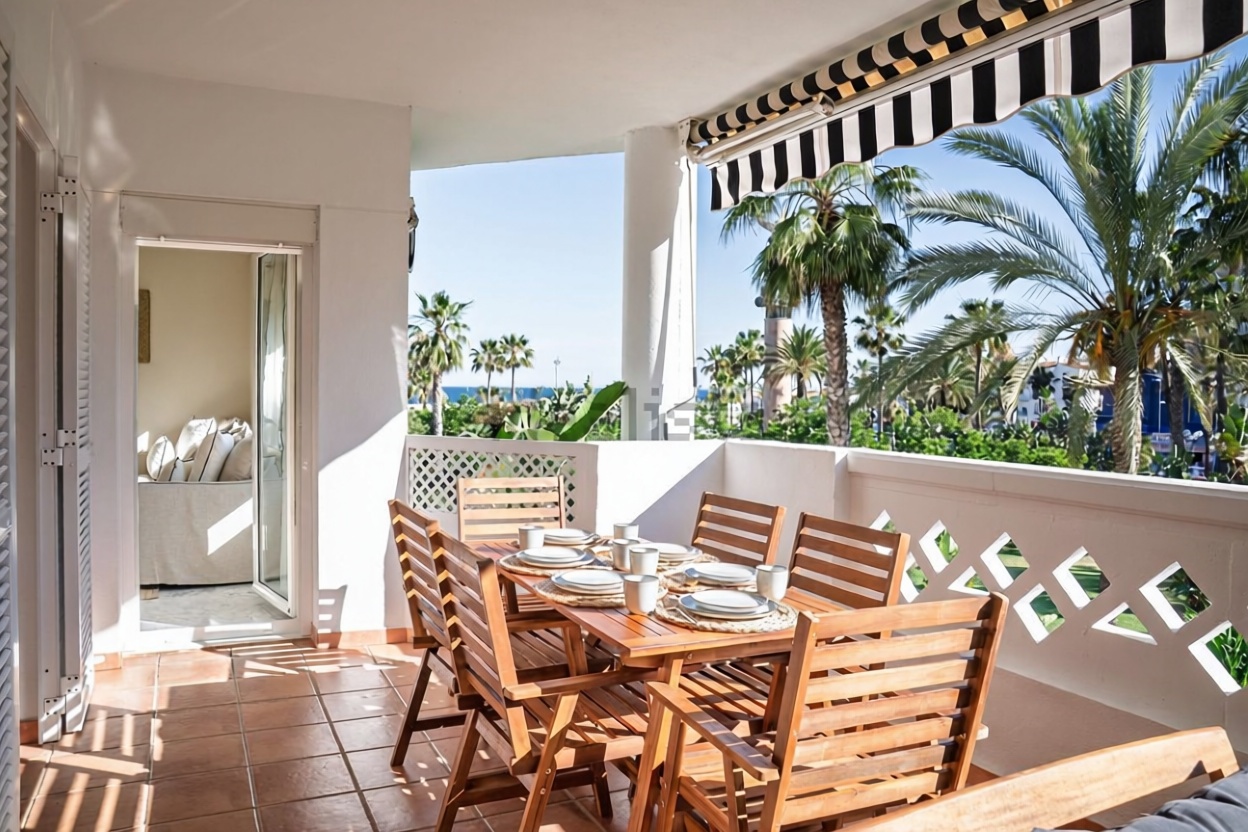
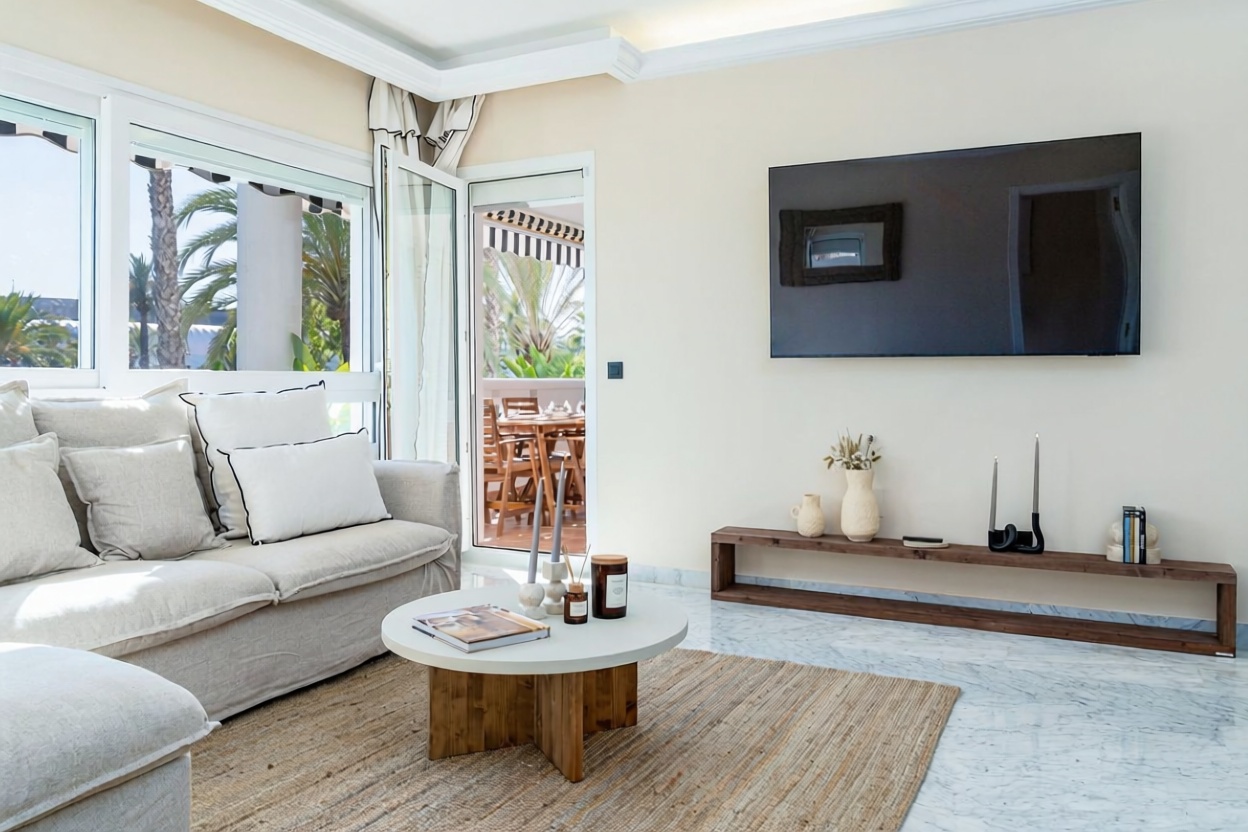
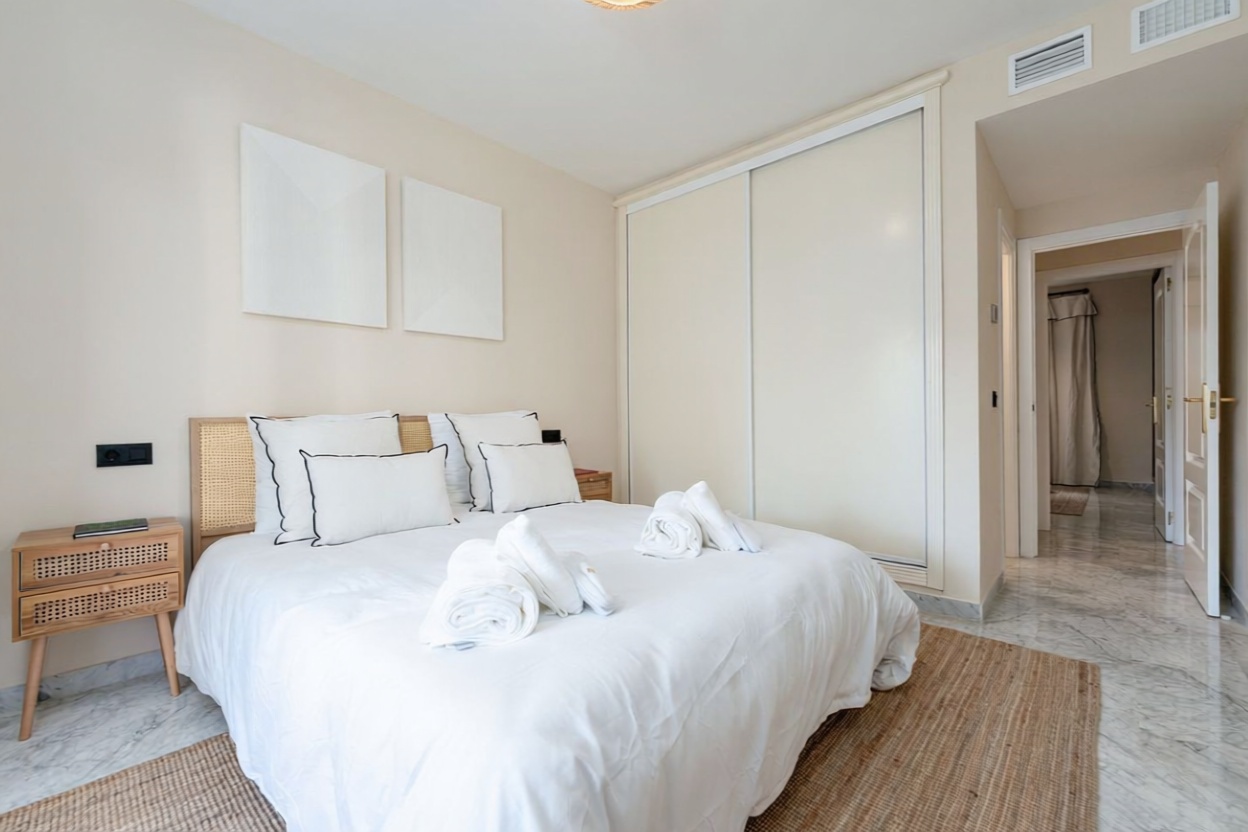
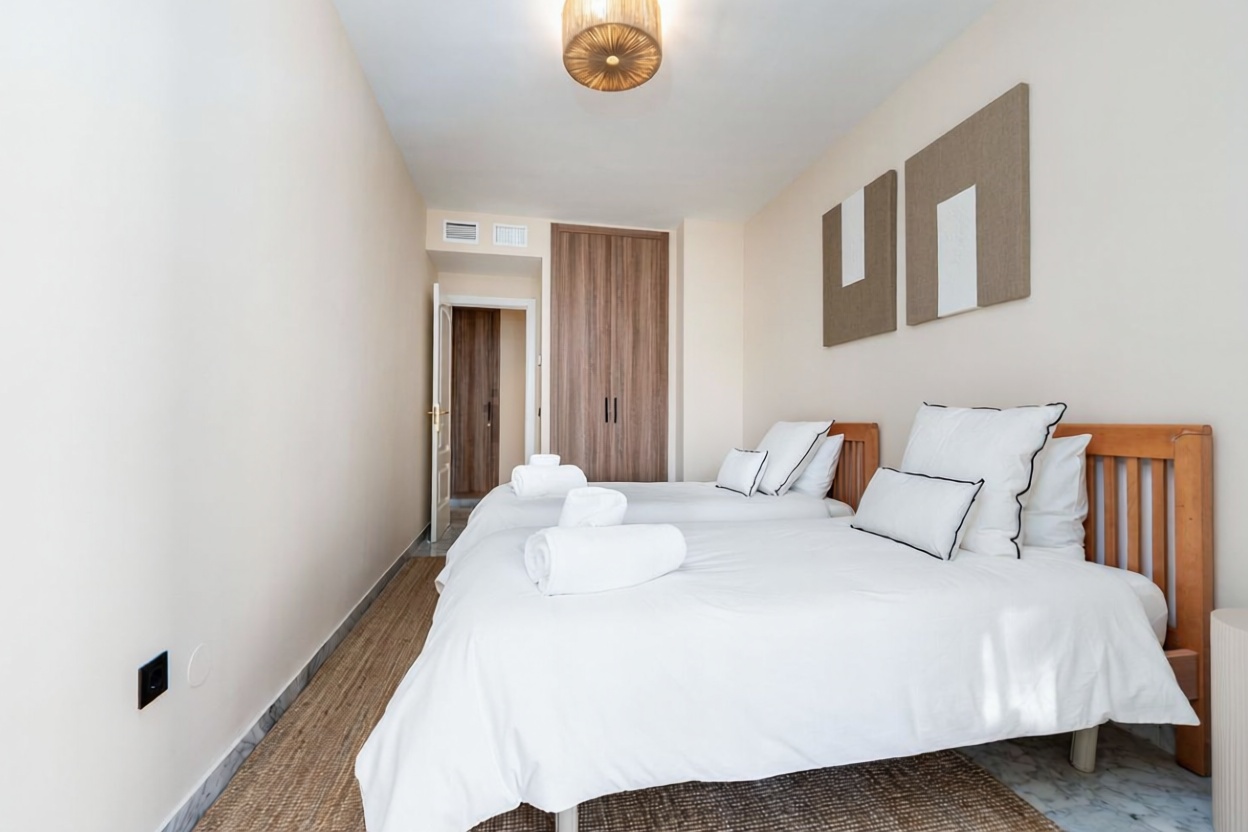
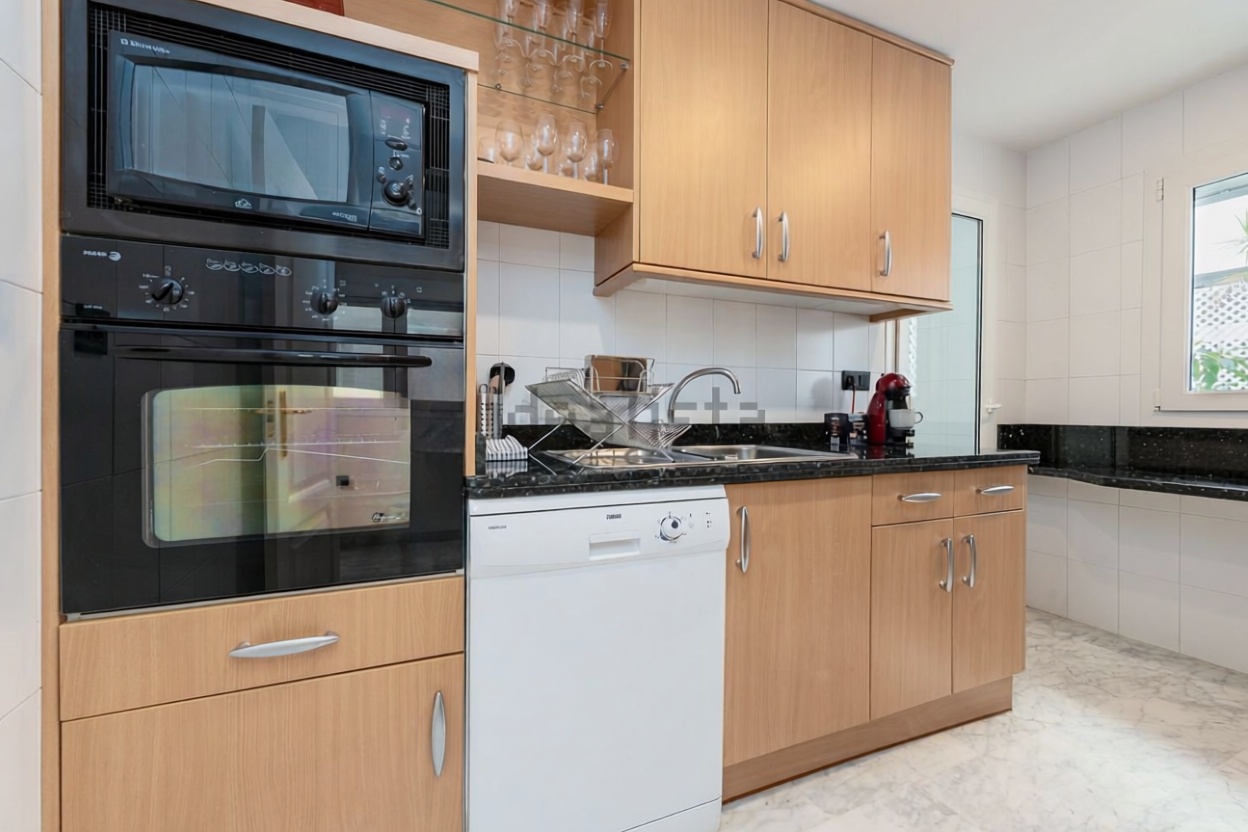
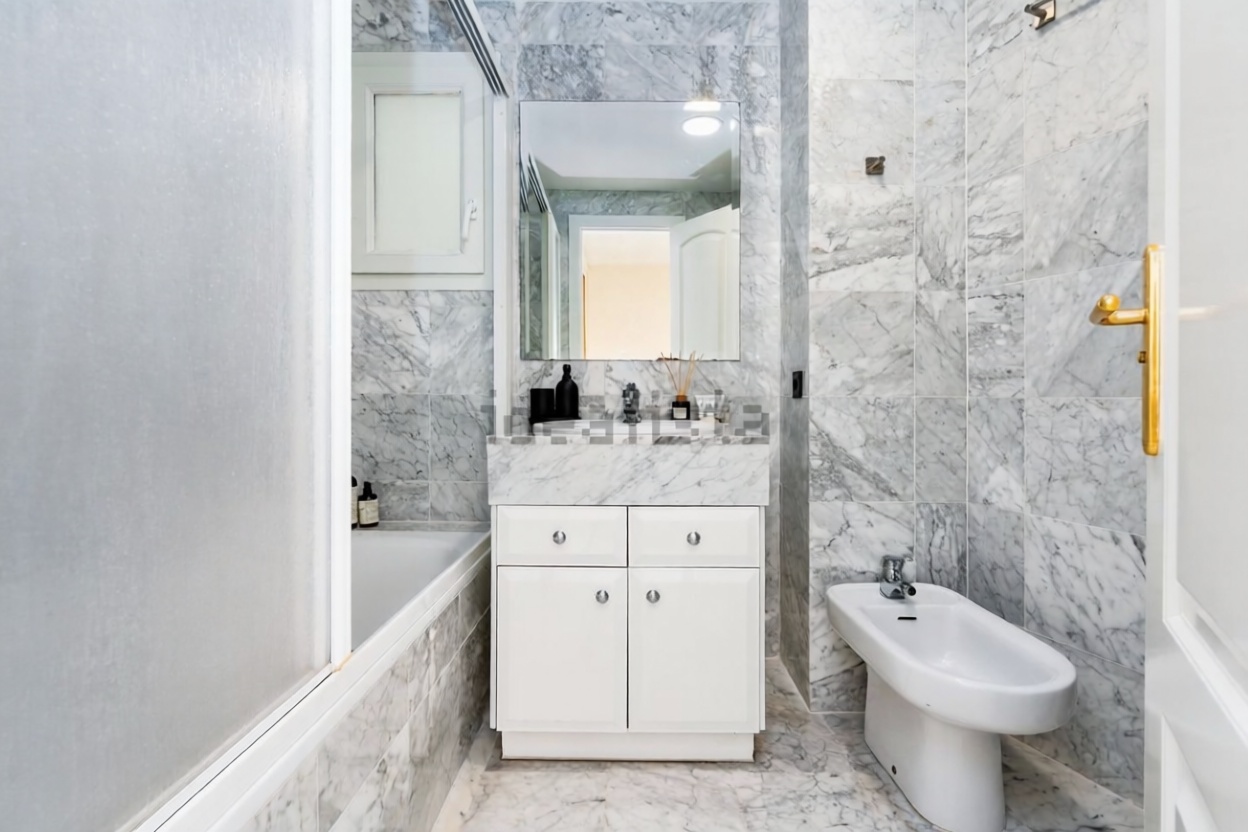
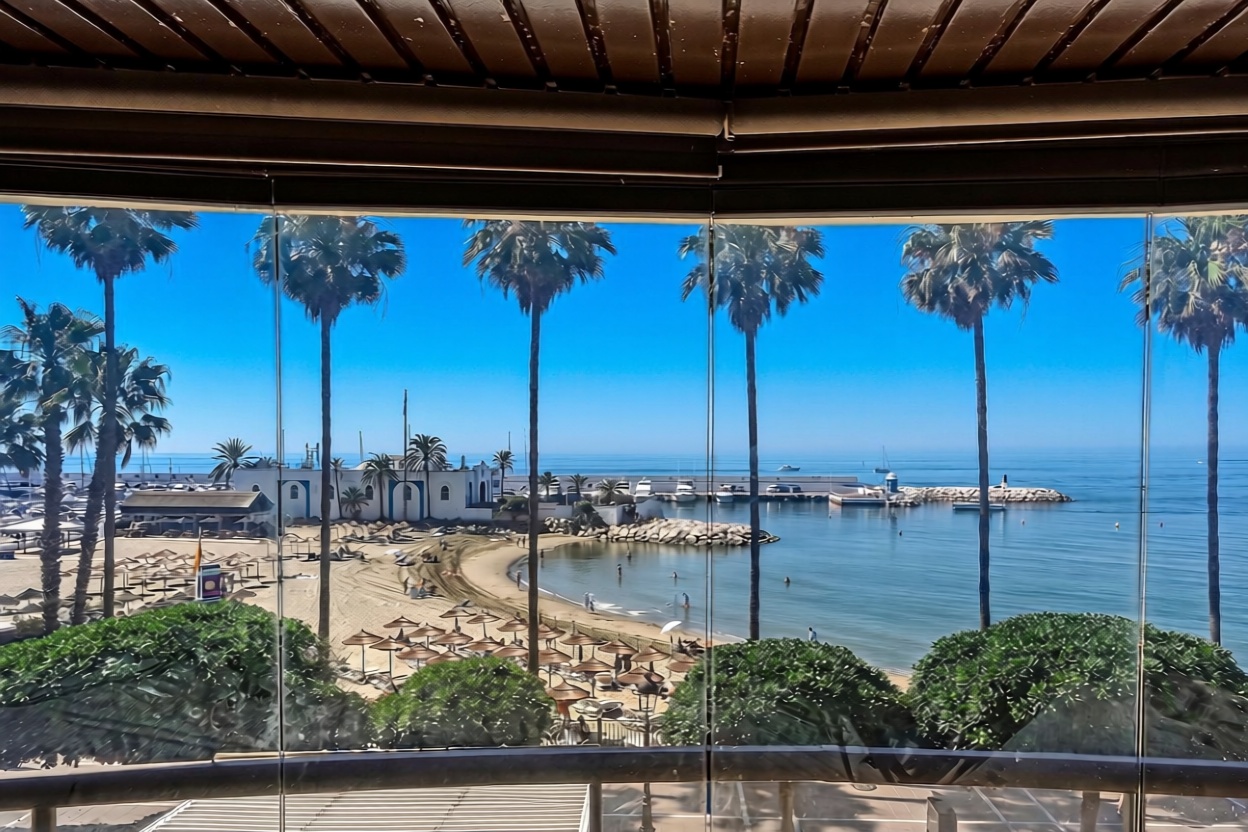
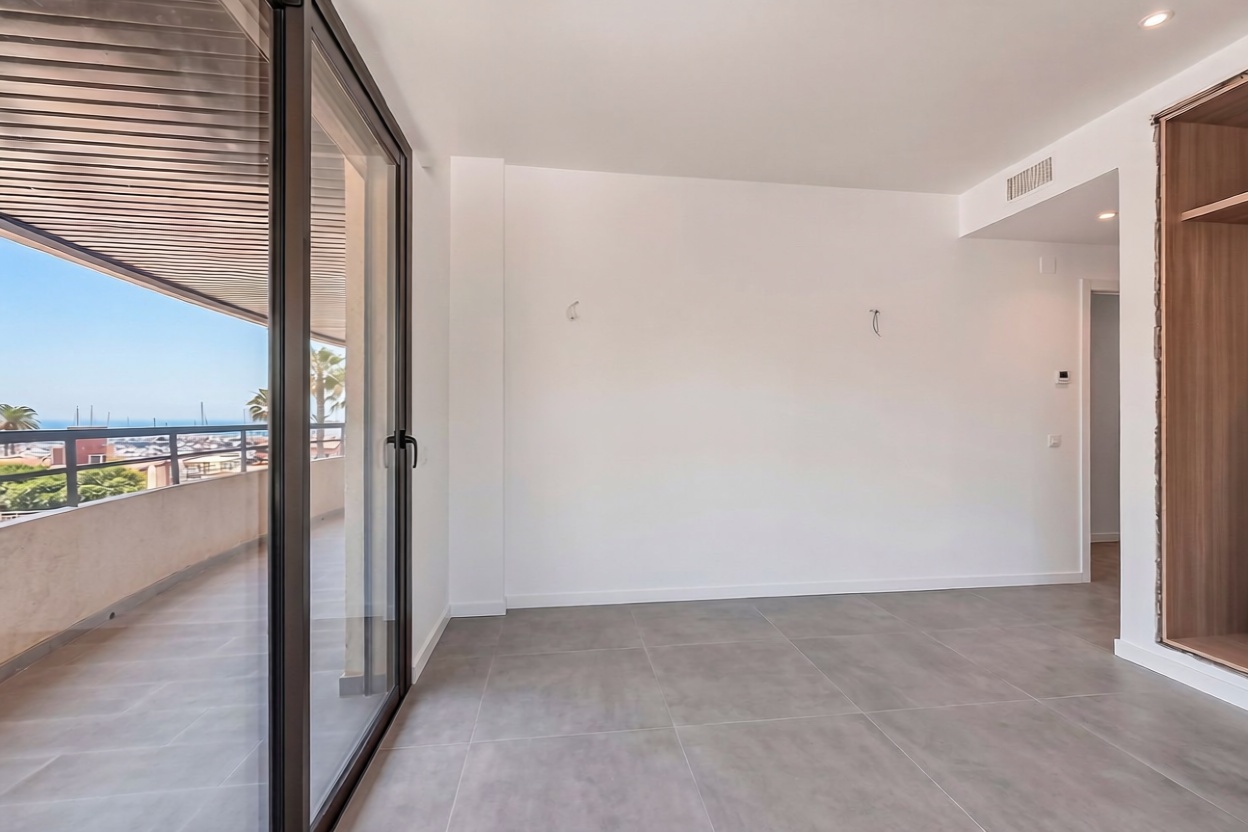
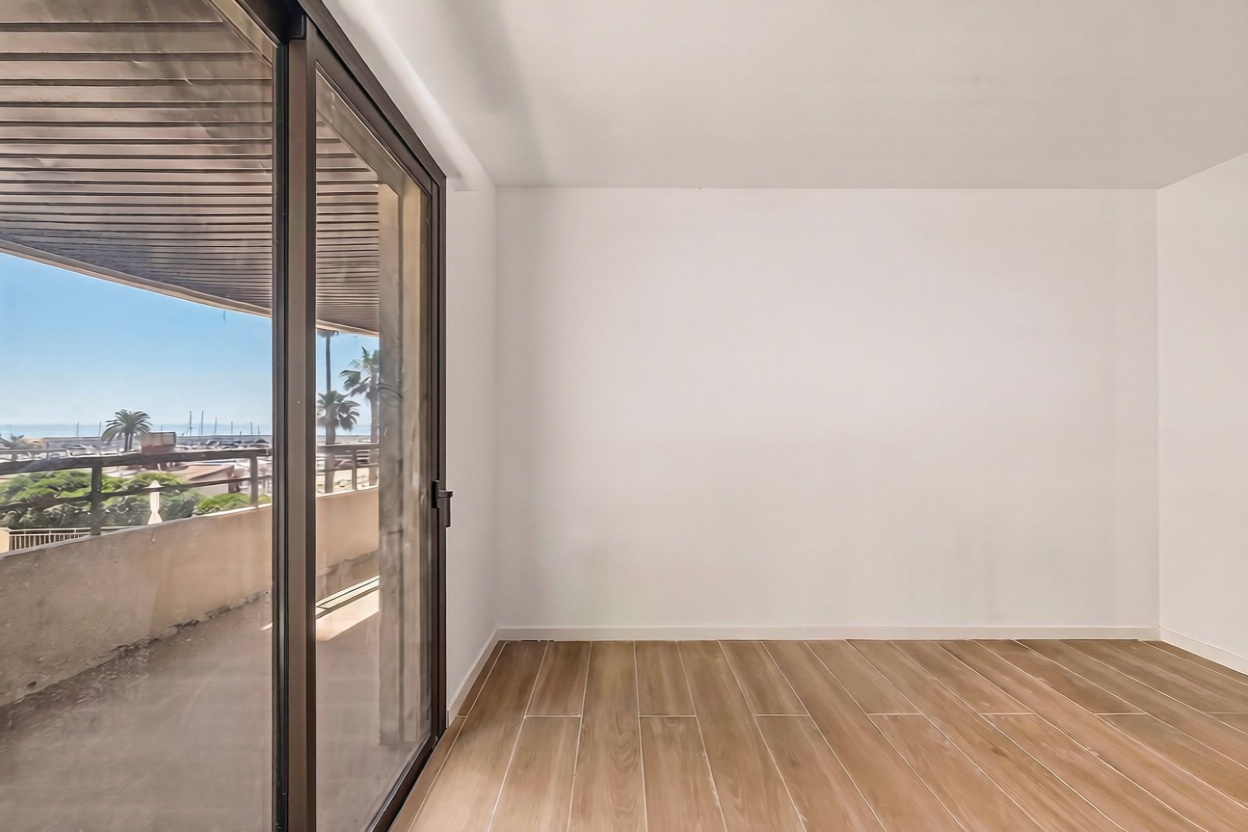
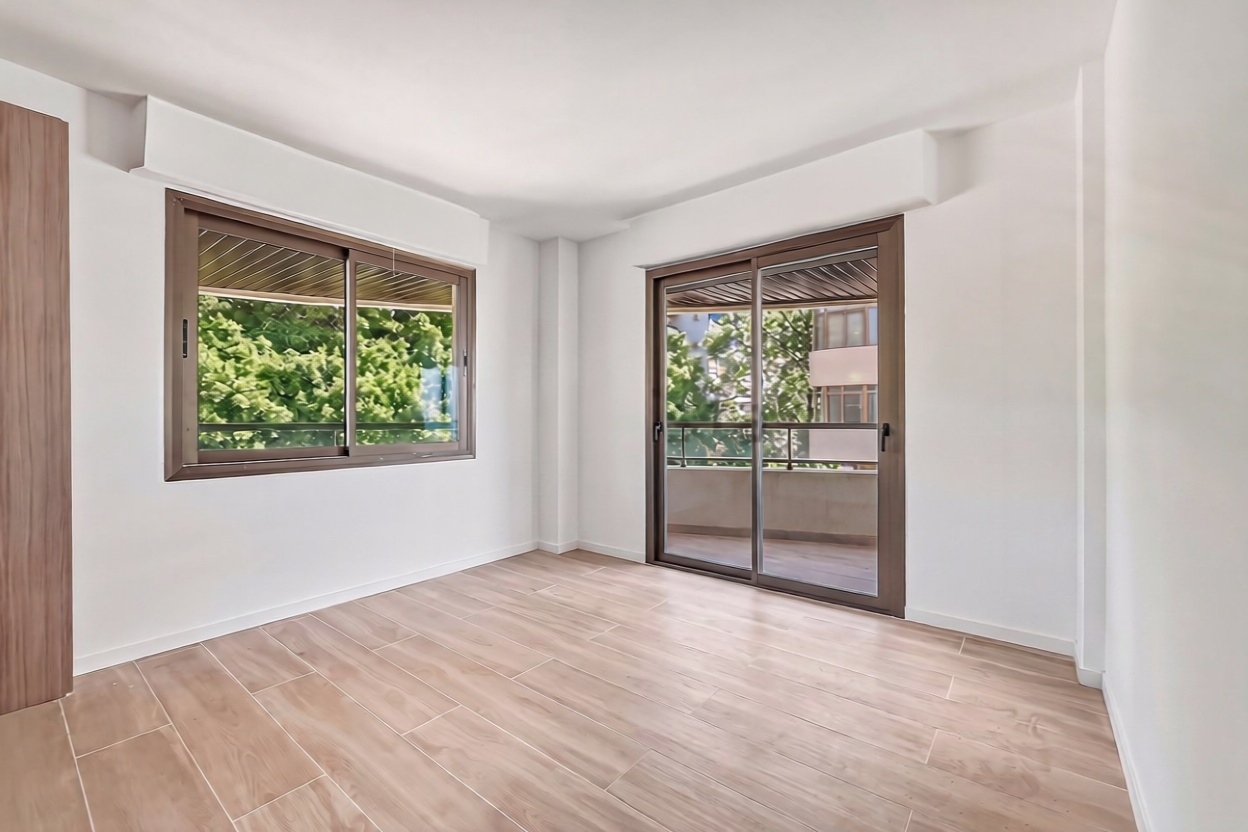
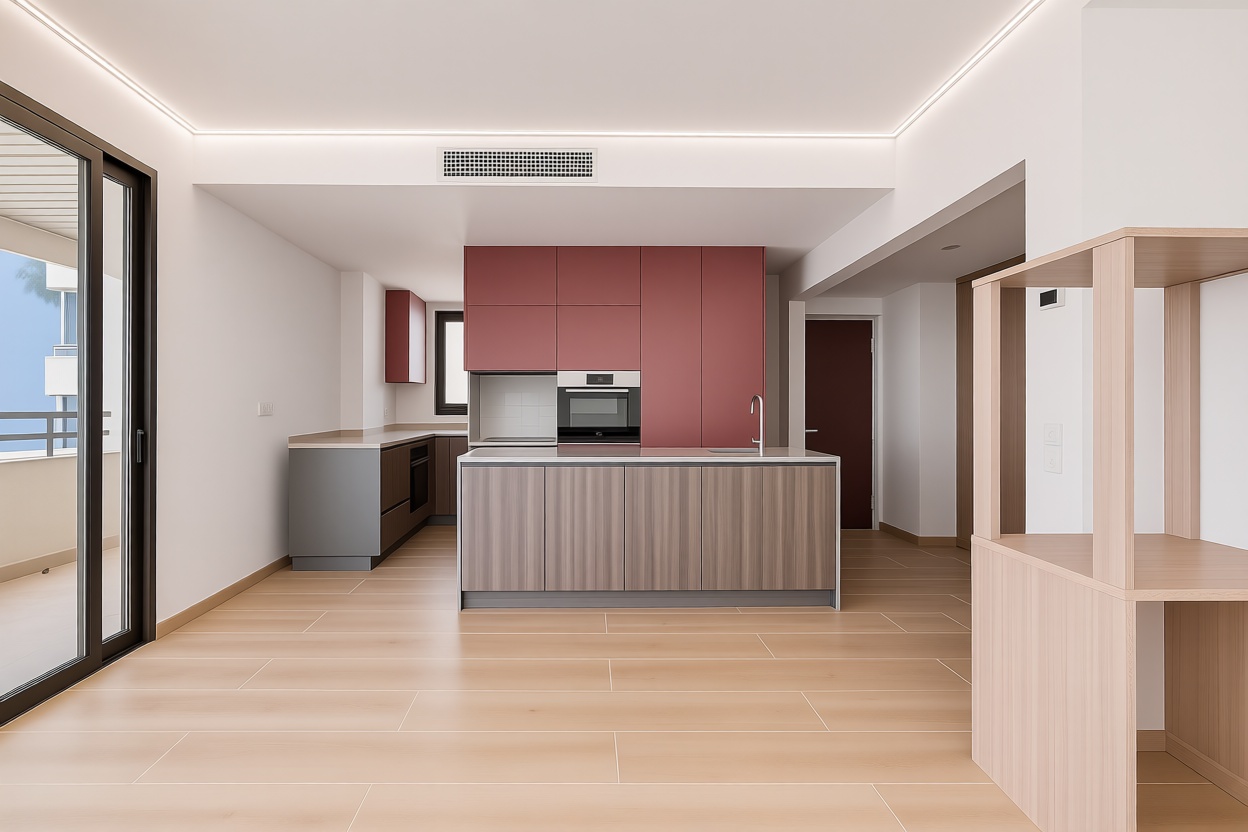
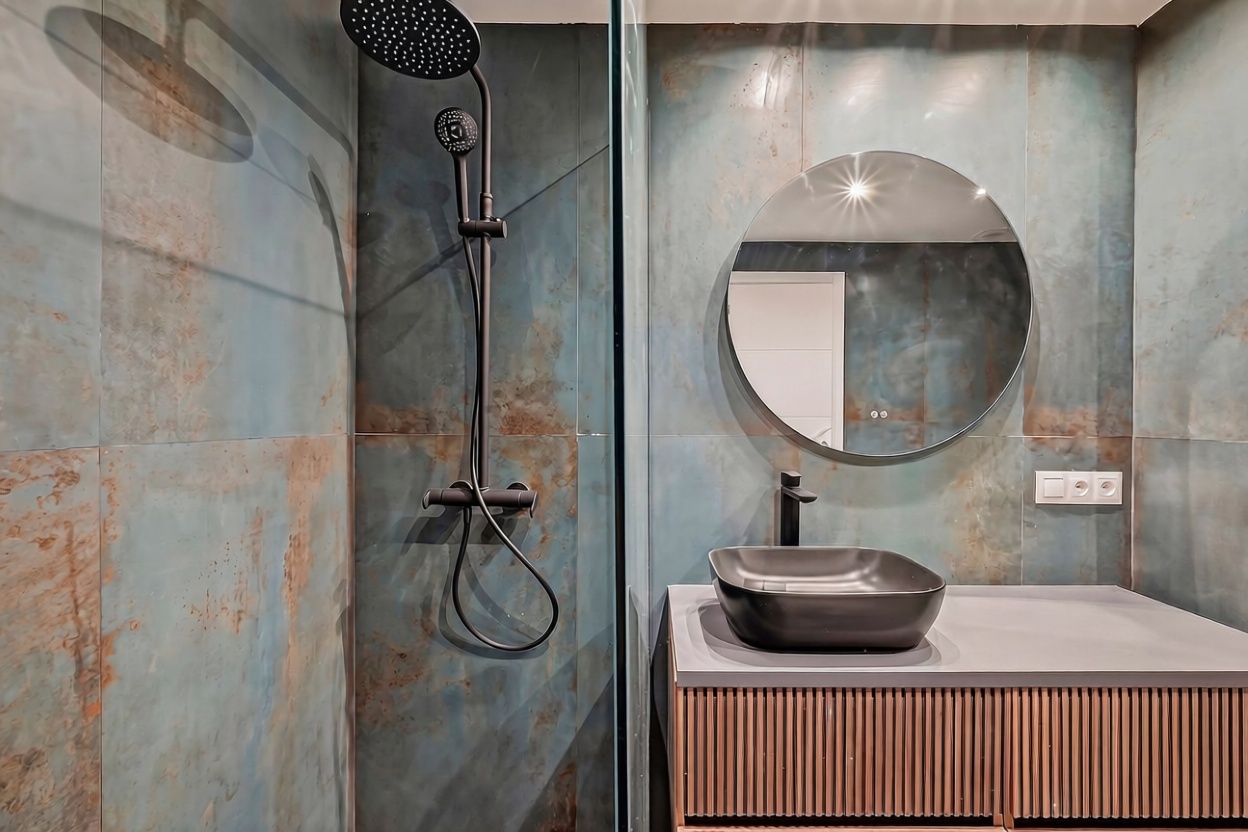
< p > & nbsp; < / p > < p > This apartment is developed in 124 square meters built and 110 square meters useful, with a distribution that makes good use of each space without generating dead areas. The living room is the heart of the house: wide, bright and south facing, it receives natural light from the first hour of the morning to the sunset. It connects directly to the terrace and balcony, creating a continuity between interior and exterior that visually expands the space and allows to live towards the sea at any time of the year. The two bedrooms are well provided, both with fitted wardrobes that solve storage without subtracting useful surface. The two bathrooms, well distributed, guarantee privacy and functionality for regular use or for receiving. The house was built in 1970 and has remained in good original condition, with finishes that reflect sustained care over time. The individual electric heating and air conditioning ensure thermal comfort at any station, while the southern orientation virtually eliminates the moisture problems or lack of light inherent in other directions. The second outside floor, without a lift, is a feature that is widely offset by privacy, views and the just distance over the floor level that allows you to enjoy the landscape without losing connection to the environment. The parking space and the storage room included in the price add a considerable practical value in an area where this type of accessories are scarce in the first line market. < / p > < p > The first line beach position is the characteristic that defines this apartment above any other. The views are front to the Mediterranean: from the living room, from the terrace and from the balcony the sea occupies the horizon without interruption, without interposed buildings, without distance to measure. This condition is not an approximation or a generous interpretation of the term - it is the real front line, with water at the front and the beach as an immediate limit. The sound of the sea enters through the open windows and forms part of the daily atmosphere of the apartment. The sea breeze naturally regulates the inner temperature in summer, reducing the dependence on air conditioning in the warmest months. The light that reflects the water on the walls of the living room changes throughout the day creating different environments according to the time, season and state of the sea. Living in the front line in Marbella means having immediate access to the beach without crossing streets or walking distances: the sand is at the foot of the building. This direct relationship with the Mediterranean is what makes this apartment a piece of difficult replacement in the market, regardless of the price or time of the year. < / p > < p > Marbella belongs to the province of Malaga and occupies a central position on the Costa del Sol, between the Mediterranean and the Nieves saw. The city has an extensive coastal façade with several urban beaches and first-line urbanizations distributed along its coastline. The Costa del Sol is one of the most consolidated coastal property markets in Europe, with a sustained international demand that has generated a high-quality urban and service fabric over decades. Marbella is the reference municipality of the entire coast of Malaga: it concentrates the largest premium product supply, the largest volume of international transactions and the highest-performance holiday rental market per square metre of the entire Spanish coast. The location of this apartment on the front line within the municipal term of Marbella places it at one of the most demanded points on the Mediterranean coast, with direct access to the promenade and the services of the urban core without the need for a vehicle for the day to day. < / p > < p > Marbella has a well-defined gastronomic identity that combines the Malagasy culinary tradition with the influence of decades of high-level international tourism. The sardine mirror is the most representative dish on the coast of Malaga: sardines stranded in bamboo rods and roast on wood coals directly on the beach, a technique declared Good of Cultural Interest. The first-line chiringhites in Marbella are the natural stage of this tradition, especially in the summer months. Ajoblanco, the cold almond and garlic soup typical of Málaga, and gazpachuelo, a hot, mayonnaise fish soup that is surprising for its balance, are references of local cuisine that are kept in the menu of the restaurants of all life. The municipal market of Marbella is the point of supply of fresh local product: Mediterranean day fish, tropical fruits of the Axarquía - avocado, mango, chirimoya - and vegetables of the Vega Malagueña. The city also has a European-level restaurant scene, with proposals ranging from Andalusian author cuisine to consolidated international references, especially concentrated in the old town and the marina. < / p > < p > Marbella's economy rests on three main pillars: tourism, the real estate sector and the services associated with a high purchasing power international clientele. Tourism is the primary engine: the city receives more than five million visitors a year, with a less pronounced seasonality than in other coastal destinations thanks to its climate and its attractiveness during the winter months. The real estate sector is the second largest generator of economic activity: the property transaction in Marbella and its environment moves volumes that place it among the most active markets in Spain, with a proportion of foreign buyers that exceed 40% of the total in the front line segment. The marina of Marbella, with capacity for more than 900 boats, is an economic node in its own right: it generates direct employment in nautical, hotel and services, and attracts a high-cost clientele that activates the trade and restoration of the area. The construction and promotion of real estate complete the picture, with a sustained activity in the premium segment that has resisted better than in other areas the lower cycles of the Spanish market. < / p > < p > Marbella attracts a diverse tourism but with a common denominator: economic capacity above the Spanish and international average. The dominant profile is that of European tourist between 35 and 65 years old, with a high proportion of British, German, Scandinavian, Russian and Persian Gulf Arabs. Golf tourism is one of the most consolidated segments: the Costa del Sol concentrates more than 70 golf courses within a 50 km radius of Marbella, making it one of the most relevant golf destinations in Europe. The luxury tourism and the yacht tourism give the city a dimension that no other Spanish coastal municipality can match: the Puerto Banus, three kilometres from the center, is one of the reference sports ports of the Western Mediterranean. The high season goes from May to October, with July and August as months of maximum density. However, Marbella maintains relevant tourist activity throughout the year: the winter months attract European residents who seek to escape from the cold of the north and golf players who use the climate to practice without the limitations of the high season. The city has a clearly differentiated double life: bustling and international in summer, quiet and residential in winter, with a quality of life in the cold months that is difficult to find in another Spanish coastal destination. < / p > < p > The climate of Marbella is one of the most benign of the European coast. With more than 320 days of sun per year and average temperatures that do not fall from 13 degrees in January or exceed 28 in August, the city allows an outside life without interruptions imposed by other climates. The Mediterranean acts as a natural thermal regulator: it accumulates heat during the summer and releases it during the winter, softening the extremes at both stations. The snow saw, north of Marbella, acts as a barrier to the cold winds of the interior, creating a particularly protected microclimate in the coastal strip. For front-line residents this protection is particularly noticeable: the apartment receives the southern sea breeze and is protected from the north component wind by the topography of the environment. The Mediterranean light of Marbella has a particular quality: intense and white in summer, golden and horizontal in winter, always present. This light is the one that enters every morning by the south-facing windows and that makes the living room a bright space even in the months of less insolation. The practical result for the owner of this apartment is that it can live with comfort at any time of the year without the climatic limitations that condition the use of other coastal properties at higher latitudes. < / p > < p > A 830,000 euros, this apartment represents a direct entry to the real front line segment in Marbella - a market with structurally limited supply and sustained international demand. The first-line properties on the Costa del Sol are not depreciated in lower cycles with the same intensity as the general market: the soil shortage in that position and constant international demand act as shock absorbers. For those who seek permanent residence, the differential value is the quality of daily life: living with the Mediterranean at the front, in a south orientation, with garage and storage room included, in a city with infrastructure, climate and provision of services at European level. For the investor, the first-line holiday rental market in Marbella maintains yields above the average of the Costa del Sol, with a demand that does not depend exclusively on the summer season. This property is a concrete decision on where and how to live - with the sea as a permanent company and Marbella as a stage. < / p >