The purchase price is only the beginning
A genuine seafront home can preserve strong appeal, but it requires a realistic annual budget. Separate fixed expenses, variable use costs and a reserve for repairs. The common mistake is to calculate only the mortgage and local tax while ignoring accelerated marine wear.
Taxes and obligations
Owners pay municipal property tax and, depending on the council, charges such as waste collection. Non-residents must also examine Spanish non-resident income tax and the applicable return, even when the home is not rented. The calculation depends on cadastral value, tax residence and use, so individual advice is essential.
Community fees, special assessments and insurance
Community fees finance lifts, pools, gardens and ordinary maintenance. Seafront buildings may need special assessments for façades, terraces, roofs, garages or corrosion. Review budgets, accounts, arrears, meeting minutes and planned works. Insurance should reflect the building, contents, liability and actual coastal risks covered by the policy.
Utilities and remote management
Water, electricity, internet, alarm, cleaning and keyholding continue even when the property is rarely used. Foreign owners should budget for fiscal representation, inspections and emergency assistance. Rental adds marketing, cleaning, linen, check-ins, repairs and taxation.
The cost of the sea
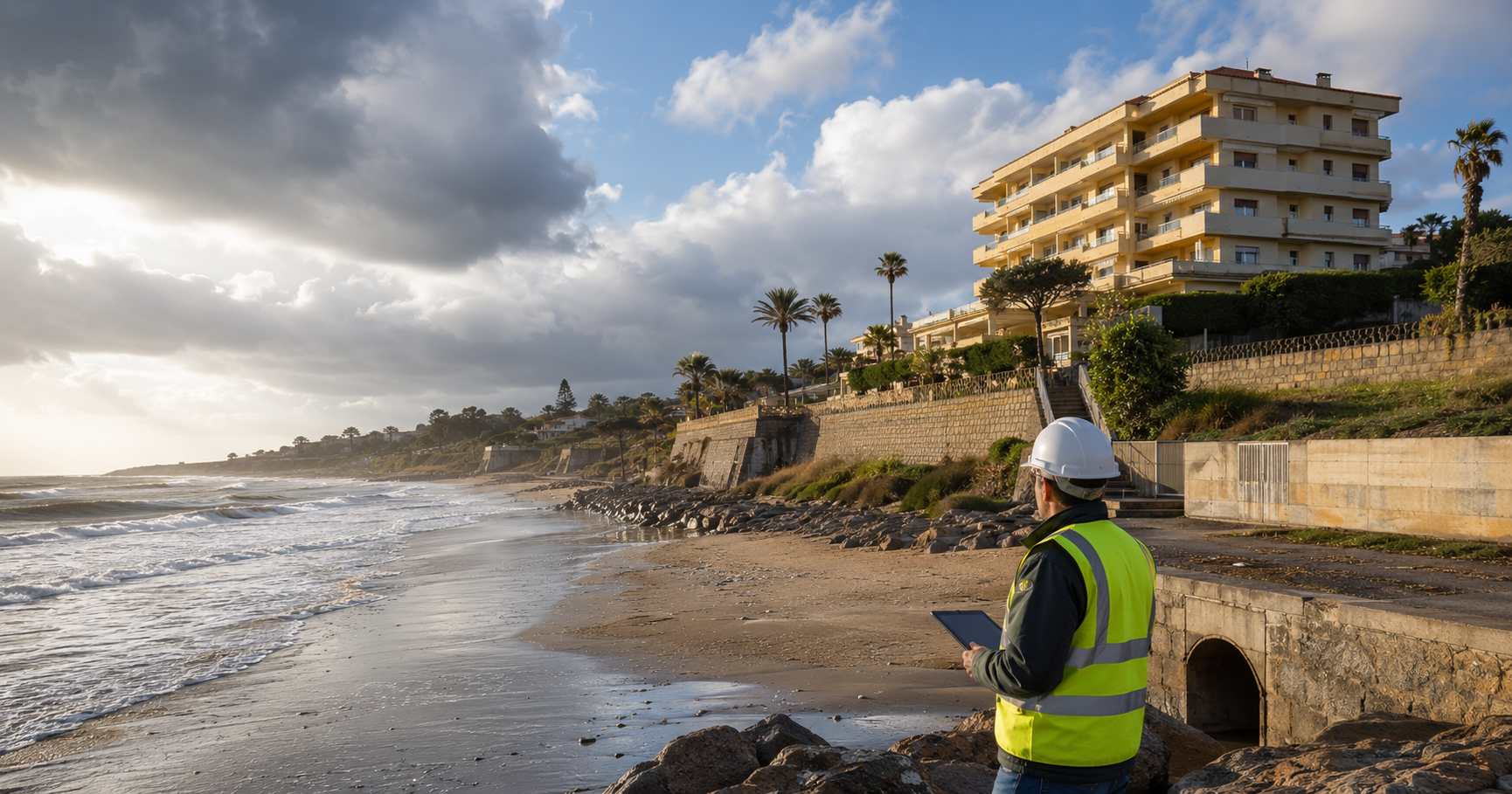
Salt, humidity, wind, sand and ultraviolet light affect windows, shutters, awnings, railings, paint and air conditioning. Regular ventilation, fresh-water cleaning and early treatment cost less than replacement.
Separate fixed, variable and exceptional costs
A useful budget does not combine every payment into one vague figure. Fixed costs remain when the home is closed: municipal property tax, possible local charges, community fees, insurance and minimum utility contracts. Variable costs follow actual use and include water, electricity, cooling, cleaning, linen, travel and minor replacements. Exceptional costs include a façade assessment, roof waterproofing, a major breakdown or new windows. The distinction shows what it costs to preserve the asset, what it costs to enjoy it and how much cash should remain available.
The owners’ association can transform the calculation
Two similarly priced apartments can have very different running costs because of their buildings. Pools, gardens, concierge services, several lifts, communal garages and ageing installations all affect the budget. Good management can justify higher fees when it prevents deferred maintenance. Ask for several years of meeting minutes, budgets, accounts, arrears, the reserve fund and works under discussion even if they have not yet been formally approved. A debt certificate concerns the individual unit; the minutes reveal the financial and technical direction of the whole building.
Assessing frontline-specific maintenance
Not every seafront home receives the same marine exposure. Prevailing wind, height, real distance from the water, neighbouring protection and an open terrace all matter. During a viewing, look for rust on fixings and railings, peeling coatings, failed joints, stiff shutters, condensation, damp smells, leaks and corroded outdoor air-conditioning equipment. Examine façades, balconies, garages and technical rooms as well, because repairs to common elements are normally shared by all owners.
When the owner lives abroad
Distance creates work that a resident might handle personally. Someone must inspect after storms, ventilate the home, identify leaks, coordinate contractors, meet insurers and hold keys. Professional supervision costs money, but leaving a property unchecked for months can cost more. A foreign buyer should also budget for tax and administrative advice appropriate to their residence and review current obligations each year. Where the home is rented, ownership expenses must be separated from operating costs and regional and municipal rules must be checked.
Test three ownership scenarios
Calculate a normal year of personal use, a year with little occupancy or no rental income, and a year containing a significant repair or community assessment. If ownership is comfortable only in the most optimistic case, the budget is too tight. Actual receipts, maintenance invoices and community records are more useful than national averages. There is no honest universal percentage for all coastal homes: the correct figure comes from the particular unit, building and intended use.
Conclusion
The best investment is not necessarily the home with the lowest expenses, but the one with predictable costs appropriate to its quality and use. Knowing them before purchase protects both enjoyment and value.
José Luis Castilla