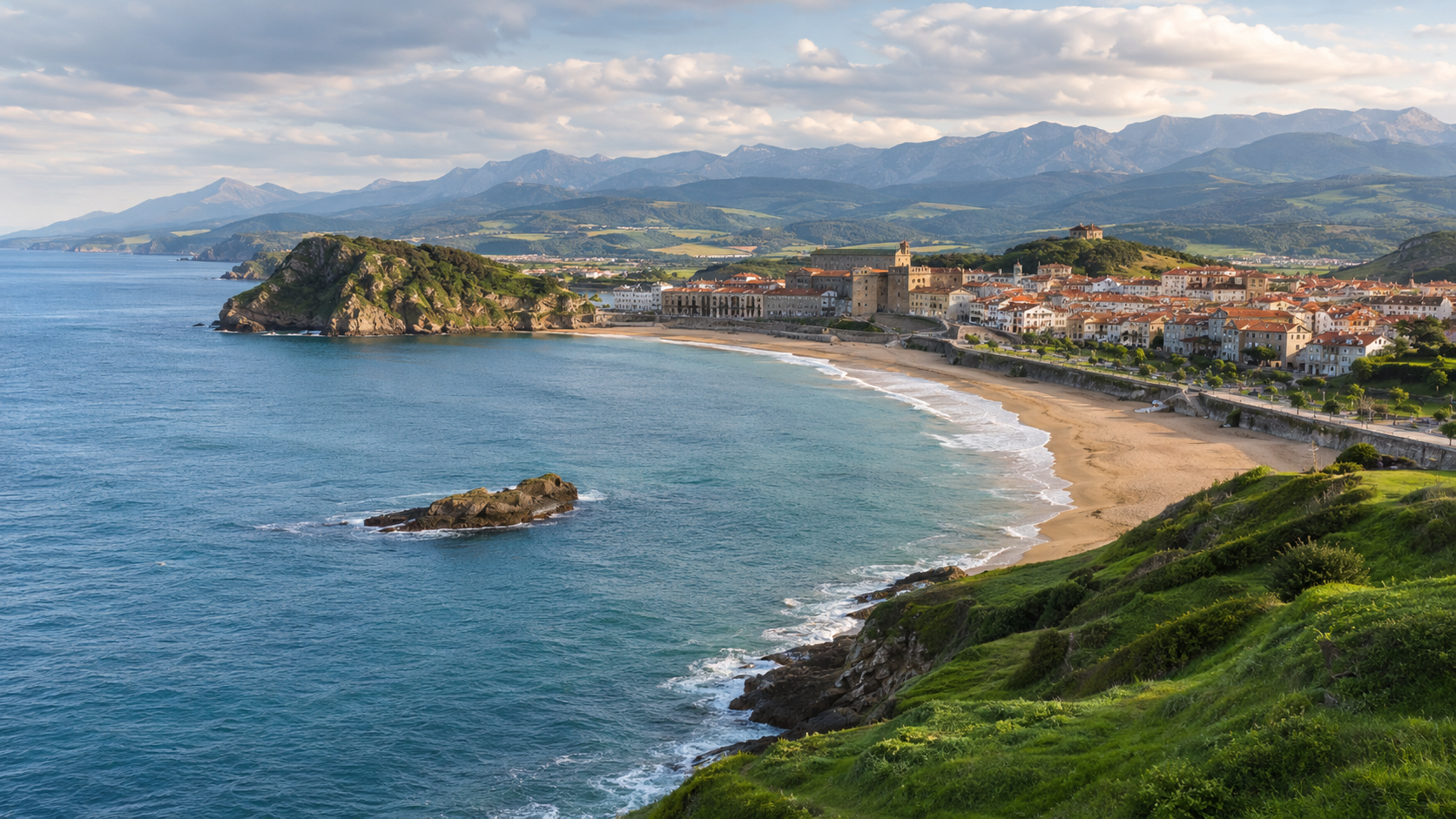
The second instalment of Addurno's coastal series. In the first we covered the Mediterranean close to Barcelona — the Costa Brava and the Costa Dorada. Now we move south to the Levante arc.
If there is one stretch of the Spanish coast built for living by the sea many months a year and not just in August, it's the Levante arc. The strip running from Castellón to Murcia enjoys sunshine almost year-round, the most well-established international community, and the most convenient connections. For the buyer who wants to genuinely use the home — escaping in February, working remotely for a season, hosting family without depending on summer — this is probably the most practical coastline in all of Spain.
But "Levante" covers four very different coasts, and here the difference between getting it right and getting it wrong is significant, because top-tier areas sit alongside heavily built-up zones that won't suit what you're looking for. Let me guide you through where the good seafront is on each one.
Costa del Azahar: authenticity and good value
The Costa del Azahar, in Castellón, is the quietest and most authentic of the four, and the one that offers the best quality-to-price ratio. Its jewel is Peñíscola, with its walled old town overlooking the sea — one of the most beautiful sights on the Mediterranean. Benicàssim and Oropesa round out a coast with a more relaxed atmosphere, less internationalised than the Blanca, ideal for those seeking seafront without the crowds and without paying the premium of the more fashionable areas.
Costa de Valencia: a major city with a beach
Here a factor unique to the whole arc comes into play: one of Spain's great cities, right next to the sea. Valencia has become one of the European cities with the best quality of life, and that changes the rules. You can have seafront with the culture, gastronomy, healthcare and direct flights of a capital just fifteen minutes away. For an executive who wants the sea without giving up city life, it's a hard combination to beat.
Around the city, the natural setting of the Albufera and El Saler offers a protected, distinctive seafront, and heading south, Cullera, Gandia and Oliva provide wide beaches and a more holiday-oriented atmosphere. Proximity to the city is the great asset of this entire area.
Costa Blanca: the climate and the international community
It's the best-known coast of the arc and, in its better parts, one of the finest in Spain. But you have to make careful distinctions, because the Costa Blanca has two faces.
The northern Costa Blanca — Dénia, Jávea, Moraira, Calpe, Altea — is the sophisticated one: coves, mountains rising over the sea, charming white villages and a high-calibre international buyer. Jávea is reputed to have one of the healthiest microclimates in the Mediterranean, and Altea, with its white old town above the bay, is one of the most beautiful and prestigious spots on the whole coast. If you're after seafront with an unbeatable climate and a settled international community — with its schools, healthcare and services in several languages — here it is.
The southern Costa Blanca — from Torrevieja to Orihuela Costa — is another matter: far more built up, geared towards volume and price. It has its audience, but it's not where I would take a buyer seeking exclusivity and low density. I'll tell you plainly so there are no surprises: on the Blanca, the specific area matters enormously.
Because the Costa Blanca offers so much and every town is a world of its own, I dedicated a full town-by-town guide to it, with prices, profiles and distances for each location. If this coast interests you, read it at your leisure: The most beautiful towns of the Costa Blanca: a guide to buying seafront in Alicante.
Costa Cálida: the warm, discreet south
The Costa Cálida, in Murcia, is the least known and has the warmest, driest climate of the arc — the name is no coincidence. The Mar Menor, with its warm, calm waters, along with Cabo de Palos, Mazarrón and Águilas, makes up a more discreet coast, very much in development, with an excellent golf offering and prices still below those of its neighbours. For anyone seeking sun, calm and the chance to discover an area before it becomes fully fashionable, the Cálida deserves a look.
How I see it: who the Levante arc is for
If I had to sum up who this coastline is for, I'd say: for those who are going to genuinely use the home. The Levante arc has the best climate in mainland Spain, the most settled international community, and the services most ready for living many months a year, not just for summering. If you're an international buyer, here you'll have everything within reach from day one.
My only firm piece of advice is the usual one, and on this coast more than any other: the location is everything. The difference between seafront in Jávea or Altea and seafront in an overbuilt stretch is vast, even though both are sold under the same "Costa Blanca" name. My job is to take you to the good one and steer you away from the one that isn't for you.
At Addurno we work seafront across the entire Levante arc, with real properties on each of these four coasts. If you're clear that you want sun and international life but don't know which specific stretch, that's where I save you from the mistake: I know exactly where the seafront that suits you is — and where it isn't.
Jose Luis Castilla